
Beyond ‘Set and Forget’: Your Proactive Guide to Gas Safety Valve Inspection and Maintenance
Your صمام أمان الغاز works silently in the background, but what if minor corrosion or a weakening pilot flame silently compromises its ability to work? Proactive inspection is key to catching small issues before they become serious safety hazards.

Can You Spot Trouble? The 5-Minute Visual Inspection That Anyone Can Do
You don’t need to be a certified technician to perform a basic safety check. A proper visual inspection is your best early warning system, involving checks for corrosion, soot, damage, and the quality of the pilot flame.
The Proactive Visual Checklist
Important Safety Note: If you ever smell gas, stop immediately, do not operate any electrical switches, leave the area, and call your gas utility or a qualified professional from a safe location.
| Area of Inspection | What to Look For | What It Could Indicate |
|---|---|---|
| Valve Body & Fittings | White/green corrosion or rust. | A slow moisture leak that could lead to a gas leak. |
| Pilot Light Assembly | Soot or a yellow, lazy flame. | Poor combustion; a clogged orifice needing cleaning. |
| Tubing and Wiring | Kinks, damage, or burnt insulation. | Restricted flow or a dangerous electrical short. |
| Venting and Air Intake | Dust, cobwebs, or debris. | Air starvation, leading to poor performance and carbon monoxide. |
Is It Ready for an Emergency? How to Safely Test Your Gas Safety Valve’s Function
Safely testing a gas safety valve involves simulating the condition it’s designed to react to: a flame-out. This confirms the primary safety shutoff sequence works correctly and within a specific timeframe.
According to a study, tests verify that valve performance falls within specified safety ranges, which is what we will do here.
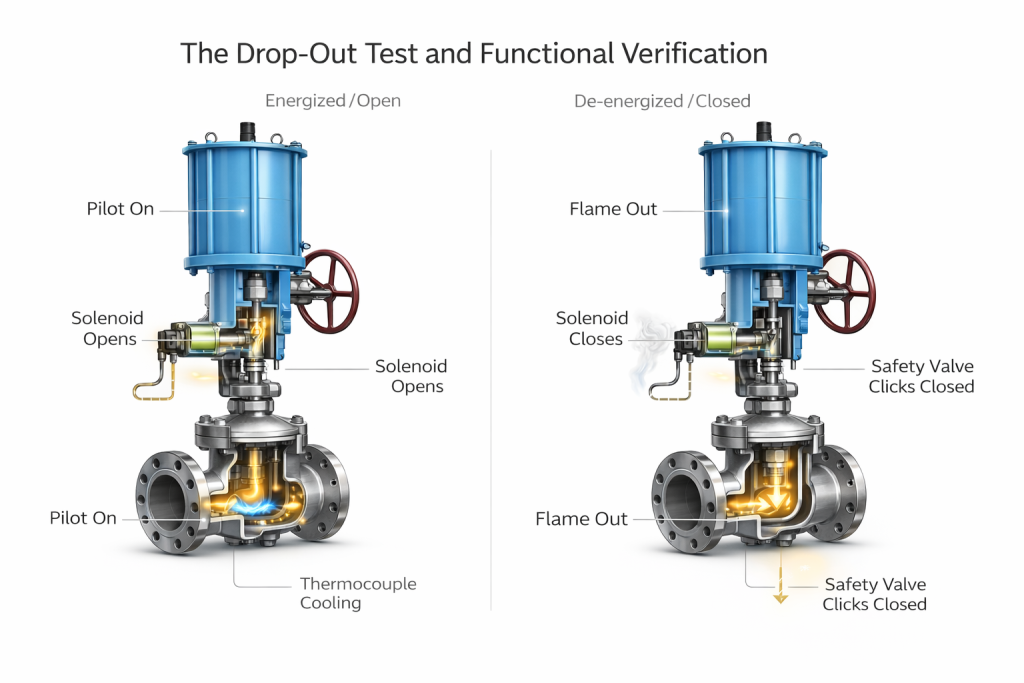
The Drop-Out Test and Functional Verification
For Thermocouple-Based Systems (Pilot Lights): The “Drop-Out” Test
- Ensure the appliance is on standby with the pilot light lit.
- Safely extinguish the pilot flame with a firm puff of air.
- Listen and time. Within 30-90 seconds, you should hear a distinct “click.”
- That “click” confirms the safety valve has shut. This is a successful test.
- If no click is heard after two minutes, the valve may be stuck open. Shut off the manual gas valve and call a professional immediately.
For Electric Solenoid Systems (Electronic Ignition): The “Listen for the Click” Test
- Turn the thermostat or control up to call for heat.
- Listen for the initial, sharp “click” as the solenoid opens the valve.
- When the heating cycle ends, listen for a second “click” as the solenoid closes.
- Hearing these clicks indicates the solenoid is likely functional.
خاتمة
Proactive inspection and functional testing transform your gas safety valve from an unknown variable into a confirmed asset. These simple checks demystify the system and empower you to ensure its readiness, providing peace of mind and enhanced safety for your home or facility between professional service calls.


 English
 Arabic
 Russian
 French
 Spanish