
Installing a صمام الفراشة incorrectly can cause leaks and premature failure. This uncertainty affects project safety and operational costs, demanding a clear answer on flow direction before installation.
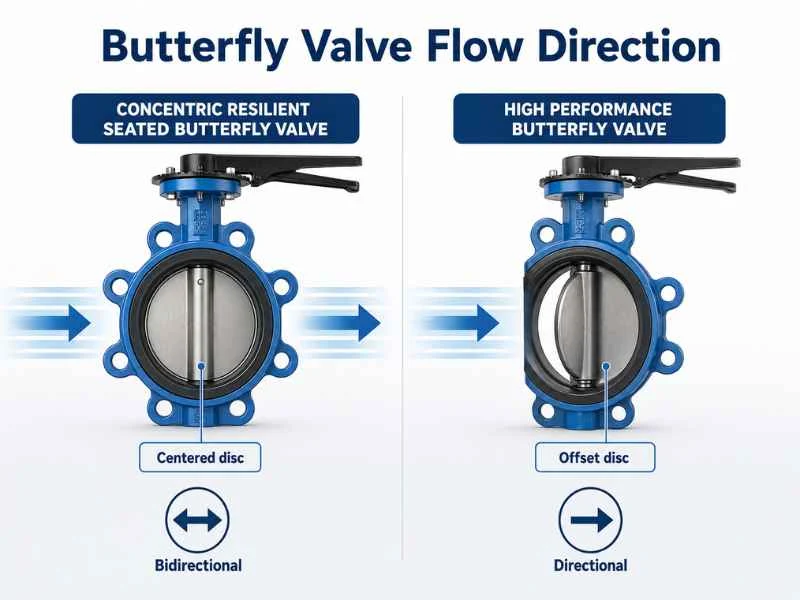
The directionality of a butterfly valve depends on its design. Most concentric butterfly valves with resilient seats are bidirectional. However, high-performance and triple offset butterfly valves are directional. They must be installed according to the manufacturer’s flow arrow to ensure proper sealing and service life.
Understanding this distinction is crucial for any engineer working with these common valves. This guide will explore how valve design determines flow direction, the risks of incorrect installation, and the best practices to follow to ensure your system operates safely and efficiently.
Concentric vs. High-Performance: Does Design Dictate Flow Direction?
Choosing between valve types requires knowing their flow characteristics. A concentric design behaves differently from a high-performance one, directly impacting whether flow direction matters for your application.
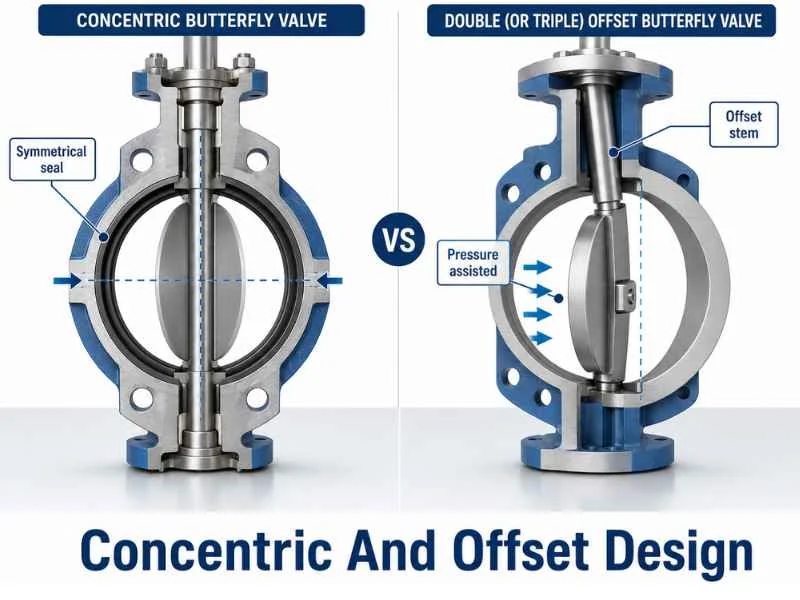
A concentric butterfly valve’s simple, symmetrical design allows it to seal equally well with flow in either direction. In contrast, a high-performance butterfly valve uses an offset disc and stem, making it directional. It is designed to seal best with pressure applied to a specific side of the disc.
A concentric or “resilient-seated” butterfly valve is the most common type. Its stem and disc are centered in the valve body. The disc compresses against a flexible rubber or polymer seat to create a seal. This symmetrical compression means the valve can handle flow and pressure from either side. It is a truly bidirectional valve, which simplifies installation for general service and on-off butterfly valve applications. You do not need to worry about orientation.
High-performance butterfly valves (HPBVs), also known as double or triple offset valves, are different. Their design introduces specific geometric offsets.
- إزاحة مزدوجة: The stem is offset from the centerline of the disc and the centerline of the valve bore. This creates a cam action as the disc pivots, reducing friction and wear on the seat.
- إزاحة ثلاثية: An additional third offset is the conical seat geometry. This design completely eliminates friction between the seat and seal during operation, extending valve life in critical or high-cycle services.
These offsets mean the valve is no longer symmetrical. HPBVs are designed for the line pressure to help push the disc into the seat, reinforcing the seal. This is often called the “pressure-assisted” direction. Installing it backward, with pressure on the wrong side, can compromise the seal and potentially damage the valve. For this reason, are butterfly valves directional is a critical question for any offset design.
How Incorrect Flow Direction Impacts Sealing and Valve Life
Installing a directional valve backward can lead to serious operational issues. It compromises the system’s integrity and can cause costly downtime and safety hazards in your plant.
Reversing the flow in a high-performance butterfly valve leads to poor shutoff, seat damage, and increased operating torque. The line pressure works against the seal instead of assisting it, increasing the risk of leakage and shortening the valve’s effective service life.
When a high-performance or triple offset butterfly valve flow direction is reversed, several problems can occur. The primary issue is sealing performance. These valves are engineered for the flow pressure to press the disc uniformly into its seat. This pressure helps create a tight, reliable bubble-tight shutoff. When installed backward, the pressure instead tries to push the disc away from the seat. This can lead to immediate leakage, especially in high-pressure applications.
Another significant risk is damage to the valve components. With pressure on the “wrong” side, the disc and stem are subjected to forces they were not designed to handle. This can cause the disc to deflect, leading to uneven contact with the seat. Over time, this results in scuffing, galling, or erosion of the metal or laminated seat surfaces. The result is a permanently damaged valve that will no longer seal properly, regardless of orientation.
The operational torque required to open or close the valve can also be affected. In the correct orientation, the flow dynamics can help the actuator. When reversed, the actuator may have to work harder against the flow, especially during closing. This increased torque requirement can strain or damage the actuator, gearbox, and stem, leading to premature failure of the valve’s automation system.
| تثبيت | Sealing Performance | Component Wear | Actuator Torque |
|---|---|---|---|
| Correct Direction | Pressure-assisted, tight shutoff | Minimal, as designed | Normal, as specified |
| Incorrect Direction | Prone to leakage | High risk of seat/disc damage | May significantly increase |
Installation Best Practices for Directional Butterfly Valves
Proper installation is key to unlocking a valve’s full performance and lifespan. For directional valves, a simple check before installation can prevent major problems down the line.
Always look for a flow direction arrow on the valve body or tag. This marking is the definitive guide for installing high-performance and triple offset butterfly valves. If no arrow is present, consult the manufacturer’s installation manual before proceeding with the installation.
The most reliable indicator of correct butterfly valve flow direction is a permanent arrow cast or stamped onto the valve body. This arrow explicitly shows the intended direction of flow for optimal sealing. Before your team installs any high-performance or triple offset valve, the first step should always be to locate this arrow. It is typically found on the side of the valve body and is the most important instruction to follow.
In some cases, the arrow may be on a metal tag attached to the valve. While this is also a valid indicator, permanent markings on the body are preferred because tags can be lost or removed. If you cannot find any directional marking on the valve, do not guess. Stop the installation and refer to the technical datasheet or installation and maintenance (IOM) manual provided by the manufacturer. The manual will specify the correct orientation. Contacting the manufacturer for clarification is the safest course of action if documentation is unclear.
When working with a lug-style butterfly valve or a wafer-style valve, ensure it is centered correctly between the pipe flanges. Misalignment can damage the seat, regardless of flow direction. During tightening, use a star or criss-cross pattern to apply even pressure on the flanges. This prevents warping the valve body and ensures the disc can operate freely without binding. Following these simple steps ensures that the valve performs as designed, providing a safe and reliable seal for many years.
Frequently Asked Questions (FAQ)
Are all butterfly valves directional?
No, not all of them are. Concentric butterfly valves with resilient seats are generally bidirectional and can be installed without regard to flow direction. However, high-performance (double offset) and triple offset butterfly valves are directional due to their design and must be installed correctly.
What happens if you install a directional butterfly valve backward?
Installing a directional butterfly valve backward causes the line pressure to work against the seal, leading to potential leakage. It can also cause increased wear on the seat and disc, require higher operating torque, and ultimately lead to premature valve failure.
How do I know if my butterfly valve is directional?
To determine if your butterfly valve is directional, first check the valve body for a cast or stamped arrow indicating the required flow direction. This is common on high-performance models. If there is no arrow, it is likely a bidirectional concentric valve. Always confirm with the manufacturer’s datasheet.
Can you use a directional butterfly valve for bidirectional flow?
It is not recommended. While a high-performance butterfly valve might offer some sealing capability against reverse flow (often at a lower pressure rating), it is not designed for it. Using it for bidirectional service will lead to poor performance, leakage, and accelerated wear.
Final Thought
So, are butterfly valves directional? The answer is: it depends on the design. Always verify if you are using a concentric or a high-performance model. For offset valves, locating the flow arrow is non-negotiable. Proper installation is the foundation for valve reliability and plant safety. Contact BCST today for expert guidance and a butterfly valve solution tailored to your flow direction, pressure, and operating conditions.



 English
 Arabic
 Russian
 French
 Spanish