
All About the Schrader Valve: Your Complete Guide to Inflation, Maintenance, and Beyond
ال Schrader valve is a small, unassuming component that plays a critical role in countless applications, from the tires on your car or bicycle to the air conditioning system in your home. Its ubiquitous design, engineered for simplicity and reliability, allows for easy inflation and pressure maintenance across a vast array of pneumatic systems. Schrader valves are the global standard for pneumatic systems, with studies showing a 13% failure rate in HVAC applications that is mitigated by gasketed caps according to a research study. A market research says, the valve dominates the automotive safety market, driven by TPMS, which is projected to grow to a $14.8 billion industry by 2032
This guide will demystify the Schrader valve, providing a comprehensive overview of its function, practical instructions for use, and essential maintenance tips. Whether you’re looking to inflate a tire, understand how your A/C system holds pressure, or learn how to replace a valve core, you’ll find all the answers here.
What is a Schrader Valve?
So, what is a Schrader valve? Named after August Schrader, who patented the design in 1893, it is a type of pneumatic tire valve used on virtually all motor vehicles worldwide, as well as many bicycle tires. It’s characterized by its threaded outer body and a spring-loaded pin in the center.
The valve’s simple, robust design makes it ideal for maintaining pressure in a wide range of applications requiring inflation and deflation. Beyond tires, you’ll find Schrader valves in air conditioning systems, some suspension components, and even certain medical devices, owing to its reliable sealing mechanism.
Compared to other valve types like the Presta valve (common on high-end road bikes) or the Dunlop valve, the Schrader valve is larger in diameter and more rugged. Its external threads allow a cap to be screwed on for protection, and also serve as a connection point for pumps and pressure gauges.
How Does a Schrader Valve Work?
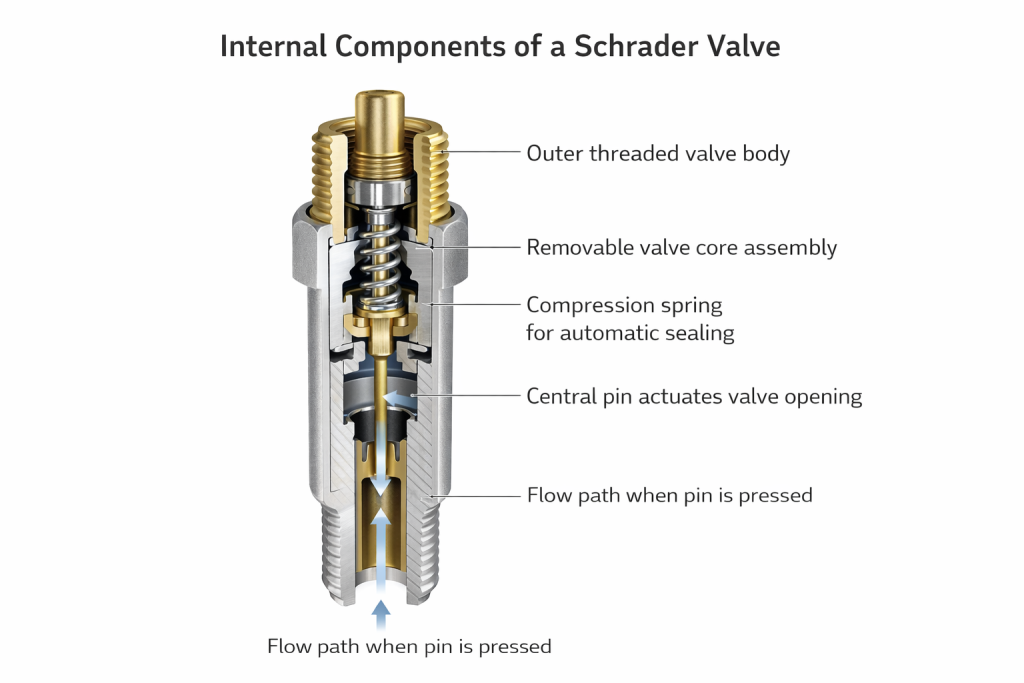
الفهم how does a Schrader valve work is key to its effective use. The core of the Schrader valve is a small, spring-loaded pin. When the valve is closed, this pin is pushed outwards by a small spring, sealing against a rubber gasket inside the valve stem. The internal air pressure from the tire or system also acts on this pin, pushing it against the seal, creating a robust, unidirectional seal.
To inflate, a pump head presses down on this central pin, compressing the spring and opening a pathway for air to enter. Once the pump head is removed, the spring-loaded pin snaps back into place, sealing the valve. The internal pressure then helps to maintain this seal, preventing air from escaping. This ingenious design ensures self-sealing when not actively being inflated or deflated.
How to Use a Schrader Valve
Learning how to use a Schrader valve is straightforward. The basic process involves connecting a pump or air compressor to the valve stem, adding air until the desired pressure is reached, and then disconnecting. For accurate pressure readings, a pressure gauge is essential.
Basic Steps for Checking Pressure and Adding Air:
- Remove the Valve Cap: Unscrew the small plastic or metal cap from the top of the Schrader valve stem.
- Check Current Pressure: Press a tire pressure gauge firmly onto the valve stem. It will briefly depress the pin and show the current pressure. Always refer to the manufacturer’s recommended pressure (e.g., printed on a tire sidewall or vehicle decal).
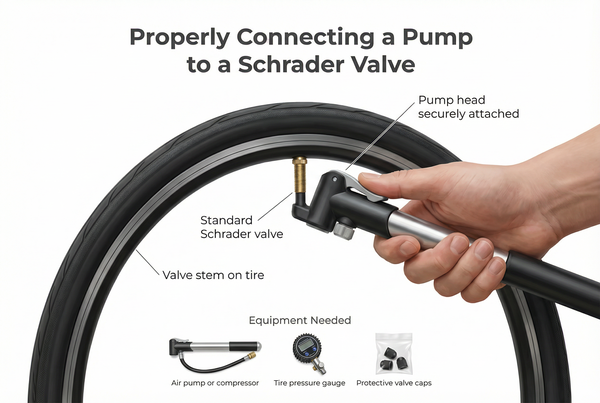
- Connect the Pump: Push the pump head (or air compressor chuck) straight down onto the valve stem. You may hear a brief hiss of air as it connects. Most pump heads have a lever to lock them securely onto the valve.
- Inflate: Operate your pump or compressor to add air. Periodically check the pressure with your gauge until the correct PSI (pounds per square inch) or Bar is reached.
- Disconnect & Replace Cap: Unlock the pump head and quickly remove it. Screw the valve cap back on. This cap helps keep dirt and moisture out of the valve, protecting the delicate core.
Inflate Your Tires: How to Inflate a Schrader Valve
When you need to how to inflate a Schrader valve on a tire, the process is very similar across various applications, be it a car, bike, or even a wheelbarrow. However, ensure you have the right equipment and know the correct pressure for your specific tire.
Equipment Needed:
- Air Pump or Compressor: Manual bicycle pump, foot pump, or electric air compressor with a Schrader valve compatible chuck.
- Tire Pressure Gauge: Essential for accurate readings. Many pump heads have integrated gauges, but a separate, accurate gauge is recommended.
- Valve Caps: To protect the valve core when not in use.
The key is to push the pump head down firmly and straight onto the valve stem. If you hear excessive air leaking immediately, you haven’t made a good seal. Adjust the pump head until the hiss subsides, or use the locking lever if your pump has one. Over-inflating can be dangerous, so always inflate incrementally and check often.
Pumping Up: How to Pump a Schrader Valve
The mechanics of how to pump a Schrader valve are largely the same regardless of the type of pump. However, each pump type offers a different level of convenience and effort.
Manual Bicycle Pumps:
These are compact and portable, ideal for on-the-go adjustments or emergency flats. Ensure the nozzle of the pump head is fully pushed onto the Schrader valve stem and locked in place with its lever (if applicable) before beginning to pump.
Foot Pumps:
Foot pumps offer more leverage, making inflation easier than with a manual hand pump, especially for car tires. Connect the chuck firmly, ensure the gauge (if present) is reading accurately, and use your foot to push down the pedal, applying even strokes.
Electric Air Compressors:
For quick and effortless inflation, electric compressors are unmatched. They can be portable (powered by a car’s 12V socket) or larger shop models. Connect the chuck, set the desired pressure (if it has an auto-shutoff feature), and let the compressor do the work. Remember to check the pressure manually with a separate gauge for precision.
Beyond Tires: How to Fill a Schrader Valve in Other Applications
The versatility of the Schrader valve extends far beyond just tires. Learning how to fill a Schrader valve in specialized systems might require specific attachments or considerations.
A/C Schrader Valves (Automotive & HVAC)
Many automotive and residential air conditioning systems use an A/C Schrader valve (or a/c Schrader valve) to allow technicians to add refrigerant (Freon) or evacuate the system. These valves typically handle refrigerants, which are under much higher pressure than air in a tire. Specialized gauges and charging hoses are required for these systems.
Warning: Never attempt to service an A/C system without proper training and equipment. Refrigerants are harmful and can cause severe injury if mishandled. Always consult a certified technician for A/C system maintenance.
Suspension Systems & Shock Absorbers:
Some vehicle suspension components, particularly adjustable air shocks or certain motorcycle forks, utilize Schrader valves for pressure adjustment. These often require a specialized high-pressure pump designed for suspension, as standard tire pumps may not reach the necessary pressure levels or offer the fine control needed for precise adjustments.
Replacing or Servicing: How to Remove a Schrader Valve Core
Sometimes, a Schrader valve might leak, or you might need to add tire sealant directly into the tire. In such cases, knowing how to remove a Schrader valve core is essential. The core is the removable inner part of the valve assembly.
What is a Schrader Valve Core?
ال Schrader valve core is the component that houses the spring-loaded pin and rubber gasket responsible for sealing the air inside the tire or system. It’s designed to be replaceable, making it easy to fix a leaky valve without replacing the entire stem.
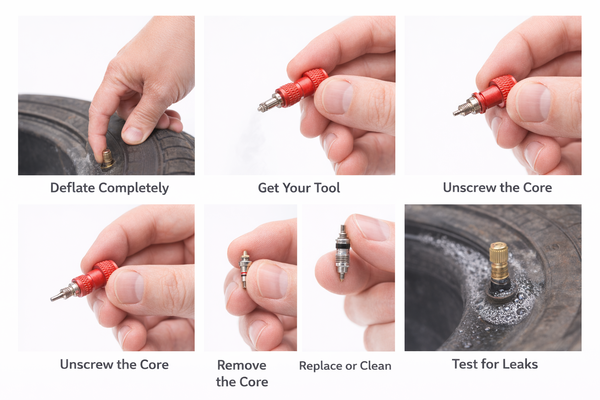
Step-by-Step for removing the Schrader valve core:
- Deflate Completely: Ensure all air pressure is released from the tire or system. You can do this by pressing the central pin of the valve until no more air escapes.
- Get Your Tool: You’ll need a specific Schrader valve core removal tool (also sometimes called a Schrader valve removal tool). This small, inexpensive tool has a notched end designed to fit over the two flats on the top of the valve core.
- Unscrew the Core: Insert the Schrader valve core removal tool into the valve stem and engage the notches with the flats on the core. Turn counter-clockwise to unscrew the core. It might be tight initially.
- Remove the Core: Once loose, you can usually pull the core out easily.
- Replace or Clean: If replacing, simply screw in a new core clockwise with the tool until it’s snug (do not overtighten). If cleaning, ensure the rubber seal is intact and free of debris.
- Test for Leaks: After replacing, inflate the tire/system and spray some soapy water on the valve stem. Bubbles indicate a leak, meaning the core isn’t sealed properly or the stem itself is damaged.
Essential Schrader Valve Tools and Adapters
Every vehicle owner or cyclist should have a few key Schrader valve tools in their kit. Having the right equipment makes inflation and maintenance tasks much simpler.
Key Schrader Valve Tools:
| Tool Name | الوصف | Use Case |
|---|---|---|
| Valve Core Removal Tool | Small, usually metal or plastic tool with a notched end. | Replacing leaky valve cores, adding tire sealant. |
| Tire Pressure Gauge | Analog stick, digital, or dial gauge. | Accurately measuring tire or system pressure. |
| Pump Head / Air Chuck | Connects air source to valve stem, often includes a locking lever. | Inflating tires with air pumps or compressors. |
| Schrader Valve Adapter (Presta) | Small brass adapter to convert a Presta valve to Schrader. | Using a Schrader pump on a Presta valve bike tire. |
ال Schrader Valve Adapter:
While a Schrader valve is common, you might sometimes encounter a different valve type, particularly on higher-end bicycles (Presta valves). A simple and inexpensive Schrader valve adapter (specifically, a Presta to Schrader adapter) allows you to use a standard Schrader valve pump to inflate a Presta valve tire. This makes it incredibly convenient, especially if you have multiple bikes with different valve types.
FAQ — Common Questions About The Schrader Valve
Q1: What is a Schrader valve used for?
أ Schrader valve is primarily used for inflating and deflating pneumatic tires on cars, bicycles (especially mountain bikes), and other vehicles. It’s also found in other pressurized systems like air conditioning (A/C Schrader valves), suspension systems, and dive tanks.
Q2: What’s the difference between a Schrader and a Presta valve?
The main differences are size and sealing mechanism. Schrader valves are wider and have an external thread with a spring-loaded pin. Presta valves are narrower, lack external threading (though they have a locknut), and use a small knurled nut at the top to seal. Schrader valves are more common on cars and some bikes, while Presta are typical on road bikes.
Q3: How do I remove a Schrader valve core?
To remove a Schrader valve core, first fully deflate the tire. Then, use a specialized Schrader valve core removal tool. Insert the tool into the valve stem, engage the notches, and turn counter-clockwise until the core unscrews and can be pulled out.
Q4: Can I use a regular bike pump to inflate my car tires with a Schrader valve?
Yes, if your bike pump is designed for Schrader valves (which most are), it will connect. However, car tires require significantly more air volume and higher pressure than most bike tires, so it will take a substantial amount of effort and time. An electric or foot pump is generally recommended for car tires.
Q5: Why is my Schrader valve leaking?
تسريب Schrader valve is usually due to a damaged, loose, or dirty valve core. The small rubber seal on the valve core can degrade over time. Try tightening the valve core with a Schrader valve core removal tool, or simply replace it with a new one. If the stem itself is cracked, the entire valve stem (or tube) will need replacement.
Q6: Do I need a cap on my Schrader valve?
While the Schrader valve core itself provides an airtight seal, the cap offers added protection. It keeps dirt, moisture, and road grime out of the delicate valve mechanism, which can prevent corrosion or debris from interfering with the seal. It’s always best practice to keep valve caps on.
Q7: What is a Schrader valve adapter?
أ Schrader valve adapter typically refers to a small converter that allows a pump designed for Schrader valves to be used on a Presta valve. It essentially screws onto a Presta valve, giving it the outside dimensions of a Schrader valve so a standard pump chuck can attach.
خاتمة
ال Schrader valve, with its simple yet effective design, is a testament to clever engineering. From daily commutes to critical industrial applications, its ability to reliably maintain pressure is foundational to many modern systems. Understanding what is a Schrader valve و how does a Schrader valve work empowers you to handle everything from basic tire inflation to more advanced maintenance.
By using the correct Schrader valve tools and following proper procedures for inflation, pumping, filling, and core removal, you can ensure the longevity and performance of your tires and other pressurized equipment. Keep your tires properly inflated, maintain your valve cores, and appreciate the small but mighty Schrader valve!
Need help with your valve applications?


 English
 Arabic
 Russian
 French
 Spanish