
When Do You Need a Gate Valve Replacement?
A critical صمام البوابة is leaking. Production is at risk, and you have to make a call: Do you attempt a quick in-line repair or commit to a full gate valve replacement? Making the wrong choice can waste hours and money, or worse, lead to a catastrophic failure.
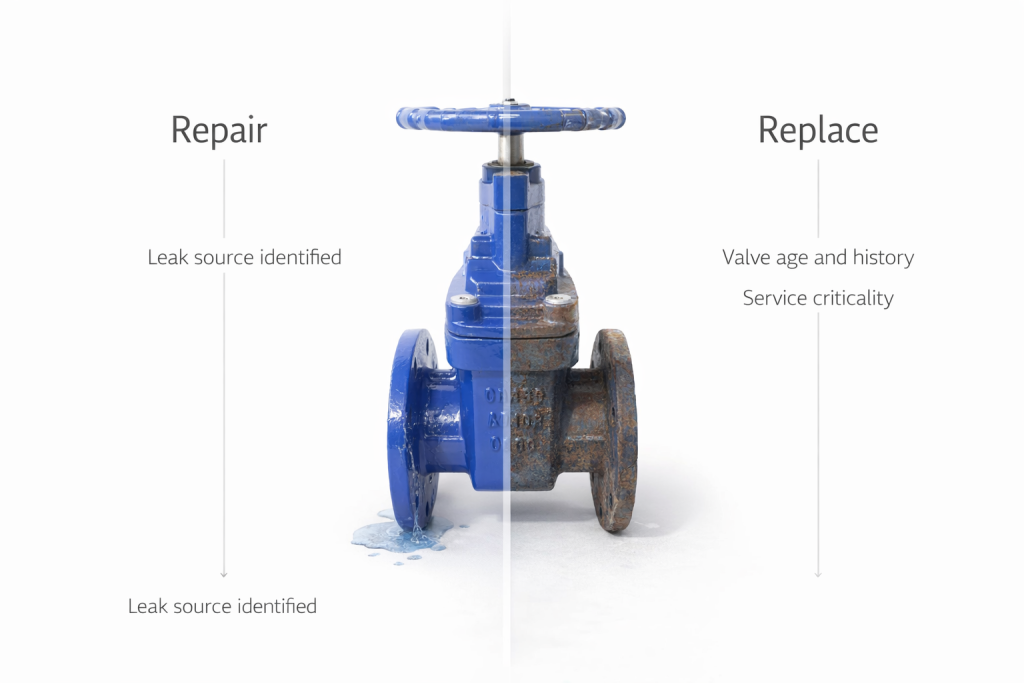
The decision to repair or replace hinges on accurately diagnosing the failure. As noted in a study on critical valve failures, replacement is often favored over repair once a component is compromised, a principle that applies directly to industrial settings.
When is In-Line Gate Valve Repair a Viable Option?
Attempting a repair on a fundamentally failed valve is a waste of resources. A simple repair is often possible for external leaks on a valve that is otherwise performing well and has not reached the end of its reliable service life.
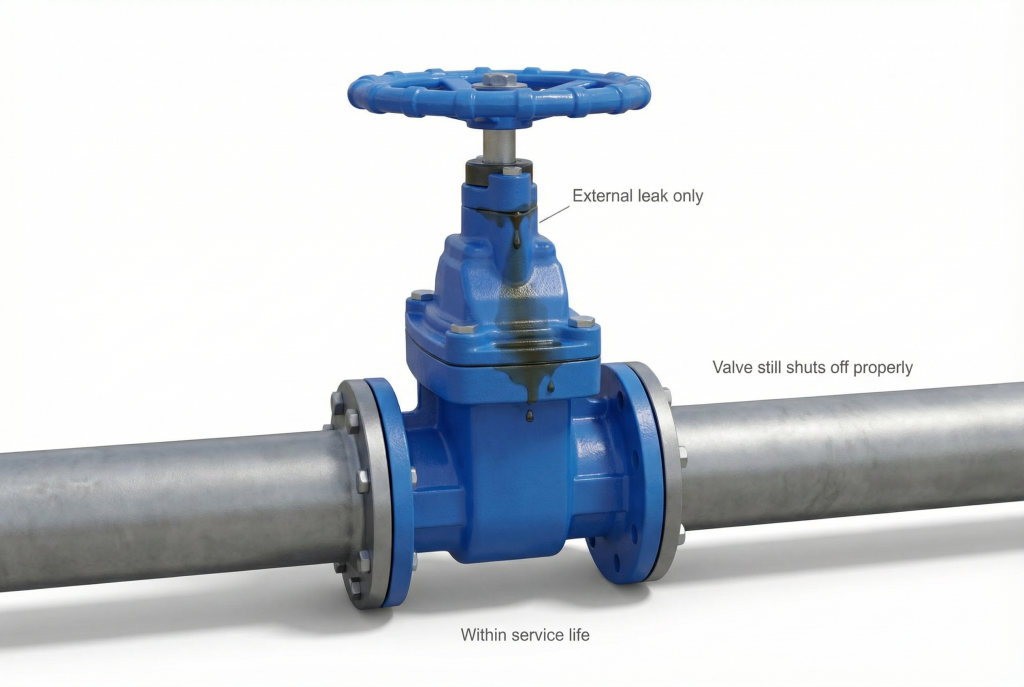
The Repairable Symptoms Checklist
| Symptom | Triage Question | Recommended Action |
|---|---|---|
| Leaking Packing | Is the leak from where the stem exits the bonnet? | Tighten packing nuts. If that fails, replace the packing. |
| Leaking Bonnet Gasket | Is the leak from the body-bonnet joint? | Re-torque bonnet bolts. If that fails, replace the gasket. |
| Stiff Operation | Is the handwheel hard to turn, but the valve still works? | Clean and lubricate the stem threads and yoke bushing. |
Critical Caveat: These repairs are only viable if the valve is otherwise healthy. If a valve has a packing leak و is passing internally, a repair is just a band-aid. Gate valve replacement is the correct long-term strategy.
When is a Full Gate Valve Replacement the Only Choice?
Ignoring the clear signs of a fatally wounded valve is a direct path to an unplanned and potentially dangerous failure. Specific symptoms indicate that the internal integrity is compromised, making any repair attempt a risky gamble.
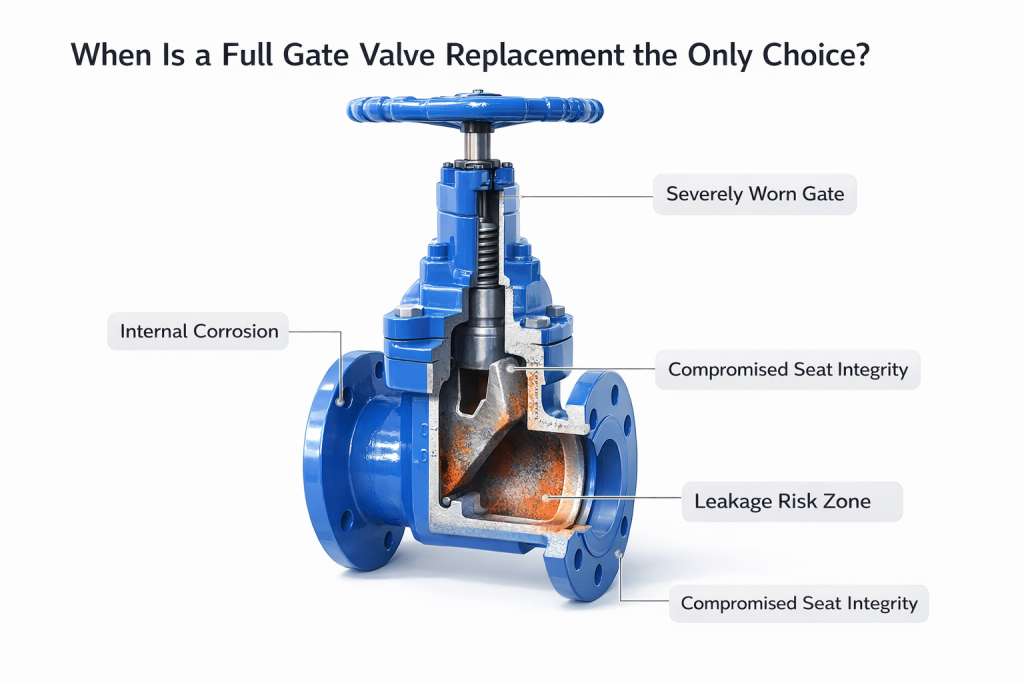
The Unfixable Conditions Checklist
| Symptom | Triage Finding (The “Why”) | The Conclusion |
|---|---|---|
| Internal Leak (“Passing”) | The valve’s sealing surfaces are physically destroyed (“wire drawing”). | الاستبدال الإلزامي. Core function has failed. |
| Cracked Body or Bonnet | The pressure-containing shell is compromised. | الاستبدال الإلزامي. Unsafe to operate. |
| Significant Corrosion | Structural integrity is questionable; risk of rupture. | Urgent Replacement. Catastrophic failure risk. |
| Bent Stem / Seized Internals | Severe internal damage; valve is inoperable. | الاستبدال الإلزامي. Drivetrain has failed. |
In these scenarios, the decision is a matter of operational integrity and safety. Continuing to rely on the valve is an acceptance of unacceptable risk. A gate valve replacement is the only way to restore predictable, safe operation.
Conclusion: Make the Right Call
Use this triage checklist to make confident, data-driven decisions. Properly diagnosing your gate valve saves time, reduces costs, and, most importantly, ensures the safety and reliability of your entire operation, whether a simple repair or a full gate valve replacement is required.


 English
 Arabic
 Russian
 French
 Spanish