
You need reliable on/off control, but a ball valve’s design can cause flow turbulence and seat wear. This compromises your system’s efficiency and leads to costly, premature valve replacements.
A gate valve is superior for applications requiring full, unobstructed flow with minimal pressure drop. Its straight-through design is ideal for pipelines, viscous liquids, and services where pigs are used for cleaning, ensuring maximum flow capacity and preventing erosion of the sealing surfaces.
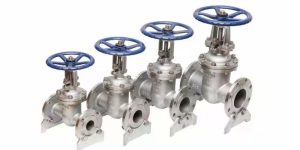
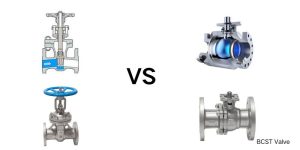
The choice between a gate valve and a ball valve is one of the most common decisions in piping design. While both provide on/off service, their internal mechanics are fundamentally different, making them suitable for very different jobs. For an engineer like Hassan, selecting the right valve type is a critical decision that impacts the long-term reliability and efficiency of the entire plant. Let’s explore the specific scenarios where the classic gate valve proves to be the better engineering choice.
How Does a Gate Valve’s Flow Path Reduce Pressure Drop?
Your system’s efficiency is suffering from unexpected pressure loss across your isolation valves. This forces your pumps to work harder, consuming more energy and increasing your operational costs.
A gate valve provides a completely straight and unobstructed path when fully open. The gate retracts entirely out of the flow stream, creating a passage that is equivalent to a straight piece of pipe. This design minimizes friction and turbulence, resulting in virtually zero pressure drop.
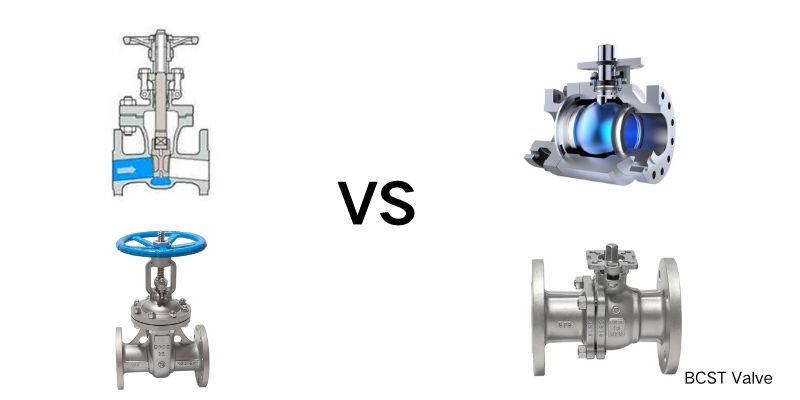
This characteristic is not just a minor benefit; it’s a core design feature with significant financial and operational implications. For Hassan, when designing long-distance transfer pipelines or critical pump suction lines, minimizing every point of pressure loss is paramount. The full-bore, non-turbulent flow of a gate valve directly translates to energy savings and improved system performance over the life of the facility. Let’s examine the mechanics behind this superior flow characteristic.
A Deeper Look at Flow Dynamics and Efficiency
The internal geometry of a valve dictates how it interacts with the fluid passing through it. This interaction is the primary source of pressure loss, a critical factor in process efficiency.
1. The Unobstructed Full-Bore Design
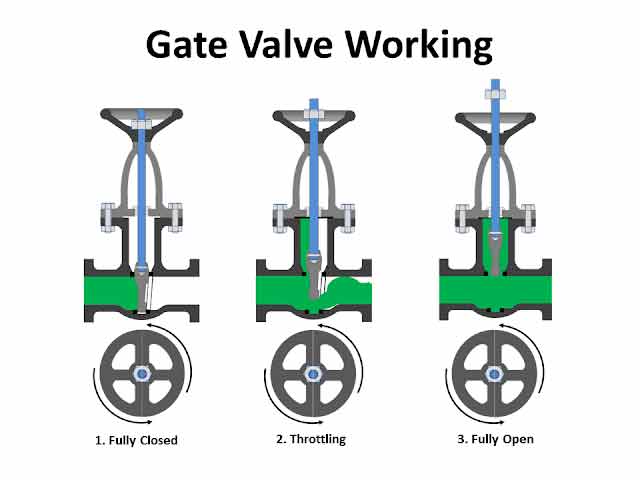
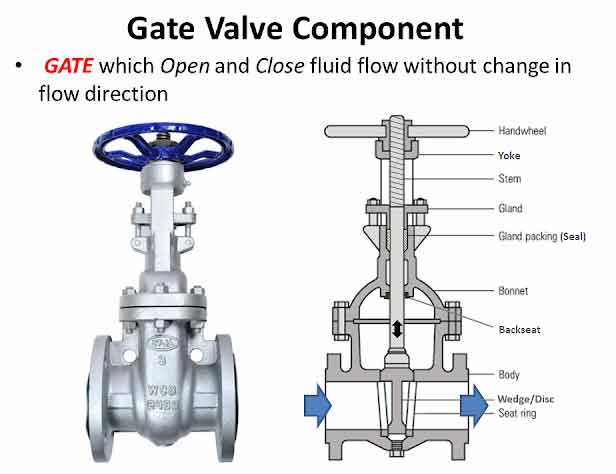
The defining feature of a gate valve is its “gate” or wedge, which moves perpendicularly to the direction of flow.
- When Open: The gate is lifted completely into the valve bonnet. This leaves a full-port opening that is the same diameter as the connecting pipe. The fluid passes through in a straight line, as if the valve wasn’t even there.
- When Closed: The gate is lowered until it seats securely against two parallel or wedge-shaped seats, creating a tight shutoff.
In contrast, a standard-port ball valve introduces a restriction. Even a full-port ball valve’s spherical design can create slight turbulence as the fluid enters and exits the ball’s bore.
2. Quantifying the Difference: The Flow Coefficient (Cv)
Engineers use a value called the Flow Coefficient, or Cv, to compare the efficiency of different valves. Cv represents the volume of water (in US gallons per minute) that will flow through a valve with a pressure drop of 1 psi.
| Valve Type (Example: 6-inch size) | Typical Cv Value | Flow Path Characteristic | Implication |
|---|---|---|---|
| Gate Valve (Full Port) | ~3500 | Straight, Unobstructed | Maximum possible flow, minimum pressure drop. Ideal for mainlines. |
| Ball Valve (Full Port) | ~2500 | Straight, Minor Obstruction | Very good flow, but the change in geometry at the ball creates some loss. |
| Globe Valve (Standard Pattern) | ~500 | Tortuous, Z-shaped | Significant pressure drop. Designed for throttling, not efficient flow. |
Hassan recalls a project involving a crude oil export pipeline. The engineering team initially specified full-port ball valves for the mainline isolation points. Hassan intervened, insisting on gate valves. His calculations showed that the cumulative pressure drop from dozens of ball valves over a 50-kilometer pipeline would have required a larger, more expensive pump station. By switching to gate valves, he saved millions in capital expenditure and reduced the pipeline’s long-term energy consumption. This is a clear example of how a simple valve choice can have a massive financial impact.
Can Gate Valves Handle Abrasive Slurries Better Than Ball Valves?
Your ball valves in a slurry service are failing frequently. The abrasive particles are destroying the seats and the ball, causing leaks and forcing you into a constant cycle of expensive maintenance and downtime.
Yes, gate valves, particularly knife gate valves, are far superior for abrasive slurries. The gate’s sliding motion and metal-to-metal seal can cut through thick media. More importantly, the sealing surfaces are protected from the erosive flow when the valve is fully open.
The failure of ball valves in abrasive service is a common and predictable problem. The very design that makes them excellent for clean fluids becomes a critical weakness when dealing with solids. For a plant processing raw materials, like in the mining or pulp and paper industries, choosing the wrong valve leads directly to lost production. Let’s break down exactly why the gate valve’s design provides the durability needed for these tough applications.
Understanding Erosion and Sealing in Abrasive Flows
When a fluid contains solid particles (a slurry), it acts like liquid sandpaper on the internal components of a valve. The way a valve protects its sealing surfaces from this erosion determines its lifespan.
The Ball Valve’s Weakness
A ball valve relies on soft seats (like PTFE or RPTFE) or precision-mated metal seats pressed against the smooth surface of the ball to create a seal.
- Erosion Point: When a ball valve is open, the seats are constantly exposed to the high-velocity, abrasive flow. The particles scour and erode the seat material.
- Closing Problem: As the valve closes, the ball wipes across the already damaged seat. Slurry particles get trapped between the ball and the seat, scoring the ball’s surface and preventing a tight seal. Once the ball’s sealing surface is scratched, the valve will never seal properly again.
The Gate Valve’s Advantage
A gate valve’s sealing mechanism works differently, offering inherent protection.
- Protected Seats: When a gate valve is fully open, the gate is completely withdrawn from the flow path. The sealing surfaces of the seats are recessed and largely shielded from the direct impact of the abrasive slurry. The main flow passes through the middle of the valve body, minimizing contact with the critical sealing areas.
- Self-Cleaning Action: The gate’s linear, sliding motion helps to push solids out of the sealing area as it closes. For extremely thick slurries, a specialized “knife gate valve” is used. It has a sharpened gate edge designed to slice through a column of solids to achieve shutoff.
| ميزة | Ball Valve in Slurry | Gate Valve in Slurry | The Engineering Advantage |
|---|---|---|---|
| Seats when Open | Exposed to direct flow | Recessed and protected | Gate valve seats last significantly longer because they are not being constantly eroded. |
| Sealing Action | Wiping motion traps particles | Sliding motion pushes particles out | Gate valve is less likely to be damaged during closing and can achieve a better seal. |
| Common Failure | Seat erosion and ball scoring | Gate or seat wear over time | The failure mode of a gate valve is often more gradual and predictable in slurry service. |
I remember working with Hassan on a chemical plant that processed a catalyst slurry. They were replacing their 4-inch ball valves every three months. We supplied them with our BCST Stellite-hardened metal-seated gate valves. Those valves have now been in service for over two years with only routine maintenance. The switch eliminated thousands of dollars in replacement costs and, more importantly, gave them the operational reliability they desperately needed.
When is a Gate Valve Better for High-Temperature Service?
You are designing a high-temperature steam line, and you are concerned about valve reliability. A ball valve’s soft seats can fail, and thermal expansion could cause the ball to seize, creating a major safety risk.
Gate valves with flexible wedge designs and metal-to-metal seats are inherently more reliable in high-temperature services. The flexible wedge can accommodate thermal expansion and contraction without binding, and there are no soft seats that can melt or degrade, ensuring a dependable shutoff.
High temperature adds another layer of complexity to valve selection. Materials expand, clearances change, and sealing components can fail catastrophically. In environments like steam generation or thermal fluid systems, a valve failure is not just an inconvenience; it can be a dangerous event. This is why experienced engineers like Hassan often default to the proven, robust design of a gate valve for these critical applications.
Managing Thermal Expansion and Sealing Integrity
When a valve heats up from ambient to several hundred degrees Celsius, its metal components expand. How the valve design manages this expansion is key to its reliability.
The Problem with Ball Valves at High Temperatures
- Seat Failure: The most common sealing material in ball valves is PTFE or similar polymers. These materials have strict temperature limits, often around 200-260°C (400-500°F). Above this, they soften, deform, and fail to seal. While metal-seated ball valves exist, they face another issue.
- Thermal Binding: A ball is trapped tightly between two seats inside the valve body. As the valve heats up, the body and the ball expand. If they expand at different rates or in a way that eliminates the operational clearances, the ball can become completely stuck or “bound” in the body. This makes the valve impossible to operate.
The Gate Valve’s Robust Solution
The gate valve’s construction offers several advantages in managing heat.
| ميزة | الوصف | High-Temperature Benefit |
|---|---|---|
| Metal-to-Metal Seats | The gate (wedge) seals directly against metal seats integrated into the valve body. Often these surfaces are hardened with Stellite overlay. | There are no soft components to melt or degrade. The valve can handle temperatures limited only by the body and trim materials. |
| Flexible Wedge | The gate is designed with a slight cut or flexibility in its center. | This allows the two halves of the wedge to flex independently. As the valve body expands or contracts, the wedge can adjust its angle to maintain a tight seal without binding. |
| Rising Stem Design | The stem threads are located outside the valve body, protected by the packing. | This keeps the critical operating threads isolated from the hot process fluid, preventing them from seizing and making operation easier and more reliable. |
In my early days in the factory, my father showed me a failed ball valve from a power plant’s superheated steam line. The PTFE seats had completely melted away, and the ball was so tightly seized that the actuator had twisted the valve stem. He then showed me the gate valve they used as a replacement, pointing out the flexible wedge. He explained, “This design breathes with the pipe. It gets hot, it expands, it cools, it contracts, but it never gets stuck.” That lesson on designing for thermal expansion, not just pressure, has always stayed with me.
خاتمة
Choose a gate valve over a ball valve for straight-line flow with minimal pressure loss, for handling abrasive slurries, and for reliable performance in high-temperature services where thermal binding is a risk.


 English
 Arabic
 Russian
 French
 Spanish