Automatic Protection
Fail-safe operation without external power, providing reliable overpressure protection when you need it most.

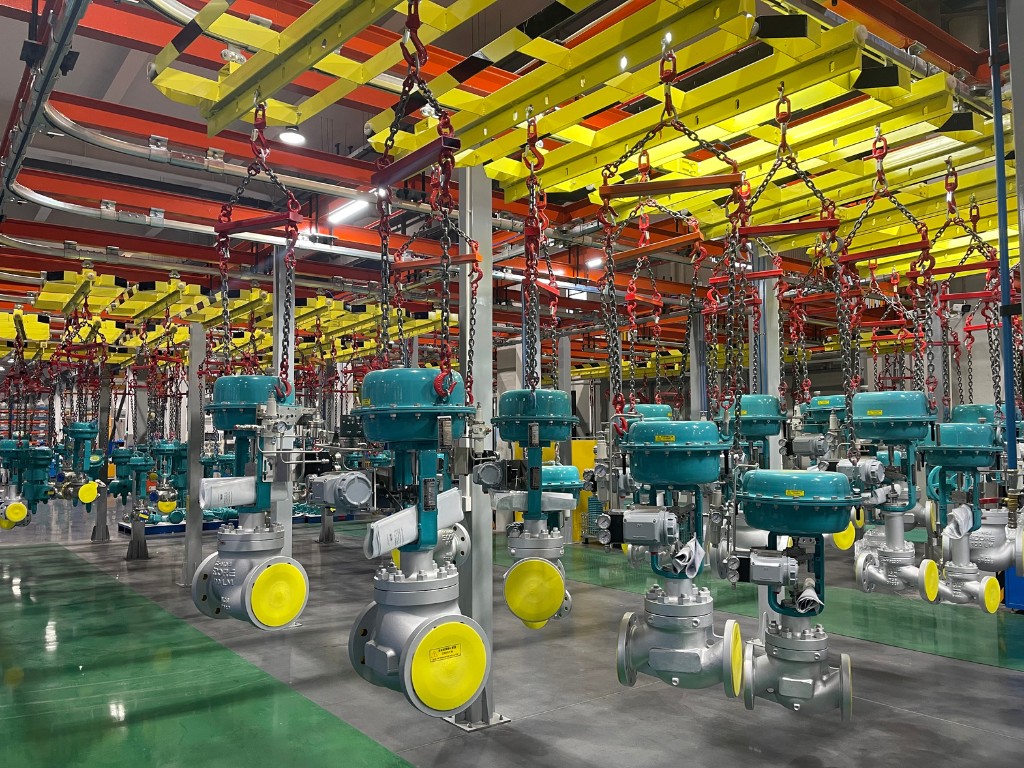
Safeguard your personnel, protect your assets, and ensure environmental compliance with BCST Safety Valves. As a premier manufacturer, we engineer and test every valve in our dedicated factory to provide reliable, automatic protection against catastrophic system failure. Trust BCST for safety you can install with confidence.

The core of a Triple Eccentric Butterfly Valve (also known as a Triple Offset Valve or TOV) is its innovative design. BCST has perfected this technology in our dedicated factory. The three offsets work in harmony: the first two place the disc seat out of the sealing plane, while the third, a unique conical sealing profile, creates a cam-action, torque-seated closure. This design eliminates rubbing between the seat and seal during operation, drastically extending valve life and ensuring bubble-tight shutoff, a hallmark of a leading manufacturer.
Fail-safe operation without external power, providing reliable overpressure protection when you need it most.
Accurate set pressure with ±3% tolerance and rapid response for optimal system protection.
Designed and manufactured to ASME, API, and ISO standards for worldwide acceptance.
Optimized factory processes ensure quick turnaround times for critical valve requirements.
Comprehensive technical consultation for valve selection, sizing, and application optimization.
Direct manufacturing control ensures consistent quality and competitive pricing.
: When specifying a Triple Offset Butterfly Valve, trust is paramount. Every BCST valve is built to exceed industry standards in our ISO 9001 certified factory. We hold crucial certifications including API 609, API 607 Fire Safe, and CE, guaranteeing our products are suitable for the most demanding services in oil & gas, chemical processing, and power generation. This commitment to certified quality is a core advantage of partnering with BCST.


The secret behind our superior performance lies in the ingenious threeoffset design that eliminates friction and ensures bubble-tight sealing.

A safety valve is a purely mechanical, self-actuating device designed to protect systems from overpressure. It requires no external power source, ensuring it functions even during a total system failure.
Every BCST safety valve is precision-engineered with high-quality components to ensure reliable performance. Understanding these parts highlights our commitment to quality.
نطاق الضغط
نطاق درجة الحرارة
نطاق الحجم
certifcation
Comprehensive selection of safety valves engineered for diverse industrial applications and operating conditions.
The most common and reliable type of safety valve, using spring force to control opening pressure.

High-accuracy valves using a pilot valve to control the main valve operation.
Application-specific designs for unique operating conditions and requirements.
Optimized for steam and vapor applications with specialized trim materials.
Designed specifically for liquid service with proportional opening characteristics.
Insulated design for high-temperature applications requiring thermal protection.
Comprehensive technical data and interactive tools to help you select the perfect valve for your application.
Choose the right material for your application based on temperature, pressure, and media compatibility.
≤425°C
Standard carbon steel for general applications
≤425°C
High-quality carbon steel casting
≤650°C
Corrosion resistant, food grade
≤650°C
Superior corrosion resistance
≤650°C
Cast stainless steel equivalent to 304
Interactive dimensional data table based on GB/T 12221-2005 standards.
| DN | ضغط | Wafer Type (mm) | Flanged Type (mm) |
|---|---|---|---|
| DN50 | PN 1.6~2.5 | 43 | 108 |
| DN65 | PN 1.6~2.5 | 46 | 112 |
| DN80 | PN 1.6~2.5 | 46 | 114 |
| DN100 | PN 1.6~2.5 | 52 | 127 |
| DN125 | PN 1.6~2.5 | 56 | 140 |
| DN150 | PN 1.6~2.5 | 56 | 140 |
| DN200 | PN 1.6~2.5 | 60 | 152 |
| DN250 | PN 1.6~2.5 | 68 | 165 |
Choose the appropriate actuator type based on your operational requirements.
Hand wheel operation for smaller sizes
Size Range:
DN50-DN300
Torque:
Low to Medium
Air-operated for automated control
Air Pressure:
4-7 bar
Response Time:
Fast
Electric motor operation for precise control
الجهد االكهربى:
220V/380V
Control:
Precise
Gear-operated for large valves
Size Range:
DN400+
Gear Ratio:
متغير
BCST valves are manufactured according to international and Chinese national standards.
API 609
صمامات الفراشة
MSS SP-67
صمامات الفراشة
آيزو 9001
Quality Management
API 609
صمامات الفراشة
MSS SP-67
صمامات الفراشة
آيزو 9001
Quality Management
Factory Testing
Certified
Years Experience
تتفوق صمامات الفراشة الثلاثية اللامركزية التي نقدمها في القطاعات الصناعية المتطلبة، مما يوفر أداءً موثوقًا في أكثر البيئات صعوبة.
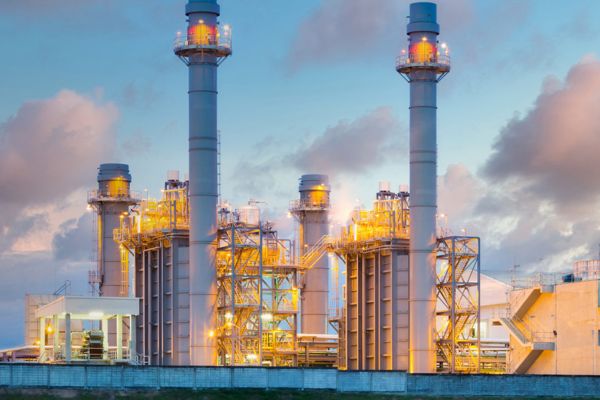
In thermal, nuclear, and combined cycle power plants, safety valves are vital for safeguarding boilers, steam generators, superheaters, reheaters, and turbines. They ensure the safe operation of high-pressure steam and water systems, preventing catastrophic failures.

From upstream drilling and production to midstream transportation and downstream refining, safety valves protect pipelines, pressure vessels, separators, and storage tanks from dangerous pressure build-ups. They are crucial in preventing explosions and leaks of flammable or toxic hydrocarbons.
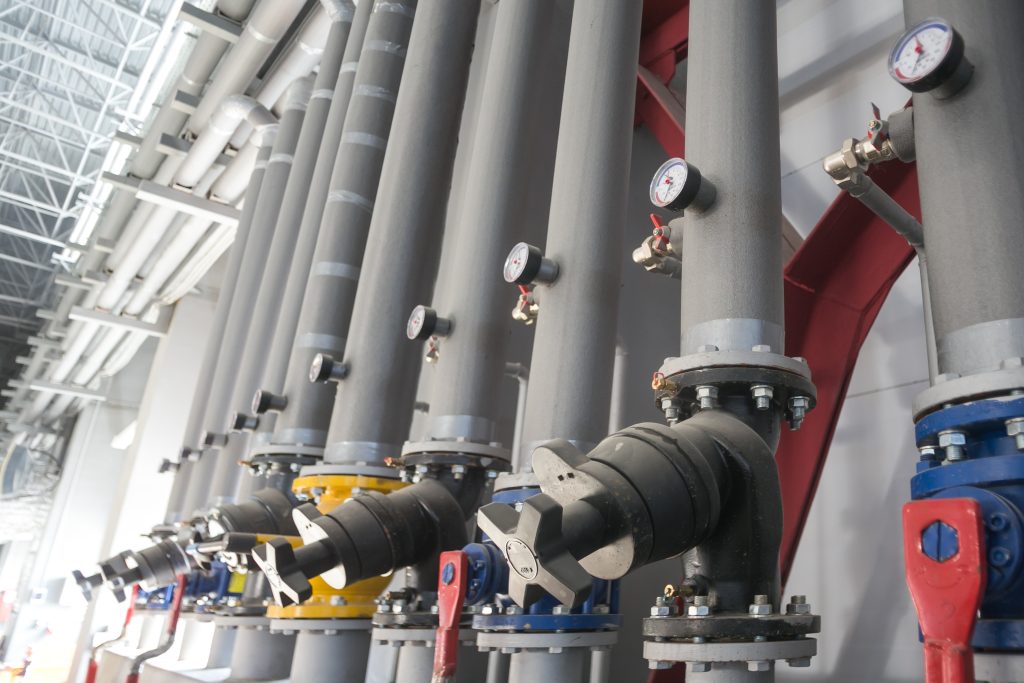
Handling a wide range of corrosive, volatile, and hazardous chemicals requires stringent safety measures. Safety valves are installed on reactors, distillation columns, storage tanks, and process lines to protect against runaway reactions and uncontrolled pressure increases.

In these industries, maintaining precise pressure control and ensuring sterile environments are critical. Safety valves are used on bioreactors, fermenters, autoclaves, and clean steam systems to prevent contamination and ensure process integrity.
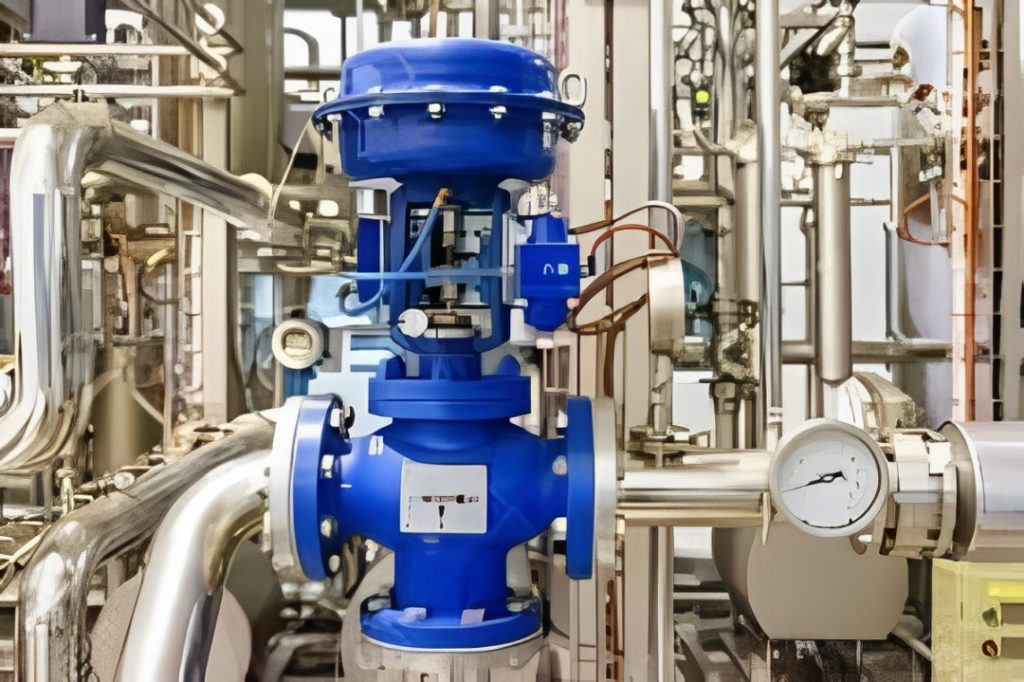
Commercial and industrial heating, ventilation, air conditioning, and refrigeration systems rely on safety valves to protect compressors, chillers, and pressure vessels from overpressure, ensuring efficient and safe climate control.
From brewing and dairy to soft drink production, safety valves protect steam boilers, pasteurizers, and storage tanks, ensuring product quality and operational safety in compliance with strict hygiene standards.
As a direct manufacturer, BCST controls the entire production process, giving us significant advantages in quality, delivery time, and pricing. Our ISO 9001 certified factory ensures every valve meets the highest standards.
International Brands
Satisfied Customers
Quality Rate
The primary function of a safety valve is to protect equipment, personnel, and the environment by automatically releasing excess pressure from a system when it exceeds a predetermined safe limit. This prevents catastrophic failures due to overpressure conditions.
While often used interchangeably, a key difference is in their opening characteristics. A safety valve typically opens rapidly with a ‘pop’ action when the set pressure is reached, primarily used for compressible fluids (gases, steam). A relief valve generally opens proportionally to the increase in pressure over the set point and is primarily used for incompressible fluids (liquids).
Safety valves are crucial because they act as the last line of defense against overpressure. They prevent explosions, equipment damage, and hazardous leaks, ensuring personnel safety, protecting valuable assets, and maintaining regulatory compliance in industries like oil & gas, power generation, and chemical processing.
The inspection and maintenance frequency for safety valves depend on various factors, including the application, operating conditions, fluid type, and regulatory requirements (e.g., ASME codes). Generally, regular inspections, testing, and maintenance are recommended, often annually or biannually, to ensure their reliable operation.
Absolutely. BCST Valve offers a wide range of standard safety valves, and we also specialize in providing customized solutions. Our engineering team can work with you to design and manufacture safety valves tailored to your specific application requirements, including unique materials, pressure ratings, and connection types.
Imagine a pressurized system without an escape route. It’s a disaster waiting to happen. Overpressure can cause catastrophic explosions, destroy expensive equipment, and endanger lives. This is where a safety valve becomes essential.
A safety valve is a non-negotiable safety device and often the last line of defense against overpressure. It is designed to automatically open and vent excess pressure from a vessel or system when it reaches a predetermined limit, then reclose once normal conditions are restored.
Hassan, our chief engineer, always says, “Control systems manage production; safety valves protect people and property.” He once showed me a facility where a control failure occurred. The only thing that prevented a major incident was the rapid, forceful opening of a safety valve. It’s a purely mechanical device, meaning it works even during a total power failure. This simple, robust design is what makes it the ultimate fail-safe. It’s not a matter of if it will be needed, but ensuring it works when it is.
Do you know what happens inside a safety valve during an emergency? It’s not a gradual release; it’s an immediate, powerful action designed to avert disaster in seconds.
The most common type, a direct-acting or spring-loaded safety valve, uses a spring to hold a disc tightly against a nozzle, keeping the system sealed. When the system pressure rises to the set point, the force on the disc overcomes the spring’s force, causing the valve to “pop” open instantly for rapid pressure release. Once the pressure drops to a safe level, the spring force reseats the disc.
I remember Hassan explaining the “pop” action. “Emily,” he said, “you don’t want a safety valve to think about opening. You want it to react instantly.” This rapid, full-lift opening is what separates a safety valve from a relief valve, which opens gradually and proportionally to the pressure increase. [6, 9] Safety valves are used for applications like steam, air, or other compressible gases where immediate, large-volume venting is critical to prevent an explosion. The entire operation is mechanical and automatic.
| المكوّن | الوظيفة | Why It’s Critical |
|---|---|---|
| ربيع | Applies a closing force on the disc. | Its stiffness determines the exact pressure at which the valve will open. |
| قرص | Seals the nozzle opening. | Must lift cleanly to release pressure and reseat tightly to prevent leaks. |
| Nozzle | Provides the inlet and seat for the disc. | It directs the system pressure onto the disc. |
Is a one-size-fits-all approach suitable for system safety? Absolutely not. Different applications demand different types of safety valves to ensure optimal protection and performance.
The main types include spring-loaded, pilot-operated, and balanced bellows valves. Spring-loaded are the most common, relying on a spring for direct operation. Pilot-operated valves use system pressure itself, controlled by a small pilot valve, to open the main valve, making them ideal for high-pressure or large-capacity systems. Balanced bellows valves are designed to operate reliably even when backpressure is present in the discharge piping.
Hassan always emphasizes matching the valve to the service. For our standard steam lines, a simple, robust spring-loaded valve is perfect. But for our main gas processing unit, he specified pilot-operated valves. “With the high pressures we’re dealing with,” he explained, “a pilot-operated valve gives us a much tighter seal close to the set pressure and a more controlled, stable release. It prevents simmering and product loss.” This taught me a valuable lesson. While a spring-loaded valve is incredibly reliable, advanced applications often require a more specialized solution.
What are the hidden dangers that could neutralize your last line of defense? A safety valve failure isn’t always obvious; it can be a silent problem waiting for a crisis to reveal itself.
Common reasons for failure include leakage, failure to open, and chattering. Leakage often occurs when dirt or debris gets trapped between the valve’s seat and disc, or when the sealing surfaces become corroded or damaged. A valve may fail to open at its set pressure if components are corroded and stuck together, or if the spring has weakened over time. Chattering, which is a rapid opening and closing, can happen if the valve is oversized for the application, leading to instability and potential damage.
I saw the importance of this firsthand during a site inspection with Hassan. We found a safety valve with a slight, almost invisible leak. The on-site team hadn’t considered it urgent. Hassan immediately had the line isolated for valve replacement. He later told me, “A small leak today can mean a stuck valve tomorrow. That constant weeping corrodes the seat and can build up deposits that essentially weld the disc shut.” Improper installation can also cause failure by creating stress on the valve body or discharge piping. This is why regular testing and maintenance are not just recommendations; they are essential safety protocols.
A safety valve is the ultimate safeguard for any pressurized system, a critical component that protects life, property, and the environment. Its effectiveness depends on correct selection for the application, proper installation, and a rigorous, non-negotiable schedule of testing and maintenance.
Tell us your specs; our engineer will reply within 24 hours.
 English English
 Arabic
 Russian
 French
 Spanish