
Cryogenic Valves in the Hydrogen Economy: From General Principles to LH2-Specific Demands
The global push toward decarbonization has positioned hydrogen as a cornerstone fuel of the future. For engineers tasked with designing, specifying, or maintaining systems that handle hydrogen in its liquid state (LH₂), a fundamental understanding of cryogenic valve technology is not optional it is essential. While general cryogenic valves serve critical functions across industries, the extreme conditions of liquid hydrogen demand a level of precision, material science, and testing rigor that goes far beyond conventional cryogenic applications.
This article establishes the engineering foundation for cryogenic valve selection, then clearly delineates why LH₂ service represents a distinct and more demanding frontier.
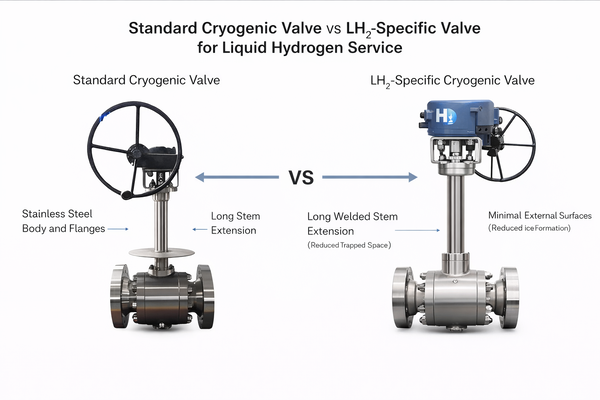
1. Cryogenic Valves: Definition and Core Engineering Principles
A криогенный клапан is a flow-control device specifically engineered to operate reliably at temperatures below -100°C (-212°F). At such low temperatures, materials behave differently: metals can become brittle, elastomers lose flexibility, and thermal contraction introduces stresses not present in ambient-temperature systems.
1.1 Fundamental Design Features
Все cryogenic valves share several critical design characteristics:
| Характеристика | Engineering Purpose |
|---|---|
| Extended Bonnet | Maintains a temperature gradient, keeping the stem packing and actuator near ambient temperature to prevent freezing and ensure operability |
| Vapor Space | Provides a region where cryogenic fluid can vaporize, creating a thermal buffer that protects the gland packing |
| Specialized Seats | Utilizes materials such as PCTFE or reinforced PTFE that retain sealing integrity at low temperatures |
| Live-Loaded Packing | Applies continuous compressive force to stem seals, compensating for thermal cycling and wear |
1.2 Common Cryogenic Media and Their Operating Temperatures
| Средний | Boiling Point | Common Applications |
|---|---|---|
| Liquid Nitrogen (LN₂) | -196°C | Inerting, food freezing, general cryogenic testing |
| Liquid Natural Gas (LNG) | -162°C | Energy transport and storage |
| Liquid Oxygen (LOX) | -183°C | Rocket propulsion, medical and industrial gases |
| Liquid Helium (LHe) | -269°C | Superconducting magnets, research |
| Liquid Hydrogen (LH₂) | -253°C | Clean energy storage and transport, aerospace |
2. Types of Cryogenic Valves and Their Operating Principles
Each valve type offers distinct flow characteristics and is suited to specific roles within a cryogenic system.
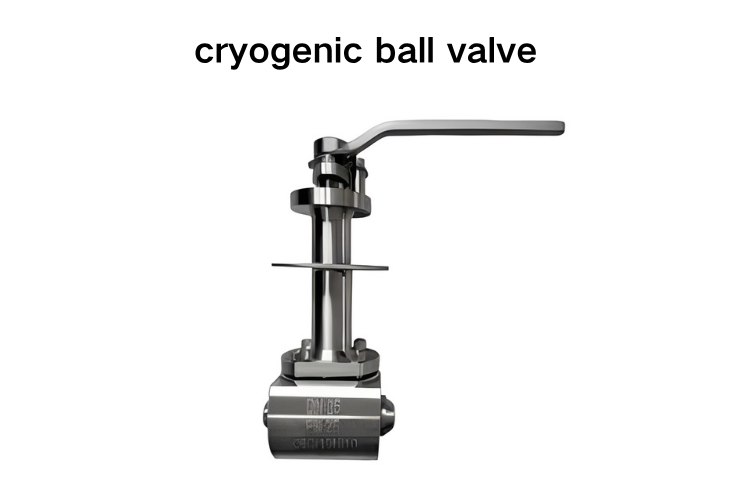
2.1 Cryogenic Ball Valves
Operating Principle: A quarter-turn mechanism rotates a spherical ball with a bore. When aligned with the flow path, the valve is fully open; when rotated 90°, flow is blocked.
Преимущества:
- Excellent shut-off capability with minimal leakage
- Compact design suitable for tight spaces
- Full-port options minimize pressure drop
- Reliable after long periods of inactivity
Limitations: Not ideally suited for precise throttling; intended primarily for on/off service.
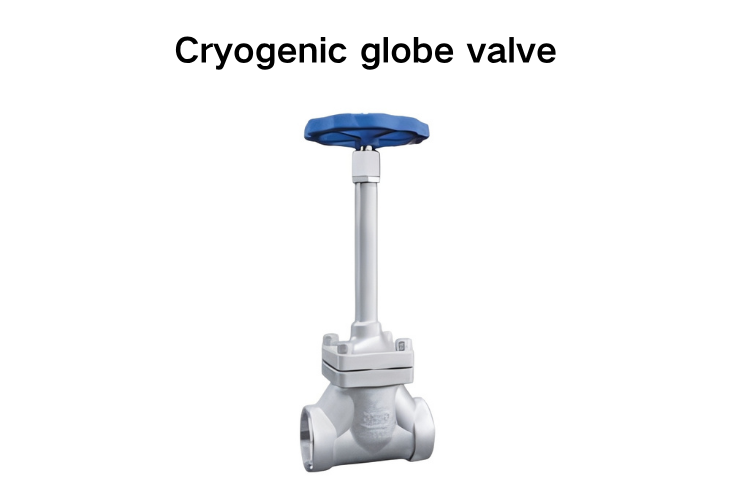
2.2 Cryogenic Globe Valves
Operating Principle: A linear motion mechanism where a disc moves perpendicularly toward or away from a stationary seat to regulate flow.
Преимущества:
- Excellent throttling and flow regulation capability
- Good shut-off characteristics
- Suitable for applications requiring frequent cycling
Limitations: Higher pressure drop compared to ball or gate valves due to tortuous flow path.
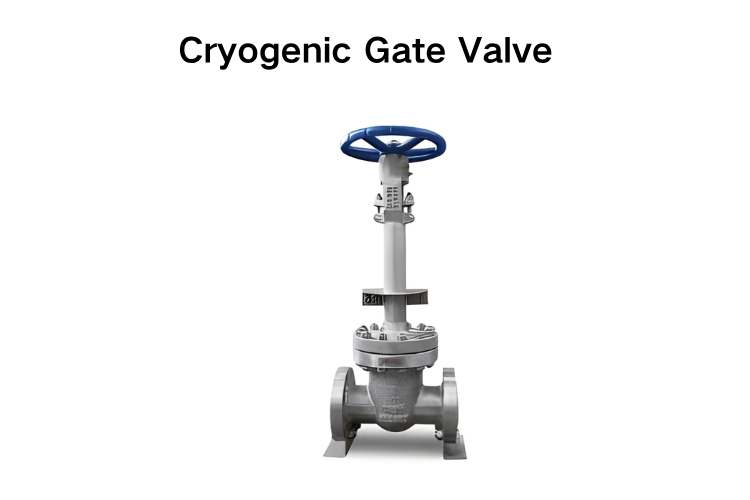
2.3 Cryogenic Gate Valves
Operating Principle: A linear motion valve where a wedge-shaped gate rises or lowers into or out of the flow stream.
Преимущества:
- Full, unobstructed flow when fully open
- Минимальный перепад давления
- Suitable for large-diameter pipelines
Limitations: Slower operation; not designed for throttling; requires full stroke to open or close.
2.4 Cryogenic Butterfly Valves
Operating Principle: A quarter-turn mechanism where a disc rotates within the flow path to control flow.
Преимущества:
- Lightweight and compact
- Lower cost for large diameters
- Suitable for both on/off and basic throttling
Limitations: Disc remains in the flow path, creating some pressure drop; sealing not as tight as ball valves.
3. Material Selection: The Foundation of Cryogenic Reliability
Material choice is the most critical decision in cryogenic valve specification. The combination of extreme cold and, in the case of hydrogen, material interactions demands rigorous selection criteria.
3.1 Body Materials
| Материал | Minimum Service Temperature | Suitability for LH₂ | Key Considerations |
|---|---|---|---|
| 304/316L Stainless Steel | -196°C | Limited | Acceptable for LN₂, LNG; hydrogen embrittlement risk at -253°C |
| High-Nickel Alloys (Inconel, Monel) | -269°C | Preferred | Superior resistance to hydrogen embrittlement; maintains ductility |
| Austenitic Stainless (High-Ni variants) | -253°C | Acceptable | Balance of cost and performance for LH₂ |
| Brass / Bronze | -196°C | Not recommended | Suitable for non-hydrogen cryogenic service |
3.2 Sealing Materials
| Материал | Effective Temperature Range | LH₂ Suitability | Приложение |
|---|---|---|---|
| PTFE (Polytetrafluoroethylene) | -268°C to +260°C | Acceptable with reinforcement | General cryogenic seats and seals |
| PCTFE (Polychlorotrifluoroethylene) | -253°C to +150°C | Preferred | Superior dimensional stability at LH₂ temperatures |
| FKM (Viton) | -40°C to +200°C | Not suitable | Limited to warmer cryogenic applications |
| Metal Seals | -269°C to +650°C | Превосходно | High-pressure, high-cycle, or critical service |
4. The Hydrogen Challenge: Moving Beyond General Cryogenics
Liquid hydrogen (LH₂) service is not simply “colder” than СПГ или LN₂ it introduces fundamentally different failure mechanisms that require specialized engineering responses.
4.1 Hydrogen Embrittlement at Cryogenic Temperatures
Hydrogen embrittlement is a phenomenon where atomic hydrogen diffuses into metal lattices, reducing ductility and promoting crack propagation. At LH₂ temperatures (-253°C), this effect is amplified because:
- Metals have reduced fracture toughness at cryogenic temperatures
- Hydrogen diffusivity, while lower, still allows gradual penetration
- Thermal cycling can create stress concentrations where embrittlement initiates
Engineering Response: Valve bodies, balls, and stems for LH₂ service must be fabricated from materials with proven resistance to hydrogen embrittlement at cryogenic temperatures, such as high-nickel austenitic alloys (e.g., Inconel 625, 718) or specially certified 316L with controlled composition and heat treatment.
4.2 Permeation and Fugitive Emissions
Hydrogen is the smallest molecule in existence. Leak paths that are inconsequential for larger molecules like methane or nitrogen become significant for hydrogen.
| Параметр | LNG/LN₂ Valves | LH₂ Valves |
|---|---|---|
| Acceptable Leak Rate (Typical) | <10⁻⁵ std cc/sec He | <10⁻⁷ std cc/sec He |
| Материал сиденья | Стандарт PTFE | PCTFE or metal-seated with secondary seals |
| Stem Sealing | Conventional packing | Live-loaded packing with secondary containment |
| Testing Medium | Helium at ambient | Helium at -253°C (operating temperature) |
4.3 Thermal Cycling and Mechanical Integrity
The temperature differential between ambient installation conditions and LH₂ operating conditions (-253°C) creates thermal contractions that stress every component. Valves must be validated through thermal cycling tests that simulate:
- Multiple cooldown cycles from ambient to -253°C
- Rapid cooldown (thermal shock) scenarios
- Gradual warm-up and re-cooling sequences
4.4 Testing Protocols: LH₂ vs. Standard Cryogenic
Стандарт cryogenic testing at -196°C (LN₂) does not validate performance at -253°C. Comprehensive LH₂ valve qualification requires:
| Test Requirement | Standard Cryogenic | LH₂-Specific |
|---|---|---|
| Температура | -196°C (LN₂) | -253°C (LH₂) |
| Leak Detection | Bubble test or moderate-sensitivity He mass spec | High-sensitivity He mass spec (≤10⁻⁷ std cc/sec) |
| Thermal Cycling | 1–3 cycles | 10+ cycles between ambient and -253°C |
| Material Validation | Standard material certs | Hydrogen embrittlement test reports |
5. Liquid Hydrogen Valve Selection: A Technical Framework
When specifying valves for LH₂ service, the following parameters must be documented and verified:
5.1 Required Specifications
- Класс давления: Consistent with system maximum allowable working pressure (MAWP) plus surge margins
- Диапазон температур: Must explicitly state -253°C minimum
- Body Material: High-nickel alloy or certified cryogenic-grade austenitic stainless with documented embrittlement resistance
- Seat Material: PCTFE or metal-seated with secondary sealing
- Упаковка: Live-loaded с fugitive emissions compliance (ISO 15848-1)
- Leakage Rate: ≤10⁻⁷ std cc/sec He at -253°C
- Приведение в действие: Extended bonnet with actuator interface maintained at ambient
5.2 Required Certifications and Test Reports
- Cryogenic Functional Test Report: Documenting seat and seat leakage at -253°C
- Material Test Reports (MTRs): Including composition, heat treatment, and mechanical properties
- Hydrogen Embrittlement Validation: Vendor documentation of material suitability
- Fugitive Emissions Test Report: Per ISO 15848-1 or equivalent
- Fire Safety Certification: API 607 или API 6FA where required
Your Complete Cryogenic Valve Resource
To build a structured knowledge base on cryogenic valves, we have organized our technical content to guide engineers from foundational concepts to advanced LH₂-specific specifications.
Foundational Resource
For a general overview of cryogenic valve types, materials, and installation principles, begin with:
What Are Cryogenic Valves? →
- Covers ball, globe, gate, butterfly, and angle valve designs; general material selection; and standard cryogenic applications.
Advanced Resource: LH₂-Specific Engineering
For detailed material selection criteria, hydrogen embrittlement mitigation strategies, LH₂ testing protocols, and specifications for -253°C service, proceed to:
Liquid Hydrogen Cryogenic Valve Specifications →
- Essential reading for engineers specifying valves for LH₂ storage, transport, and hydrogen economy infrastructure.
Заключение
Cryogenic valves are sophisticated engineering components that enable safe and reliable fluid handling across a range of low-temperature applications. However, liquid hydrogen service at -253°C introduces distinct challenges—hydrogen embrittlement, ultra-low permeation limits, и extreme thermal cycling—that demand specialized materials, rigorous testing, and a higher level of engineering scrutiny.
For engineers and project managers working in the hydrogen economy, understanding both the general principles of cryogenic valves and the specific demands of LH₂ service is essential to ensuring system safety, reliability, and long-term performance.
BCST Valve manufactures cryogenic valves for the most demanding applications, including liquid hydrogen service. Our engineering team provides technical consultation to match valve specifications to your exact operating conditions.


 English
 Arabic
 Russian
 French
 Spanish