
Selecting Ball Valves for Pipeline Service
For engineers involved in the design, operation, or maintenance of fluid transmission systems, the ball valve stands as a cornerstone of pipeline integrity. Its quarter-turn operation, robust design, and excellent shut-off capabilities make it an indispensable component across various industries, from oil & gas to water treatment. Studies on signal feature extraction highlight that valves (including ball valves) are more likely to leak than the pipes themselves, making their reliability essential for preventing catastrophic accidents and economic losses.
But within the realm of pipelines, not all ball valves are created equal. The unique demands of high pressure, diverse media, and stringent safety regulations necessitate a deep understanding of their design, operation, and application. This comprehensive guide from BCST Valve serves as a foundational resource for pipeline engineers, offering insights into the critical characteristics and design considerations of ball valves tailored for pipeline service.
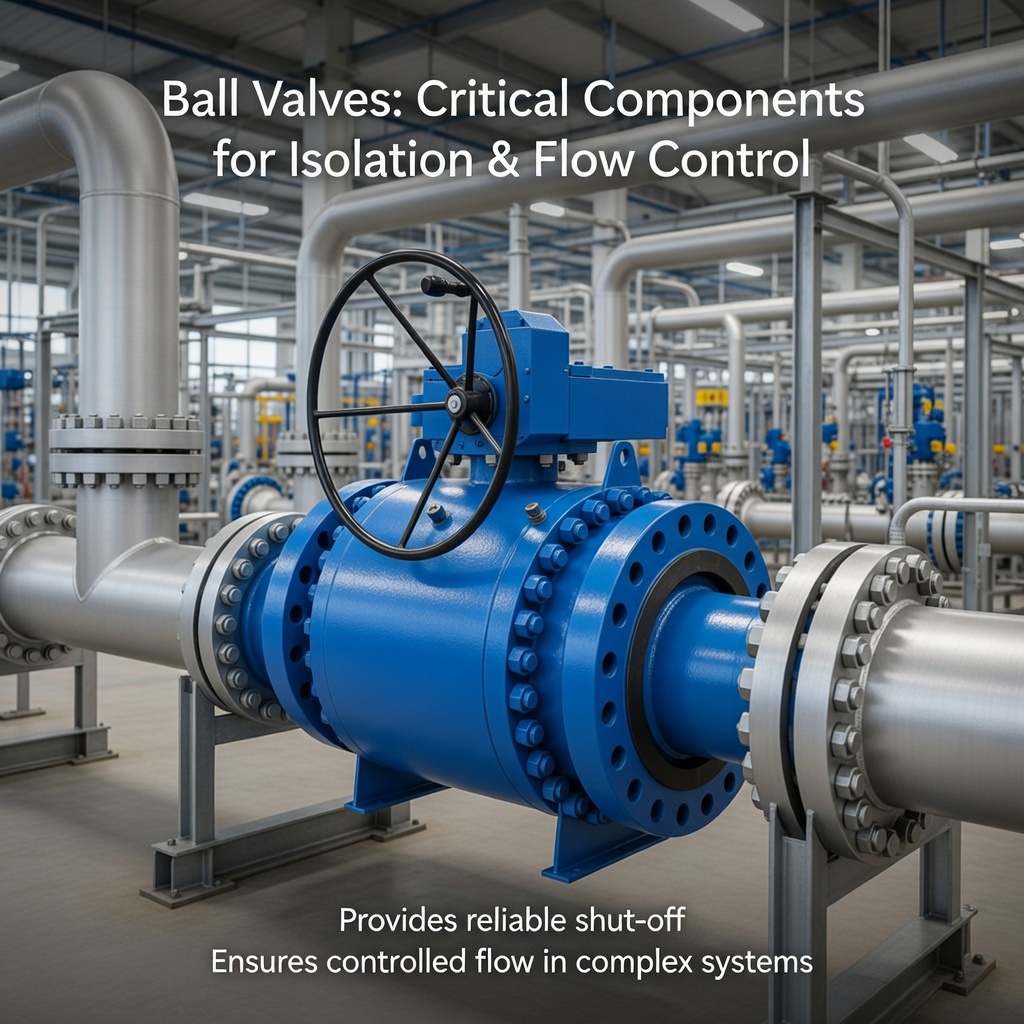
Key Characteristics of Ball Valves for Pipeline Service
Ball valves for pipeline applications demand a set of characteristics that ensure reliable, safe, and efficient operation over extended periods, often in harsh environments:
- Четвертьоборотная операция: Enables quick opening and closing, vital for emergency shut-off or process control.
- Tight Shut-off: Achieves bubble-tight closure, minimizing leakage and ensuring positive isolation.
- Low Pressure Drop: When fully open, the straight-through flow path minimizes turbulence and pressure loss, crucial for long pipelines.
- Прочная конструкция: Designed to withstand high pressures, extreme temperatures, and corrosive or abrasive media.
- Minimal Maintenance: Typically require less frequent maintenance compared to other valve types, reducing operational costs.
- Bi-directional Flow: Many designs allow flow in either direction without compromising performance.
Adhering to Industry Standards: API 6D and Beyond
For pipeline ball valves, adherence to recognized industry standards is not merely a recommendation; it’s a mandatory requirement for safety, interoperability, and performance assurance. The most prominent standard:
- API 6D (Pipeline Valves): This American Petroleum Institute specification sets the benchmark for design, manufacturing, testing, and documentation of pipeline valves, including ball valves. It covers critical requirements for performance, material traceability, pressure testing, and specific features like double block and bleed (DBB) capabilities.
- NACE MR0175 / ISO 15156: For pipelines handling sour gas (hydrogen sulfide – H2S), compliance with NACE standards is essential. These standards define material requirements to prevent sulfide stress cracking, a critical failure mode in such environments.
- ISO 14313: The international equivalent to API 6D, providing similar specifications for pipeline valves.
- ASME B16.34: Covers valves — flanged, threaded, and welding end.
Understanding and specifying valves compliant with these standards ensures that the components are fit-for-purpose and meet the rigorous demands of pipeline service.
Fundamental Design Choices for Pipeline Ball Valves
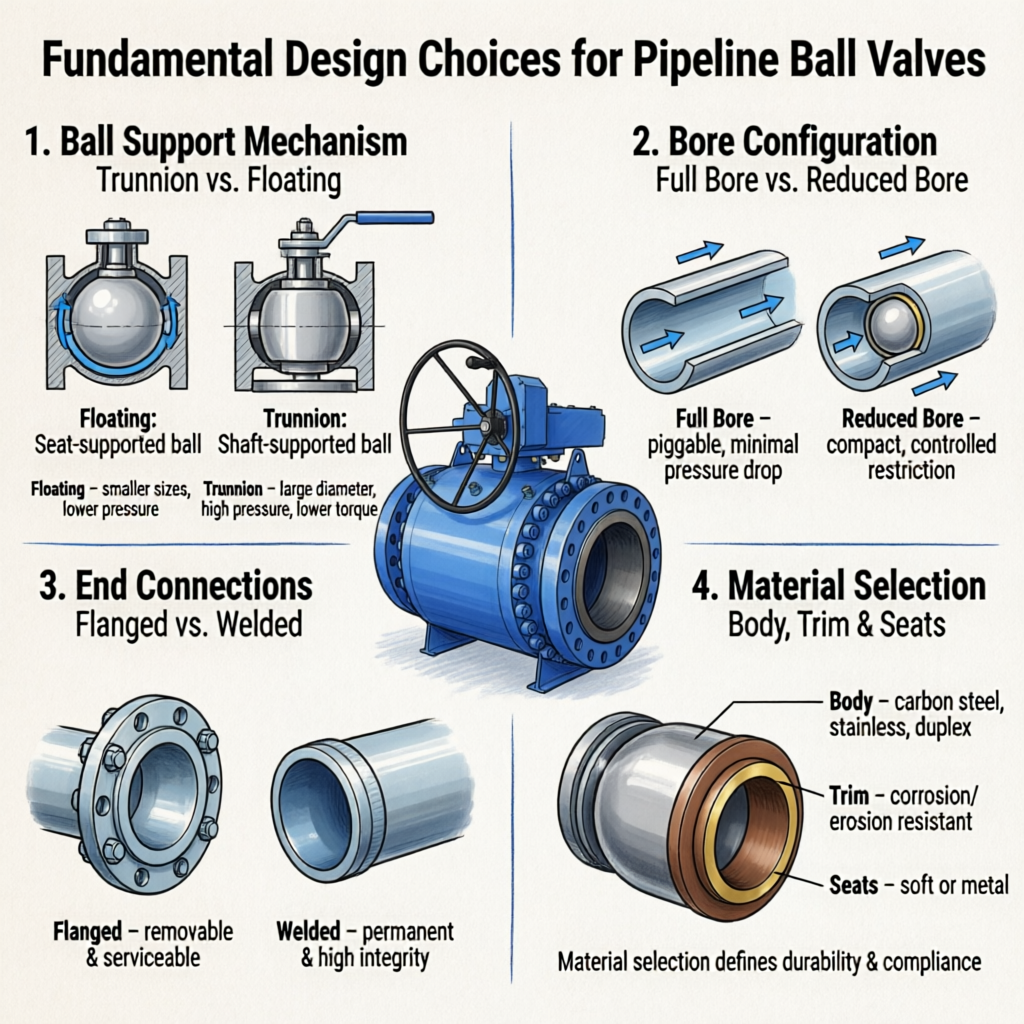
The selection of a ball valve for pipeline service involves several fundamental design choices, each with significant implications for performance, cost, and maintenance. Engineers must carefully weigh these factors against the specific application requirements.
1. Ball Support Mechanism: Trunnion vs. Floating
The way the ball is supported within the valve body dictates its operational characteristics, especially under high pressure. This is a primary differentiator for pipeline service:
For high-pressure or large-diameter pipelines, the internal support mechanism of the ball is paramount. The choice between two fundamental designs, which we explore in detail in Trunnion vs. Floating Ball Valves: Understanding the Key Differences for Industrial Applications, is a critical decision affecting torque, sealing performance, and valve longevity.
- Floating Ball Valves: The ball is held in place by the compression of two seats against it. Suitable for smaller sizes and lower pressure applications where pipeline stresses are minimal.
- Trunnion-Mounted Ball Valves: The ball is fixed on two trunnions, relieving pressure from the seats onto the support shafts. This design is highly preferred for large diameter, high-pressure, and severe-service pipeline applications due to lower operating torque and better sealing integrity.
2. Bore Configuration: Full Bore vs. Reduced Bore
The internal diameter of the valve’s port is crucial for fluid dynamics and maintenance procedures:
The diameter of the valve’s opening relative to the pipeline has major consequences for pressure drop and operational procedures. We detail these impacts in Full Bore vs. Reduced Bore Ball Valves: A Guide for Pipeline Pigging & Flow.
- Full Bore (Full Port): The bore diameter is equal to the internal diameter of the connecting pipeline. This minimizes pressure drop and allows for pipeline pigging (the cleaning and inspection of pipelines using specialized tools). Essential for integrity management.
- Reduced Bore (Reduced Port): The bore diameter is smaller than the connecting pipeline. Offers a more compact and economical valve but introduces a pressure drop and makes pigging impossible through the valve. Typically used where flow restriction is acceptable or desirable.
3. End Connections: Flanged vs. Welded
The method of connecting the ball valve to the pipeline is critical for structural integrity and maintenance accessibility:
How a valve is integrated into the pipeline determines its long-term integrity and serviceability. The two primary methods for high-integrity systems are covered in our guide, Pipeline Valve Integrity: Flanged vs. Welded End Connections.
- Flanged Ends: Allow for easy installation and removal of the valve for maintenance or replacement. Requires gaskets and bolts for assembly. Common in applications needing flexibility.
- Welded Ends: Provide a permanent, leak-proof connection, reducing potential leak paths and offering higher structural integrity. Preferable for critical, high-pressure, or buried pipelines where maintenance access is limited.
4. Material Selection: Body, Trim, and Seats
The materials chosen for the valve’s components directly impact its resistance to corrosion, erosion, and extreme temperatures, ensuring compatibility with the transported medium:
A valve’s resilience is dictated by its materials. Selecting the right body, trim, and seat materials for the specific fluid, pressure, and temperature is a science we break down in Choosing Valve Materials for Pipeline Service (API & NACE Standards).
- Материалы корпуса: Carbon steel (for general service), stainless steel (for corrosive media), duplex/super duplex stainless steel (for severe corrosive environments like seawater or high H2S concentrations), or specialized alloys.
- Trim Materials: Internal components like the ball, stem, and retaining rings. Often stainless steel or specialty alloys to resist corrosion and erosion.
- Материалы сиденья: Critical for sealing. Soft seats (PTFE, PEEK) for tight shut-off, metal seats for high temperature, abrasive media, or fire-safe requirements.
Maintenance and Operation Considerations
Beyond initial selection, engineers must consider aspects that impact long-term operation:
- Тип приведения в действие: Manual (lever/gear) for infrequent operation, or automated (pneumatic, hydraulic, electric) for remote control and rapid cycling.
- Emergency Shut-off (ESD): For critical lines, ESD functionality is paramount, often implemented with spring-return actuators.
- Пожаробезопасный дизайн: Essential for flammable media, ensuring the valve maintains external pressure containment even after seat material degradation in a fire.
- Stem Extension: For buried pipelines, an extended stem allows for operation from ground level.
- Двойной блок и кровотечение (DBB): Often a requirement for verifiable isolation, enhancing safety during maintenance or integrity testing.
Заключение
For pipeline engineers, the ball valve is far more than a simple shut-off device. It is a precision-engineered component whose proper selection and application directly influence the safety, efficiency, and longevity of vast and critical infrastructure. Understanding the nuances of trunnion vs. floating designs, bore configurations, end connections, and material compatibility, all within the framework of stringent industry standards like API 6D, is fundamental to successful pipeline engineering.
At BCST Valve, we are committed to providing the highest quality ball valves and the detailed technical collaboration that pipeline engineers require. Our expertise ensures that every valve meets the exacting specifications for demanding pipeline applications, offering reliability where it matters most.
Partner with BCST Valve for your next pipeline project.


 English
 Arabic
 Russian
 French
 Spanish