
Заслонки, known for their quick opening and closing capabilities, are widely used in various fluid control systems. Particularly in industrial manufacturing, butterfly valves play a significant role in pipeline fluid control due to their simple structure, lightweight design, and relatively low cost. Based on the eccentricity of the disc relative to the seat, поворотные затворы can be classified into concentric, double offset, and triple offset types.
I. Definitions of Offset Butterfly Valves
1. Double Offset Заслонка:
A double offset butterfly valve features two offsets of the disc relative to the valve stem. The first offset is where the valve stem is offset from the sealing surface axis, allowing the disc to disengage from the seat when closed. The second offset involves the valve stem being offset from the centerline of the pipeline. This design reduces wear on the sealing surface during the opening and closing process, thereby extending the valve’s service life.
2. Triple Offset Заслонка:
A triple offset butterfly valve adds a third offset to the double offset design. The third offset refers to a conical shape of the sealing surface rather than a simple circle, which ensures that the sealing contact area has no sliding friction during opening and closing. This design allows triple offset butterfly valves to achieve hard sealing while significantly improving sealing performance.
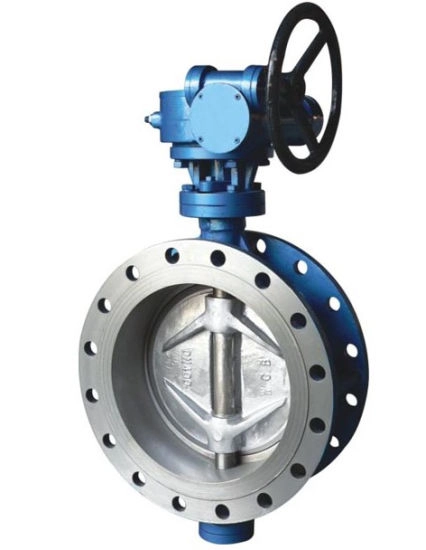
II. Differences Between Double Offset and Triple Offset Butterfly Valves
1. Structural Design Differences:
Double Offset Заслонка:
Double offset butterfly valves have a relatively simple design, with two offsets that reduce interference between the disc and the seat. This design lowers the operating torque and reduces wear on the sealing surface.
Triple Offset Заслонка:
Triple offset butterfly valves add a conical sealing surface on top of the double offset design. This feature allows the disc to quickly disengage from the sealing surface upon opening, eliminating sliding friction and nearly eliminating wear between the disc and seat. The triple offset design not only significantly enhances the valve’s durability but also enables it to withstand higher pressures and temperatures, making it suitable for harsh working conditions.
2. Sealing Performance Differences:
Double Offset Butterfly Valve:
Double offset butterfly valves usually use soft seals or resilient metal seals, suitable for medium and low-pressure applications. Although the sealing surfaces have some friction during the opening and closing process, the sealing performance is generally good. However, prolonged use may lead to seal failure due to wear, making double offset butterfly valves more suitable for applications where sealing requirements are not too stringent.
Triple Offset Butterfly Valve:
Triple offset butterfly valves feature a conical metal hard seal or a multi-layer soft-hard combined seal, providing highly reliable sealing performance. This design maintains excellent sealing even under high temperature, high pressure, and corrosive medium environments. Moreover, since there is no friction during the opening and closing process, triple offset butterfly valves can achieve zero leakage, making them widely used in applications with high sealing requirements, such as petrochemical and natural gas industries.
3. Differences in Pressure and Temperature Resistance:
Double Offset Butterfly Valve:
Double offset butterfly valves are generally used in medium and low-pressure systems with a narrower temperature range. While material selection can improve their pressure and temperature resistance to some extent, sealing performance tends to decrease under high-pressure and high-temperature conditions. Therefore, double offset butterfly valves are typically used in pipelines where temperature and pressure are not too high.
Triple Offset Butterfly Valve:
Triple offset butterfly valves, with their special sealing design, can withstand higher pressures and temperatures, often suitable for conditions up to several hundred degrees Celsius or even higher. The metal sealing surface effectively resists deformation caused by high temperatures, maintaining stable sealing performance. Triple offset butterfly valves are an ideal choice for high-pressure systems and extreme temperature environments.
4. Differences in Operating Torque and Opening Performance:
Double Offset Butterfly Valve:
Due to the friction between the sealing surfaces during the opening and closing process, double offset butterfly valves have slightly higher operating torque compared to triple offset valves. The disc needs to overcome friction during operation, so the opening and closing performance is somewhat inferior to that of triple offset butterfly valves.
Triple Offset Butterfly Valve:
With the third offset design, triple offset butterfly valves experience almost no friction during operation, resulting in lower operating torque and smooth, effortless opening and closing. This advantage is particularly evident in large-diameter and high-pressure applications.
5. Differences in Application Scenarios:
Double Offset Butterfly Valve:
Double offset butterfly valves are mainly used in medium and low-pressure pipeline systems and are suitable for conventional media such as water, oil, and gas, commonly found in water supply, wastewater treatment, and HVAC fields.
Triple Offset Butterfly Valve:
Triple offset butterfly valves, with their excellent sealing performance and resistance to high temperatures and pressures, are widely used in industries such as oil, chemical, natural gas, metallurgy, and power. They are indispensable in harsh media, corrosive environments, and applications requiring frequent opening and closing.

III. Selection Recommendations
When choosing between double offset and triple offset butterfly valves, it is crucial to assess the specific requirements of the working conditions. If the requirements for sealing performance, pressure resistance, and operating torque are relatively low, double offset butterfly valves are a cost-effective choice that meets the needs. However, for high-temperature, high-pressure conditions, frequent operation, or stringent zero leakage requirements, triple offset butterfly valves are undoubtedly the more reliable option.
IV. Заключение
Double offset and triple offset butterfly valves each have their strengths in design and applicable scenarios. Triple offset butterfly valves, with their superior sealing performance and high durability, are increasingly replacing traditional double offset valves in various industrial fields. As a professional manufacturer, we always recommend that customers choose the most suitable valve product based on their specific needs to ensure safe and stable operation of equipment. Our product line includes butterfly valves of various specifications and materials to meet the demands of complex working conditions. Please feel free to contact us for more information.


 English
 Arabic
 Russian
 French
 Spanish