
Выбор правильного клапан can feel overwhelming. An unsuitable valve leads to higher project costs, installation challenges, and long-term reliability issues, impacting your entire operation’s efficiency.
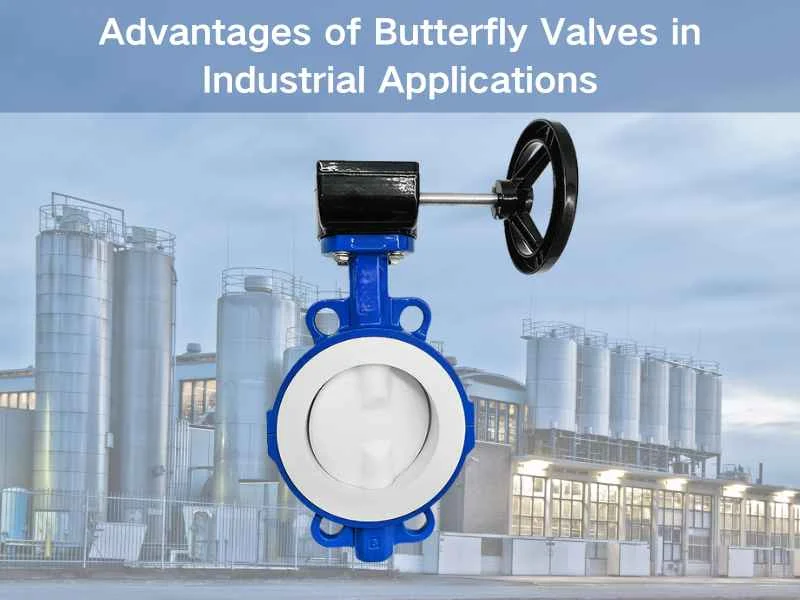
The primary advantages of a butterfly valve are its compact, lightweight design, lower cost, and quick quarter-turn operation. Its simplicity allows for easy installation and automation, making it a versatile choice for isolation and flow control in numerous industrial applications.
In this article, we will explore these benefits in detail. Understanding these advantages will help you confidently decide if a butterfly valve is the optimal solution for your specific project needs, saving you time, space, and budget.
Compact Design and Lower Weight
Space and structural load are critical constraints in any plant design. Bulky, heavy valves require more extensive pipe supports and can complicate piping layouts, increasing material and labor costs.
A key advantage of the butterfly valve is its remarkably compact and lightweight profile. Compared to a gate or globe valve of the same pipe size, a butterfly valve has a much smaller face-to-face dimension and significantly less mass.
This compact nature simplifies system design and installation. The reduced weight means less stress on the pipeline and its supports. Your team can often install larger butterfly valves without needing heavy lifting equipment. This advantage is especially important in offshore platforms, modular process skids, and crowded mechanical rooms where space and weight are at a premium. I’ve seen projects where switching from gate valves to butterfly valves saved considerable structural steel costs.
Face-to-Face Dimension
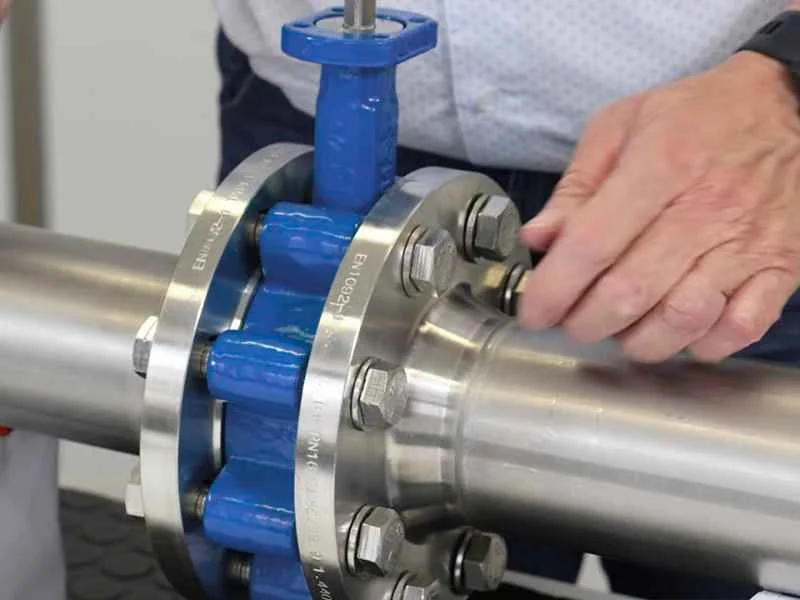
The slim, wafer-style body of a butterfly valve fits between two pipe flanges. This design minimizes the space it occupies along the pipeline. A typical 10-inch butterfly valve might have a face-to-face dimension of only a few inches. In contrast, a 10-inch gate valve can be several times longer. This difference allows for more flexible and compact piping arrangements, which is a significant benefit in complex systems. It frees up valuable space for other equipment or access walkways, improving plant safety and maintainability.
Reduced Installation and Support Costs
Weight directly impacts cost. A lighter valve is easier to handle, transport, and install, reducing labor hours. More importantly, it lessens the need for expensive, heavy-duty pipe supports. Over the length of a large project with hundreds of valves, these savings add up substantially. You can allocate budget to other critical areas instead of over-engineering supports for unnecessarily heavy valves. This makes the butterfly valve a smart choice for cost-conscious project engineers focused on total installed cost, not just the initial valve price.
Cost-Effectiveness in Purchase and Operation
Project budgets are always tight. Selecting valves that offer the best value without compromising performance is essential for a project’s financial success and long-term operational viability.
Butterfly valves are highly cost-effective due to their simple design and use of fewer materials. Their initial purchase price is often significantly lower than that of other valve types, especially in larger sizes. This economic benefit extends throughout the valve’s life cycle.
The design of a поворотный клапан is elegantly simple: a body, a disc, a stem, and a seat. This contrasts sharply with the complex construction of gate or globe valves, which have more components. Using less material, particularly in large-diameter applications, directly translates to a lower manufacturing cost and a more attractive price point for you. This makes it an excellent choice for general-purpose isolation and control duties where a more expensive valve is not required by the process conditions.
Lower Initial Investment
When comparing valves for services like cooling water, HVAC, or low-pressure process lines, the cost difference is clear. For a 12-inch pipe, a butterfly valve can be a fraction of the cost of a gate valve. This upfront saving allows you to procure more valves within your budget or upgrade materials in more critical service areas. This is especially true for standard applications where a resilient-seated butterfly valve provides reliable shutoff at a very competitive price.
Reduced Maintenance and Lifetime Costs
The simplicity of the butterfly valve also leads to lower maintenance costs. With fewer moving parts and wear points, there is less that can go wrong. The seat is often the primary wear item and, in many designs, it is easily replaceable without removing the valve from the line. For example, a rubber-lined butterfly valve offers excellent sealing and a field-replaceable liner. This reduces downtime and maintenance labor costs. The combination of a low initial price and minimal long-term upkeep gives the butterfly valve a superior total cost of ownership in many applications.
| Характеристика | Заслонка | Задвижка | Шаровой клапан |
|---|---|---|---|
| Initial Cost (Large Sizes) | Низкий | Высокий | Very High |
| Weight & Size | Очень низкий | Высокий | Высокий |
| Сложность установки | Низкий | Высокий | Умеренный |
| Actuation Speed | Fast (Quarter-Turn) | Slow (Multi-Turn) | Slow (Multi-Turn) |
| Типовые применения | On/Off, Throttling | On/Off | Throttling, Regulation |
This table shows a simplified comparison. The best choice always depends on specific process requirements like pressure, temperature, and fluid characteristics.
Quick Operation and Application Versatility
In many process situations, you need to stop or start flow quickly. Multi-turn valves like gate valves require many handwheel rotations to operate, which is too slow for emergencies or frequent cycling.
A major advantage of butterfly valves is their fast, quarter-turn operation. The disc moves from fully open to fully closed with just a 90-degree turn of the stem. This enables rapid shutoff, which is vital for safety and process control.
This quick action makes butterfly valves ideal for automation. Equipping them with a pneumatic, electric, or hydraulic actuator is simple and cost-effective. The low torque requirement for most concentric butterfly valves means you can use smaller, less expensive actuators compared to those needed for ball or plug valves of the same size. This combination of speed and easy automation makes them a go-to choice for a wide range of services, from simple on/off isolation to basic flow modulation. If you need more fundamental information, you can read our guide on what is a butterfly valve.
Suitability for Diverse Media
Modern butterfly valves are not just for water. With a vast selection of body, disc, and seat materials, they can handle an impressive range of fluids. This includes liquids, gases, vapors, and even slurries with suspended solids. For corrosive chemicals, you can choose from various alloys for the disc and body, along with seat materials like PTFE or EPDM. For abrasive slurries, a polyurethane-lined butterfly valve can offer excellent wear resistance. This adaptability allows you to standardize on one valve type for many different applications within your plant, simplifying inventory and maintenance training.
Throttling and Control Capabilities
While primarily used for on/off service, butterfly valves can also be used for throttling and flow control, especially in high-volume, low-pressure-drop applications. High-performance butterfly valves (double and triple offset) are specifically designed for this. They offer better control characteristics and tighter shutoff than standard concentric designs. When paired with a positioner, an actuated butterfly valve provides a cost-effective solution for regulating flow in cooling systems, air handling units, and large water distribution networks. However, for precise control in high-pressure-drop situations, a globe valve may still be the better choice.
Часто задаваемые вопросы
What are the main advantages of a butterfly valve compared to a ball valve?
The main advantages of a butterfly valve, especially in larger sizes, are its lower weight, smaller footprint, and lower cost. A ball valve provides a full, unobstructed port and superior sealing in high-pressure applications. However, a butterfly valve’s simplicity and economic benefits make it preferable for many general-purpose and large-diameter pipelines where space and budget are key considerations.
Are there any disadvantages to consider with the advantages of butterfly valves?
Yes. A primary disadvantage is that the disc is always present in the flow path, causing a pressure drop even when fully open. This can be a concern in systems sensitive to flow restriction. Also, for throttling abrasive slurries, the disc can be prone to wear. High-performance designs mitigate some of these issues, but they are important factors to consider during valve selection.
How do the advantages of butterfly valves benefit high-volume applications?
In high-volume applications like water treatment or HVAC, the advantages of a butterfly valve are significant. Their low initial cost for large diameters provides huge budget savings. The lightweight design simplifies installation on large pipes, and the quarter-turn action allows for rapid, automated control of large flow rates, which is crucial for process efficiency and safety in these systems.
Do the advantages of a butterfly valve apply to throttling services?
Yes, particularly with high-performance (double or triple offset) designs. While a standard concentric butterfly valve offers basic throttling, its control characteristic is not linear. High-performance valves are engineered for better throttling performance and can handle higher pressures and temperatures. They provide a cost-effective alternative to globe valves for many control applications, combining good regulation with tight shutoff.
What is the primary structural advantage of a butterfly valve?
The primary structural advantage of a butterfly valve is its excellent strength-to-weight ratio. The slim, wafer- or lug-style body requires minimal material yet provides sufficient structural integrity for its pressure rating. This lightweight and compact form factor reduces the need for heavy pipe supports and makes installation easier, directly lowering the total installed cost of the piping system.
How does material selection enhance the advantages of a butterfly valve?
Proper material selection greatly expands the application range, enhancing the valve’s versatility. By choosing from a wide array of metals, plastics, and elastomers for the body, disc, and seat, you can customize a butterfly valve for almost any service. This includes corrosive chemicals, high temperatures, and abrasive slurries. This adaptability allows a single, cost-effective valve design to be used across an entire facility.
Final Thought
The key advantages of a butterfly valve—its compact size, low weight, cost-effectiveness, and fast operation—make it a powerful and versatile choice for many industrial services. It delivers reliable performance while helping to control project costs and simplify system design.
For a dependable solution tailored to your project, consider BCST’s range of butterfly valves. Contact us today for expert guidance on selecting the right valve for your application.


 English
 Arabic
 Russian
 French
 Spanish