

Why Galvanized Ball Valve Can be the Robust Choice for Corrosion-Prone Applications?
In industrial and commercial fluid systems, the battle against corrosion is constant. Left unchecked, rust and degradation can compromise valve integrity, leading to costly leaks, system failures, and hazardous conditions. While шаровые краны are celebrated for their precise shut-off and ease of operation, their material selection is paramount, especially when exposed to challenging environments. This is where the galvanized ball valve steps in as a highly effective and economical solution.
This guide delves into the world of the galvanized ball valve, exploring the protective power of its zinc coating, its key advantages, typical applications, and crucial considerations for selection and installation. At BCST Valve, we understand that durability and performance are non-negotiable. Our range of valves, including robust galvanized options, is designed to deliver reliable fluid control where corrosion is a continuous threat.
Choosing the right valve for harsh conditions can significantly extend system lifespan and reduce maintenance overhead. A galvanized ball valve offers a compelling balance of strength, corrosion resistance, and cost-effectiveness for many demanding applications.
What is a Galvanized Ball Valve?
A galvanized ball valve is essentially a standard ball valve, typically made from carbon steel or cast iron, that has undergone a galvanization process. Galvanization involves coating the valve’s surface with a layer of zinc, primarily to protect it from corrosion. This zinc coating acts in two crucial ways:
- Barrier Protection: The zinc layer physically separates the base metal (steel or iron) from corrosive elements in the environment, such as oxygen and moisture.
- Sacrificial Protection (Cathodic Protection): If the zinc coating is scratched or damaged, exposing the steel underneath, the zinc will corrode preferentially to the steel (being more electrochemically active). This sacrificial action protects the steel from rusting, even at the point of damage.
The most common method for applying this coating is hot-dip galvanization, where the steel valve parts are submerged in a bath of molten zinc. This creates a strong metallurgical bond and a uniform coating that is highly resistant to abrasion and impact.
Key Advantages of Galvanized Ball Valves
The protective zinc coating imparts several significant benefits to the galvanized ball valve, making it a preferred choice for specific applications:
- Enhanced Corrosion Resistance: This is the primary advantage. The zinc layer drastically slows down the corrosion process compared to uncoated steel, especially in outdoor, humid, or mildly corrosive environments.
- Extended Service Life: By preventing rust, galvanized valves last considerably longer than their bare steel counterparts, reducing the frequency and cost of replacements.
- Cost-Effective Protection: While initially more expensive than uncoated steel, the longevity and reduced maintenance of a galvanized ball valve often result in a much lower total cost of ownership over its lifespan compared to carbon steel or even some stainless steel alloys for certain applications.
- Durability and Mechanical Strength: The underlying steel structure provides robust mechanical strength, allowing the valve to operate effectively under various pressures and temperatures, while the tough zinc coating resists bumps and scratches.
- Ease of Inspection: The dull gray finish makes it relatively easy to visually inspect the coating for damage.
Common Applications for Galvanized Ball Valves
Galvanized ball valves are widely utilized in industries and systems where corrosion protection is needed, but the extreme chemical resistance of stainless steel might be overkill or cost-prohibitive. Some typical applications include:
- Water Treatment & Distribution (Non-Potable): Used in processes involving raw water, industrial water, and wastewater treatment, but generally not for drinking water (see limitations below).
- Agricultural Irrigation Systems: Handling non-potable water for crop irrigation, where valves are exposed to outdoor elements.
- Industrial Cooling Water Lines: For once-through or open-loop cooling systems.
- HVAC Systems (Non-Potable): In non-potable closed-loop heating and cooling circuits.
- Системы противопожарной защиты: In sprinkler systems and standpipes where the valve primarily contains non-potable water, often in exposed environments.
- General Utility Lines: For air, inert gases, or other non-corrosive fluids where environmental exposure is a concern.
- Marine and Coastal Environments: Certain applications where salt spray is a factor, though often with additional protective coatings or more robust alloys like stainless steel.
The Galvanization Process & Standards
Hot-dip galvanizing, the most common method for producing a galvanized ball valve, involves several steps:
- Уборка: The steel valve body is thoroughly cleaned to remove dirt, grease, and mill scale through degreasing, pickling (acid cleaning), and rinsing.
- Fluxing: The cleaned steel is immersed in a flux solution (typically zinc ammonium chloride) to prepare the surface for the molten zinc and prevent oxidation.
- Galvanizing: The valve is then dipped into a bath of molten zinc (typically at 450°C / 840°F). A metallurgical reaction occurs, forming a series of zinc-iron alloy layers on the surface, followed by an outer layer of pure zinc.
- Cooling & Inspection: After removal from the zinc bath, the valve cools and is visually inspected for coating thickness and quality as per industry standards.
Relevant Standards: The quality and performance of galvanization are governed by international standards such as ASTM A123/A123M for hot-dip galvanized iron and steel products and ASTM A153/A153M for hot-dip galvanizing on iron and steel hardware. These standards ensure appropriate coating thickness, adherence, and finish.
Selecting the Right Galvanized Ball Valve
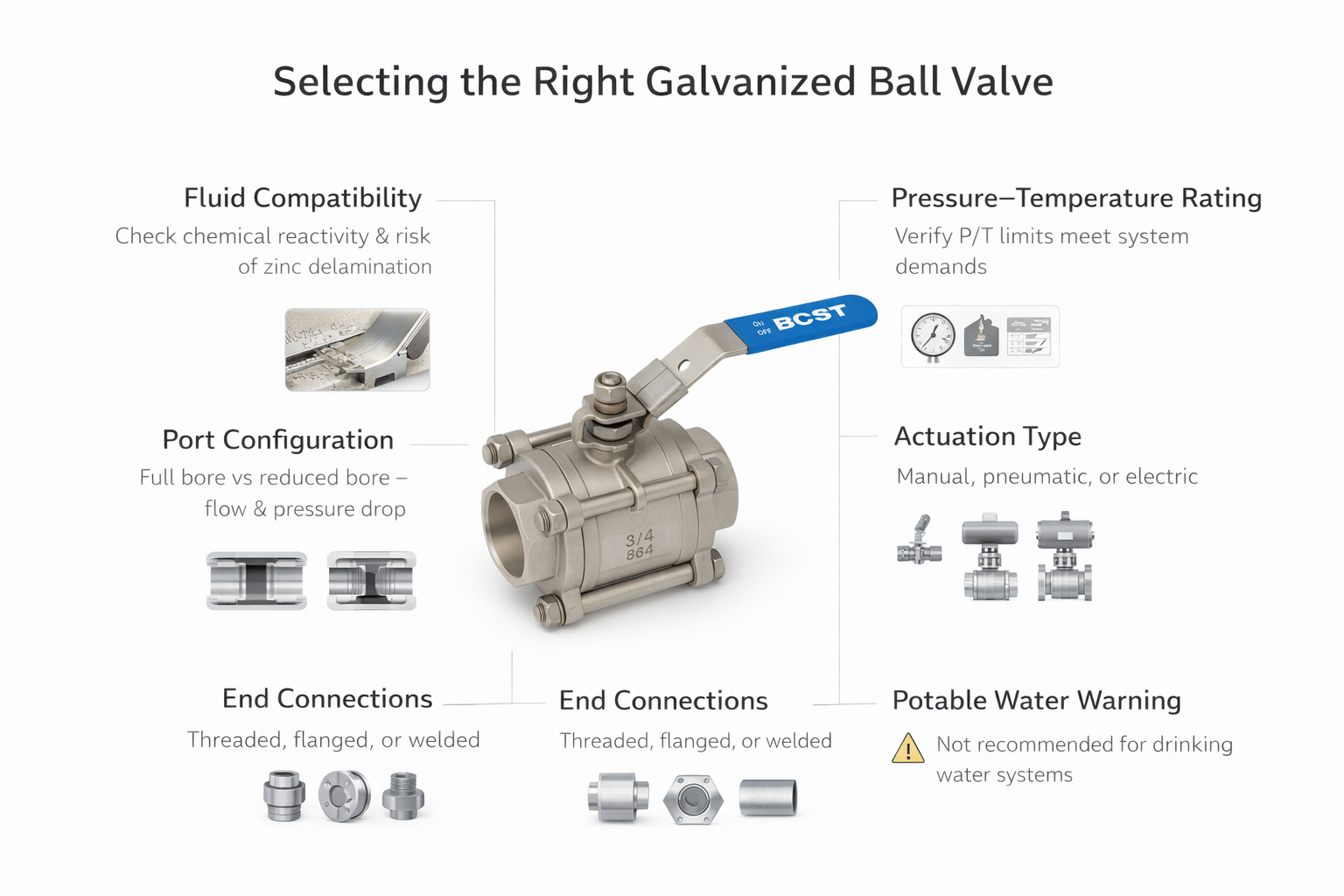
Choosing the correct galvanized ball valve involves more than just selecting a size. Critical factors to consider include:
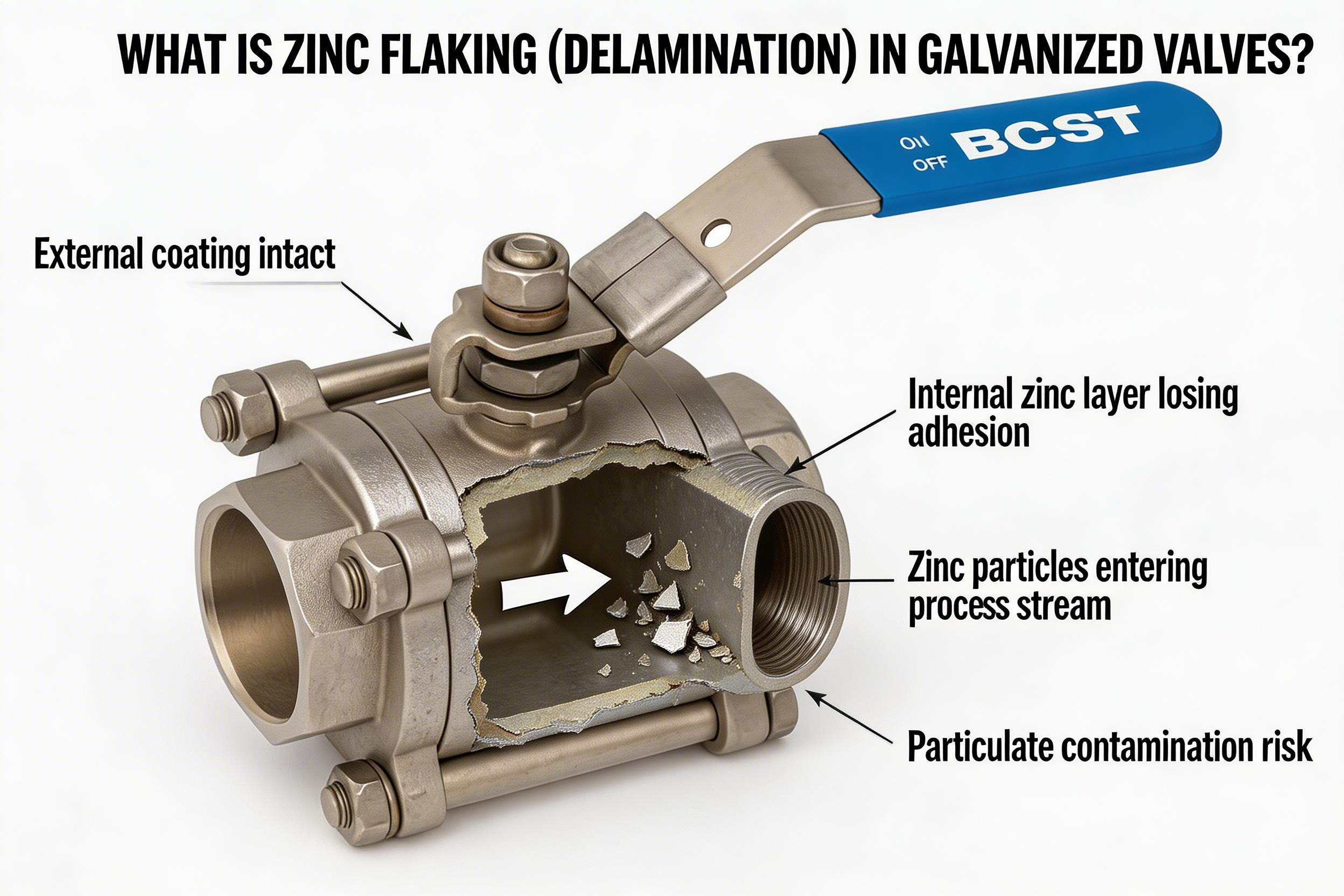
- Совместимость с жидкостями: While galvanized surfaces resist general corrosion, zinc can react negatively with highly acidic or highly alkaline fluids. It is also unsuitable for specific chemicals. Always consult compatibility charts. Importantly, internal applications, particularly with high temperatures or abrasive media, can lead to zinc flaking (delamination), causing downstream damage to pumps and filters.
- Номинальные значения давления и температуры: Ensure the valve’s pressure-temperature (P/T) ratings meet or exceed system requirements.
- Port Configuration: Standard (reduced) bore or full bore, depending on flow requirements and pressure drop considerations.
- Концевые соединения: Threaded (NPT, BSP), flanged, or welded ends. Flanged connections are common for larger sizes, while threaded are typical for smaller galvanized ball valves.
- Тип приведения в действие: Manual (lever or gear), pneumatic, or electric actuation.
- Potable Water Warning: Galvanized ball valves are generally not recommended for potable (drinking) water applications. Zinc can leach into the water, affecting taste and potentially posing health concerns. For potable water, lead-free brass, bronze, or stainless steel valves are preferred and often mandated by regulations.
Installation and Maintenance Considerations
To maximize the life and performance of a galvanized ball valve, consider these practices:
- Handle with Care: Avoid dropping, scraping, or excessively clamping the valve during transport and installation, as this can damage the protective zinc coating.
- Proper Sealants: Use appropriate thread sealants (e.g., PTFE tape or paste compatible with zinc) to ensure leak-free connections.
- Electrical Isolation: In some installations, especially with dissimilar metals, ensure proper electrical isolation to prevent galvanic corrosion between the valve and other pipeline components.
- Coating Repair: If the zinc coating is damaged during installation or operation, it can often be repaired with zinc-rich paints compatible with galvanization, restoring the sacrificial protection.
- Регулярный осмотр: Periodically inspect the valve for any signs of coating degradation or corrosion, addressing issues proactively.
Limitations and Alternatives
While highly effective, galvanized ball valves are not suitable for all applications:
- Potable Water: As noted, generally unsuitable due to potential zinc leaching.
- Highly Corrosive Media: For concentrated acids, strong bases, or aggressive chemicals, the zinc coating will quickly degrade.
- High Temperatures: Extreme temperatures can affect the integrity and longevity of the zinc coating, potentially leading to premature flaking.
- Абразивные материалы: Fluids with suspended solids can erode the coating prematurely.
For these demanding conditions, alternatives like stainless steel ball valves (304, 316, Duplex), PVC-lined valves, or specialized alloys are more appropriate.
Заключение
The galvanized ball valve stands as a testament to effective material engineering, offering superior corrosion protection and extended service life for a wide range of industrial applications. Its combination of robust mechanical strength with the sacrificial benefits of zinc makes it a valuable, cost-effective asset in environments where rust is a constant threat.
At BCST Valve, we are dedicated to providing high-quality, reliable fluid control solutions. Whether you need the durable protection of a galvanized ball valve or the advanced capabilities of other alloys, our experts can guide you to the optimal choice for your specific operational demands and environmental conditions.
Seeking durable, corrosion-resistant ball valve solutions?


 English
 Arabic
 Russian
 French
 Spanish