
Imagine a sprawling oil refinery or a high-pressure steam line in a power plant. The pipes carry immense pressure and temperature, and a single valve failure could mean a costly shutdown or a serious safety incident. In these demanding environments, where reliability and strength are non-negotiable, one valve material stands out as the industry’s trusted workhorse: carbon steel.
A carbon steel ball valve combines the robustness and cost-effectiveness of carbon steel with the simple, reliable quarter-turn operation of a ball valve. This makes it the default choice for a vast range of non-corrosive industrial applications, from oil and gas to general manufacturing.
For over 22 years, BCST Valve has manufactured high-integrity carbon steel ball valves for critical industries worldwide. This guide will walk you through what makes them so essential, how they compare to other materials, and how to select the perfect one for your system. Experimental studies on building water systems report that ball valves, when fully open, produce lower head loss than gate and pressure-reducing valves of the same nominal diameter.
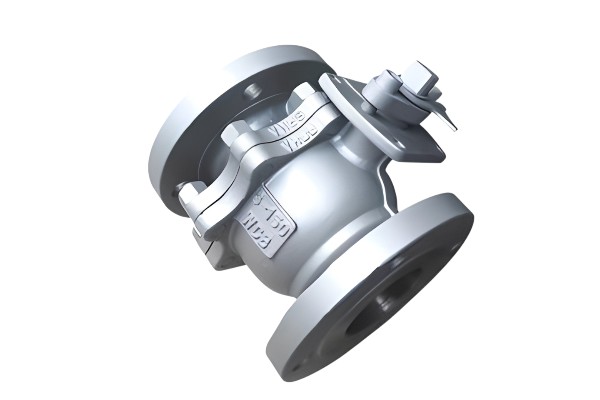
What Exactly is a Carbon Steel Ball Valve?
The name describes its two fundamental features: the material and the mechanism.
- The Material (Carbon Steel): This is an iron alloy with a carbon content of up to 2.1% by weight. Its popularity stems from its high strength, excellent durability, and ability to withstand high pressures and temperatures. Common grades used for valve bodies are ASTM A216 WCB (for castings) and ASTM A105 (for forgings).
- The Mechanism (Ball Valve): This is a quarter-turn (90-degree) shutoff valve. It uses a rotating ball with a hole (a “bore”) through the center. When the valve is open, the bore aligns with the pipe for full flow. When closed, the solid side of the ball blocks the flow path, providing a tight seal.
Together, they create a tough, reliable, and easy-to-operate valve that is cost-effective for general and heavy-duty industrial services.
Why Choose Carbon Steel vs. Other Materials?
There’s some difference between cast iron, ductile iron, bronze, and stainless steel valves. While materials like stainless steel offer superior corrosion resistance, carbon steel dominates in applications where strength and cost are the primary drivers. Here’s a quick comparison:
| Характеристика | Carbon Steel (WCB) | Stainless Steel (316) | Латунь |
|---|---|---|---|
| Стоимость | Most Economical | Выше | Умеренный |
| Strength & Durability | Превосходно | Превосходно | Хорошо |
| Диапазон температур | Up to 425°C (800°F) | Wider Range (Cryo to High Temp) | Lower (around 200°C) |
| Устойчивость к коррозии | Poor (Requires coating/painting) | Превосходно | Good (but susceptible to dezincification) |
The Takeaway: Choose carbon steel when your media is not highly corrosive (e.g., oil, gas, steam, non-potable water), and you need high strength and temperature resistance without the higher cost of stainless steel.
Common Applications: Where Carbon Steel Shines
Thanks to its robust profile, carbon steel ball valves are found across numerous industries:
- Нефть и газ: Upstream production, midstream pipelines, and downstream refining for controlling the flow of crude oil, natural gas, and other hydrocarbons.
- Выработка электроэнергии: High-pressure steam lines, cooling water systems, and fuel oil skids.
- Химическая обработка: For non-corrosive chemical streams where stainless steel is overkill.
- HVAC & General Industry: Chilled water loops, compressed air lines, and general utility services.
How to Select the Right Carbon Steel Ball Valve
Specifying the correct valve involves more than just picking a material. Follow this checklist to ensure optimal performance and safety:
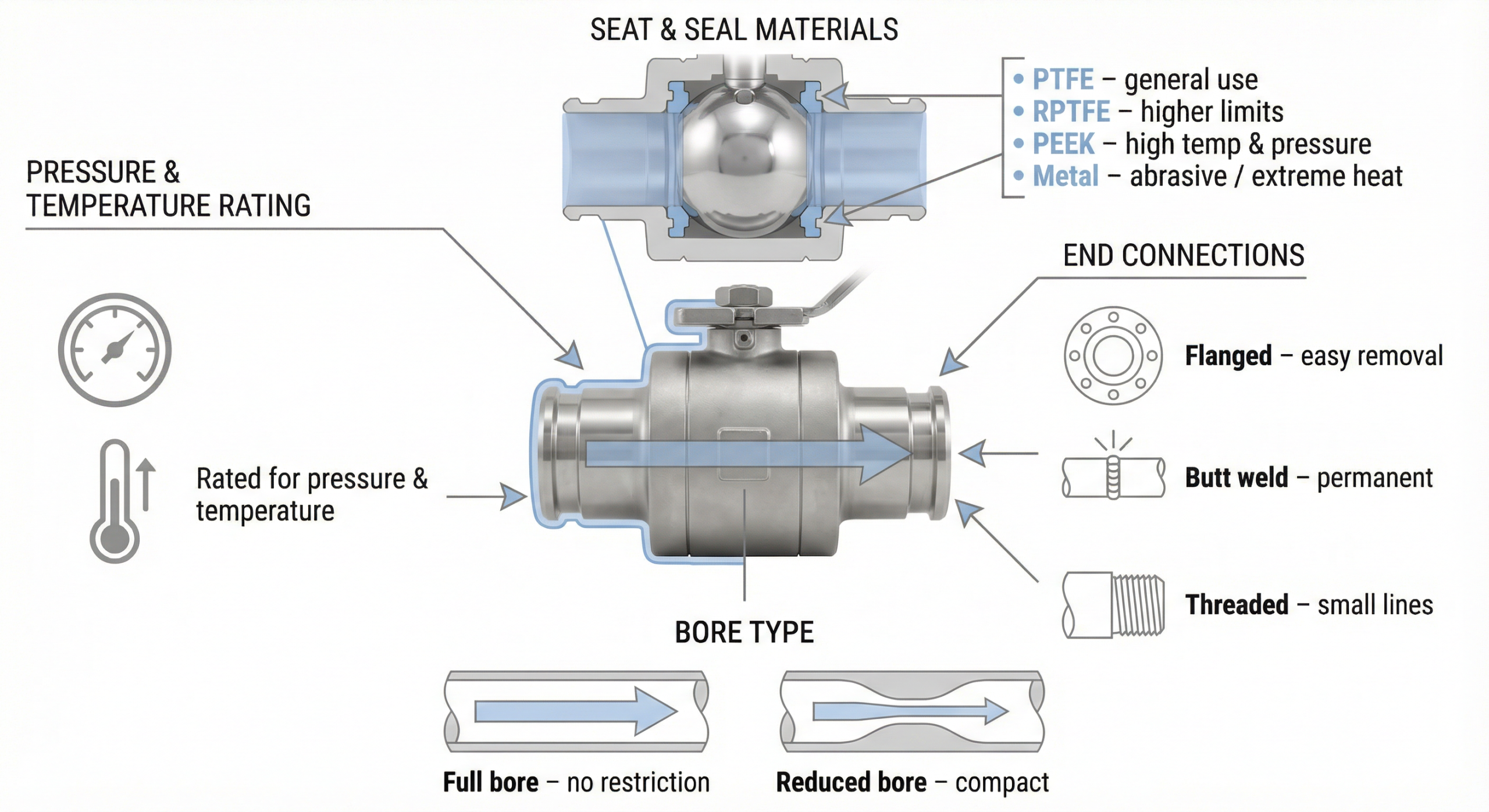
- Define Pressure and Temperature: What is the maximum operating pressure and temperature? This will determine the required pressure class (e.g., ANSI Class 150, 300, 600) of the valve.
- Choose Seat and Seal Materials: The “soft” parts of the valve must be compatible with your media and temperature.
- PTFE (тефлон): Standard choice for general purpose, good up to ~200°C.
- RPTFE (Reinforced PTFE): Higher temperature and pressure capability.
- PEEK: For high-temperature and high-pressure service.
- Металлические сиденья: For abrasive media or very high temperatures above 260°C.
- Select End Connections: How will the valve connect to the pipe?
- Flanged (RF/FF): Most common for easy installation and removal.
- Butt Weld (BW): For a permanent, leak-free connection, common in high-pressure lines.
- Threaded (NPT): For smaller pipe sizes and lower pressures.
- Specify Bore Type:
- Full Bore (Full Port): The valve’s bore is the same size as the pipe ID, offering no flow restriction. Ideal for pigging.
- Reduced Bore (Regular Port): The bore is one size smaller than the pipe, creating a slight pressure drop but offering a more compact, economical valve.
Conclusion: The Reliable Choice
The carbon steel ball valve has earned its reputation as an industry workhorse for a reason. It delivers exceptional strength, high-temperature performance, and reliability at a price point that makes it the preferred choice for countless non-corrosive fluid and gas applications.
By carefully considering your service conditions and selecting the right specifications, you can ensure your system is equipped with a valve that will perform safely and efficiently for years to come.
Need a reliable carbon steel valve for your project?
Our experts are ready to help you specify the perfect valve for your application.


 English
 Arabic
 Russian
 French
 Spanish