
Butterfly Valve Types: Concentric, Double Offset, and Triple Offset Guide
Picking the wrong valve leads to costly shutdowns. Your project timeline and budget are at risk. Understanding butterfly valve types ensures you get it right the first time.
The main butterfly valve types are concentric (lined), double offset (high-performance), and triple offset. Each is designed for different pressures, temperatures, and applications, from general service to severe and critical conditions. Your choice depends entirely on your specific process needs.
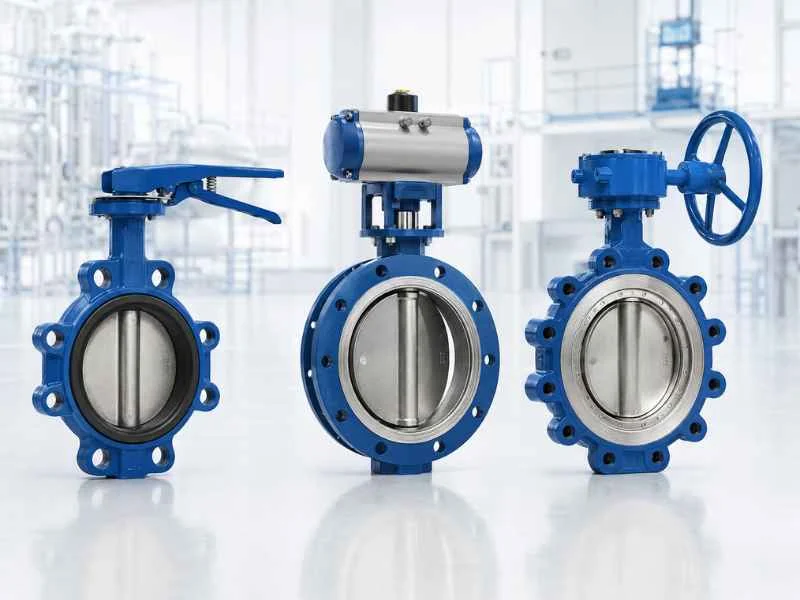
This isn’t just theory. I remember working with a Chief Engineer, Hassan, who was designing a new petrochemical plant. His success depended on selecting the exact right valve for hundreds of different lines. Every detail mattered. Let’s break down these details so you can choose with the same confidence.
Differentiating Concentric and High-Performance Butterfly Valves
Using a basic valve for a tough job can be a disaster. It will fail quickly, causing leaks and downtime. Know when to use a concentric valve and when to upgrade.
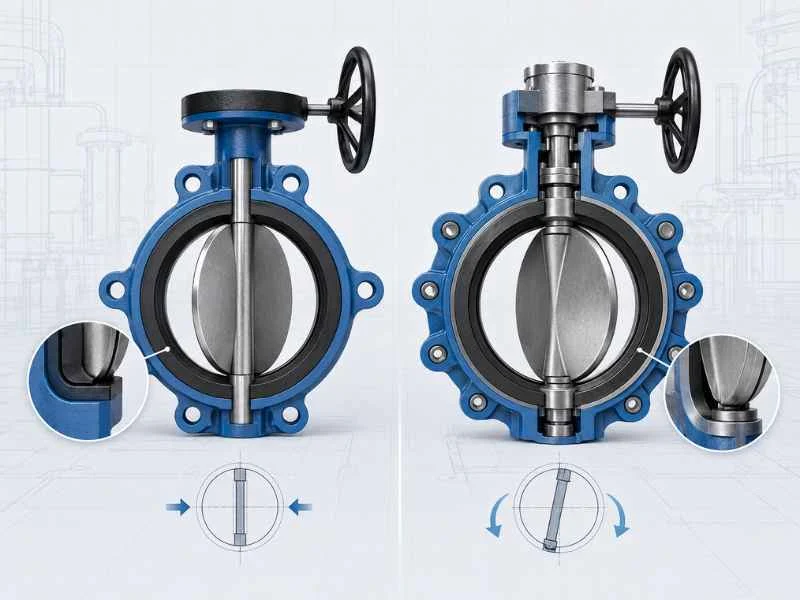
The main difference is in the stem’s position. A concentric valve’s stem is centered, causing the seat to wear from friction. A high-performance double offset valve moves the stem back and to the side, reducing wear and improving sealing for tougher jobs.
Concentric (Zero Offset) Design
The concentric butterfly valve is the most basic design. The stem and the disc are centered in the valve body. As the valve closes, the disc makes contact with the soft seat around its entire edge. This constant contact and friction are why this design is also called a “resilient-seated” valve. It is simple, effective, and low-cost for general services. Think of it as the workhorse for non-critical applications.
Double Offset (High-Performance) Design
High-performance butterfly valves add two offsets to the design. First, the shaft is moved behind the disc. Second, the shaft is moved slightly to one side of the pipe’s centerline. These two changes create a cam action. The disc now swings into the seat in the final few degrees of closing, rather than rubbing against it the whole time.
The Engineering Difference
This design change has huge benefits. It dramatically reduces friction, which means less wear on the seat. This allows for a longer service life and better sealing capabilities at higher pressures and temperatures.
| Характеристика | Concentric (Zero Offset) | Double Offset (High-Performance) |
|---|---|---|
| Offset | Нет | Two offsets |
| Уплотнение | Compression of soft seat | Cam-action into seat |
| Friction | High, constant contact | Low, contact only at closure |
| Приложение | Water, HVAC, general utilities | Chemicals, oil & gas, steam |
| Стоимость | Низкий | Средний |
Understanding the Triple Offset Butterfly Valve Design
For your most critical services, zero leakage is non-negotiable. A standard valve might not seal tightly under extreme heat or pressure. The triple offset valve offers a solution for these applications.
This advanced valve adds a third offset and uses metal-to-metal sealing. It completely eliminates friction between the disc and seat during operation, providing a bubble-tight shutoff even in the most severe conditions like high-pressure steam or cryogenic applications.
The Three Offsets Explained
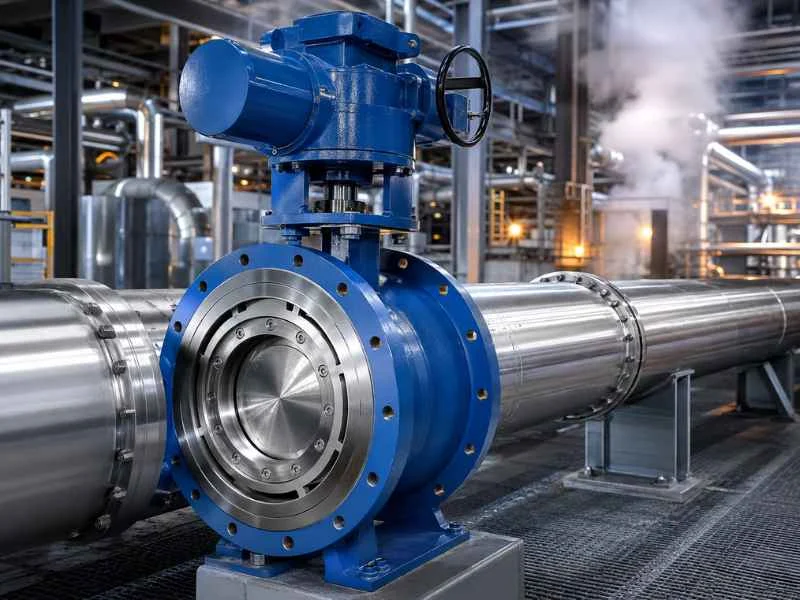
The triple offset valve (TOV) builds upon the double offset design. It has the same first two offsets, moving the shaft behind the disc and to the side. The key innovation is the third offset: the geometry of the seating surface itself. It creates a cone shape for both the disc edge and the seat. This allows the disc to move like a section of a cone, swinging into the seat without any rubbing. It only makes contact at the very final point of closure, creating a perfect seal.
Why Metal-to-Metal Sealing Matters
Because there is no friction, the TOV doesn’t need a soft, resilient seat. Instead, it can use laminated or solid metal seats. This is a game-changer. Metal seats allow the valve to operate at extremely high temperatures (up to 815°C or 1500°F) and cryogenic temperatures. This is something soft-seated valves cannot do. This metal-to-metal contact, combined with the cone-in-cone seating, provides a bi-directional, zero-leakage shutoff. For a chief engineer like Hassan working on a refinery, this is the only choice for critical high-pressure steam lines or hydrocarbon services where failure is not an option.
Choosing the Right Seat Material for Your Valve
A valve’s body can be strong, but the seat is often the first part to fail. The wrong seat material will quickly degrade, causing leaks and process contamination. You must match the seat material to your specific media.
Butterfly valve seats are generally divided into two categories: soft seats and metal seats. Soft seats, like EPDM or PTFE, provide excellent sealing for general use. Metal seats are required for high temperatures, high pressures, and abrasive services where soft materials would be destroyed.
Common Soft Seats
Soft seats are used in concentric and some high-performance butterfly valves. They are great for creating a tight seal in low-pressure, moderate-temperature applications. The choice of material depends entirely on the fluid running through the pipe. You must check chemical compatibility charts to make the right decision. A poor choice will lead to the seat swelling, cracking, or dissolving.
The Role of Metal Seats
Metal seats are the standard for triple offset valves and are used in special high-performance valves. The seat is typically made of a durable material like stainless steel, often with a harder material like Stellite overlaid on the sealing surface. This design is built for the toughest jobs. It can handle abrasive particles, high-velocity flow, and extreme temperatures that would instantly destroy a soft seat. While they are more expensive, their durability and reliability are essential in critical applications.
| Материал | Temperature Range (°C) | Common Media/Application |
|---|---|---|
| EPDM | -40 to 120°C | Water, wastewater, HVAC |
| NBR (Buna-N) | -10 to 80°C | Oils, fuels, hydraulic fluids |
| Viton (FKM) | -20 to 200°C | Chemicals, acids, oils at high temps |
| PTFE | -50 to 200°C | Highly corrosive chemicals, food |
| Metal (e.g., Stellite) | -196 to 815°C | High-pressure steam, cryogenics, abrasives |
Selecting the Proper Actuation Method
You need to open a valve, but it’s 50 feet up in the pipe rack. Manual operation isn’t always practical, efficient, or safe. You need to choose the right actuation for better control.
The main actuation methods are manual (lever or gear), пневматический, и электрический. Manual is for simple, accessible valves. Pneumatic and electric actuators are for automation, remote control, and large valves that require high torque to operate.
Manual Operation: Simple and Direct
Manual actuators are the simplest option. For small valves (typically under 6 inches), a simple hand lever is common. For larger valves that require more force, a gearbox with a handwheel is used. This gives the operator a mechanical advantage to open or close the valve. Manual actuation is cheap and reliable, but it requires a person to be physically present at the valve. It is not suitable for valves that need to be operated frequently or are in hard-to-reach locations.
Automated Actuation: Pneumatic vs. Electric
For any automated process, you need an automated actuator. Hassan specified hundreds of these for the chemical plant he designed. The two main types are pneumatic and electric.
- Пневматические приводы use compressed air to move a piston or diaphragm, which turns the valve stem. They are fast, reliable, and relatively low-cost. They are also excellent for safety systems because you can use a spring-return model that automatically moves the valve to a safe open or closed position if power is lost.
- Electric actuators use an electric motor and gears to operate the valve. They are great for precise positioning and for remote locations where compressed air isn’t available. They are generally slower and more expensive than pneumatic actuators.
| Фактор | Пневматический привод | Электрический привод |
|---|---|---|
| Speed | Быстрый | Медленный |
| Стоимость | Нижний | Выше |
| Power Source | Сжатый воздух | Electricity |
| Fail-Safe | Simple (spring-return) | Complex (requires battery backup) |
| Точность | Good (with positioner) | Превосходно |
Matching Butterfly Valve Types to Specific Applications
You know the different types, but how do you decide which one to buy? Guessing is an expensive mistake that can lead to safety risks. You can use a simple framework to match the valve to the job.
For general water service, use a concentric valve with an EPDM seat. For chemical processing, a double offset valve with a PTFE seat is a better choice. For high-pressure steam, a triple offset valve is the safest and most reliable option.
Low-Risk Applications (General Service)
These are applications where a leak would be an inconvenience but not a disaster. Think of building HVAC systems, municipal water distribution, or general water lines within a plant. The pressure and temperature are low, and the fluid is not corrosive.
- Valve Choice: Concentric Butterfly Valve
- Seat Choice: EPDM or NBR
- Why: It is the most cost-effective solution that provides a reliable shutoff for these simple conditions. There is no need to pay for a high-performance design.
Moderate-Risk Applications (Chemical & Processing)
This category includes most chemical, oil, and gas processing lines. The fluids might be corrosive or flammable, and the pressures and temperatures are higher. A leak could be dangerous and cause a process shutdown.
- Valve Choice: Double Offset Butterfly Valve
- Seat Choice: PTFE or other resistant material
- Why: The double offset design reduces wear and provides a better seal, extending the valve’s life and reliability. A PTFE seat is needed to resist chemical attack.
High-Risk Applications (Critical Service)
When Hassan designs a refinery, he identifies these lines first. They include high-pressure steam, cryogenic liquids, flammable gas, and emergency shutdown (ESD) systems. Any failure here could be catastrophic. Absolute reliability and bubble-tight shutoff are required.
- Valve Choice: Поворотный клапан с тройным смещением
- Seat Choice: Metal-to-Metal
- Why: Only the friction-free, metal-seated TOV design can provide the guaranteed shutoff and handle the extreme temperatures and pressures found in these critical services. It is the highest standard for safety and performance.
FAQ on Butterfly Valve Types
Q1: Which butterfly valve types are best for high temperatures?
A: For high-temperature services, triple offset butterfly valves (TOVs) are the best choice. Their metal-to-metal seating design can handle temperatures up to 815°C (1500°F). Some high-performance double offset valves can also be fitted with metal seats for higher temperature applications, but TOVs offer the highest performance and reliability in extreme heat.
Q2: What are the main differences between butterfly valve types?
A: The main differences are the design of the offsets, the seat material, and the sealing method. Concentric valves have zero offsets and use a soft seat that is compressed. Double offset valves have two offsets for less friction and better sealing. Triple offset valves have three offsets for friction-free, metal-to-metal sealing in critical applications.
Q3: How do I choose between different butterfly valve types for my project?
A: To choose correctly, you should consider your process conditions. Think about the fluid type (media), temperature, pressure, and whether you need a simple on/off function or throttling control. For general, low-pressure water, a concentric valve is good. For chemicals or moderate pressure, choose a double offset. For high-pressure steam or critical safety systems, a triple offset is required.
Q4: Are there specific butterfly valve types for abrasive materials?
A: Yes. For abrasive materials like slurries, a triple offset valve with a hardened metal seat is a very durable option because there is no rubbing to cause wear. Alternatively, you can use a concentric valve with a thick, abrasion-resistant rubber liner that protects the valve body from the abrasive media. The choice depends on the severity of the abrasion and other process conditions.
Q5: What are the most common butterfly valve types used in the water industry?
A: The most common type is the concentric butterfly valve with a resilient seat. For clean water applications, an EPDM seat is standard because it is durable, provides a great seal, and is cost-effective. For wastewater, an NBR (Buna-N) seat might be used if oils are present. These valves are perfect for the low-pressure, moderate-temperature conditions of most water and wastewater plants.
Q6: Why are there so many different butterfly valve types?
A: The variety exists to provide safe, reliable, and cost-effective solutions for thousands of different industrial processes. A simple, inexpensive concentric valve is perfect for an HVAC system, but it would fail dangerously in a high-pressure steam line. A high-tech triple offset valve is perfect for that steam line, but it would be too expensive and unnecessary for a simple water pipe. The different types ensure engineers can select the right tool for the job.
Final Thought
Choosing from the many butterfly valve types is crucial for your project. From simple concentric to critical triple offset valves, the right choice ensures safety and efficiency. At BCST, we help engineers like you make that choice. Contact us to find the perfect valve solution for your needs.


 English
 Arabic
 Russian
 French
 Spanish