
Pneumatic & Electric Valve Actuators For Automated Flow Control
High torque output, fail-safe spring-return or modulating control, and durable construction for valve automation in oil & gas, chemical processing, power generation, and water treatment systems up to 20,000 Nm.
- Сертифицировано по стандарту Iso 9001
- Быстрая доставка по всему миру

Наши основные продукты
Our range includes pneumatic scotch yoke actuators (high torque for quarter-turn valves), electric multi-turn actuators (precise positioning for gate and globe valves), spring-return fail-safe actuators (automatic closure on power loss), compact rack and pinion actuators (for small-bore ball and butterfly valves), and hydraulic actuators (for ultra-high thrust requirements).
Pneumatic Valve Actuator
Pneumatic Rack-and-Pinion or Scotch Yoke Technology for Reliable On/Off & Modulating Control
Pneumatic valve actuators convert compressed air energy into mechanical torque to operate quarter-turn valves such as ball, butterfly, and plug valves. Available in rack-and-pinion designs for compact, high-cycle on/off service or scotch yoke configurations for high-breakout torque requirements, these actuators deliver consistent performance in demanding industrial environments. Double-acting models require air pressure to both open and close, while spring-return (single-acting) models provide failsafe positioning upon loss of air supply. Constructed from extruded aluminum with corrosion-resistant coating or stainless steel for harsh conditions, pneumatic actuators offer rapid response, simple installation, and reliable operation in hazardous areas where electrical devices are restricted. They are the industry standard for process automation in oil & gas, chemical, water treatment, and power generation.
Основные характеристики
- Rack-and-pinion or scotch yoke designs available
- Double-acting or spring-return failsafe configurations
- Fast response time (0.5–2 seconds typical)
- Wide temperature range: -20°C to +80°C (high-temp options to +150°C)
- ATEX / IECEx certified for hazardous areas
Типовые применения
- Automated ball and butterfly valve control
- Process on/off and modulating services
- Remote pipeline isolation stations
- Chemical dosing and batch control systems
- Очистные сооружения для воды и сточных вод
Electric Valve Actuators
Precise Electric Torque Control for Remote & Automated Valve Operation
Electric valve actuators use an electric motor (AC or DC) coupled with a gear train to produce rotational torque for operating quarter-turn or multi-turn valves. Unlike pneumatic actuators, they require no compressed air infrastructure, making them ideal for remote locations, indoor facilities, or sites where pneumatic systems are impractical. These actuators feature manual override handwheels, position feedback via limit switches or potentiometers, and optional local/remote control interfaces. Modern electric actuators offer modulating control (4–20 mA input) for precise throttling, as well as bus communication protocols such as Modbus, Profibus, or Foundation Fieldbus for integration into DCS or PLC systems. With explosion-proof enclosures available, electric actuators serve safely in refineries, chemical plants, and fuel storage terminals.
Основные характеристики
- No compressed air required uses standard electrical power
- Manual handwheel override standard
- Modulating (4–20 mA) or on/off control options
- Multi-turn or quarter-turn configurations
- Integrated position feedback and torque limit protection
Типовые применения
- Remote valve automation without instrument air
- Water treatment and distribution networks
- HVAC air handling and chiller plant valves
- Tank farm and pipeline block valves
- Clean room and pharmaceutical processing

Triple-offset Butterfly Valve
Balanced Air-to-Open & Air-to-Close for High-Cycle, Fail-Last Operation
Double acting pneumatic actuators require compressed air applied to both sides of the piston to move the valve to open and closed positions. No springs are used, meaning the actuator remains in its last position upon loss of air supply (fail-last or fail-in-place). This design delivers higher output torque per unit volume compared to spring-return actuators and is ideal for large ball or butterfly valves requiring consistent torque in both directions. Double acting actuators are typically rack-and-pinion for compact linear torque output or scotch yoke for rising torque profile needed at valve breakaway. They excel in continuous modulating service, high-cycle on/off applications (e.g., packing machines, filling lines), and any process where failsafe spring action is not required. With no springs to fatigue, they offer longer maintenance intervals and simpler repair.
Основные характеристики
- Fail-last (stay-put) position on air loss
- Higher torque output than spring-return designs
- Symmetric torque in both directions
- Ideal for modulating and high-cycle services
- Simple construction with fewer wear parts
Типовые применения
- Continuous modulating control loops
- High-cycle on/off automation (conveyor diverters, bagging machines)
- Large bore ball and butterfly valves
- Process where spring-return failsafe is unnecessary
- Dual-valve interlock systems

What Is A Valve Actuator?
A valve actuator is the “brain” and “muscle” of a fluid control system. It is a mechanical device used to provide the force required to operate a valve specifically to move the plug, ball, or disc into an open, closed, or modulating position. In manual systems, a person turns a handwheel or lever; in automated systems, the actuator replaces the human element, responding to a signal from a control system (like a PLC) to manage flow, pressure, and temperature remotely and precisely.
Fail-Safe Protection
High Torque Output
Точное управление потоком
Trusted for Control System Across All Industries
Our valve actuators are trusted across diverse industries for their durability, erosion resistance, and reliable performance under extreme pressure drops.
Химическая и нефтехимическая промышленность
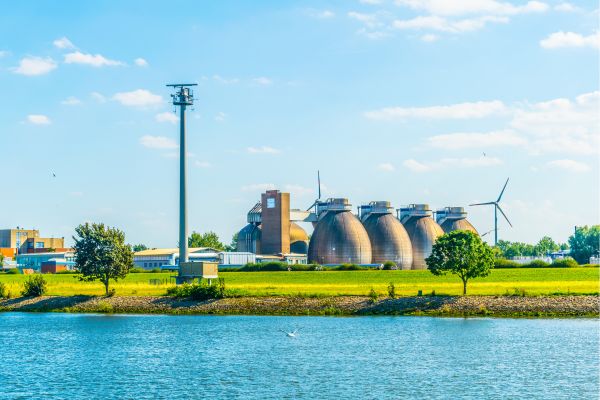
Automating the isolation of high-pressure reactors and toxic media. Use our electric actuators for hydrocracker and hydrotreater feed shut-off, high-pressure separator isolation, ammonia and methanol service block valves, and emergency vent isolation where fugitive emissions must be near zero.
Нефть и газ
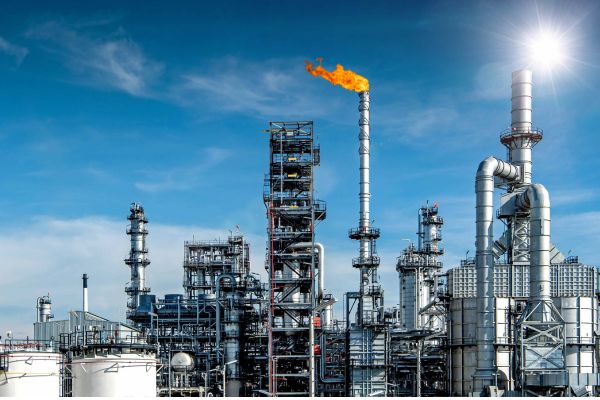
Powering reliable pipeline isolation and emergency shutdown (ESD) protocols. Use our pneumatic actuators for wellhead manifold isolation, mainline block valves, pig launcher/receiver isolation, and compressor station suction/discharge shut-off where pressures exceed 2,500 psi and fail-safe closure is mandatory.
Water & Desalination
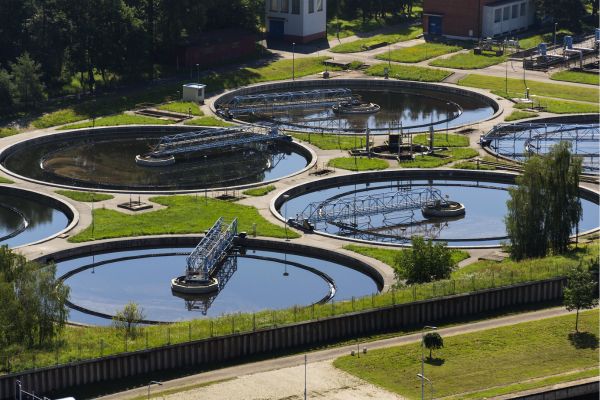
Managing high-pressure reverse osmosis systems with precision. Use our modulating actuators for high-pressure feed pump isolation, brine reject control, energy recovery device bypass, and automatic flush valves where corrosion-resistant enclosures and precise positioning are critical.
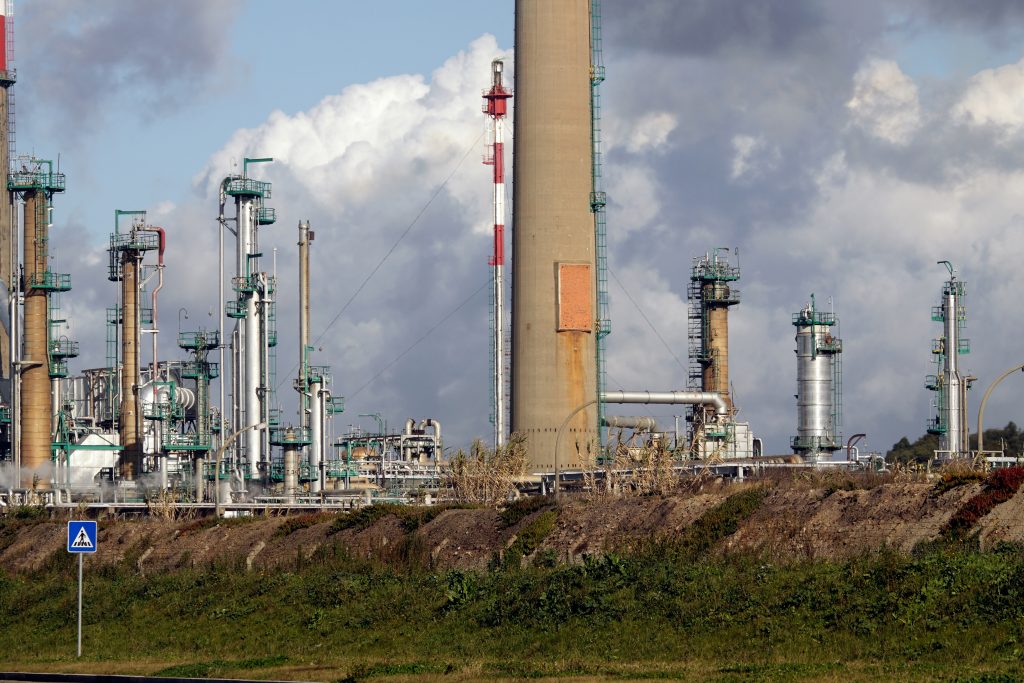
Производство электроэнергии
Controlling critical steam, feedwater, and cooling circuits in power plants. Our electric multi-turn actuators automate boiler feedwater isolation, turbine bypass valves, superheated steam drains, and cooling water intake shut-off with high torque and temperature-resistant components.
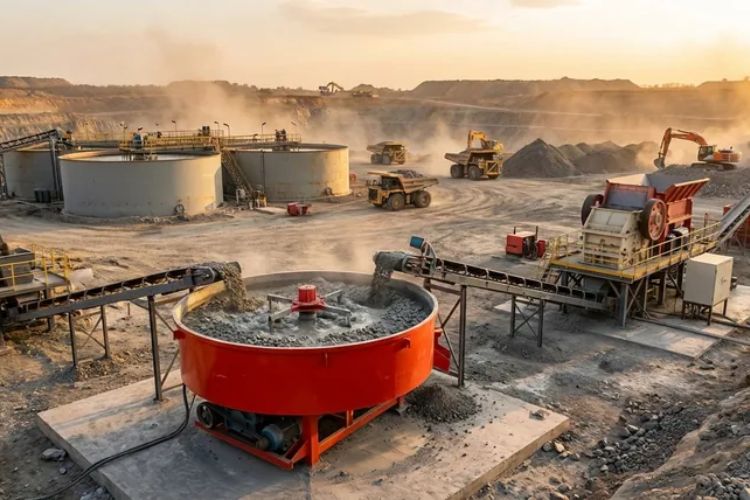
Mining & Slurry Transport
Actuating heavy-duty valves in abrasive slurry and tailings systems. Use our high-thrust hydraulic and pneumatic scotch yoke actuators for slurry pipeline isolation, cyclone feed control, thickener underflow valves, and tailings dam discharge where torque margins and rugged sealing are essential.
Готовы найти идеальное решение по клапанам для вашего проекта?
Свяжитесь с нашей командой экспертов сегодня, чтобы обсудить требования вашего проекта и узнать, как BCST может предоставить надежные и эффективные решения, отвечающие вашим потребностям.
Pneumatic, Electric, or Double-Acting? How to Choose the Right Valve Actuator
You need a reliable valve actuator for automated flow control, but the options – pneumatic spring-return, double-acting, or electric – can be overwhelming. The wrong choice leads to slow response, inadequate torque, or costly field failures. Here’s exactly when to pick each type, backed by ISO 5211, NAMUR, and industry best practices.
For fail-safe on/off with pneumatic supply → Spring-Return Pneumatic Actuator. For high cycle, fast operation without spring → Double-Acting Pneumatic Actuator. For precise modulating control, no instrument air → Electric Actuator (multi-turn or part-turn). For ultra-high torque, heavy-duty service → Scotch Yoke Pneumatic Actuator.
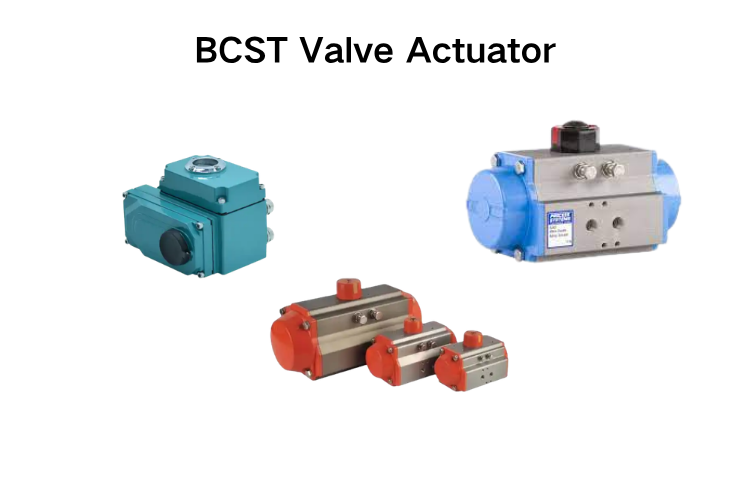
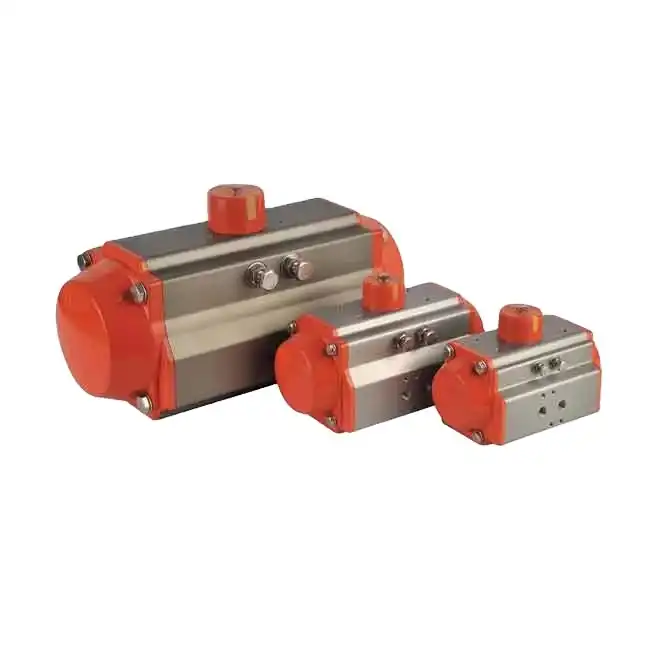
Figure 1: Three main valve actuator configurations – each optimized for different automation requirements.
Real-world lesson: A chemical plant automated a critical reactor vent valve with a double-acting pneumatic actuator, assuming air supply would always be available. After a plant air compressor failure, the valve could not close, causing a hazardous release. They replaced it with a spring-return fail-safe actuator – the lesson: always specify fail-safe position for ESD and critical isolation.
What You Really Need to Know Before Choosing a Valve Actuator
Your selection hinges on four pillars: torque requirement (break, running, seat torque), fail-safe action (spring-return or electric backup), control type (on/off or modulating), and environment (hazardous area, temperature, available utilities). Also consider cycle speed, duty cycle, and maintenance access. Below we break down each actuator family with technical depth and field-proven advice.
1. Spring-Return Pneumatic Actuator: Fail-Safe by Design
Как это работает
A spring-return actuator uses compressed air to compress one or more springs, moving the valve to the “powered” position. When air pressure is lost, the stored spring energy returns the actuator to the predetermined fail-safe position (either open or closed). This design is inherently safe for emergency shutdown (ESD) and critical isolation. Per ISO 5211 and NAMUR VDI/VDE 3845 , these actuators are available in rack-and-pinion or scotch yoke configurations, with torque outputs from 50 Nm to 25,000 Nm.
When I Recommend It
- Emergency shutdown (ESD) systems – must close or open on air failure.
- Fuel gas and burner shut-off – safety integrity level (SIL) rated applications.
- Remote pipelines and wellhead isolation – where instrument air may be interrupted.
- Fire-safe valve automation – spring return ensures position regardless of power loss.
Where It Falls Short
Spring-return actuators have larger physical envelopes and higher cost than double-acting due to spring packs. They also have lower cycle life (spring fatigue) if cycled frequently. For high cycle count (e.g., 50,000+ cycles/year), a double-acting pneumatic or electric actuator is preferable.
2. Double-Acting Pneumatic Actuator: High Speed, High Cycle
Как это работает
A double-acting actuator uses compressed air on both sides of the piston. One side opens the valve, the other closes it. Without springs, it offers lower cost, lighter weight, and higher cycle life. It requires a continuous air supply to maintain position; loss of air leaves the valve in its last position (no fail-safe). Standardized mounting per ISO 5211 and VDI/VDE 3845 ensures interchangeability with quarter-turn valves (ball, butterfly, plug).
When You Want This One
- High cycle frequency applications – automatic packaging, batching, conveyor diverters.
- Large diameter butterfly valves – lower torque requirement and fast stroking.
- Water and wastewater treatment – where air supply is reliable and fail-safe not required.
- Modulating service with positioner – precise control without spring hysteresis.
The Big Trade-Off
No fail-safe. If air supply fails, the valve stays put – unacceptable for ESD or safety systems. Also requires clean, dry instrument air (typically ISO 8573-1 Class 2.4.2). In freezing climates, air line drying is mandatory.
Critical: Double-acting actuators are NOT suitable for safety instrumented functions (SIF) per IEC 61508/61511 unless supplemented with a separate safety system (e.g., air tank and trip valve). Always evaluate the required safety integrity level (SIL).
3. Electric Actuator: Precision Modulation Without Pneumatics
Как это работает
Electric actuators use an electric motor (AC or DC) driving a gear train to produce torque. They can be part-turn (for ball/butterfly valves) or multi-turn (for gate/globe valves). They offer precise positioning (<0.5% accuracy), data logging, and network connectivity (Modbus, Profibus, HART). Fail-safe can be achieved with battery backup or supercapacitors. Standards: IEC 60534-2-1 , EN 15714-2 , and API 6DX for subsea applications.
When You Absolutely Need This Valve
- No instrument air available – remote sites, small skids, offshore platforms with limited utilities.
- Precise modulating control – temperature or pressure loops requiring tight regulation.
- Smart valve diagnostics – real-time torque profiles, cycle counting, predictive maintenance.
- Multi-turn valves (gate, globe) – where linear motion is required.
One Limitation
Electric actuators are slower than pneumatic (typically 2-10 sec per stroke vs. 0.5-2 sec). They are also more expensive upfront and require electrical power in hazardous areas (ATEX/IECEx certification needed). For very high torque (above 10,000 Nm), pneumatic scotch yoke is often more economical.
Quick Comparison Table: Valve Actuator Types
| Характеристика | Spring-Return Pneumatic | Double-Acting Pneumatic | Электрический привод |
|---|---|---|---|
| Fail-Safe | Yes (spring return on air loss) | No (holds last position) | Optional (battery/capacitor backup) |
| Torque Range | 50 – 25,000 Nm | 50 – 40,000 Nm | 10 – 20,000 Nm |
| Stroking Speed | Fast (0.5-2 sec) | Very fast (0.3-1 sec) | Slow (2-10 sec) |
| Тип управления | On/off (with positioner can modulate) | On/off or modulating | Precise modulating (0.5% accuracy) |
| Utility Required | Instrument air (clean, dry) | Instrument air | Single-phase or 3-phase power |
| Лучшие приложения | ESD, blowdown, wellhead, fuel gas | High cycle, water treatment, HVAC, general on/off | Remote sites, precision modulation, smart diagnostics |
Making the Right Choice – A Practical Decision Framework
Need fail-safe action on air loss for emergency shutdown? → Spring-return pneumatic actuator .
Have reliable instrument air, high cycle rates, no fail-safe required ? → Double-acting pneumatic actuator .
Lack instrument air, require precise modulation and diagnostics ? → Electric actuator with battery backup for fail-safe.
Need ultra-high torque (>20,000 Nm) for large valves ? → Scotch yoke pneumatic actuator (double-acting or spring-return).
Always verify torque requirements at minimum supply pressure (e.g., 80 psi for pneumatic, ±10% voltage for electric). For modulating service, ensure the actuator has enough start/stops per hour. I’ve seen plants oversize actuators and suffer from slow response, or undersize them and experience stalling. Match the actuator to the valve’s break torque, especially for ball valves with high seat friction.
Pro tip: For critical applications, always request a torque curve from the valve manufacturer and compare with the actuator’s torque output across the full stroke. Factor in temperature effects (rubber seats stiffen at low temperature). For electric actuators, confirm the control signal (4-20 mA, 0-10 V, or digital) and fieldbus compatibility before ordering.
Часто задаваемые вопросы
How do I choose between a pneumatic and an electric valve actuator?
Selection primarily depends on your available power source and duty cycle. Pneumatic actuators are the industry standard for high-cycle, fail-safe applications (100% duty cycle) and are ideal for hazardous environments where air is readily available. In contrast, electric actuators offer superior precision for modulating control and are easier to install in remote locations where running instrument air lines is cost-prohibitive.
What is the difference between a "double-acting" and a "spring-return" actuator?
The distinction lies in the fail-safe mechanism. A double-acting actuator uses air pressure to both open and close the valve; if air supply is lost, the valve stays in its last position. A spring-return (fail-safe) actuator uses air to move in one direction and mechanical springs to return it to a safe position (open or closed) immediately upon loss of power or air pressure.
What does "break torque" mean in actuator sizing?
Break torque (or unseating torque) is the maximum force required to move a valve from its fully closed position. It is often significantly higher than the running torque due to static friction and “stiction” from the valve seats. For a reliable control system, we recommend sizing your actuator with a 25-30% safety factor above the valve’s published break torque to ensure consistent operation under high-pressure conditions.
Can electric actuators be used in hazardous (Ex) environments?
Yes, provided they carry the correct ATEX, IECEx, or NEMA 7 certifications. While pneumatic actuators are inherently spark-free, electric actuators for hazardous areas are housed in heavy-duty, explosion-proof enclosures designed to contain any internal ignition. Always verify the specific zone rating (e.g., Zone 1 or Zone 2) before installation to ensure site safety compliance.
How does temperature affect valve actuator performance?
Standard actuators typically operate between -20°C and 80°C. Extreme cold can cause seals to brittle and condensation to freeze in pneumatic lines, leading to failure. For high-temperature steam applications or arctic environments, specify Viton (FKM) seals and low-temperature lubricants. For electric actuators, internal heaters are essential to prevent moisture buildup and electronic board failure.
What are the signs of a failing valve actuator?
Common indicators include erratic movement (hunting), audible air leaks, or the valve failing to reach its full stroke. In automated valves, increased “cycling time” often suggests worn internal seals or a lack of supply pressure. Utilizing a smart positioner can provide predictive diagnostics, flagging torque increases before they lead to a total process shutdown.
Свяжитесь с нами
Tell us your specs; our engineer will reply within 24 hours.
 English
 Arabic
 Russian
 French
 Spanish