
Elegir bien butterfly valve manufacturer is crucial. A poor choice can lead to operational failures, project delays, and safety hazards, impacting your bottom line and plant safety.
To choose the best butterfly valves manufacturers, evaluate their technical expertise, quality control systems, material traceability, and certifications. Also, consider their production capacity, after-sales support, and documented project experience in your specific industry. These factors ensure reliable performance and long-term value.
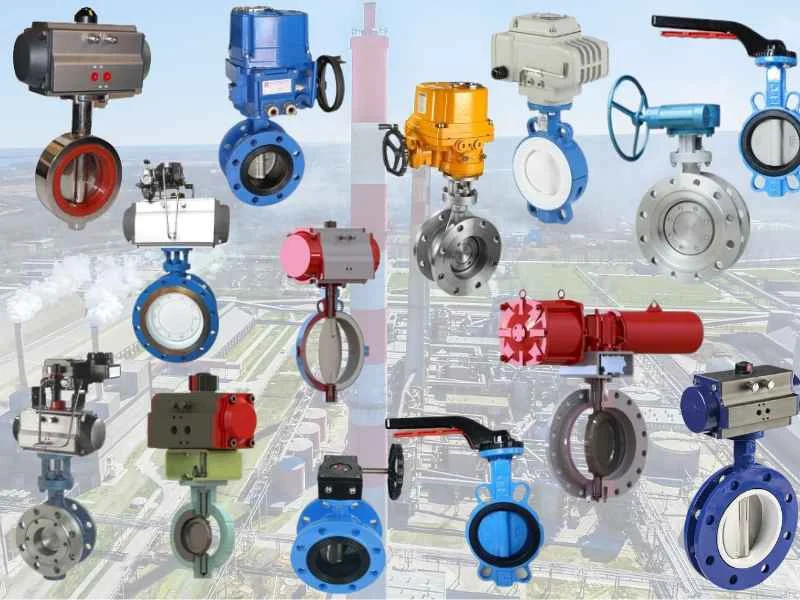
This guide provides a structured approach to vetting potential partners. We will explore the critical technical qualifications, quality management systems, and commercial considerations you should assess. This ensures you partner with a manufacturer who can meet your project’s demanding requirements for safety and reliability.
Assessing Technical Capabilities and Design Expertise
A manufacturer’s technical strength directly impacts valve performance and safety. You must verify their design capabilities, material knowledge, and ability to customize solutions for your specific application.
Assess a manufacturer’s technical expertise by reviewing their engineering team’s experience, their range of valve designs (e.g., concentric, double offset, válvula de mariposa de triple offset), and their R&D investments. A capable partner understands how pressure, temperature, and media affect long-term valve performance.
A truly capable manufacturer has a strong engineering team at its core. These engineers should have deep knowledge of international standards like API, ASME, and ISO. They must be able to provide clear technical drawings, flow capacity calculations (Cv/Kv), and pressure-temperature rating charts. Their expertise is vital when you need to select the correct valve for challenging applications, such as those found in chemical processing or oil and gas.
The breadth of their product portfolio is another key indicator. A manufacturer that produces a wide variety of valves demonstrates extensive experience. For example, they should offer standard rubber-lined butterfly valves for water and general utilities. They should also provide specialized solutions like PTFE-lined butterfly valves for highly corrosive acids or chemicals. A company that understands the nuances between these different types is better equipped to guide you. This knowledge helps you avoid costly mistakes, like using the wrong seat material for an aggressive medium.
Finally, evaluate their ability to provide custom solutions. In many industrial projects, a standard off-the-shelf valve is not the perfect fit. You might need a specific face-to-face dimension, a special flange drilling, or a stem extension for an insulated pipeline. A reliable manufacturing partner can accommodate these requests. They can modify valve designs, source special materials, or configure unique actuation packages to meet your exact process requirements. This flexibility ensures the valve integrates perfectly into your system and performs as expected.
Evaluating Quality Management and Compliance
Robust quality control is non-negotiable for industrial valves. It ensures every valve meets safety standards, performs reliably, and prevents costly failures in critical services like yours.
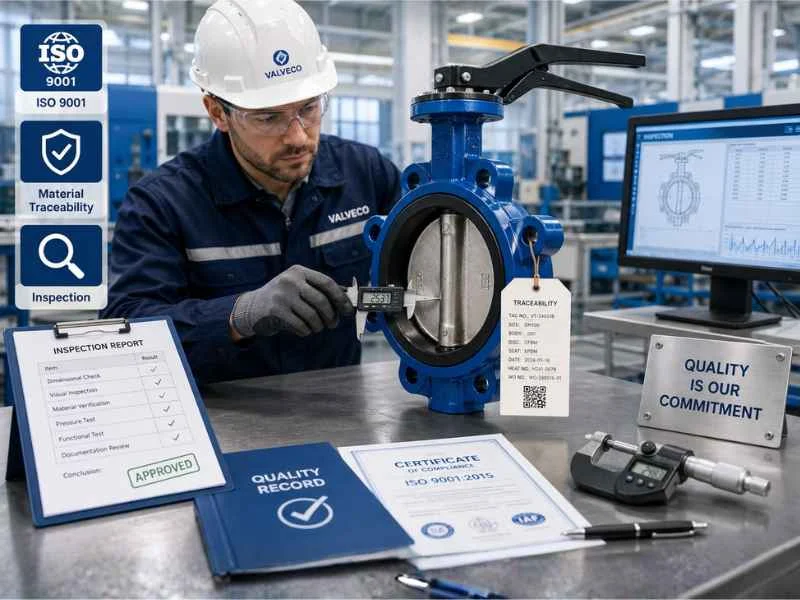
Evaluate a manufacturer’s quality system by verifying their certifications, such as ISO 9001. Check their material traceability procedures and witness their testing processes, including pressure tests (hydrostatic and pneumatic) and functional tests. This confirms their commitment to delivering compliant products.
Certifications and Standards
Certifications are an essential starting point. ISO 9001 certification shows that the manufacturer has a documented quality management system. However, for critical applications, you need more. Look for manufacturers compliant with valve-specific standards like API 609 for butterfly valves. For European projects, CE marking is mandatory, indicating compliance with EU safety directives. These certifications are not just pieces of paper; they represent a commitment to consistent quality and safety. They assure you that the production process is controlled, repeatable, and audited by third parties.
Material Traceability and Testing
In industries like oil and gas or chemical processing, material integrity is a primary safety concern. A top-tier manufacturer must provide full material traceability. This means they can supply Material Test Reports (MTRs), typically to EN 10204 3.1, for all pressure-containing parts. These reports trace the valve body, disc, and stem back to the original raw material heat number. Without this documentation, you cannot verify that the materials meet project specifications, creating significant risk.
Rigorous testing is the final step in quality assurance. Every valve should undergo pressure testing according to a recognized standard like API 598. This process includes a shell test to check the body’s integrity and a seat test to verify shutoff performance. For gas applications, a low-pressure pneumatic seat test is often required. The table below outlines common tests you should expect.
| Test Type | Purpose | Typical Standard |
|---|---|---|
| Hydrostatic Shell Test | Verifies the integrity of the valve body against external leaks. | API 598 |
| Hydrostatic Seat Test | Checks for leakage through the closed valve disc and seat. | API 598 |
| Pneumatic Seat Test | Uses air or gas to test for seat leakage, often for gas service. | API 598 |
| Functional Test | Confirms smooth operation of the valve and actuator assembly. | Manufacturer’s Standard |
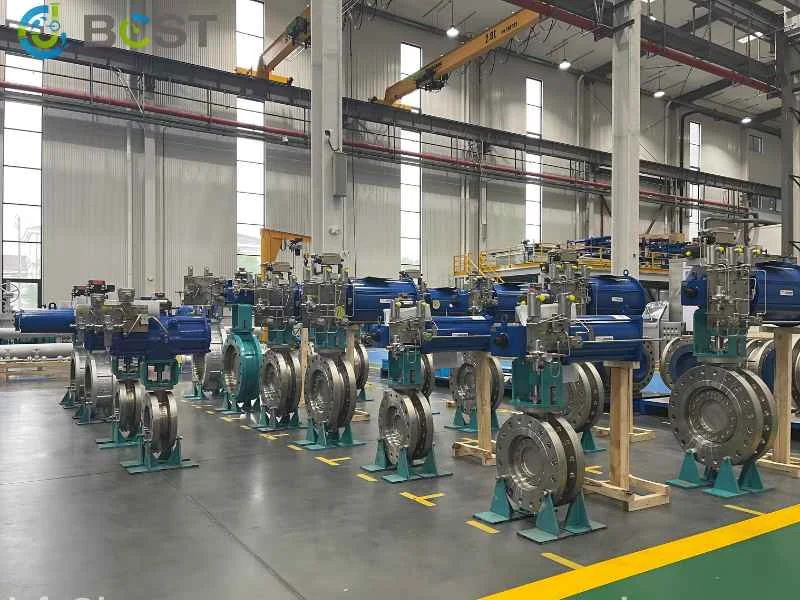
Reputable butterfly valves manufacturers will also welcome Factory Acceptance Tests (FAT). A FAT allows you or a third-party inspector to witness these tests firsthand before the valves are shipped. This provides the ultimate confidence in the product’s quality and compliance.
Analyzing Commercial and Logistical Support
Beyond technical quality, a manufacturer’s commercial reliability is key. On-time delivery, clear documentation, and responsive after-sales support are essential for smooth project execution and long-term operation.
Assess commercial support by reviewing their project reference list, especially in your industry and region. Evaluate their production capacity, standard lead times, and ability to provide comprehensive documentation. Strong after-sales service, including spare parts availability, is also a critical factor.
A manufacturer’s project history speaks volumes. Ask for a reference list of projects similar to yours in terms of industry, application, and geographic location. A supplier with experience in Nigerian oil and gas projects, for example, will already understand local content requirements, documentation standards, and logistical challenges. This experience can prevent significant delays and administrative headaches. It demonstrates they are not just a product vendor but a partner who understands your operating environment.
Production capacity and delivery timelines are critical for project planning. A manufacturer must be transparent about their production schedule and lead times. A low price is worthless if the valves arrive months late, delaying your entire project and incurring massive costs. Discuss your project timeline with them upfront. Ask for a firm delivery commitment in writing. A reliable partner will manage their production to meet your schedule and will communicate proactively if any issues arise. They can supply a wide range of products, from simple on-off butterfly valves to complex actuated packages.
Comprehensive documentation and after-sales support are hallmarks of a professional manufacturer. For every order, you should expect to receive General Arrangement (GA) drawings, Material Test Reports (MTRs), and detailed Installation, Operation, and Maintenance (IOM) manuals. These documents are vital for installation, commissioning, and future maintenance. Furthermore, inquire about their after-sales support. Do they offer a clear warranty? Are spare parts, such as seats and seals for their cast iron butterfly valves, readily available? Can you get technical support if your team encounters an issue during installation? A manufacturer committed to long-term partnership will provide robust support long after the sale is complete. This includes support for actuated valves, whether they are pneumatic butterfly valves o electric butterfly valves.
Preguntas frecuentes
What certifications should I look for in butterfly valves manufacturers?
Look for ISO 9001 for quality management as a baseline. For specific applications, key certifications include API 609 for butterfly valve design, API 607 for fire-safe design, and CE marking for projects in Europe. These demonstrate a commitment to recognized industry standards for safety, design, and manufacturing processes, ensuring the products are reliable and fit for purpose in demanding industrial environments.
How can I verify the quality of products from butterfly valves manufacturers?
Verify quality by requesting Material Test Reports (MTRs) for traceability and reviewing their internal testing procedures. Ask for test reports compliant with standards like API 598, which covers hydrostatic and pneumatic testing. The best way to ensure quality is to conduct or witness a Factory Acceptance Test (FAT) at the manufacturer’s facility before shipment.
Why is project experience important when selecting butterfly valves manufacturers?
Project experience, especially in your industry and region, is crucial. It shows the manufacturer understands the specific technical requirements, documentation needs, and logistical challenges associated with your application. A manufacturer with a proven track record in similar projects is less likely to cause delays and can provide more relevant and effective support, ensuring a smoother project execution.
What kind of technical support should butterfly valves manufacturers provide?
Reliable manufacturers should offer comprehensive technical support. This includes assistance with valve selection and sizing during the bidding stage, clear and detailed technical documentation (drawings, manuals), and after-sales support for installation, commissioning, and troubleshooting. They should have knowledgeable engineers available to answer questions and help resolve any issues that arise during the valve’s lifecycle.
How do reliable butterfly valves manufacturers handle material traceability?
Top-tier manufacturers manage traceability through a rigorous system. They assign unique heat numbers to raw materials and track them throughout the production process. They provide Material Test Reports (MTRs), typically to EN 10204 Type 3.1, for all critical components like the body, disc, and stem. This allows you to verify that the materials used match your project specifications, which is essential for safety and compliance.
Are lower prices from some butterfly valves manufacturers a red flag?
While cost is a factor, an unusually low price can be a red flag. It may indicate compromises on material quality, a lack of proper testing, or non-compliance with standards. This can lead to premature failure, safety risks, and higher long-term costs. Always balance price with technical specifications, quality certifications, and the manufacturer’s reputation to ensure you are getting reliable value, not just a low initial cost.
Final Thought
Choosing the right butterfly valve manufacturer is about finding a reliable partner, not just a supplier. It requires a thorough evaluation of technical skill, quality, and support. BCST combines manufacturing expertise with dedicated service to ensure your project’s success. Contact us to discuss your valve requirements.


 English
 Arabic
 Russian
 French
 Spanish