

Self-operated pressure regulator valves have extensive applications in both industrial and civil fields. Their importance and advantages lie in their ability to achieve automatic regulation without external energy sources, providing economical, efficient, and reliable solutions in many scenarios. This article will analyze in detail the working principle, advantages, practical applications, and significance of self-operated pressure regulator valves in different fields.
Working Principle of Self-operated Pressure Regulator Valves
Self-operated pressure regulator valves primarily rely on the energy of the medium itself for regulation and control. Their working principle is based on a feedback control system that adjusts the valve core position through changes in pressure at both ends of the valve, thereby controlling the downstream pressure. Common types of self-operated pressure regulator valves include pressure reducing valves, pressure stabilizing valves, and back pressure valves.
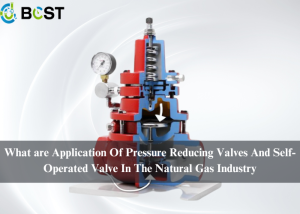
A typical self-operated pressure regulator valve consists of a valve body, a regulating mechanism (such as a diaphragm or spring), an actuator, and a feedback system. When the medium flows through the valve, pressure changes are transmitted to the regulating mechanism. The displacement of the diaphragm or piston moves the valve core, adjusting the flow cross-section to achieve pressure stabilization or reduction.
Advantages of Self-operated Pressure Regulator Valves
No External Energy Required: Self-operated pressure regulator valves do not rely on electricity, gas, or other external energy sources, reducing energy consumption and infrastructure investment. They are especially suitable for scenarios without power or gas supply.
Simple Structure, Easy Maintenance: Due to their simple structure and few internal parts, they have a low failure rate, are easy to maintain and repair, saving operating costs and time.
Quick Response, Accurate Regulation: Self-operated pressure regulator valves use the pressure changes of the medium itself for real-time adjustment. They respond quickly and have high regulation accuracy, meeting the needs of demanding working conditions.
High Reliability: By using a self-regulating method, they reduce reliance on electronic or pneumatic components, lowering the probability of failures due to changes in external conditions and enhancing system reliability.
Practical Applications of Self-operated Pressure Regulator Valves
- Industrial Process Control
Self-operated pressure regulator valves are widely used in pressure control systems in industries such as chemical, petrochemical, power, and metallurgy. For example, in boiler feedwater systems, self-operated pressure reducing valves can effectively maintain stable boiler operation. In chemical reactors, self-operated back pressure valves can ensure constant reaction pressure, optimizing reaction conditions, improving product quality, and increasing production efficiency.
- Fluid Transport Systems
In fluid transport systems for water supply, gas supply, and heating, self-operated pressure regulator valves play a crucial role. For instance, in urban water supply systems, self-operated pressure stabilizing valves can regulate and maintain the water pressure in the pipeline network, ensuring stable water pressure at each user end, and preventing pipe damage or water supply interruptions caused by pressure fluctuations.
- Natural Gas Distribution Systems
In natural gas distribution systems, self-operated pressure regulator valves are used to regulate and stabilize the pressure in the distribution network. This ensures the safe and efficient operation of the gas distribution network, avoiding safety hazards and gas wastage due to pressure fluctuations.
- HVAC Systems
In heating, ventilation, and air conditioning (HVAC) systems, self-operated pressure regulator valves are used to regulate the supply and return water pressure, ensuring efficient system operation and indoor comfort. For example, in air conditioning systems, self-operated pressure reducing valves can adjust the supply pressure of the cooling water, ensuring the normal operation of the air conditioning units.
Importance of Self-operated Pressure Regulator Valves
- Enhancing System Efficiency
Precise control provided by self-operated pressure regulator valves ensures that systems operate in their optimal state, improving energy efficiency. For example, in boiler systems, precise pressure regulation can optimize the combustion process, reduce fuel consumption, and lower operating costs.
- Ensuring Safety
In many industrial applications, pressure stability is directly related to system safety. Self-operated pressure regulator valves provide precise pressure control, preventing safety incidents caused by pressure fluctuations. For instance, in high-pressure natural gas pipelines, the use of self-operated pressure stabilizing valves can prevent serious accidents like pipeline ruptures.
- Reducing Operating Costs
Self-operated pressure regulator valves do not require external energy, reducing energy costs and equipment investment. They are also easy to maintain, with low failure rates, which reduces downtime and maintenance costs. These factors collectively lower the overall operating costs of the system.
- Environmental Protection and Energy Saving
Since self-operated pressure regulator valves can precisely control and stabilize pressure, they prevent medium wastage and improve overall system efficiency, contributing to energy saving and environmental protection. For example, in heating systems, precise pressure control can effectively reduce thermal energy wastage and lower carbon dioxide emissions.
Development Trends of Self-operated Pressure Regulator Valves
With the continuous advancement of industrial automation and intelligence, self-operated pressure regulator valves are also evolving and improving. The future development trends mainly include the following aspects:
- High Precision and High Reliability
Future self-operated pressure regulator valves will further enhance regulation precision and reliability to meet the demands of more challenging operating conditions. Improvements in materials and manufacturing processes will also significantly enhance the durability and corrosion resistance of the valves.
- Intelligence and Digitization
Combining the Internet of Things (IoT) and sensing technology, self-operated pressure regulator valves will move towards intelligence and digitization. Real-time monitoring and data analysis will enable remote monitoring of valve status and fault prediction, improving overall system management and maintenance efficiency.
- Green and Environmental Protection
With increasing environmental requirements, the design and manufacturing of self-operated pressure regulator valves will place more emphasis on energy saving and environmental protection. Using new environmentally friendly materials and optimized designs, the energy consumption and emissions during valve operation will be reduced, promoting sustainable industrial development.
- Modularization and Standardization
Future self-operated pressure regulator valves will develop towards modularization and standardization to meet various operating conditions. Modular design will allow for quick assembly and replacement of valves, improving production efficiency and adaptability.
Conclusion
Self-operated pressure regulator valves, as devices that do not require external power sources, have widespread applications and importance in both industrial and civil fields. With their simple structure, easy maintenance, quick response, and precise adjustment, they play a critical role in various pressure control systems. Through accurate pressure control, self-operated pressure regulator valves not only enhance system efficiency and safety but also effectively reduce operating costs and energy consumption, contributing to energy saving, emission reduction, and environmental protection.
In the future, with continuous technological advancements, self-operated pressure regulator valves will develop towards higher precision, greater reliability, intelligence, environmental friendliness, modularization, and standardization. This will provide higher quality solutions for industrial automation and intelligence. In this development process, the importance of self-operated pressure regulator valves will become even more evident, continuing to provide robust support for pressure control across various industries.


 English
 Arabic
 Russian
 French
 Spanish