
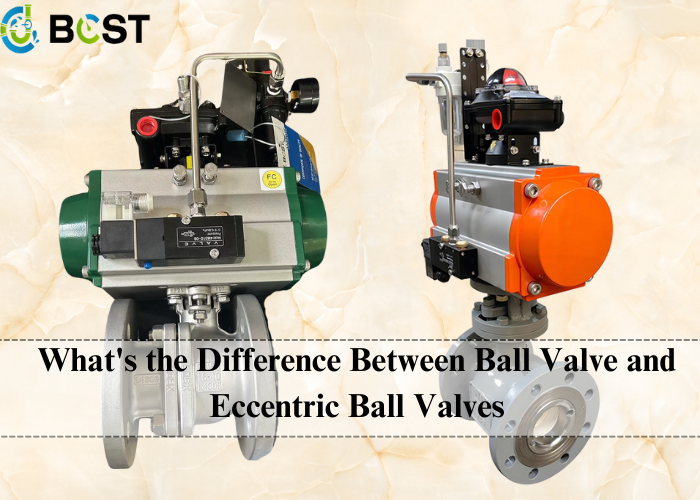
Valves are crucial components in various industrial applications, serving to control the flow of fluids within pipelines. Among the many types of valves available, ball valves and eccentric ball valves stand out due to their unique designs and functionalities. This article will explore the differences between these two types of valves, focusing on their features, advantages, disadvantages, and applicable scenarios.
1. Overview of Ball Valves
1.1 Design and Structure
Шаровые краны are designed with a spherical disc (the ball) that rotates within the valve body to control fluid flow. The primary components include:
Valve Body: The main housing that contains all other components.
Ball: A spherical element with a hole in the center, which allows fluid to pass through when aligned with the flow direction.
Seats: Sealing components that prevent leaks when the valve is closed.
Stem: Connects the ball to the actuator, enabling rotation.
1.2 Functionality
The operation of a ball valve is straightforward:
Open Position: When the ball is rotated to align with the flow path, fluid can flow freely.
Closed Position: Rotating the ball perpendicular to the flow path creates a seal, stopping fluid flow.
1.3 Advantages of Ball Valves
Fast Operation: Ball valves can be opened or closed quickly, making them ideal for applications requiring rapid response.
Minimal Pressure Drop: In the fully open position, they offer very low resistance to flow, reducing pressure loss.
Durability: Constructed from robust materials, ball valves can withstand high pressures and temperatures.
1.4 Disadvantages of Ball Valves
Limited Flow Control: While they excel at fully open or closed positions, they are not suitable for throttling applications.
Potential for Wear: Over time, the sealing surfaces may wear down, leading to leaks if not properly maintained.
1.5 Applications of Ball Valves
Шаровые краны are commonly used in:
Water Supply Systems: For both residential and industrial water distribution.
Oil and Gas: Controlling the flow in pipelines and processing facilities.
Chemical Processing: Suitable for aggressive chemicals due to their robust construction.
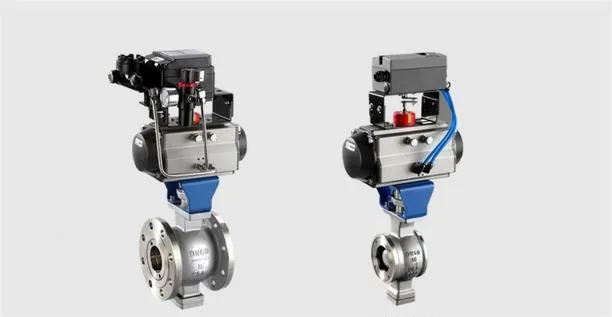
2. Overview of Eccentric Ball Valves
Eccentric ball valves, also known as eccentric plug valves, incorporate a unique design where the ball is offset from the center of the valve body. This design allows for smoother operation and better flow characteristics.
2.1 Design and Structure
Key components of an eccentric ball valve include:
Eccentric Ball: The ball is positioned off-center, providing enhanced flow dynamics.
Valve Body: Similar to standard ball valves but adapted to accommodate the eccentric design.
Seal: Often designed to self-adjust during operation, minimizing wear.
2.2 Functionality
The operation of an eccentric ball valve involves:
Open Position: The eccentric ball rotates to allow fluid to pass through with minimal obstruction.
Closed Position: The ball moves into a sealing position, effectively blocking fluid flow.
2.3 Advantages of Eccentric Ball Valves
Improved Flow Characteristics: The eccentric design reduces turbulence and pressure drop, enhancing overall flow efficiency.
Self-Cleaning Properties: The movement of the ball helps prevent debris accumulation on the sealing surfaces.
Better Throttling Capability: Unlike traditional ball valves, they can perform better in throttling applications.
2.4 Disadvantages of Eccentric Ball Valves
Complexity of Design: The eccentric mechanics can make them more complex and potentially more costly than standard ball valves.
Maintenance Requirements: May require more maintenance due to the moving parts and potential for wear.
2.5 Applications of Eccentric Ball Valves
Eccentric ball valves are often found in:
Wastewater Treatment: Efficiently handling sludge and viscous fluids.
Mining and Mineral Processing: Managing the flow of abrasive materials.
Power Generation: Used in cooling systems and other high-flow applications.
3. Key Differences Between Ball Valves and Eccentric Ball Valves
Understanding the distinctions between these two types of valves is essential for selecting the appropriate valve for a specific application. Below are the main differences based on various parameters.
3.1 Design and Construction
Shape of the Closure Element: Standard ball valves have a spherical closure element, while eccentric ball valves feature an off-center ball.
Flow Path: The flow path in a ball valve is linear, whereas the eccentric design allows for a more streamlined flow with reduced turbulence.
3.2 Operational Functionality
Throttling Ability: Eccentric ball valves offer better performance in throttling situations compared to conventional ball valves, which are primarily on/off devices.
Self-Cleaning: The motion of the eccentric ball can help clean the sealing surfaces, a feature less pronounced in standard ball valves.
3.3 Performance and Efficiency
Pressure Drop: Eccentric ball valves typically exhibit lower pressure drops due to their design, making them more efficient in high-flow applications.
Flow Control: Ball valves are mainly suited for quick shutoff, while eccentric ball valves provide some capability for flow regulation.
3.4 Maintenance and Durability
Wear Resistance: Eccentric ball valves may present more wear points due to their moving parts, requiring more frequent inspections and maintenance.
Lifespan: Both types can be durable, but the longevity will depend on the application, materials used, and maintenance practices.
3.5 Cost Considerations
Initial Costs: Eccentric ball valves may have a higher initial cost due to their complexity and manufacturing.
Long-Term Value: While the upfront cost might be higher, their improved efficiency and lower maintenance needs can result in cost savings over time.
4. Selecting the Right Valve for Your Application
Choosing between a ball valve and an eccentric ball valve depends on several factors related to your specific application requirements.
4.1 Flow Control Needs
If your application requires precise flow control and the ability to handle varying flow rates, an eccentric ball valve may be more suitable. Conversely, for simple on/off control, a traditional ball valve would suffice.
4.2 Fluid Characteristics
Consider the type of fluid being handled. If the fluid is viscous or contains solids, an eccentric ball valve’s self-cleaning properties can be advantageous. In contrast, standard ball valves are more appropriate for clean fluids.
4.3 Pressure and Temperature Conditions
Evaluate the operating conditions, including pressure and temperature. Both types of valves come in various ratings, but eccentric ball valves might provide better performance in high-pressure or high-temperature environments.
4.4 Budget Constraints
Budget considerations play a critical role in valve selection. While eccentric ball valves offer long-term benefits, the initial investment is higher. Assess the total cost of ownership, including potential maintenance savings.
4.5 Industry Standards and Regulations
Ensure that the selected valve meets industry standards and regulations specific to your sector. Compliance with safety and operational standards is vital for ensuring reliability and efficiency.
5. Заключение
In summary, both шаровые краны and eccentric ball valves have distinct features, advantages, and disadvantages. Ball valves are ideal for applications requiring fast, reliable on/off control, while eccentric ball valves excel in applications demanding better flow characteristics and throttling capabilities.
When choosing between the two, consider the specific requirements of your application, including flow control needs, fluid characteristics, operating conditions, budget constraints, and compliance with industry standards. By understanding the differences and evaluating your needs, you can make an informed decision that optimizes performance, reliability, and cost-effectiveness in your fluid control system.


 English
 Arabic
 Russian
 French
 Spanish