
An Engineer’s Guide to the PBV Ball Valve Portfolio: Trunnion vs. Floating vs. Severe Service
For engineers, selecting the right valve is not merely about flow control; it’s about optimizing system performance, ensuring safety, and maximizing operational longevity. When it comes to ball valves, the “PBV” designation often refers to a broad family of high-performance products designed to meet diverse industrial demands. Understanding the nuances between these types – Trunnion-Mounted, Floating, and Severe Service – is critical for making informed decisions that impact everything from budget to plant reliability.
This comprehensive guide from BCST Valve is designed as your go-to reference. We’ll demystify the core mechanics, primary applications, and distinct advantages of each PBV valve type, helping you navigate our extensive portfolio and confidently select the perfect valve for your specific operational challenges.
Whether you’re a project engineer designing a new pipeline, a plant manager optimizing an existing system, or a junior engineer looking to grasp valve fundamentals, this article will equip you with the knowledge to make strategic choices within the PBV valve family.
What is a PBV Ball Valve? A Foundation of Fluid Control
At its core, a PBV ball valve (often denoting “Pressure Balanced Valve” or a specific brand’s high-performance offering) is a quarter-turn valve that controls flow using a rotary ball with a bore. When the ball’s bore is aligned with the pipe, flow occurs; a 90-degree turn blocks the flow. What sets the PBV family apart is its engineering designed for reliability in industrial settings, often surpassing general-purpose ball valves in durability, pressure handling, and specialized features.
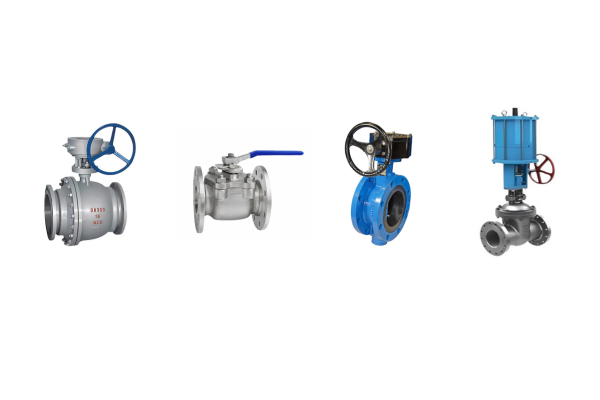
Our PBV portfolio at BCST Valve encompasses designs tailored for different pressure ranges, fluid characteristics, and operational environments:
- Trunnion-Mounted PBV Ball Valves: For high-pressure, large-diameter applications.
- Floating PBV Ball Valves: Versatile and cost-effective for general service conditions.
- Severe Service PBV Ball Valves: Engineered to withstand the most aggressive process environments.
Understanding Trunnion-Mounted PBV Ball Valves: Robustness for High Pressure
The trunnion-mounted PBV ball valve is the workhorse of high-pressure and large-diameter applications. Its design is characterized by a ball that is securely held in place by a trunnion (a mechanical support) at the top and bottom. This prevents the ball from “floating” downstream due to line pressure.
Как они работают:
Instead of the ball pressing against the seat to achieve a seal, the seats themselves are designed to move. Line pressure acts on the upstream seat, pushing it against the stationary ball to create a seal. The trunnion bearing absorbs the thrust from the line pressure, which means operating torque is significantly reduced, even under extreme high-pressure conditions.

Key Advantages:
- High-Pressure Capability: Exceptionally suited for very high-pressure systems due to the fixed ball.
- Reduced Operating Torque: Easier to open and close, resulting in smaller actuators and lower operational costs.
- Excellent Sealing: Often feature spring-loaded seats to ensure tight shut-off, even at low pressures. Some designs also support Double Block and Bleed (DBB) functionality for critical isolation.
- Larger Sizes: Preferred for large-diameter pipelines where the weight of the ball requires support.
Typical Applications:
- Long-distance oil and gas pipelines
- High-pressure processing plants
- Transmission and distribution networks
- Offshore platforms and subsea applications
Exploring Floating PBV Ball Valves: Versatility for General Service
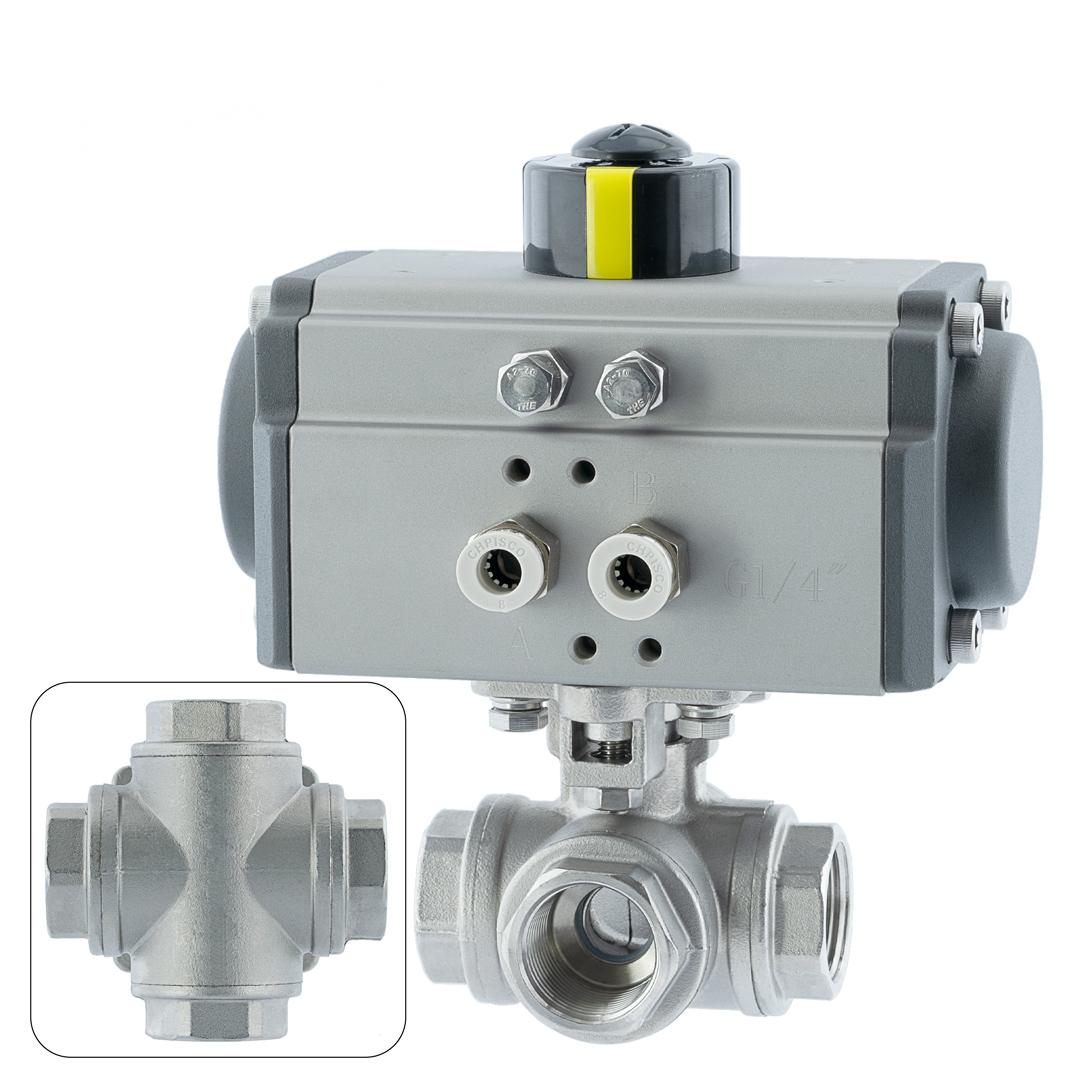
The floating PBV ball valve represents a simpler, yet highly effective, design within the ball valve family. In this configuration, the ball is not mechanically supported by a trunnion. Instead, it is “floating” within the valve body, suspended between the two seat rings.
Как они работают:
When the valve is closed, the upstream line pressure pushes the floating ball against the downstream seat. This pressure-energized contact forces the ball tightly against the seat, creating a seal. The effectiveness of the seal increases with higher line pressure. While simple, this design relies on the integrity of the downstream seat to maintain shut-off.
Key Advantages:
- Cost-Effective: Simpler design and fewer components make them generally less expensive than trunnion-mounted valves.
- Compact Design: Often smaller and lighter, making them easier to install in confined spaces.
- Excellent Shut-off: Provides a tight seal, especially at moderate pressures, due to the pressure-energized seating.
- Wide Range of Materials: Available in various body and trim materials for different fluid compatibilities.
Typical Applications:
- General utility lines (water, air, non-corrosive gas)
- Lower to medium pressure process lines
- Системы отопления, вентиляции и кондиционирования воздуха
- Water treatment plants (non-potable applications generally, unless specialized materials)
Conquering Challenges with Severe Service PBV Ball Valves
Severe Service PBV ball valves are not a separate design category like floating or trunnion, but rather a robust, highly-engineered subset. These valves are built to endure the most punishing industrial environments where standard valves would fail prematurely. “Severe Service” typically refers to conditions involving:
- High Temperatures: Extreme heat, superheated steam, or cryogenic cold.
- High Pressures: Beyond the scope of standard trunnion valves.
- Абразивные материалы: Slurries, catalyst fines, pulp, carbon particles.
- Corrosive Media: Strong acids, bases, chlorides, highly reactive chemicals.
- Erosive Conditions: High velocity, flashing, or cavitation.
- Demanding Cycles: Frequent operation or critical safety shut-off (Emergency Shut-Down).
Design Features for Extreme Conditions:
- Metal Seats with Hard Coatings: Instead of soft seats, severe service valves feature precise metal-to-metal seating, often coated with hard materials like Tungsten Carbide (WC), Chrome Carbide (CrC), or Ceramics to resist abrasion and erosion.
- Special Alloys: Constructed from exotic materials such as Hastelloy, Inconel, Monel, Titanium, or Duplex/Super Duplex Stainless Steels to resist extreme corrosion and high temperatures.
- Прочная конструкция: Thicker walls, heavy-duty bearings, and specialized stem packing to handle thermal cycling and high pressures.
- Engineered Flow Paths: Designed to minimize turbulence, cavitation, and flashing effects, especially in choked flow conditions or for pressure letdown.

Key Advantages:
- Unparalleled Durability: Drastically extended operational life in environments that rapidly destroy conventional valves.
- Reliable Shut-off: Maintains tight seals even with abrasive media or high pressure differentials.
- Reduced Maintenance & Downtime: Minimizes costly repairs and production interruptions.
- Повышенная безопасность: Critical for containing hazardous or high-energy fluids.
Typical Applications:
- Refineries and petrochemical plants (catalyst lines, heat exchangers)
- Power generation (steam lines, boiler feed water)
- Mining (slurry transport, high-pressure processing)
- Целлюлозно-бумажная промышленность
- Chemical processing of highly corrosive substances
Trunnion vs. Floating vs. Severe Service: A Comparative Overview
| Характеристика | Floating PBV Ball Valve | Trunnion PBV Ball Valve | Severe Service PBV Ball Valve |
|---|---|---|---|
| Опора для мяча | Unsupported, floats between seats | Supported by trunnion at top & bottom | Typically trunnion, but highly engineered |
| Механизм уплотнения | Upstream pressure pushes ball against downstream seat | Upstream pressure pushes seat against stationary ball | Highly robust metal-to-metal seating, specialized coatings |
| Рабочее давление | Low to moderate | Moderate to very high | Extreme high, high differential |
| Диапазон размеров | Typically smaller (up to 8-10 inches) | Larger sizes (from 2 inches up to 60+ inches) | Wide range, built to handle application stresses |
| Material & Features | Carbon steel, stainless steel, soft seats | Carbon steel, stainless steel, often with soft seats or metal seats for specific applications | Exotic alloys, metal seats with hard coatings, engineered trim, specialized packing |
| Лучшее для | General utility, standard process, cost-sensitive projects | High-pressure pipelines, large-diameter applications, reduced actuation torque | Abrasive, corrosive, high-temp, high-pressure drop, flashing applications where reliability is paramount |
Making the Right PBV Valve Selection for Your Project
Choosing the correct PBV ball valve is a critical step in any fluid handling system design. It requires a detailed understanding of your application’s specific parameters:
- Process Media: What fluid is being handled? Is it corrosive, abrasive, clean, or hazardous? This defines material compatibility requirements.
- Operating Pressure & Temperature: The minimum and maximum pressure and temperature will dictate the valve’s pressure-temperature rating and material limitations.
- Требования к потоку: Do you need full bore to minimize pressure drop or is reduced bore acceptable?
- Приведение в действие: Manual, pneumatic, hydraulic, or electric actuation – often linked to valve size and frequency of operation.
- Частота циклов: How often will the valve operate? High-cycle applications require more robust designs.
- Environmental Conditions: Is the valve exposed to harsh weather, corrosive atmospheres (e.g., coastal areas)?
- Safety & Regulatory Requirements: Are there specific industry standards (e.g., API 6D for pipelines, NACE for sour service) or safety certifications needed?
BCST Valve’s engineers are specialists in these distinctions. We encourage early consultation to ensure the optimal selection, preventing costly issues down the line.
Заключение
The PBV valve portfolio offers sophisticated solutions for virtually any industrial fluid control challenge. By understanding the fundamental differences between Trunnion-mounted, Floating, and Severe Service ball valves, engineers can confidently specify the right valve, optimizing performance, reliability, and ultimately, the success of their projects.
At BCST Valve, we don’t just supply valves; we provide engineered solutions. Our commitment to quality, backed by extensive experience, ensures that every PBV valve leaving our facility is built to perform. Trust our expertise to guide your selection and deliver the robust fluid control your critical systems demand.
Ready to explore the ideal PBV valve for your application?


 English
 Arabic
 Russian
 French
 Spanish