
Choosing the wrong valve causes huge headaches, from poor system performance to expensive breakdowns. You need the right valve for the job, but telling them apart is tricky. I’m here to clear that up for you.
The biggest difference in the globe valve vs gate valve debate is their job. Gate valves are simple on/off switches for your pipeline. Globe valves are like dimmer switches, designed to precisely control how much fluid gets through.
Getting this choice right is one of the most basic things in any fluid control system. But I see people mix them up all the time. They think a valve is a valve. That mistake leads to huge problems later on, messing with efficiency and even safety. I’ve helped so many clients fix issues that started with this simple mix-up. When you understand the “why” behind each valve, you’ll save yourself a lot of trouble and build better systems. So let’s get into the details, and you’ll be choosing the right valve with confidence every time.
Understanding the Fundamental Functions of Ворота и Шаровые клапаны
You hear “gate valve” and “globe valve” thrown around, but you need to understand what each one is for. Mixing them up is a common mistake that leads to real system problems. Let’s make their roles crystal clear.
A gate valve works like an actual gate in a fence. Its job is to be either completely open or completely shut. A globe valve, in contrast, is built to control how much flow gets through. It uses a special plug inside for very fine control.
Diving Deeper into Their Purpose
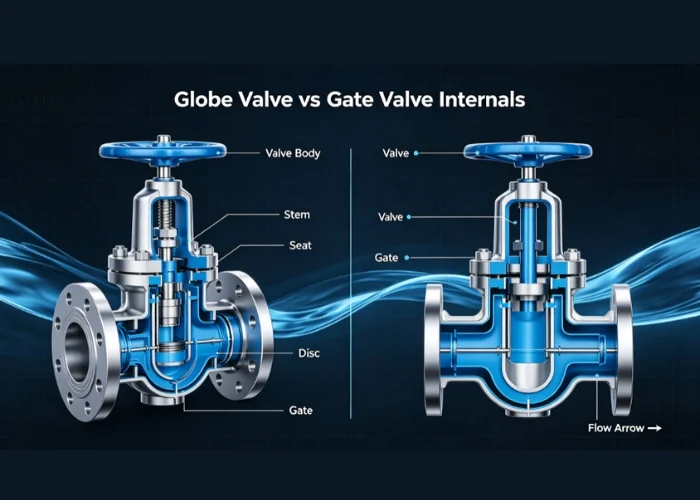
The best way to get the globe valve vs gate valve difference is to picture the fluid moving inside. I’ll never forget when this really clicked for me. I was young, just learning the ropes on my father’s factory floor. I watched our technicians assemble both types of valves, with all the internal parts laid out on the workbench. It was a real lightbulb moment. It’s not just about stopping the flow. It’s all about как you control it.
The Gate Valve: An All-or-Nothing Approach
The gate valve is named for its simple, effective mechanism: a solid gate that slides straight up and down across the pipe. When you turn the handwheel, you’re just lifting that gate completely out of the way. This gives you a wide-open, straight path for the fluid to pass through. Because there’s nothing in the way, there’s almost no pressure drop. This makes it perfect for isolating equipment or shutting off a long pipeline. It’s like a light switch. You only use it for “on” or “off.” Throttling a gate valve is a sure way to destroy it.
The Globe Valve: The Art of Precision Control
The globe valve is a completely different beast, built for finesse. Inside its globe-shaped body, the fluid doesn’t just flow straight through. It’s forced into an S-shaped path. It flows up through an opening (the seat), and a plug moves down into that opening to control the flow. This winding path is what allows you to “throttle” the flow with incredible precision. You dial it in anywhere from 100% open to fully closed. That tricky path, however, creates a lot of resistance, which means a high pressure drop. It’s a trade-off. You give up the low resistance of a gate valve to gain total control, just like a dimmer switch for your pipes.
Key Design Differences Dictate Gate and Globe Valve Performance
From the outside, they look pretty much the same. A body, a handwheel, a stem. Don’t let that fool you. This surface-level similarity leads people to use them incorrectly, which hurts the entire system. Let’s look under the hood.
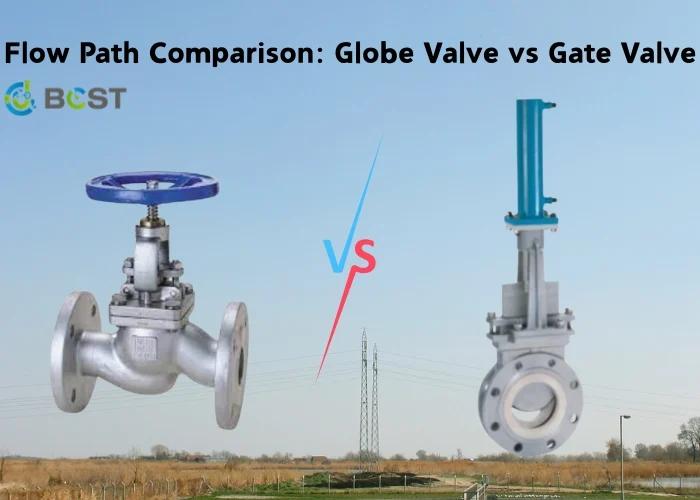
The deep design difference in the globe valve vs gate valve battle is all about the flow path and the sealing part. A gate valve has a flat gate that slides through the flow. A globe valve has a plug that moves against a seat, forcing the fluid to zig-zag.
Diving Deeper into Design and Mechanics
I often talk with experienced engineers like Hassan, a technical chief from Nigeria who designs entire refineries. For him, every little detail matters. He once told me, “Emily, a little bit of pressure drop over one valve is nothing. But over a thousand valves? It costs us a fortune in energy.” His point is that these design details have huge real-world costs. In the globe valve vs gate valve contest, these internal mechanics are everything.
Internal Flow Path
This is the single biggest difference, and it defines them.
- Задвижка: The path is straight as an arrow when the valve is open. This means the fluid flows smoothly with very little resistance or pressure drop. It’s designed to be invisible to the system when it’s open.
- Globe Valve: The fluid must make at least two sharp turns. This difficult path is what allows it to control flow, but it’s also why it causes a high pressure drop. It’s a bump in the road, by design.
Возможность дросселирования
This is where they really show their different personalities.
- Задвижка: It’s terrible for throttling. If you leave it partly open, the fluid rushes through the small opening at high speed. This creates intense vibration and turbulence that eats away at the gate and seats. The valve starts chattering and is damaged very quickly. Soon, it won’t even seal properly when you try to close it.
- Globe Valve: This is what it was born to do. The plug and seat are built to handle the forces of partially open flow. It smoothly and steadily changes the flow rate, giving you stable control without self-destructing.
This table breaks it down simply:
| Характеристика | Задвижка | Шаровой клапан |
|---|---|---|
| Main Job | On/Off Isolation | Throttling / Flow Control |
| Путь потока | Straight, Open | S-shaped, Restricted |
| Перепад давления | Очень низкий | Высокий |
| Throttling Ability | Terrible (causes damage) | Превосходно |
| Уплотнения | With a sliding gate | With a plug on a seat |
| Typical Use | Mainline shutoff, block valves | Flow regulation, bypass lines |
Using a gate valve where you need control is a recipe for disaster. And using a globe valve for simple shutoff is just wasting money.
Matching the Right Valve to the Right Application
You have the theory. Now, using it in the real world is what really matters. A wrong choice risks safety and burns through your budget. Let’s talk about where each of these valves belongs.
The rule is simple: use gate valves for isolation where it stays fully open or closed. Use globe valves anywhere you need to adjust or regulate the flow, like on a steam or cooling line.
Diving Deeper into Real-World Scenarios
Every project I’ve been on has taught me the same lesson: match the valve to the job. I remember a client who couldn’t get their process temperature right. It turned out they were using a gate valve to try and control the cooling water flow. It was a nightmare. The valve would either leak or vibrate so badly you could hear it across the plant. As soon as we swapped it for a proper globe valve, the system stabilized perfectly. That’s the real-world impact of the globe valve vs gate valve choice. It’s about stability, reliability, and making your equipment last.
When to Use a Gate Valve
Think of any place you need to “set it and forget it.” Its job is to open a line for service or shut it for maintenance.
- Main Water Lines: Think about the main water line coming into your plant. You need full flow when it’s on and a perfect seal when it’s off. A gate valve is perfect.
- Pipeline Isolation: In big pipelines for oil, gas, or chemicals, giant gate valves are used to block off sections for repair. Low flow resistance is key here to save on pumping costs.
- Block Valves: A gate valve is placed before and after major equipment like a pump. This lets you shut off the flow to service that pump without shutting down everything.
In these jobs, the valve isn’t operated often. When it’s open, you want it to act like it’s not even there.
When to Use a Globe Valve
Think of any place you need to turn a dial, not just flip a switch. It’s for active and frequent adjustments.
- Охлаждающая вода Systems: Here, you need to adjust coolant flow to keep equipment at a perfect temperature. A globe valve gives you that fine control.
- Steam Lines: Controlling steam flow for heating or running a turbine requires the precision of a globe valve. It’s a matter of both efficiency and safety.
- Fuel Oil Systems: To control a burner’s heat, you need to carefully regulate the fuel flow. That’s a job for a globe valve.
- Bypass Lines: These are small lines that go around a piece of equipment. A globe valve allows you to manually control flow if the main piece is down for maintenance.
Now that you get the globe valve vs gate valve difference, choosing the right supplier is your next step. Technical knowledge is half the battle; the other half is a partner who delivers quality valves you can trust. My father built Клапан BCST on responsibility and quality, and that’s a legacy I’m proud to continue. We make a full range of gate and globe valves, and our team is always here to help you pick the perfect one for your job.
Часто задаваемые вопросы (FAQ)
Q1: Can I use a gate valve for throttling flow?
A: No. Throttling a gate valve is a critical mistake. It causes severe vibration that destroys the valve’s seals and internal parts, leading to failure. It is only designed for fully open or fully closed service.
Q2: Which valve creates a higher pressure drop in the system?
A: The globe valve creates a significantly higher pressure drop. Its internal S-shaped flow path, necessary for control, creates much more resistance than a gate valve’s straight-through path.
Q3: Are globe valves always installed in a specific direction?
A: Yes. Standard globe valves are unidirectional and have a flow arrow on the body. Installing them backward causes serious operational problems and prevents proper sealing.
Q4: For a simple on/off application, which valve is more cost-effective?
A: A gate valve is the more cost-effective option for simple on/off jobs. Its simpler design makes it the economical choice when you don’t need the fine-control features of a globe valve.
Final Thought
Choosing between a globe valve vs gate valve is simple: gate valves for on/off isolation, globe valves for flow control. Making the right choice ensures system efficiency and longevity. At BCST, we help you get it right, providing reliable valves backed by decades of expertise.


 English
 Arabic
 Russian
 French
 Spanish