
Struggling with unreliable flow control in your water systems? Leaks and pressure drops disrupt your operations, costing you time and money.
Simply put, a gate valve for water gives you a dead-stop. They create a straight, clear path when open and a bubble-tight seal when closed. This simple on/off function makes them the perfect go-to for ensuring reliability and efficiency in water systems.
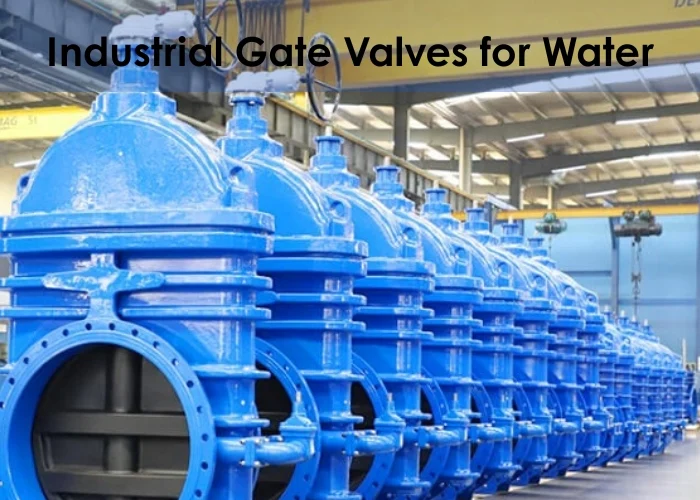
You see these valves everywhere, even if you don’t give them a second thought—the big iron wheels on pipes in factories or under the street. What makes them so essential? They are the unsung heroes that keep our water flowing safely. It reminds me of something Hassan, a chief engineer I’ve worked with for years, always says: “Emily, a system is only as strong as its weakest valve.” He’s absolutely right. It all comes down to choosing the right valve for the job. Let’s get into why so many experienced engineers like him put their trust in gate valves for water.
Задвижки for Water Use a Simple On/Off Mechanism for Control.
Are you confused about how a simple valve can manage massive water pipelines? Using them incorrectly leads to system damage and dangerous water hammer effects.
A gate valve for water works with a flat gate that slides up and down. When you turn the handle, a stem lifts the gate, clearing a path for full, unobstructed flow. Turn it the other way, and the gate lowers to completely block the water with a tight seal.
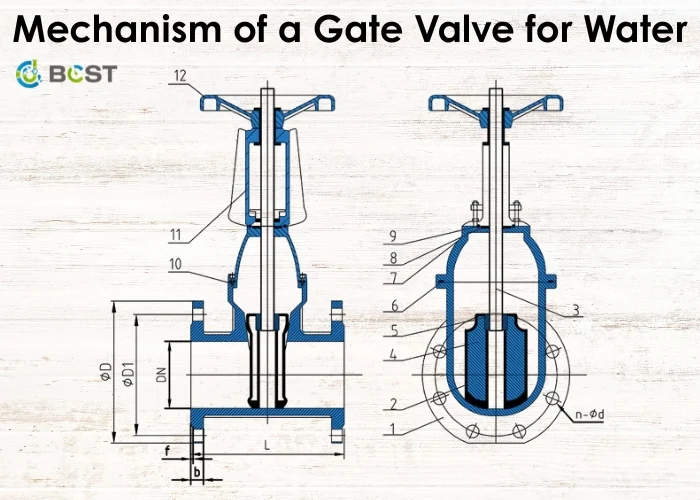
Diving Deeper into On/Off Functionality
The biggest thing to understand about gate valves for water is this: they are either on or off. That’s it. You must never use them to adjust or “throttle” the flow. When the valve is left half-open, water blasts through that small space at high speed. This causes intense vibration and turbulence that eats away at the gate and seat material. Engineers call this damage “wire drawing,” and over time, it ruins the valve’s ability to create a tight seal. I’ve seen Hassan drill this into the minds of junior engineers. He says, “A gate valve is a door, not a faucet. You open it all the way, or you close it all the way. There is no in-between if you want the system to last.” That simple rule is why they are perfect for isolating parts of a pipeline for maintenance or for emergency shutdowns.
There are two main designs.
Rising Stem vs. Non-Rising Stem
The choice between these two comes down to where and how you will use the valve.
| Характеристика | Задвижка с поднимающимся штоком | Non-Rising Stem Gate Valve |
|---|---|---|
| Stem Movement | The stem rises out of the valve when open. | The stem turns, but stays at the same height. |
| Position Indicator | The visible stem shows the valve’s position at a glance. | There is no external indicator of valve position. It requires a separate indicator. |
| Typical Use | Above-ground, where a quick visual check is essential. | Underground or in tight spaces with limited vertical room. |
| Техническое обслуживание | The stem threads are outside, easy to access for cleaning and lubricating. | The stem threads are inside, exposed to the water, which leads to corrosion. |
For jobs above ground, the rising stem valve (known as OS&Y) is the standard. Being able to tell if a line is open or closed with a quick glance is a massive safety feature in any plant. For fire hydrants buried underground or in a cramped utility closet, the compact non-rising stem is the correct choice.
Key Design and Material Features Define Gate Valve Reliability.
Are you worried about valve failure causing expensive downtime in your water system? Choosing the wrong material or design quickly leads to corrosion and leaks.
Gate valves for water are so reliable because their design is simple and tough. The straight flow path means less pressure loss. Plus, using materials like coated ductile iron or stainless steel fights off corrosion, making them last for years.
Diving Deeper into Design and Materials
The secret to the long life of a gate valve for water is its simple design. Fewer moving parts mean fewer things to break. But the real difference between a good valve and a great one is in the details of its construction and the materials used.
Minimal Pressure Drop for Maximum Efficiency
Think about water flowing through a pipe. When a gate valve is fully open, it’s a clean, straight section of that pipe. The gate tucks completely out of the way. This is a “full-bore” design, and it’s a huge deal. This means very little friction and almost no pressure loss as the water passes through. In big systems, like a city’s water supply, low pressure drop means less powerful pumps are needed to move the water around. That saves a lot of energy and money over the years.
Durability Through Smart Material Choices
Choosing the right material is everything. I once asked Hassan why he insisted on resilient-seated gate valves with a specific epoxy coating for a drinking water project. He told me, “Emily, you can’t cut corners with potable water. The ductile iron body gives it strength, the fusion-bonded epoxy coating stops rust from touching the water, and the rubber seat guarantees no leaks. It’s about public health.”
Here is a breakdown of the common materials:
- Ductile Iron: This is the workhorse for city and industrial water lines. It’s strong and affordable. It is coated with a tough epoxy paint to protect it from rust.
- Stainless Steel (304/316): For high-purity water, food production, or corrosive water, stainless steel is the answer. The 316 grade excels at resisting salt and other chlorides.
- Bronze & Brass: These are used for smaller gate valves in buildings and on boats. They are excellent at resisting corrosion, especially from saltwater.
Resilient Seated vs. Metal Seated
Next, let’s talk about how the valve actually seals. Today, the industry standard is the resilient seated gate valve. This means the gate is coated in a tough rubber (like EPDM). When it closes, the rubber presses against the smooth inside of the valve, creating a perfect, bubble-tight seal. This design also pushes away any dirt or grit, so it seals cleanly every time. The older metal-seated design is reserved for very high temperatures or for fluids with a lot of abrasive particles, where rubber would get destroyed.
Gate Valves for Water Are Critical in Many Industrial Applications.
Do you think gate valves are only used for municipal water mains? You are missing their crucial benefits for your own industrial water applications.
Gate valves for water are workhorses across all kinds of industries. You find them in power plant системы охлаждения, factory water lines, wastewater treatment, and vital fire protection systems where simple, reliable “off” is a matter of safety.
Diving Deeper into Industrial Roles
We all know these valves deliver our drinking water, but they are true workhorses in tough industrial settings, too. Their simple, rugged design is perfect for isolating a piece of equipment so a maintenance crew can work on it safely. Different industries use them in specific ways. In a wastewater plant, for instance, the valve has to shut off a flow that’s full of sludge and solids. For that, a special type, the knife gate valve, is needed. Its sharp edge slices right through the gunk.
But in general, their job is the same. Let’s look at where they’re non-negotiable.
| Industrial Application | Specific Use Case | Why Gate Valves for Water Are Ideal |
|---|---|---|
| Очистка сточных вод | Shutoff for tanks, pumps, and sludge lines. | They provide a tight seal for maintenance, and the full-bore design prevents clogs. For thick sludge, a knife gate is used. |
| Производство электроэнергии | Cooling water intake lines, boiler feedwater isolation. | They handle huge volumes of water with minimal friction loss to keep the plant efficient. They are built tough for constant use. |
| Горная промышленность | Dewatering pumps and lines moving abrasive slurry. | Their heavy-duty construction handles the rough-and-tumble environment. Special linings are used to resist wear from sand and rock. |
| Системы противопожарной защиты | Main water supply for sprinkler systems. | Here, reliability is everything. The valve stays open for years but must close perfectly when needed. They must be certified (UL/FM) for this job. |
| Производство | Process water for cooling machinery, washing products. | They allow you to shut down one part of a factory for repair without stopping the water supply to all the other areas. |
The core need is always the same: shutting off the flow completely and with confidence. I saw this firsthand on a project with Hassan at a new chemical plant. He needed to be certain his teams could safely isolate any pump or heat exchanger for repairs. The simple visual check of a rising stem gate valve gave his workers that confidence. It’s this rock-solid reliability that makes gate valves for water a true cornerstone of industry.
A valve is only as good as the company that made it. An engineer like Hassan needs to know his supplier is an expert who stands behind their product. That’s the world I grew up in. At BCST Valve, my family has been making high-quality gate valves for water and other tough industrial uses for decades. We live and breathe the details—from material sourcing to coating tests—that make a valve last. Take a look at our solutions at https://bcstvalve.com/ and see how we can help your project.
Frequently Asked Questions (FAQ)
Q1: Can gate valves be used to regulate water flow?
A: No, you must only use them for fully open or fully closed service. Using them to throttle flow causes damage and makes the valve leak and fail.
Q2: What is the difference between a rising stem and non-rising stem gate valve?
A: A rising stem moves up and down on the outside, so you can see if the valve is open. A non-rising stem stays put, which is necessary for tight spaces or underground pipes.
Q3: How do I choose the right material for my gate valve for water?
A: It depends on your water. For drinking water, use coated ductile iron. For corrosive water or food-grade systems, go with stainless steel. When in doubt, check with an expert.
Final Thought
Choosing the right gate valves for water is a critical decision for your system’s safety, efficiency, and long-term reliability. To ensure you have dependable performance, partner with an expert. Let Клапан BCST be your trusted, expert source for high-quality industrial valves that will protect your operations.


 English
 Arabic
 Russian
 French
 Spanish