
Your process requires stable flow, but your batches are inconsistent. You think you need a new valve, but the terms “flow control valve” and “throttle valve” are being used interchangeably. You’re worried about making another expensive mistake.
This confusion is common and costly. A throttle valve can’t compensate for pressure changes, leading to unstable flow and ruined product. The key is understanding that a true flow control valve и throttle valve perform two very different jobs in your system.
A true flow control valve is part of a system that maintains a precise flow rate regardless of pressure changes. A throttle valve simply creates a restriction; its flow rate will change if pressure fluctuates. One offers precision, the other offers simple resistance.
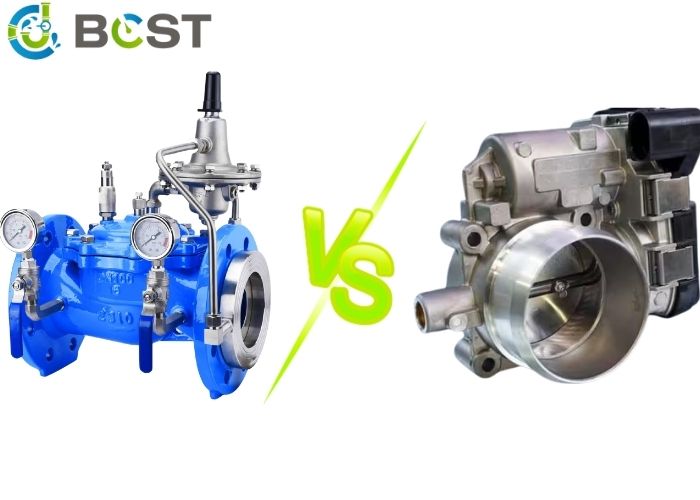
What Makes a Flow Control Valve So Precise?
Your chemical dosing system needs to deliver exactly 10 gallons per minute, every single time. A drop in line pressure causes the flow to dip to 8 GPM, ruining the batch. This is the exact problem a flow control valve is designed to prevent.
A flow control valve is a smart device. It’s not just a valve; it’s part of a control loop. Its job is to maintain a constant flow rate even when upstream or downstream pressures change.
It does this by using a feedback system. The “flow control valve” system consists of a control valve (the muscle), a flow meter (the eyes), and a controller like a PLC or DCS (the brain). The controller constantly compares the actual flow rate from the meter to your desired setpoint. If it detects a difference, it automatically adjusts the valve opening to bring the flow back on target. This is what makes it pressure-independent and incredibly precise. This type of active regulation is the defining characteristic of a true flow control valve application.
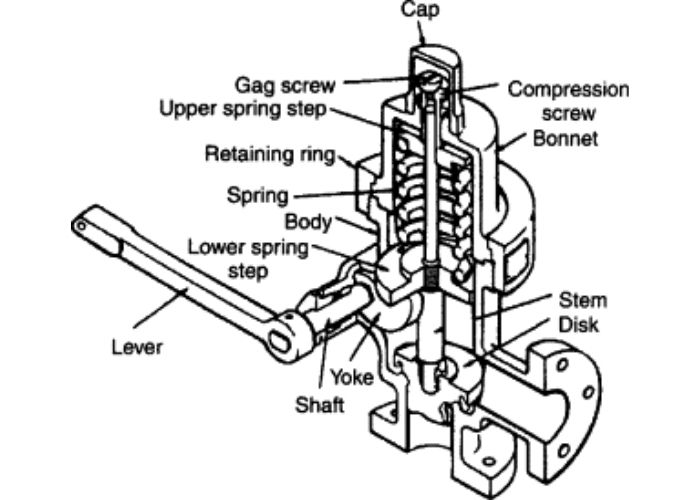
Let’s dive deeper into how this works in practice.
A System in Action
Imagine you’re filling a tank and need the process to be perfect. Here’s how the flow control valve system ensures that:
- You Set the Target: You tell the controller, “I need a constant flow of 50 liters per minute.”
- The System Monitors: The flow meter, installed downstream of the valve, measures the fluid passing through it. It sends a signal to the controller, saying, “The current flow is 49 liters per minute.”
- The Brain Reacts: The controller sees the difference between your setpoint (50) and the actual flow (49). It calculates that a small adjustment is needed.
- The Muscle Moves: The controller sends a new signal to the positioner on the flow control valve, telling it to open slightly.
- The Goal is Achieved: The valve opens a fraction more, the flow increases to exactly 50 liters per minute, and the controller continues to monitor and make tiny adjustments to hold it there.
If the main line pressure suddenly drops, a simple throttle valve would let the flow rate fall. But the flow control valve system sees the drop instantly via the flow meter and opens the valve further to compensate, keeping your flow perfectly stable.
Where You Need a Flow Control Valve
This level of precision is critical in many industries. You absolutely need a flow control valve system for:
- Химическая обработка: For precise dosing and blending to ensure product quality and safety.
- Фармацевтическое производство: Where batch consistency is mandated by strict regulations.
- Boiler Control: To precisely manage feedwater and fuel flow for efficiency and safety.
- Трубопроводы: To ensure a consistent transfer rate of oil, gas, or other valuable fluids.
In short, anywhere you need to control the rate of flow independently of pressure, a flow control valve system is the only reliable solution.
So, What Is a Throttle Valve Then?
You have a simple water line and just need to reduce the flow a bit. You don’t need pinpoint accuracy; you just need less. You install a basic ball valve and crank the handle halfway. You’ve just used a throttle valve.
A throttle valve is a much simpler device. Its only job is to create a restriction in the line to reduce flow or pressure. It works by “throttling,” or obstructing, the flow path. Think of it like kinking a garden hose.
The key difference is that a throttle valve is pressure-dependent. Its position is fixed. If you set a throttle valve to 50% open, the amount of fluid that passes through it will go up and down as the line pressure changes. It has no “brain” to compensate for these fluctuations. Any valve used to simply restrict flow without an active feedback loop is acting as a throttle valve.
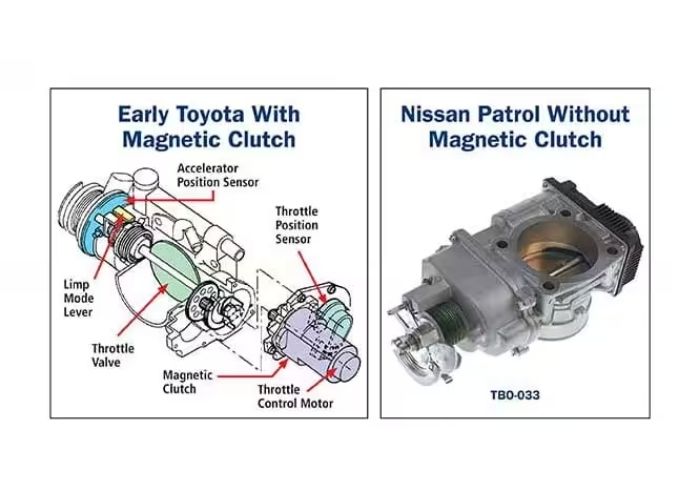
Let’s explore this simple but important concept.
Position-Based, Not Flow-Based
The core a throttle valve operates on is its position. You set it and forget it.
- Action: You use a handwheel or a simple actuator to set a globe valve to 40% open.
- Scenario 1: The upstream pressure is high (e.g., 10 bar). The flow through your throttle valve might be 100 liters per minute.
- Scenario 2: The upstream pressure drops (e.g., 7 bar) due to another process starting up. The position of your throttle valve is still 40% open, but the flow now drops to 80 liters per minute.
The valve did its job—it provided a fixed restriction. But it did not and cannot control the flow rate. Common valves used for throttling include:
- Шаровые клапаны: Excellent for throttling due to their internal design.
- V-Port Шаровые краны: Designed with a v-shaped notch to provide good control characteristics.
- Needle Valves: Used for very fine, low-flow throttling.
- Standard Ball or Butterfly Valves: Can be used for throttling, but their control is not as linear or stable as a globe or v-port valve.
Where You Use a Throttle Valve
You don’t always need the complexity of a full flow control valve system. A simple throttle valve is perfect for:
- Системы отопления, вентиляции и кондиционирования воздуха: For balancing water flow to different zones.
- General Water Service: For reducing pressure or flow in a simple utility line.
- Pump Discharge: As a manual bypass or to create back-pressure.
- Any application where coarse adjustment is acceptable and pressure is relatively stable.
Using a throttle valve in these situations is smart and cost-effective. The mistake is trying to use one where a true flow control valve is needed.
Часто задаваемые вопросы
1. What is the main difference between a flow control valve and a throttle valve?
A flow control valve system maintains a constant flow rate regardless of pressure changes. A throttle valve simply creates a fixed restriction, so its flow rate will vary if pressure fluctuates.
2. Can I use a throttle valve for precise flow control?
No, not on its own. To achieve precise flow control, you must integrate the throttle valve into a closed-loop system with a flow meter and a controller. At that point, it becomes a flow control valve system.
3. Is a ball valve a throttle valve?
It can be used as one. While standard on/off ball valves provide poor throttling, specially designed v-port ball valves are excellent for this purpose and are often used as the final control element in a flow control valve loop.
4. When should I definitely choose a flow control valve system?
Choose a flow control valve system whenever your process requires a consistent, repeatable flow rate for quality, safety, or efficiency, especially in applications like chemical dosing, blending, or batching where line pressure is not stable.
Заключение
A flow control valve maintains a set flow rate. A throttle valve provides a set restriction. Understanding this fundamental difference is the key to designing a stable, reliable process. Don’t let confusing terms lead you to the wrong solution. At BCST, we can help you choose the right valve for the right job, ensuring your system performs perfectly.


 English
 Arabic
 Russian
 French
 Spanish