
Do You Think Brass Ball Valves Are Really That Cheap? Think Again.
You’re looking at two options for a general-purpose valve of the ball. The brass option is significantly less expensive than the stainless steel. It feels like a quick, easy win for your budget. But this initial saving is deceptive.
That cheap brass valve of the ball is highly likely to fail from corrosion within a year, leading to leaks, disruptions, and costly emergency replacements that erase all initial savings.
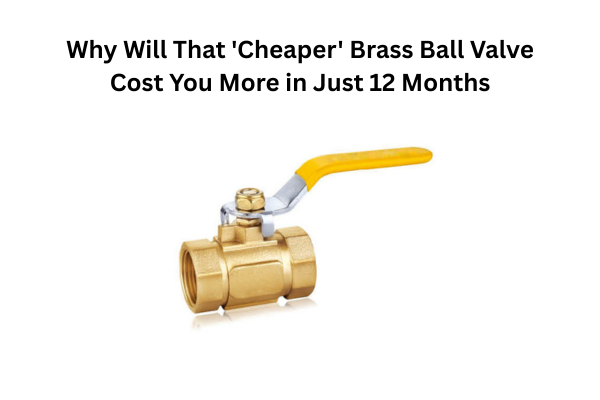
What is Dezincification and Why Does it Destroy Your Brass Valve of the Ball?
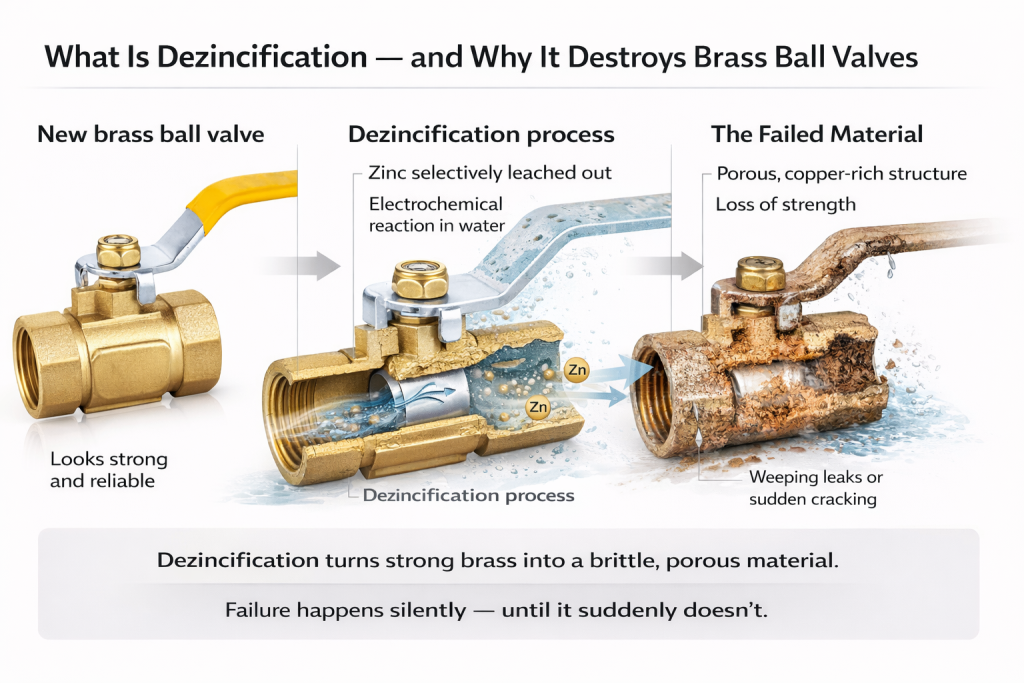
Your plant’s new brass valve of the ball looks solid, but a chemical process is at work, turning the strong metal into a weak, porous material. This process is called dezincification. It’s an electrochemical reaction where water selectively leaches zinc out of the alloy, leaving behind a brittle, copper-rich structure that is prone to cracks and leaks.
Dive Deeper: The Hidden Enemy Inside Your Valve
- The Chemical Reaction: Water that is slightly acidic or high in chlorides creates a small electrical current between the zinc and copper in brass. This causes the more reactive zinc particles to dissolve, leaving the copper behind.
- The Mechanical Result: The resulting porous structure is weak and brittle. It begins to weep and eventually loses its mechanical integrity, leading to a crack or complete failure under normal system pressure.
- Why Stainless Steel is Immune: Stainless steel (304 or 316) is an alloy of iron, chromium, and nickel. It contains no zinc. Therefore, dezincification cannot occur.
| Характеристика | Low-Cost Brass Ball Valve | Шаровой кран из нержавеющей стали |
|---|---|---|
| Zinc Content | Высокий | Нет |
| Susceptibility to Dezincification | Very High | Нет |
| Typical Lifespan in Water | Short | Long |
How Does a Small Leak Become a Huge Expense? The Total Cost of Ownership
The true cost of a failed valve of the ball is the initial purchase price PLUS the cost of skilled labor, operational downtime, and potential damage. This Total Cost of Ownership (TCO) for a cheap brass valve often exceeds the cost of a stainless steel valve within the first year.
Calculating the Real Price Tag
Let’s break down the real cost of that “cheaper” brass valve of the ball over a two-year period:
- The Initial Purchase: This is the most visible number and the most misleading. The brass valve of the ball has a low initial price.
- The Inevitable Failure: Dezincification causes weeping or failure.
- The Replacement Cost: This is where hidden costs multiply.
- Replacement Part: Buying another valve.
- Labor: Skilled technicians must isolate, drain, remove, and install.
- Downtime: Production loss while the line is shut down.
| Cumulative Cost Breakdown | Cheap Brass Ball Valve | Шаровой кран из нержавеющей стали |
|---|---|---|
| Year 1 Purchase & Install | Lower Initial Cost | Higher Initial Cost |
| Year 2 Replacement & Labor | + High Recurring Cost | Нет |
| Total 2-Year Cost | VERY HIGH | STABLE (Lower TCO) |
Conclusion: Invest in Reliability, Not Replacements
The upfront price of a valve of the ball is only a fraction of its true cost. By choosing stainless steel over cheap brass for most water applications, you are not spending more; you are investing in reliability, preventing future leaks, and making the decision with the lowest Total Cost of Ownership.


 English
 Arabic
 Russian
 French
 Spanish