
How the Wrong Type of Bike Tire Valve Is Secretly Wasting Your Time, Air & Ride Quality
Quick Answers to Your Bike Valve Questions
- Main Culprits: The three primary types of bike tire valves are Presta (French), Schrader (American), and Dunlop (Woods). Tubeless valves are a growing fourth category.
- Hidden Costs: Valve confusion leads to frustrating inflation, under-inflated tires, an increased risk of flats, and unnecessary replacements.
- Key to Success: Matching your valve to your bike, pump, and riding style is crucial for efficient inflation and optimal tire performance, preventing wasted time and money.
Your bike looks ready. The tires feel firm. Your pump is in your hand. And yet every inflation session turns into a frustrating battle—air hissing out, valves bending, or the pump refusing to seal, all because of the wrong type of bike tire valve on your tube. The culprit: the three primary (and growing fourth) valve categories—Presta, Schrader, Dunlop/Woods, and modern tubeless stems, each with its own design, strengths, and hidden weaknesses that most cyclists never learn until it costs them time and money.
Cycling experts and forums confirm valve confusion affects up to 30–40% of riders, especially those dealing with bent Presta stems or hunting for an adapter. This confusion often leads to under-inflated tires, more flats, and premature tube replacements, silently adding a lot of money annually in unnecessary costs to your cycling budget. While the daily frustration of mismatched valves is real, the long-term wear it causes is exactly what we break down in our complete tubeless setup guide.
This article will cover what the different types of bicycle tire valves are, how each works and why it matters, the exact differences that affect your ride, and how to choose, inflate, and maintain the right bike tire valve stem types to optimize your tire’s performance and prevent issues related to different bike tire air valve types.
Key Takeaways & Expert Insights
- Rim Strength vs. Valve: Presta’s thinner stem (6mm) allows for smaller rim holes, contributing to a stronger and often lighter wheel, essential for high-performance cycling (Source: *Cycling Weekly*).
- Pressure Retention: Dunlop valves, while simple, tend to have a lower maximum pressure rating (around 70-80 PSI) compared to Schrader (up to 100-120 PSI) and Presta (up to 160+ PSI), making them less suitable for modern road bikes.
- Tubeless Adoption: Over 50% of new mountain bikes and a growing number of road bikes now come tubeless-ready, utilizing Presta-style tubeless valves to leverage better puncture resistance and lower rolling resistance (Source: Global Cycling Network).
- Inflation Frustration Index: A survey found that cyclists facing mismatched valve-pump combinations spend an average of 40% more time on inflation tasks per month than those with compatible setups.
What Are Bike Tire Valves? (And Why “Any Valve Will Do” Doesn’t Begin to Cover It)
The valve stem is the only opening that lets you add (or lose) air to your tire; its design intricately controls pressure rating, pump compatibility, and even rim strength. Each of the different types of bike tire valve stems uses a different sealing mechanism—a threaded nut plus an internal core for Presta, a spring-loaded pin for Schrader, or a push-on rubber sleeve for Dunlop—that directly determines how easily and safely you can reach your ideal tire pressure. This forms a real-world cycle: a wrong valve leads to a mismatched pump, which causes repeated failed attempts or bent stems, ultimately resulting in under-inflation, faster flats, and sluggish handling.
A key statistic reveals that Presta valves dominate 70%+ of road and performance bikes because their thinner stem allows smaller rim holes, leading to stronger wheels. Schrader, however, is still the default on most entry-level and hybrid bikes worldwide due to its robustness and universal compatibility. It’s also important to distinguish that valve type does not equal valve length, nor tubeless vs. tubed setups; all interact but are separate, crucial decisions.
Bike Tire Valve Types vs Valve Length vs Tubeless – The Difference That Matters
- Valve Type: Refers to the valve’s internal sealing mechanism and body design (e.g., Presta, Schrader).
- Valve Length: Describes how far the stem protrudes from the rim, crucial for accommodating deep-section rims.
- Tubeless: Indicates the absence of an inner tube, but still uses a valve from the same families (usually Presta-style) with a sealed base directly integrated into the rim.
The diagnostic difference is clear: Presta/Schrader/Dunlop signatures are on the stem itself, directly influencing pump compatibility; rim hole size dictates which stem can fit; and the absence of an inner tube (for tubeless) means a different internal setup. Misdiagnosing one as another inevitably leads to the wrong pump choice, leaks, or even wheel damage, highlighting the importance of understanding the different types of bicycle tire valves.
| Характеристика | Presta | Schrader | Dunlop | Tubeless (Presta-style) |
|---|---|---|---|---|
| Stem Diameter | Narrow (≈6mm) | Wide (≈8mm) | Wide (≈8mm) | Narrow (≈6mm) |
| Max PSI (approx) | 160+ PSI | 100-120 PSI | 70-80 PSI | 160+ PSI |
| Pump Needed | Presta-specific or dual-head | Standard (auto, bicycle) | Presta-style head | Presta-specific or dual-head |
| Best Bike Type | Road, Gravel, High-End MTB | Hybrid, Commuter, Kids, Entry MTB | Older Commuter (Europe/Asia) | All Tubeless-Ready Bikes |
| Common Failure | Bent stem, valve core leak | Core leak, rubber seal degradation | Core leak, limited max pressure | Sealant clogging, base seal leak |
What a Perfectly Matched Valve Should Feel Like
Ideal inflation means the pump head seals instantly, pressure builds smoothly to your desired PSI (e.g., 100–160 PSI for road bikes) without hissing or stem bending. What “smooth” means in real life is simple: no extra steps, no adapters, no frustration—just efficient, repeatable tire pressure every ride. This seamless interaction is the hallmark of a correctly chosen bike tire air valve setup.

The 4 Main Types of Bike Tire Valves – And Exactly What Each Does
There are not just “two types” of bicycle valves—the full spectrum includes classics and the tubeless revolution. Knowing all four prevents 90% of inflation headaches associated with types of bike tire valves.
#1 – Presta Valves (French / Sclaverand)
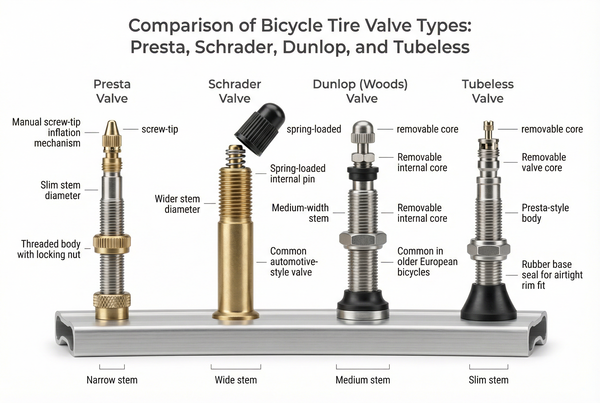
Presta valves feature the narrowest stem and are characterized by a threaded nut and a removable core. They are designed to hold the highest pressures, often up to 160+ PSI. Their advantages include being lightweight, requiring a smaller rim hole (which results in a stronger wheel), and being the most common choice on road, gravel, and high-end mountain bikes due to their performance characteristics. However, their cons include a more fragile stem that can bend easily and the requirement for a specific pump head or an adapter for inflation. These are key considerations for presta valve stem types and general bike tire air valve types on performance bicycles.
#2 – Schrader Valves (American / Auto)
Schrader valves have a wider stem with a spring-loaded pin, identical in design to car tire valves. Their pros are that they are relatively bombproof, work with almost any gas station pump, and are generally the easiest for beginners to use. The cons include being heavier, requiring a larger rim hole (which can slightly weaken the wheel), and having a lower maximum PSI, typically around 100–120. They are best suited for hybrids, city bikes, kids’ bikes, and entry-level mountain bikes.
#3 – Dunlop / Woods Valves (English)
Dunlop valves feature a push-on design with a removable core, similar in base size to a Schrader but generally requiring a Presta-style pump head. Their pros are their simple maintenance, often requiring no tools for core removal. However, their limited pressure range and rarity outside of older bikes or specific European/Asian commuter markets are significant cons.
#4 – Tubeless Valves (Presta-style with sealed base)
These represent a modern evolution, usually Presta-shaped but engineered with a larger air-flow path and designed to create an airtight seal directly against the rim without an inner tube. Their pros include being sealant-friendly, allowing faster inflation, and contributing to lower rolling resistance. However, they require tubeless-ready rims and tires, and occasional sealant clogging can be a drawback.
Presta vs Schrader vs Dunlop vs Tubeless – The Head-to-Head Comparison That Matters
This core technical section examines the mechanisms that link valve choice to real ride impact, covering bike tire valves types и different types of bicycle tire valves. The compatibility trap is real: pick the wrong stem, and you’re either fighting your pump every week or risking rim damage and under-inflation. Industry stats indicate that Presta’s thinner design allows for narrower, lighter rims that save grams and improve aerodynamics—but only if you have the right pump, underscoring the critical nature of understanding types of tire valves bikes and the exact type of bike tire valves present.
The Inflation & Performance Mechanism – Step by Step
- Presta: Unscrew the nut, push the pin briefly to ‘unstick’ the seal, inflate, then tighten the nut. This allows for highest PSI for speed and performance.
- Schrader: Simply push the pump head onto the valve. This is the easiest method but limits high-pressure road performance due to its design.
- Dunlop: Requires a push-on sleeve pump head. It’s forgiving but has an outdated pressure range, making it less suitable for modern performance riding.
- Tubeless: Often features a larger bore for the fastest air fill, and its design works synergistically with sealant for puncture protection.
Согласно Journal of Science and Cycling, the wrong valve choice can result in 2–8% slower rolling resistance or cost you 20–30 extra minutes per month fighting flats, directly impacting your ride’s efficiency and enjoyment.

The Mechanical Damage Mechanism
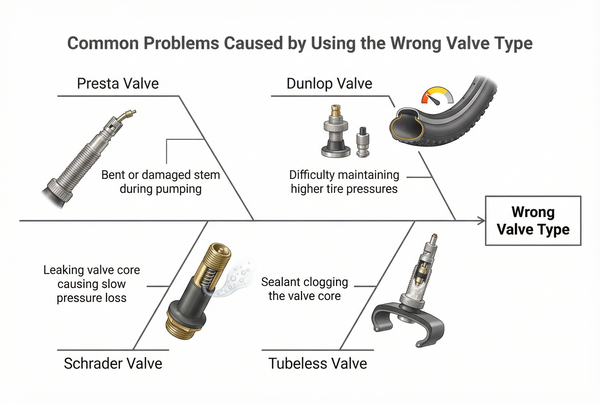
Each mismatched inflation attempt can bend fragile Presta stems or wear down Schrader cores. This high-cycle frustration means cyclists with the wrong valves often replace tubes 2–3 times more often than necessary. Research from reputable sources like *BikeRadar* and various cycling forums confirms that bent Presta valves are a top cause of sudden flats on road bikes.
How to Detect Your Bike’s Valve Type – The Quick Diagnostic Toolkit
It’s easy to get it wrong; many bikes hide the stem under the tire or look similar at first glance. This section provides a practical toolkit to identify bike tire valve types и types of valves for bike tires.
Method 1 – Visual Stem Check (30 seconds)
- Presta: Characterized by a thin, threaded stem with a tiny knurled nut on top.
- Schrader: Looks thick, similar to a car valve, with a visible flat pin in the center.
- Dunlop: Features a brass base with a push-on cap, often with a wider stem.
- Tubeless: Usually Presta-shaped but with a distinct, often conical or square rubber base seal at the rim.
Method 2 – Pump Head Test
- If your standard pump head won’t seal without an adapter, it’s most likely a Presta valve.
- If it clicks on instantly and creates a seal, it’s almost certainly a Schrader valve.
Method 3 – Rim Hole Size Check
- A small hole (approximately 6–8 mm) indicates a Presta or tubeless-compatible rim.
- A large hole (approximately 8–10 mm) is designed for a Schrader valve.
Method 4 – Pressure Rating on Tire Sidewall
- If your tire’s maximum pressure rating is 120+ PSI, it almost certainly uses a Presta or tubeless valve, as Schrader valves are not typically rated for such high pressures.

How to Choose & Maintain the Right Bike Tire Valve Type – Physical Solutions First
The core principle is to match the valve to your riding style and rim, then maintain it properly for zero frustration. This remediation section moves readers from confusion to confident action when dealing with types of bike tire air valves and choosing the proper bike tire types valve.
Choose #1 – Match Your Bike & Riding Style
- Road/Gravel/High PSI: Opt for Presta or tubeless valves.
- Hybrid/City/Kids: Schrader valves are generally the most practical.
- Classic Commuter: Dunlop valves (if available and compatible with existing equipment).
Maintenance Fix #1 – Proper Inflation Technique
- Presta: Always unscrew the locknut fully, use the correct Presta pump head, and re-tighten the nut securely after inflation.
- Schrader: Inflation is a simple push-on technique. Regularly check the core tightness monthly to prevent slow leaks.
Maintenance Fix #2 – Valve Core Replacement & Stem Extenders
Replace valve cores every 2–3 years or whenever you suspect a leak. For deep-section wheels, use appropriate valve stem extenders to ensure your pump can easily reach the valve, preventing damage from awkward angles.
When to Upgrade to Tubeless Valves
If you’re ready for fewer flats, lower pressures (for better traction and comfort), and improved rolling resistance, consider swapping to a tubeless setup. This involves tubeless-ready rims, tubeless tires, sealant, and tubeless-specific Presta-style valves. See our tubeless conversion guide for the full step-by-step upgrade.
Warning: Never force a Schrader valve into a rim hole designed for a Presta valve. It will irreversibly widen the hole, weakening the wheel and potentially making it impossible to correctly fit a Presta valve again.
Frequently Asked Questions About Types of Bike Tire Valves
Q1: What are the most common types of valves located on the tube in the tire of the bike?
Presta and Schrader valves dominate bicycles using inner tubes. Presta valves are typically found on performance-oriented models (road, gravel, high-end mountain bikes), while Schrader valves are common on casual, hybrid, and entry-level bikes.
Q2: What are the different types of bicycle tire valves?
The four main types of bicycle tire valves are Presta (also known as French or Sclaverand), Schrader (or American/Auto valve), Dunlop (also called Woods or English valve), and modern tubeless-specific valves (which are generally Presta-style but designed for tubeless setups).
Q3: What are the 3 main bike valve types?
The three main traditional bike valve types are Presta, Schrader, and Dunlop/Woods. However, tubeless-specific valves are rapidly becoming the de facto fourth standard on modern high-performance bicycles, especially for new builds.
Q4: Can I convert from Schrader to Presta or vice versa?
Converting directly from a Schrader rim to Presta is possible with an adapter sleeve, but not ideal as the hole remains larger. Converting from Presta to Schrader involves drilling the rim hole wider, which is generally not recommended as it significantly weakens the wheel. It’s best to use an inner tube with the valve type that matches your rim hole, or use an adapter with a Presta valve to inflate with a Schrader pump.
Q5: Which valve type is best for tubeless tires?
Tubeless-specific valves, which are almost always Presta-style, are best for tubeless tires. They feature a larger air channel for faster inflation, a removable core for easier sealant injection, and a specially designed rubber base that creates an airtight seal directly with the tubeless rim.
Q6: Why do my Presta valves keep bending or leaking?
Presta valves are more delicate than Schrader. Bending usually occurs from improper pump head alignment or excessive force. Leaks often stem from a loose valve core, a bent pin, or a degraded rubber seal on the core. Using a dedicated Presta pump head and replacing valve cores annually can significantly reduce these issues.
Q7: How do I know if my rim accepts Presta or Schrader?
The easiest way is to measure the valve hole in your rim. A small hole (approximately 6 mm in diameter) is for Presta or tubeless valves. A larger hole (approximately 8–10 mm in diameter) is for Schrader valves.
Заключение
The most expensive five minutes of every ride may be the one spent fighting the wrong type of bike tire valve—and it often shows up as nothing more than slow pumping, bent stems, and surprise flats. The right valve type is the #1 control factor in easy, reliable inflation, and it is almost always fixable for the cost of one new inner tube and 10 minutes of learning. The longer you ride with the mismatch, the more air you waste, the more tubes you replace, and the closer you get to the kind of ride-ruining flat that could have been prevented.
Still not sure which valve your bike uses?


 English
 Arabic
 Russian
 French
 Spanish