
Выбор правильного клапан for your industrial application can be challenging. An incorrect choice can lead to operational failures, safety hazards, and increased maintenance costs over time.
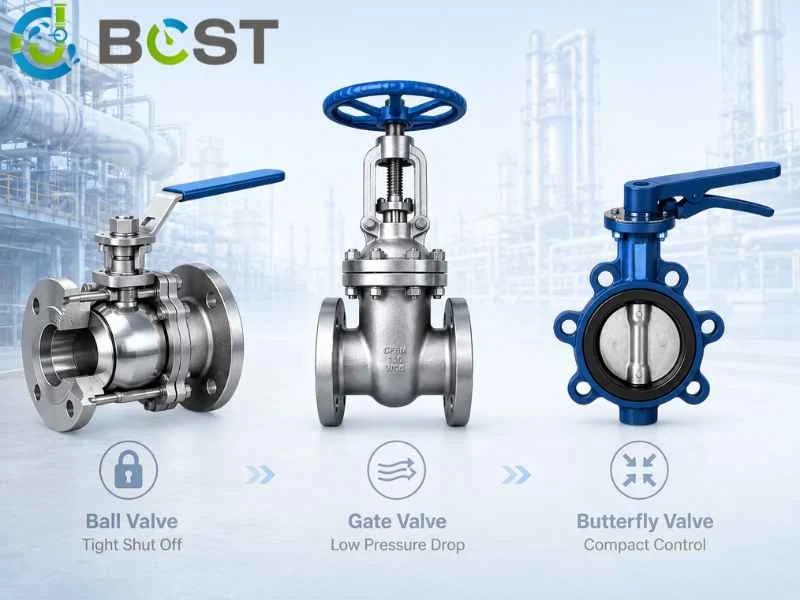
The best valve choice depends on your specific needs. Шаровые краны offer the tightest shut-off. Задвижки provide minimal flow restriction. Заслонки are compact and cost-effective for large-diameter pipes. Each has a distinct role in fluid control systems.
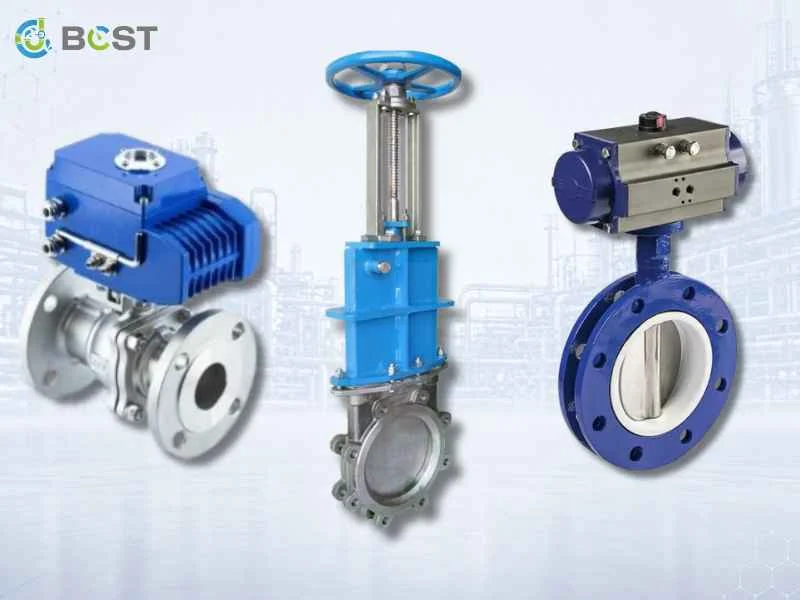
Understanding the fundamental differences in design, function, and application is crucial for selecting the most reliable and cost-effective solution for your project. This article breaks down the key characteristics of ball, gate, and butterfly valves to help you make an informed decision.
Understanding the Ball Valve: Tight Shut-Off and Reliability
When your process demands a perfect, leak-free seal, the ball valve is often the top contender. Its simple yet effective design ensures reliable performance in critical applications.
A ball valve provides excellent shut-off using a rotating ball with a central bore. This quarter-turn operation is fast and requires low torque. It is ideal for on/off services where bubble-tight sealing is essential to prevent product loss or ensure process safety.
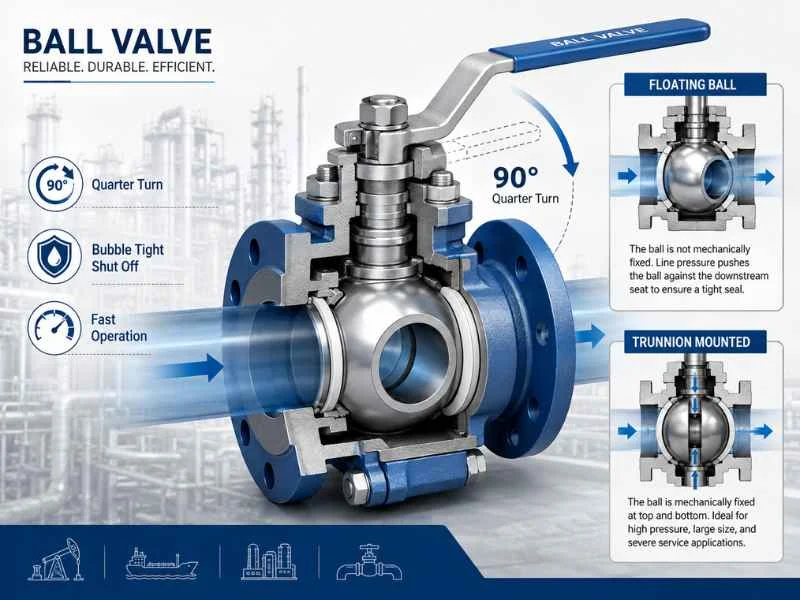
A ball valve is a quarter-turn valve, meaning the handle turns 90 degrees to move from fully open to fully closed. This quick action is a significant advantage in emergency shutdown (ESD) systems or for processes requiring rapid cycling. The sealing mechanism is highly effective because the valve’s seats wipe the ball’s surface clean during operation, preventing buildup that could cause leaks.
Key Design Features
There are two primary designs for ball valves: floating and trunnion mounted.
- Floating Ball Valves: The ball is held in place by two elastomeric seats and “floats” slightly downstream against the seat under pressure. This design is common in smaller sizes and lower pressure applications.
- Trunnion Mounted Ball Valves: The ball is supported by a top and bottom stem, or trunnion, which absorbs the pressure load. This reduces seat wear and lowers operating torque, making them suitable for larger sizes and high-pressure services.
The material selection for the ball and seats is critical for compatibility with the process fluid’s temperature, pressure, and chemical properties. Common materials include stainless steel, carbon steel, and various alloys for the body, with PTFE or metal seats for demanding conditions. When making your selection, a high-quality шаровой клапан from a trusted manufacturer ensures long-term reliability.
The Gate Valve: Unobstructed Flow for On/Off Service
When your primary goal is to minimize pressure drop across the valve in the fully open position, a gate valve is the classic solution for isolation service.
A gate valve uses a flat or wedge-shaped gate that moves perpendicular to the flow. When fully open, it creates a straight-through, unobstructed path. This design is perfect for applications where maintaining flow efficiency and minimizing turbulence is critical.
A gate valve is a multi-turn valve, requiring several turns of the handwheel to move from open to closed. This slow operation prevents water hammer in pipelines but makes it unsuitable for applications needing quick cycling. Its primary function is on/off isolation, not throttling. Using a gate valve for throttling can cause severe seat erosion and vibration, leading to premature failure.
Design and Application
Gate valves are available in several designs, with the stem configuration being a key differentiator.
- Rising Stem (OS&Y): The stem rises and lowers as the valve is operated, providing a clear visual indication of the valve’s position. This is the most common type for industrial applications.
- Non-Rising Stem: The stem does not move up or down, making it suitable for installations with limited vertical space, such as underground services.
Gate valves excel in services with slurries and viscous fluids because the straight flow path allows for easy passage. They are widely used in large-diameter pipelines for water distribution, oil and gas transmission, and power plants. Due to its design, a задвижка provides reliable bidirectional shut-off, making it a versatile choice for basic isolation tasks where flow efficiency is paramount.
The Butterfly Valve: A Compact and Cost-Effective Choice
For large-diameter pipes where space and weight are major constraints, the butterfly valve presents a compelling alternative to traditional gate or ball valves.
A butterfly valve controls flow with a disc that rotates on a central stem. Its simple, lightweight design makes it less expensive and easier to install, especially in sizes above 4 inches. It is a quarter-turn valve, offering fast operation for both on/off and throttling services.
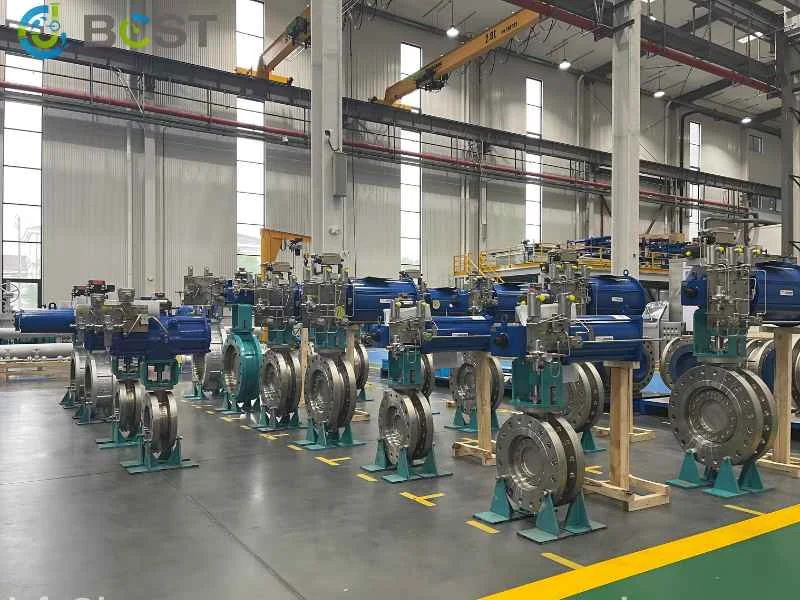
The main drawback of a butterfly valve is that the disc is always present in the flow path, even when fully open. This creates a pressure drop across the valve, though it is generally lower than that of a globe valve. For many applications, this pressure drop is acceptable when weighed against the valve’s significant cost, weight, and space savings. To learn more about its fundamental workings, you can explore the details of what is a butterfly valve and its various types.
From Concentric to Triple Offset
The evolution of the butterfly valve has expanded its application range significantly.
- Концентрические (с упругим сиденьем): The stem is centered in the disc, which is centered in the pipe bore. These are used for low-pressure, general-purpose applications like water distribution.
- Double Offset: The stem is offset from the center of the disc and the pipe bore. This design reduces seat wear and lowers torque.
- Тройное смещение: A third offset is added to the seating geometry, creating a metal-to-metal seal that is bubble-tight. This allows high-performance поворотный клапан models to be used in high-pressure, high-temperature, and critical services once reserved for ball or gate valves.
Key Comparison: Ball Valve vs Gate Valve vs Butterfly Valve
Choosing the correct valve requires a direct comparison of their primary characteristics. The following table summarizes the key differences to guide your selection process based on your project requirements for flow, shut-off, and cost.
| Характеристика | Шаровой клапан | Задвижка | Заслонка |
|---|---|---|---|
| Shut-Off (Sealing) | Excellent, often bubble-tight | Good, but can be prone to wear | Good to excellent (triple offset) |
| Путь потока | Unobstructed (full-bore) | Unobstructed, straight-through | Obstructed by the disc |
| Перепад давления | Очень низкий | Самый низкий | Low to moderate |
| Операция | Быстро (четверть оборота) | Медленный (многооборотный) | Быстро (четверть оборота) |
| Дросселирование | Poor (can cause seat damage) | Very Poor (causes severe erosion) | Good to excellent |
| Размер и вес | Умеренный | Large and heavy | Compact and lightweight |
| Стоимость | Умеренный | High, especially in large sizes | Low, especially in large sizes |
| Typical Use | High-pressure on/off, process control | Pipeline isolation, services with low ∆P | Water, HVAC, large-diameter on/off and control |
This table highlights the trade-offs. If your top priority is zero leakage and fast operation in a high-pressure system, a ball valve is a strong choice. If you need to isolate a section of a large pipeline with minimal impact on flow, a gate valve is the traditional and reliable option. If you are working with a large-diameter line and need a cost-effective, lightweight valve for on/off or control, the butterfly valve is likely the best fit.
Frequently Asked Questions (FAQ)
1. What is the main difference in a ball valve vs gate valve vs butterfly valve comparison?
The main difference lies in their closing mechanism and flow path. A ball valve uses a rotating ball for tight shut-off. A gate valve uses a sliding gate for unobstructed flow. A butterfly valve uses a rotating disc, making it compact and cost-effective for large pipes. Each is suited for different applications based on sealing, pressure drop, and cost priorities.
2. For high-pressure shut-off, which is better: ball valve, gate valve, or butterfly valve?
A ball valve, particularly a trunnion-mounted design, is generally the best choice for high-pressure shut-off. Its design provides a bubble-tight seal that is highly reliable under pressure. While high-performance triple offset butterfly valves can handle high pressures, ball valves are often preferred for critical isolation in services like oil and gas processing.
3. When should I choose a butterfly valve over a ball valve or gate valve?
Choose a butterfly valve when you are working with large pipe diameters (typically over 4 inches) and need a cost-effective, lightweight, and compact solution. They are excellent for water distribution, HVAC systems, and general chemical services. They are also a good choice for throttling applications where precise flow control is needed.
4. In a ball valve vs gate valve vs butterfly valve scenario, which is worst for throttling?
A gate valve is the worst for throttling or regulating flow. Partially opening a gate valve creates high fluid velocity and turbulence, which causes severe erosion on the gate and seats. This leads to vibration, noise, and rapid valve failure. Gate valves should only be used in fully open or fully closed positions.
5. Which valve type offers the lowest pressure drop in a ball valve vs gate valve vs butterfly valve comparison?
The gate valve offers the lowest pressure drop. When fully open, it provides a straight, unobstructed path that is the same diameter as the pipe. This “full-bore” design minimizes friction loss and turbulence, making it the most efficient choice for applications where maintaining system pressure is critical, such as long-distance pipelines.
Final Thought
In the ball valve vs gate valve vs butterfly valve debate, there is no single best answer—only the right valve for the job. Your choice depends entirely on the specific needs of your application: tight shut-off, unrestricted flow, or compact, low-cost design. BCST offers a complete range of high-quality industrial valves to meet your project’s demands.
To ensure optimal performance, safety, and reliability, always base your selection on process conditions. Contact our team today to discuss your project and receive an expert recommendation tailored to your needs.


 English
 Arabic
 Russian
 French
 Spanish