
Are Push Connect Ball Valves Reliable? A Pro’s Take on Longevity
Since their introduction, push connect ball valves have revolutionized plumbing, making fast, solder-free connections accessible to professionals and DIYers alike. Their convenience is undeniable. However, a lingering question often surfaces, especially among those accustomed to traditional soldering or crimping: “Are push connect ball valves truly reliable for long-term use?”
At BCST Valve, we understand these concerns. After over two decades in valve manufacturing, we can confidently state that, when properly selected and installed, modern push connect ball valves are highly reliable and engineered for impressive longevity. This guide dives into the technology, the professional standards, and what truly contributes to their lasting performance.

The Foundation of Reliability: Engineering & Materials
The “pro’s take” on reliability starts with understanding the engineering. Push connect valves aren’t just “friction-fit”; they feature sophisticated internal mechanisms designed for superior gripping and sealing power.
Quality Materials for Enduring Performance
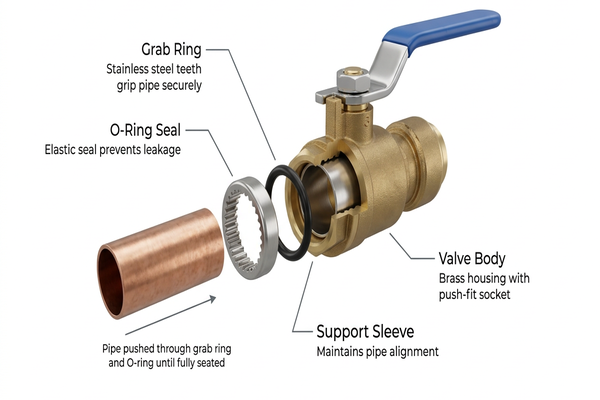
- Lead-Free Brass Body: Most high-quality push connect valves, including BCST’s, are constructed from sturdy DZR (dezincification-resistant) lead-free brass. This material resists corrosion and degradation from water chemicals, ensuring structural integrity over decades.
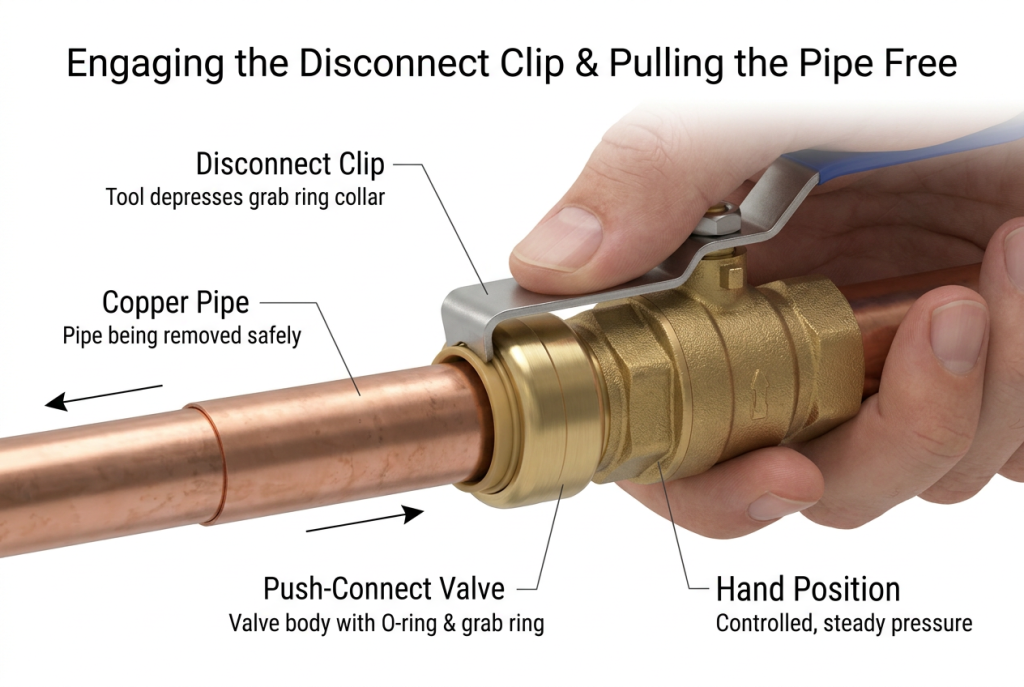
- Stainless Steel Grab Ring: The core gripping mechanism uses precision-engineered stainless steel teeth. These teeth firmly bite into the pipe’s exterior, creating a secure, unidirectional hold that strengthens under pressure.
- EPDM O-Ring Seal: The watertight seal is provided by an EPDM (Ethylene Propylene Diene Monomer) O-ring. EPDM is known for its excellent resistance to heat, cold, ozone, and water (including chlorinated water), making it ideal for potable water systems.
Industry Certifications: Your Assurance of Quality
Reliable push connect valves aren’t just built well; they’re tested rigorously. Look for the following certifications, which indicate adherence to strict standards:
- NSF/ANSI 61 & NSF/ANSI 372: Certifies that the valve is safe for potable water applications and is lead-free.
- CSA B125.3 / ASSE 1061: Specifies performance criteria for plumbing fittings, including push-fit connections.
- UPC/IPC: Uniform/International Plumbing Code compliance for residential and commercial installations.
Addressing the Longevity Myth: “Will It Last?”
The biggest concern often revolves around long-term performance. Will the seal degrade? Will the connection weaken? For a properly installed, quality valve, the answer is no, it’s designed to last.
| Concern | Pro’s Response (The Reality) |
|---|---|
| “The O-ring will dry out and leak.” | High-grade EPDM O-rings are designed for continuous immersion in water and resist degradation, cracking, and drying for decades under normal operating conditions. |
| “The grip will fail under pressure.” | The stainless steel grab ring’s teeth are designed to increase their grip as water pressure strengthens, acting as a natural anti-pullout mechanism. Tested to withstand high pressures far exceeding typical household limits. |
| “It’s not as strong as solder.” | While visually different, a properly installed push connect joint meets and often exceeds the burst pressure ratings of the pipes themselves. Tensile strength is more than adequate for plumbing applications. |
| “They can only be used temporarily.” | This is a common misconception. Push connect valves are approved for permanent in-wall and underground installations per plumbing codes, highlighting their proven durability. |
Factors Influencing Push Connect Valve Longevity
While the technology is sound, ultimate longevity depends on several practical factors:
- Proper Installation: This is paramount. A clean, square, deburred pipe cut, and full insertion to the correct depth are non-negotiable. Learn exactly how in our guide: How to Install a Push Connect Ball Valve in 5 Easy Steps.
- Water Quality: Excessive sediment or corrosive water can, over many years, potentially degrade any plumbing component. Normal municipal water doesn’t pose an issue.
- System Pressure & Temperature: Adhere strictly to the manufacturer’s specified pressure and temperature ratings. Operating outside these ranges can compromise the seals and materials.
- Pipe Material & Condition: Ensure compatibility with copper, PEX, or CPVC, and avoid using them on pipes that are severely corroded, pitted, or damaged. Use correct PEX stiffeners where required.
- Environmental Exposure: While rated for concealed spaces, extreme direct UV exposure or constant freezing/thawing cycles in unprotected outdoor areas can reduce lifespan (as it would for most plumbing materials).
- Chemical Exposure: Avoid exposure to harsh chemical environments that are not compatible with the valve’s EPDM seals or brass body.
Applications Where Reliability Shines
Push connect ball valves prove their reliability in a myriad of applications, demonstrating their consistent performance once installed correctly:
- Under-Sink Connections: Supplying water to faucets, dishwashers, and water filters.
- Water Heater Installations: Perfect for hot and cold supply lines, offering quick replacement capability.
- Whole-House Water Shut-offs: When properly sized and installed, they serve reliably as main shut-off points.
- PEX Plumbing Systems: A natural, efficient fit for contemporary PEX installations.
To fully understand their appropriate use cases and limitations, consult our detailed guide: When (and When Not) to Use a Push Connect Ball Valve.
Conclusion: Trust in Modern Plumbing Innovation
From a professional standpoint, the reliability of push connect ball valves is no longer a question mark, but a proven fact. Modern manufacturing, high-quality materials, rigorous testing, and adherence to plumbing codes ensure that these valves offer years—even decades—of leak-free, dependable service.
At BCST Valve, we are proud to offer push connect solutions that bring efficiency and lasting reliability to your plumbing projects. By choosing recognized brands and prioritizing correct installation, you can confidently embrace this innovative technology.
Ready for reliable, easy-to-install plumbing solutions?


 English
 Arabic
 Russian
 French
 Spanish