
Maintenance Guide: Replacing and Calibrating Air Compressor Pressure Relief Valves
Сайт air compressor pressure relief valve is a non-negotiable safety device. When it malfunctions (leaks, pops early, or fails to open), timely replacement is critical. However, performing an air compressor pressure relief valve replacement isn’t just about unscrewing an old part and screwing in a new one. It demands strict adherence to safety protocols and a clear understanding of the valve’s specialized functions.
This comprehensive guide provides a step-by-step tutorial for safely replacing your relief valve, alongside crucial insights into adjustment procedures. We’ll outline essential safety protocols like Lockout/Tagout (LOTO), walk you through the replacement process, and—most importantly—address the critical question: how do you adjust the pressure relief valve on an air compressor? Learn about the dangers of unauthorized adjustments, when factory-setting is mandatory, and how to perform post-installation testing to ensure your system meets stringent pressure relief valve safety standards.
Quick Answer: Air compressor pressure relief valve replacement requires depressurizing the system and following Lockout/Tagout (LOTO) protocols. Relief valves are typically factory-set and sealed; adjusting them in the field is dangerous, voids the ASME stamp, and should never be attempted without specialized expertise and calibration equipment.
1. Safety Protocol: Depressurization and LOTO (Lockout/Tagout)
Before attempting any air compressor pressure relief valve replacement or maintenance, prioritize safety. Failure to follow proper procedures can lead to serious injury or death. Here’s a general overview of critical safety steps, but always refer to your company’s specific safety manual and OSHA guidelines:
Mandatory Pre-Service Steps
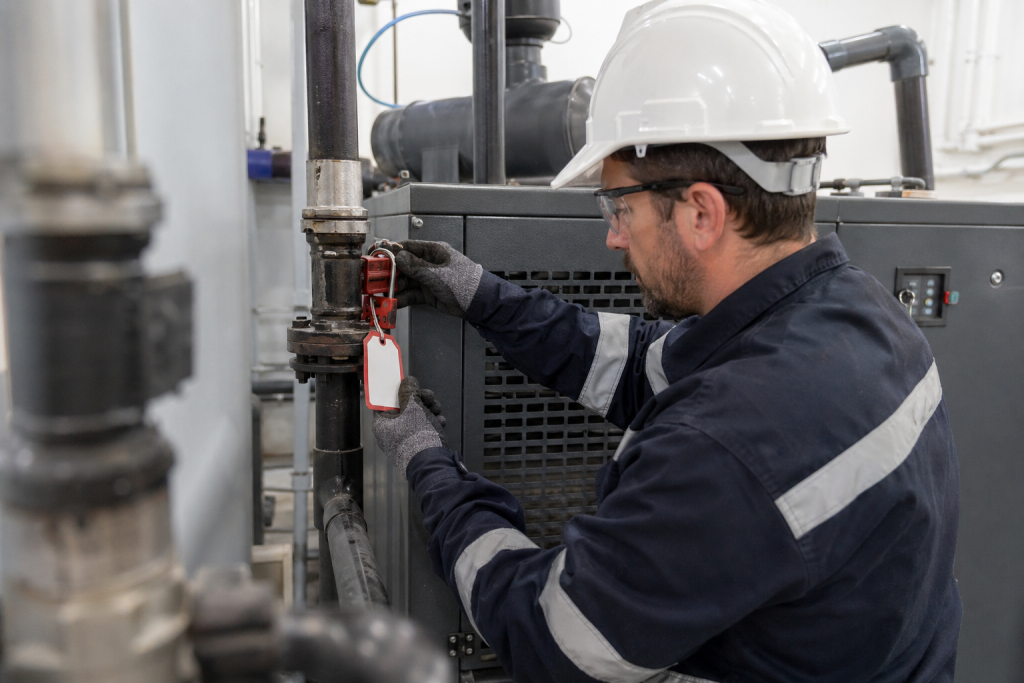
- Disconnect Power: Turn off the compressor at the main disconnect switch and apply Lockout/Tagout (LOTO) devices to prevent accidental energization.
- Depressurize System: Slowly open a drain valve on the air receiver until the pressure gauge reads zero. Ensure all residual pressure is released from the entire system, including any connected lines.
- Bleed Supply Lines: Open any downstream valves or release points to ensure all air is purged.
2. Step-by-Step Air Compressor Pressure Relief Valve Replacement
Once the system is safely depressurized and locked out, you can proceed with the air compressor pressure relief valve removal and replacement.
Procedure for Replacing the PRV (HowTo Schema below)
Step 1: Gather Tools and New Valve
You will need a new, appropriately sized pressure relief valve (ensure its set pressure matches or is slightly below your tank’s MAWP, as per ASME guidelines discussed in our PRV guide). You’ll also need a wrench or pipe wrench, pipe thread sealant (PTFE tape or pipe dope compatible with air), and possibly a wire brush for cleaning threads.
Step 2: Remove the Old Valve
Using the appropriate wrench, carefully unscrew the old pressure relief valve counter-clockwise. Be prepared for any residual pressure or air trapped in the valve. Inspect the threads on the air receiver for any damage or corrosion. Clean the threads thoroughly with a wire brush if necessary.

Step 3: Prepare and Install the New Valve
Apply a generous amount of pipe thread sealant to the threads of the new pressure relief valve. Carefully thread the new valve into the opening on the air receiver, ensuring it is perpendicular to the tank. Tighten it firmly with a wrench, but do not overtighten, as this can damage the threads or compromise the valve body. Ensure the relief valve’s outlet is facing a safe direction (away from personnel or sensitive equipment).
Step 4: Re-pressurize and Test
After replacement, remove LOTO, restore power, and slowly re-pressurize the air compressor system. Check carefully around the new valve for any air leaks using soapy water. Most importantly, ensure the new valve does not leak at normal operating pressure and correctly activates at its set pressure (as discussed under “Verifying the Set Pressure” below).
3. How Do You Adjust the Pressure Relief Valve on an Air Compressor?
The straightforward answer for most industrial and commercial air compressors: you don’t adjust the pressure relief valve on an air compressor. This is a critical point that cannot be overstated. Unlike a pressure switch that controls compressor cycling, the PRV is a non-adjustable, factory-set safety device.
Why Field Adjustment is Not an Option
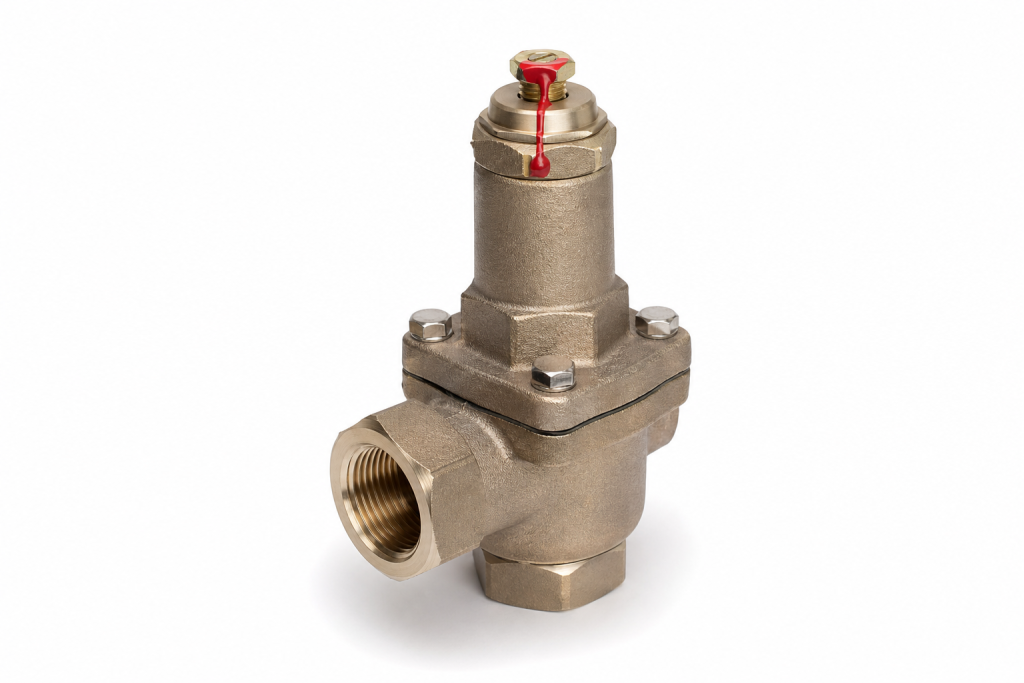
Air compressor pressure relief valves are manufactured and tested to meet stringent industry standards (e.g., ASME Section VIII, UV stamp for unfired pressure vessels). They are typically set to open at a specific pressure (e.g., 200 PSI for a 175 PSI compressor) and then sealed to prevent tampering. This seal is often a lead wire or a crimped cap. Breaking this seal voids the valve’s certification and compromises the guarantee of its reliable operation.
5. When to Factory-Set vs. Field-Adjust
While field adjustment of a compressor PRV is generally forbidden, understanding the options for different applications where field adjustment is possible sheds light on why it’s not feasible here.
The Distinction in Valve Management
| Характеристика | Factory-Set (Standard for Air Compressors) | Field-Adjustable (Specialized PRVs / Other Applications) |
|---|---|---|
| Adjustment Mechanism | Pre-tensioned spring, permanently fixed and sealed. | Adjustable screw, sometimes with a locking nut, but requires certification. |
| Калибровка | Calibrated at the factory under controlled conditions. | Requires specialized test bench and certified technicians. |
| Compliance | ASME UV Stamp valid as shipped. | Recertified after adjustment by approved facility. |
| Приложение | Air receivers, smaller pressure vessels. | Large industrial process vessels, boilers (where set pressure adjustments are part of regular operations within strict limits). |
Для matching set pressures for your air compressor, always refer to the maximum allowable working pressure (MAWP) stamped on your air receiver, and select a replacement PRV accordingly. We provide such factory-set valves at BCST.
6. Verifying the Set Pressure: Post-Installation Testing
After installing a new air compressor pressure relief valve, it is crucial to verify its functionality through a pop test or manual actuation.
How to Safely Test Your New PRV
- Manual Actuation (Ring Test): While the compressor is running and under pressure (but below the PRV’s set point), you can lift the ring on the top of the valve to manually release a burst of air. This helps unseat any potential debris and verifies the valve is not stuck. Some codes require this weekly or monthly.
- Pop Test (Controlled Overpressure): For a full functional test, operate the compressor with the discharge valve closed. Let the pressure build slowly while monitoring the air receiver’s pressure gauge. The PRV should “pop” open precisely at its stamped set pressure. Immediately after it pops, open your discharge valve or shut off the compressor. This is a critical test to ensure the valve performs as expected.
7. FAQ on PRV Replacement & Adjustment
What pressure rating should my replacement PRV have?
Your replacement PRV must have a set pressure rating that is equal to or less than the Maximum Allowable Working Pressure (MAWP) stamped on your air receiver (tank). Never install a valve with a set pressure higher than the tank’s MAWP. The MAWP is the maximum pressure the tank can safely withstand.
Are there different types of thread sealant for installing PRVs?
Yes, use pipe thread sealant specifically rated for compressed air applications. PTFE (Teflon) tape is common, ensuring clean application to prevent debris from entering the system. Proper pipe dope can also be used, but ensure it’s suitable for the pressure and temperature ratings of your system.
What if my new PRV leaks after replacement?
A leak after replacement usually indicates improper thread sealing, damaged threads on the receiver, or a manufacturing defect in the new valve (rare but possible). Immediately depressurize the system and re-check the installation. If the leak persists, consider replacing the valve again.
Conclusion: Uncompromising Safety in Every Replacement
Performing an air compressor pressure relief valve replacement is a straightforward task that carries immense safety responsibility. Strict adherence to safety protocols and an unwavering commitment to using non-adjustable, factory-set valves with the correct matching set pressures are paramount. Never compromise by attempting unauthorized adjustments to this critical safety device.
BCST Valve provides a complete line of ASME-certified pressure relief valve replacement solutions, ensuring your compressed air system maintains the highest standards of safety and compliance. When it’s time for a replacement, choose a valve you can trust, pre-set to protect your personnel and assets. Consider our certified solutions for durable, reliable performance.
Need to Safely Replace Your Air Compressor Pressure Relief Valve?
Ensure performance and compliance. Contact BCST Valve for certified, factory-set replacement options or custom set-pressure requests for specialized applications.


 English
 Arabic
 Russian
 French
 Spanish