
Why it’s important to know the difference?
You’re trying to choose a valve, and the “one-size-fits-all” myth is a dangerous trap. Selecting the wrong valve for the job isn’t a small mistake; it leads to leaks, costly energy loss from pressure drop, and even catastrophic system failure.
The globe valve vs ball valve decision boils down to one fundamental question: do you need to simply stop the flow, or do you need to precisely control it? Ball valves are for quick, tight on/off shutoff. Globe valves are designed specifically for throttling and flow regulation.
My father, who founded our valve factory, always used a simple analogy that has stuck with me my entire career. He’d say, “Emily, a ball valve is a light switch, it’s either on or off. A globe valve is a dimmer switch. It lets you choose exactly how much light you want.” This simple distinction is the key to understanding everything that follows. Choosing the right one isn’t just about following a spec sheet; it’s about understanding the function and making your entire system run more efficiently and safely. Let’s break down why this choice is so critical.
Just What Are We Talking About? A Look Inside Each Valve
You’re facing two pieces of metal that both control flow, but their internal mechanics are worlds apart. Ignoring these differences is like trying to use a hammer to turn a screw. It might work for a moment, but you’ll destroy the screw.
A globe valve and a ball valve control flow in completely different ways. A globe valve uses a plug that moves up and down (linear motion) for precise regulation. A ball valve uses a rotating ball with a hole through it (quarter-turn motion) for fast, unobstructed shut-off.
What Is a Globe Valve?
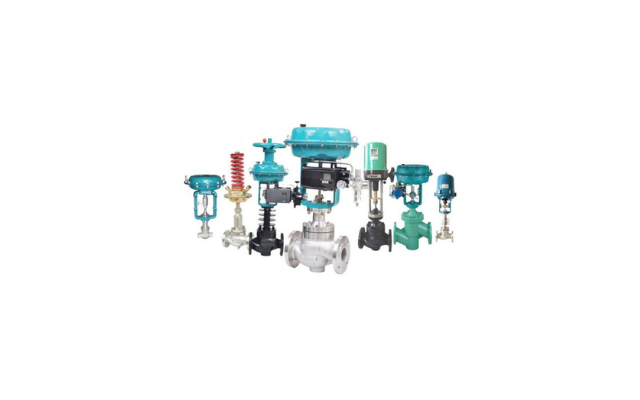
A globe valve is a linear-motion valve primarily used for starting, stopping, and, most importantly, regulating (throttling) flow. Its name comes from its typically spherical body shape. Inside the body is an internal baffle that creates a Z-shaped or S-shaped flow path. A movable plug, attached to a stem, is moved up and down to close against a seat in the middle of the baffle, allowing you to precisely control the amount of fluid passing through. It’s a true throttling valve by design.
What Is a Ball Valve?

A ball valve is a quarter-turn rotational valve. This means a 90-degree turn of the handle moves it from fully open to fully closed. It gets its name from the hollow, pivoting ball inside. When the valve is open, the hole in the ball aligns with the pipe, allowing for straight-through, unrestricted flow. When closed, the solid part of the ball blocks the flow. It is the quintessential shut-off valve.
What Are the Key Technical Differences Between a Globe and a Ball Valve?
You know they work differently, but how does that translate to performance in your system? The difference between globe valve vs ball valve impacts everything from energy costs to the safety of your process. This is where engineers make or break a system’s efficiency.
The biggest differences are in flow control, pressure drop, and shut-off tightness. Globe valves offer precise control but at the cost of high pressure drop. Ball valves offer excellent shut-off with minimal pressure drop but are terrible for control.
Flow Control Capability (Throttling)
This is the main point in the globe valve vs ball valve for control debate.
- Globe Valves: Excellent. The design, where the plug moves incrementally away from the seat, allows for precise, linear adjustments to the flow rate.
- Ball Valves: Very Poor. A ball valve is an “all or nothing” device. The majority of the flow change happens within the first 10% of its rotation, making fine adjustments nearly impossible.
Pressure Drop and Cv Factor
- Globe Valves: High pressure drop. The winding, Z-shaped path the fluid must take through the valve body creates significant resistance and head loss, even when the valve is fully open.
- Ball Valves: Very Low pressure drop. The straight-through path of a full-port ball valve presents almost no obstruction to the flow, making it highly efficient. This is a critical factor in the globe valve vs ball valve pressure drop consideration for system design.
Shut-Off Tightness (Leakage Class)
- Ball Valves: Excellent, bubble-tight shut-off. The ball rotates against soft seats (like PTFE), creating a tight seal with no leakage.
- Globe Valves: Good to Very Good. Metal-seated globe valves provide a solid shut-off, but they are more prone to minor leakage over time if the seat and plug become worn or scored, especially in throttling applications.
On/Off Service: Which Valve Performs Better for Isolation?
You need to reliably start and stop flow, often quickly. This is known as isolation or on/off service. A mistake here can mean a slow response in an emergency or constant energy waste.
For on/off service, the ball valve is the undisputed winner. Its fast action, tight seal, and minimal flow resistance make it the ideal choice when your primary goal is simply to start or stop the flow.
Why Ball Valves Win for Shut-Off
- Speed: A quick 90-degree turn is all it takes to go from fully open to fully closed. This is vital for emergency shutdowns.
- Efficiency: A full-port ball valve is like having an open piece of pipe. It creates almost zero pressure drop, saving pump energy.
- Longevity: When used strictly for open/close service, the wiping action of the ball against the seats keeps them clean, and wear is minimal compared to a valve constantly in a partially open state.
Limitations of Globe Valves for Isolation
- Slow Operation: It takes multiple, sometimes dozens, of handwheel turns to fully open or close a globe valve.
- Energy Loss: The inherent high pressure drop of a globe valve means you are constantly wasting energy fighting its resistance, even when it’s fully open.
Throttling Service: Which Valve Should You Use for Control?
You need to regulate the flow rate, control pressure, or manage the temperature of your media. This is throttling, and it is one of the most demanding applications for a valve.
The globe valve is the clear and correct choice for any throttling application. Its internal design is built specifically to handle the stresses of partially open flow and provide the fine control necessary for process regulation.
Why Globe Valves Are Preferred for Throttling
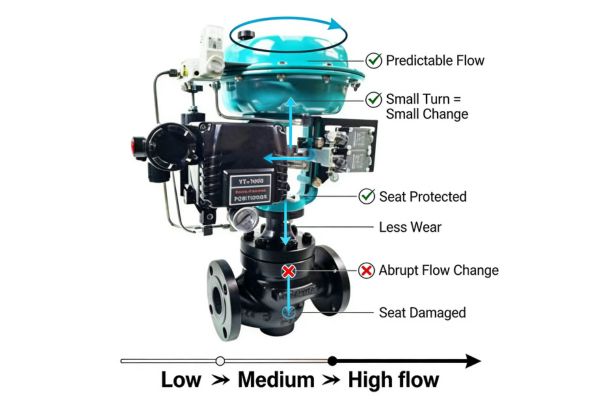
- Linear Control: The flow rate changes in direct proportion to how much you turn the handle, giving you predictable and repeatable control.
- Seat Protection: The globe valve’s design ensures the high-velocity, turbulent flow of throttling occurs away from the seating surfaces, protecting them from erosion and prolonging the valve’s life. This makes it the best valve for throttling.
The Risks of Throttling with a Ball Valve
Trying to throttle flow with a standard ball valve is a guaranteed way to destroy it.
- Seat Erosion (Wire Drawing): The high-velocity jet of fluid cutting across the partially exposed soft seat will quickly erode it, causing the valve to leak when you try to fully close it.
- Vibration and Noise: The intense turbulence created by a partially open ball valve can cause severe vibration and cavitation, which can damage not only the valve but the surrounding piping as well.
Application Guide: Globe Valve vs. Ball Valve for Steam, Water, and Oil
The theoretical differences are clear, but how do they apply in the real world? In my experience, certain industries have very clear preferences based on decades of trial and error.
Globe Valve vs Ball Valve for Steam

- Verdict: Globe valves are the industry standard for throttling steam. For globe valve vs ball valve for steam isolation, ball valves are acceptable but must be fitted with high-temperature seats (like PEEK or metal seats) and seals.
- Reasoning: Steam systems rely on precise pressure and temperature management. The fine control of a globe valve is essential for this.
Water and Plumbing Systems
- Verdict: Ball valves are the standard for main water shut-offs. Globe valves are used where flow control is needed, such as faucets, spigots, and balancing lines.
- Reasoning: You want fast, reliable shut-off for your main water line. You want to control the flow from your faucet. The choice is clear.
Oil, Gas, and Chemical Processes

- Verdict: Ball valves overwhelmingly dominate for pipeline transport and isolation due to their low pressure drop and pigging capability (allowing cleaning devices to pass through). Globe valves are used in smaller lines for precise dosing, sampling, and process control.
Quick Comparison Chart: Globe Valve vs. Ball Valve
| Feature | Globe Valve | Ball Valve |
|---|---|---|
| Primary Function | Throttling & Flow Control | On/Off Isolation & Shut-Off |
| Pressure Drop | High | Very Low |
| Flow Direction | Uni-directional (must be installed correctly) | Bi-directional |
| Shut-off Speed | Slow (Multi-turn) | Fast (Quarter-turn) |
| Throttling Capability | Excellent (Linear control) | Very Poor (Not recommended) |
| Shut-off Tightness | Good to Very Good | Excellent (Bubble-tight) |
| Operating Mechanism | Linear motion (up/down) | Rotational (quarter-turn) |
| Cost | Generally Higher | Generally Lower |
| Best For | Flow regulation, throttling, precise control | Quick isolation, emergency shutoff, minimal pressure drop |
Conclusion
The globe valve vs ball valve debate is settled by one thing: function. Don’t fall into the trap of using the cheaper or more readily available option. Choose the right tool for the job.
- Use a Ball Valve when you need: Tight shut-off, fast operation, and low pressure drop for on/off isolation.
- Use a Globe Valve when you need: To precisely regulate or throttle flow rate, pressure, or temperature.
Always check the pressure, temperature, and material compatibility for your specific service. But your first and most important decision starts with choosing between the light switch and the dimmer switch. Get that right, and your system will be safer, more efficient, and more reliable for years to come.
Need help selecting the right valve for your application?


 English
 Arabic
 Russian
 French
 Spanish