
Struggling to choose the right valve for your pipes? Picking between a gate valve and a butterfly valve is a small detail, but the wrong one causes leaks, kills efficiency, and leads to system failure.
A gate valve is for simple on/off service where you need a clear, unobstructed flow with minimal pressure drop. A butterfly valve is a lightweight, fast, and low-cost option for both isolation and for managing the flow rate.
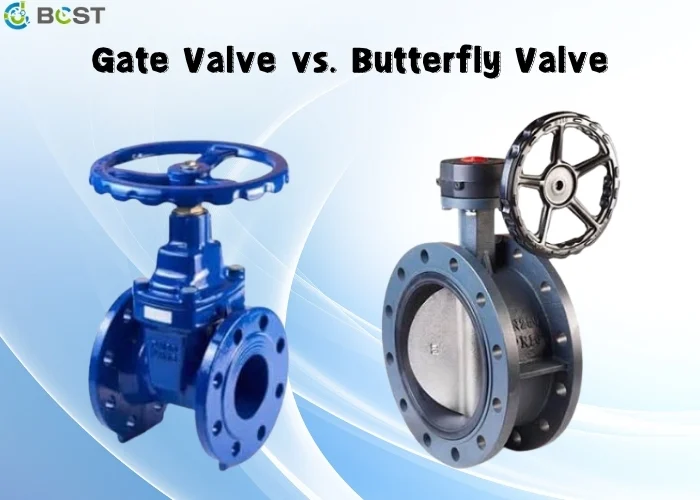
I’ve seen this dilemma play out so many times. Growing up in my father’s valve factory, I learned that this choice is a critical engineering decision. I remember a client, Hassan, a sharp chief engineer at a petrochemical plant. He spent a full week weighing the pros and cons of a gate valve vs. a butterfly valve for a new pipeline. He knew his choice would affect the plant’s performance for decades. You’re facing the same important decision, and after reading this, you will feel just as confident as Hassan. Let’s break them down so you can make the right call.
What Is a Gate Valve
Not sure if a gate valve is the heavy-duty solution you need? If you misunderstand its purpose, you will put it in the wrong place, leading to process issues and extra maintenance.
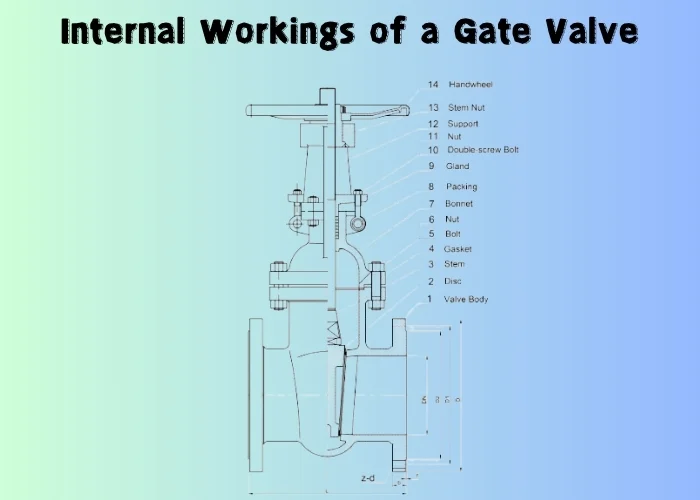
A gate valve uses a solid gate that slides up and down to stop or start the flow. When it’s fully open, you get a straight, clear path for your fluid. This means you get minimal pressure drop, but it’s only meant for on/off use, not for fine-tuning the flow.
Diving Deeper into Gate Valves
Walk into any industrial plant, and you’ll find a gate valve. Their design is beautifully simple and tough. The best way to picture it is to think of a castle’s portcullis. The gate lowers straight down into the flow to block it off completely. Lift the gate, and the path is wide open. Because the passage is straight and totally clear, the fluid flows through with very little pressure loss. This is why they are perfect for jobs where you need maximum flow, like on main water lines or in oil and gas pipelines.
I can still feel the weight of the cast iron gate valves on the factory floor from when I was a kid. My dad always said their strength was in their simple, rugged design, perfect for lines that are left open or closed for a long time.
Key Characteristics of a Gate Valve
So, what makes a gate valve tick? They provide a fantastic seal, giving you a “bubble-tight” shutoff that’s critical where no leakage is allowed. They are also bi-directional, so you install them either way. The trade-off is speed. It takes several turns of the handwheel to open or close one, so they are not for emergencies. You must never use them to throttle the flow. Leaving a gate valve halfway open creates a high-speed jet that eats away at the gate and seats, destroying the valve.
| Feature | Description |
|---|---|
| Function | Purely On/Off (Isolation) |
| Flow Path | Straight-through, totally clear |
| Pressure Drop | Minimal |
| Sealing | Excellent, bubble-tight |
| Operation | Slow, requires multiple turns |
| Throttling | Do not use; it causes damage |
Because of these traits, a gate valve is the champion for any liquid service that needs a completely clear path and a tight seal, especially if you plan to leave it alone for long periods.
What Is a Butterfly Valve
Thinking about a butterfly valve because it’s so compact? You need to know its limits, or you will end up with leaks, early wear, and costly shutdowns.
A butterfly valve uses a round disc in the middle of the pipe to control flow. A quick quarter-turn of the handle swings the disc from blocking the pipe to letting fluid pass. Its light, compact body makes it cheap and easy to install for both shutoff and throttling.
Diving Deeper into Butterfly Valves
The name says it all. The “butterfly” is a disc that pivots on a central rod. A quick 90-degree turn is all it takes to go from fully closed to fully open. That speed is a huge plus, making it perfect for processes that need quick action or for emergency shutoffs. The design is also incredibly lean. A butterfly valve is way smaller and lighter than a gate valve for the same pipe size. That saves you money on the valve itself and makes installation a breeze, since it doesn’t need as much space or support.
I’ve helped dozens of clients switch to butterfly valves in their plants for applications like water treatment and HVAC. They are always shocked by how much space, time, and money they save.
Key Characteristics of a Butterfly Valve
The key thing to know about a butterfly valve is that the disc always sits in the flow, even when it’s wide open. This creates a pressure drop, which is a big point of difference in the gate valve vs. butterfly valve showdown. This is a small price to pay for its other benefits. These valves are excellent for controlling, or “throttling,” the flow. You position the disc at any angle to get the exact flow rate you need. High-performance versions, like triple-offset butterfly valves, handle serious pressure and temperature, putting them in the same league as gate valves for tough jobs.
| Feature | Description |
|---|---|
| Function | On/Off and Excellent for Throttling |
| Flow Path | Always slightly obstructed by the disc |
| Pressure Drop | Low; more than a gate valve |
| Sealing | Varies from good to excellent based on design |
| Operation | Fast, just a quarter-turn |
| Throttling | Very capable |
The butterfly valve is a true workhorse. It’s affordable, light, and versatile, making it the go-to choice for a huge range of jobs, especially in large pipes where a gate valve would be massive and expensive.
Side-by-Side Comparison: Gate Valve vs. Butterfly Valve
Staring at technical specs is confusing. Choosing based on price alone is a mistake that leads to poor performance and expensive valve replacements.
Here’s the short version: Grab a gate valve for high-pressure jobs that need a clear flow path and won’t be operated often. Go with a butterfly valve when you need something fast, light, and compact, especially if you need to adjust the flow or are tight on space.
Diving Deeper into the Comparison
So, how do you actually choose? It’s not about which valve is “better,” but which is right for your job. An engineer like Hassan doesn’t guess; he analyzes the system’s needs. Let’s do that right now. A gate valve is a heavy bank vault door. It gives you a perfect seal and a wide-open passage, but it’s slow, heavy, and clunky. A butterfly valve is a modern revolving door: it’s fast, space-efficient, and easy to use, but the door is always in the path.
Direct Comparison Table
The best way to decide is to put them head-to-head. This table covers the factors that matter most when debating gate valve vs. butterfly valve.
| Factor | Gate Valve | Butterfly Valve | Winner For… |
|---|---|---|---|
| Primary Function | On/Off isolation | On/Off and throttling | Butterfly Valve (Versatility) |
| Pressure Drop | Very Low – full bore design | Low – disc remains in flow | Gate Valve (Efficiency) |
| Sealing | Excellent bi-directional sealing | Good to excellent based on design | Gate Valve (Critical Shutoff) |
| Size and Weight | Large, heavy, and requires more space | Compact, lightweight, and space-saving | Butterfly Valve (Cost and Installation) |
| Actuation | Slow, multi-turn operation | Fast, quarter-turn (90°) operation | Butterfly Valve (Speed) |
| Cost | Higher initial cost, especially in large sizes | Lower initial cost and lower installation cost | Butterfly Valve (Budget) |
| Applications | High pressure, high temp, viscous fluids, slurries | Water, chemicals, air, gases, large volume applications | Depends on Application |
| Maintenance | More complex to service | Simpler and easier to repair or replace seats | Butterfly Valve (Ease of Maintenance) |
In the end, it is simple. For a pipeline carrying crude oil that needs to stay open for months, the gate valve is the only choice. For the cooling water lines in an HVAC system that need frequent adjustment in a tight mechanical room, the butterfly valve is the hands-down winner.
Choosing the right valve is about more than technical specs; it’s about working with a manufacturer who gets what you do and delivers quality you count on. Since I was a girl, I have watched my family at BCST build not just valves, but trust. We’ve helped hundreds of engineers like Hassan find the perfect valve, whether it’s a tough gate valve for a critical pipeline or a high-performance butterfly valve for a tricky chemical process. With our own factory and decades of hands-on experience, we make sure every valve we ship is ready to perform.
Frequently Asked Questions (FAQs)
Q1: Can a gate valve be used for throttling?
A: Do not use a gate valve for throttling. Using it partly open creates intense vibration and flow that erodes the valve’s internals, causing it to wear out fast and fail to seal when you need it to.
Q2: Is a butterfly valve good for high pressure?
A: Standard butterfly valves are for lower pressures. High-performance types, like double-offset and triple-offset butterfly valves, are specifically engineered to handle high pressures and temperatures with ease.
Q3: Which valve is cheaper, a gate valve or a butterfly valve?
A: A butterfly valve is cheaper for the same pipe size. It’s also lighter and smaller, which means you save money on installation costs like labor and structural supports.
Final Thought
Picking the right valve protects your whole system. A gate valve provides perfect isolation for full-flow lines, while a butterfly valve offers quick, versatile control. For expert advice and a dependable source for both gate and butterfly valves, trust BCST to ensure your project’s success.


 English
 Arabic
 Russian
 French
 Spanish