High-Performance Sight Flow Indicators for Clear Process Monitoring

Durably engineered for reliability in demanding industrial environments. Find your model or get expert advice.

Contacte con nosotros

brida visor indicador de caudal

Find the Right Sight Flow Indicator for Your Application

Use the filters to instantly narrow down our inventory to the exact specifications you need.

Visor de caudal de doble ventana

Indicador visual de doble cristal

Dual-Pane Visual Inspection Technology

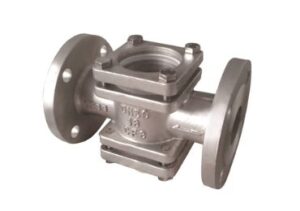
Double glass sight indicators feature two parallel tempered glass or borosilicate glass windows separated by a sealed chamber, providing enhanced safety and visual confirmation of fluid flow in pressurized systems. These robust sight flow indicators utilize dual-layer glass construction that creates a protective barrier, ensuring continued containment even if the primary glass layer fails while maintaining clear visual access to process media. Double glass sight indicators offer superior durability and operator safety in high-pressure, high-temperature applications where single-pane designs would pose unacceptable risk.

Características principales

  • Dual-layer glass protection
  • Enhanced operator safety
  • High-pressure capability
  • Temperature-resistant construction
  • Redundant containment design

Aplicaciones típicas

  • High-pressure steam systems
  • Chemical process monitoring
  • Oil and gas production
  • Power generation plants
  • Critical safety applications
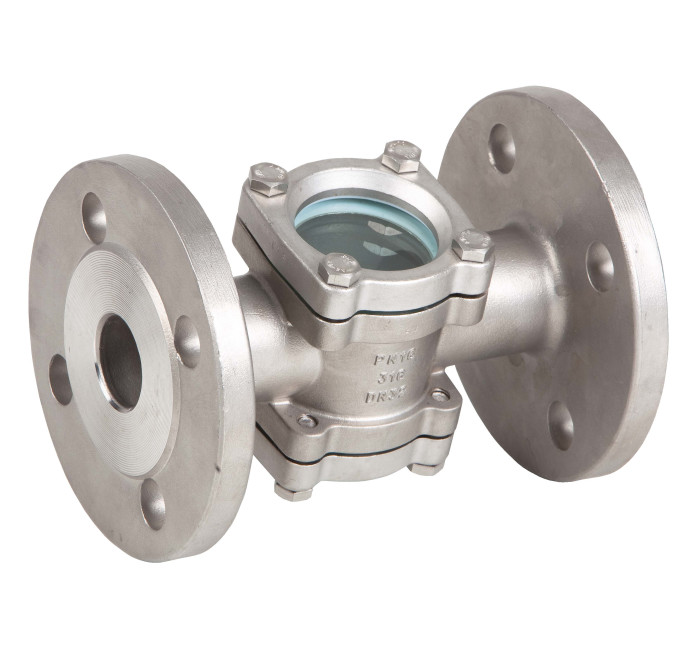
brida visor indicador de caudal

Indicador de caudal con brida

Bolted Connection Visual Monitoring

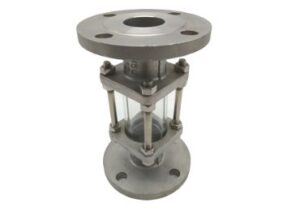
Flange sight flow indicators integrate directly into flanged piping systems using standard ANSI, DIN, or JIS bolt patterns, providing secure visual access to process flow without welding or specialized installation procedures. These versatile sight flow indicators feature heavy-duty cast or forged bodies with reinforced glass windows, enabling reliable flow verification and inspection in large-diameter pipelines and high-pressure industrial processes. Flange sight indicators accommodate various glass types, lighting options, and wiper mechanisms to maintain visibility in challenging service conditions.

Características principales

  • Standard flange connections
  • Heavy-duty construction
  • Large viewing area
  • Interchangeable glass options
  • Optional illumination systems

Aplicaciones típicas

  • Large pipeline monitoring
  • Industrial water systems
  • Wastewater treatment plants
  • Chemical transfer operations
  • Process verification points
Flotador indicador de caudal

Flotador Indicador de caudal

Mechanical Flow Detection Technology

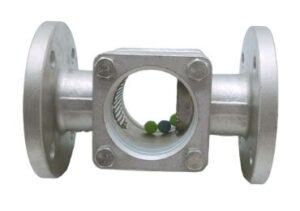
Float sight flow indicators incorporate a visible float element that rises with fluid flow velocity, providing immediate visual confirmation of flow presence and approximate flow rate indication. These intuitive sight flow indicators utilize gravity-operated or magnetic float mechanisms within transparent chambers, enabling operators to quickly verify pump operation, detect flow anomalies, or monitor low-flow conditions without electronic instrumentation. Float sight indicators offer fail-safe mechanical operation with no power requirements, making them ideal for remote locations and backup verification systems.

Características principales

  • Visual flow rate indication
  • No power required
  • Mechanical operation
  • Instant flow verification
  • Maintenance-free design

Aplicaciones típicas

  • Pump operation verification
  • Coolant flow monitoring
  • Lubrication system checks
  • Low-flow detection
  • Remote installation sites
indicador de caudal de visión total

Indicador de caudal de visión total

360-Degree Visual Access Design

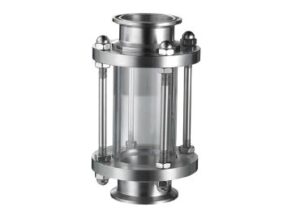
Full view sight flow indicators provide complete circumferential visibility through extended glass tube or multi-window construction, enabling comprehensive inspection of fluid characteristics including color, clarity, flow patterns, and contamination from any viewing angle. These premium sight flow indicators eliminate blind spots and shadows that compromise observation in standard single-window designs, facilitating superior process monitoring and quality control verification. Full view sight indicators incorporate reinforced glass chambers with protective guards, ensuring safe operation while maximizing visual access for critical inspection requirements.

Características principales

  • Complete 360-degree visibility
  • Multi-angle inspection capability
  • Enhanced process monitoring
  • No visual blind spots
  • Quality control optimization

Aplicaciones típicas

  • Food and beverage production
  • Pharmaceutical quality control
  • Contamination detection
  • Color verification processes
  • Critical quality inspection
visor sanitario indicador de caudal

Indicador de caudal sanitario

Hygienic Tri-Clamp Connection Technology

Sanitary sight flow indicators feature polished stainless steel construction with tri-clamp connections and smooth, crevice-free internal surfaces that meet stringent 3-A, FDA, and EHEDG hygienic standards. These specialized sight flow indicators utilize pharmaceutical-grade borosilicate glass and elastomeric seals suitable for CIP/SIP cleaning protocols, ensuring compliance with food safety and pharmaceutical manufacturing requirements.

Características principales

  • 3-A sanitary certified design
  • Tri-clamp connections
  • CIP/SIP compatible
  • Electropolished surfaces
  • FDA-compliant materials

Aplicaciones típicas

  • Food processing lines
  • Fabricación farmacéutica
  • Dairy product handling
  • Beverage production systems
  • Biotechnology processes
visor tubular indicador de caudal

Indicador de caudal con visor tubular

Extended Length Visual Monitoring

Tubular sight flow indicators feature elongated transparent tube construction that provides continuous visual access along extended pipeline sections, enabling observation of flow characteristics, particle settlement, stratification, or phase separation over greater distances. These extended-view sight flow indicators utilize heavy-wall borosilicate glass tubes or clear polymer sections with reinforced end connections for dependable process monitoring.

Características principales

  • Extended viewing length
  • Continuous flow observation
  • Flow pattern analysis
  • Multi-phase compatibility
  • Versatile connection options

Aplicaciones típicas

  • Sediment monitoring
  • Phase separation detection
  • Mixing verification
  • Particle observation
  • Multi-phase flow systems
indicador de caudal de alta presión

Indicador de caudal de alta presión

Reinforced Extreme Pressure Containment

High pressure sight flow indicators are engineered with heavy-wall construction, reinforced glass viewing windows, and robust sealing systems capable of withstanding extreme operating pressures exceeding 5,000 psi (345 bar) while maintaining visual clarity. These specialized sight flow indicators utilize thick tempered borosilicate glass or sapphire windows secured in forged steel or stainless steel bodies.

Características principales

  • Extreme pressure ratings (5,000+ psi)
  • Forged steel construction
  • Thick reinforced glass windows
  • Metal-to-metal sealing options
  • Pressure cycle durability

Aplicaciones típicas

  • Hydraulic system monitoring
  • High-pressure chemical reactors
  • Supercritical fluid processes
  • Oil and gas production
  • Hydrocracking operations
Rueda de paletas Mirilla Indicador de caudal

Rueda de paletas Indicador de caudal

Rotational Flow Verification Technology

Paddle wheel sight flow indicators incorporate a visible rotating paddle or impeller element within a transparent chamber that spins proportionally to fluid velocity, providing immediate visual and quantitative confirmation of flow rate and direction. These dynamic sight flow indicators utilize magnetic coupling or direct-drive mechanisms to translate fluid movement into rotational motion visible to operators.

Características principales

  • Visual flow rate indication
  • Direction detection capability
  • Rotating paddle mechanism
  • Optional electronic output
  • Self-indicating operation

Aplicaciones típicas

  • Coolant circulation monitoring
  • Chemical dosing verification
  • Pump performance checks
  • Heating/cooling loop control
  • Flow direction confirmation
Rueda de paletas Mirilla Indicador de caudal

Thread Sight Flow Indicator

Compact Threaded Connection Design

Thread sight flow indicators feature NPT, BSP, or metric threaded connections that enable quick installation directly into tapped ports on tanks, pipelines, and process equipment without flanges or special adapters. These compact sight flow indicators utilize space-efficient designs with reinforced glass viewing windows sealed within threaded bodies, providing economical visual access in confined installation spaces.

Características principales

  • Standard threaded connections
  • Compact installation footprint
  • No flanges required
  • Multiple orientation options
  • Cost-effective design

Aplicaciones típicas

  • Small-bore piping systems
  • Tank level observation
  • OEM equipment integration
  • Hydraulic reservoir monitoring
  • Auxiliary line verification

What is a Sight Flow Indicator?

A sight flow indicator (also known as a sight glass or flow indicator) is a device installed in a pipe that provides a visual means of observing the flow, color, and clarity of the liquid or gas within the process line. It is a critical component for operators and engineers to instantly verify that a system is operating correctly.

Why are they essential?

  • Prevent Downtime: Immediately spot blockages, empty lines, or reverse flow before it damages pumps or other expensive equipment.
  • Ensure Product Quality: Visually confirm product consistency, detect contamination, and monitor chemical reactions or blending processes in real time.
  • Verify Process: Confirm that filters, pumps, and valves are functioning as intended and that the correct fluids are being routed.

Proven Performance Across Industries

We are a trusted partner for leaders in the world’s most demanding industries.

Válvula reguladora de caudal aplicada en procesos químicos

Procesado químico

Safely monitor the flow of aggressive chemicals and solvents. Our wide range of body and seal materials ensures maximum chemical compatibility.

BCST Valve application in Oil & Gas Industry

Petróleo y gas

Ensure the reliable flow of lubricants, coolants, and refined fuels in harsh upstream and downstream environments.

Válvula de descarga neumática BCST en el procesamiento de alimentos y bebidas

Alimentación y bebidas

Use our sanitary, 3-A compliant models to verify Clean-in-Place (CIP) cycles, monitor product flow, and ensure hygienic standards are met

BCST Valve application in Pharmaceutical Industry

Farmacéutica

Critical for monitoring processes in purified water (WFI) systems, API manufacturing, and other high-purity applications.

BCST Valve application in Water Treatment

Water & Wastewater

Track the flow of treatment chemicals, confirm pump operation in lift stations, and monitor filter backwash cycles.

Generación de energía

Maintain uptime by monitoring the flow of bearing lubricants to turbines, coolant to generators, and fuel lines.

¿Está listo para encontrar la solución de válvulas perfecta para su proyecto?

Póngase en contacto hoy mismo con nuestro equipo de expertos para hablar de los requisitos de su proyecto y descubra cómo BCST puede ofrecerle soluciones fiables y eficientes adaptadas a sus necesidades.

Control de calidad del indicador visual de caudal BCST

indicador visual de caudal -diseño

Diseño

  • Caculación de software técnico
  • Reunión del equipo técnico
  • Confirmación de planos CAD
indicador visual de flujo inspección de materias primas

Inspección de materias primas

  • Análisis químico
  • Propiedad mecánica
  • dimensión Comprobaciones
  • Controles visuales
  • Examen de no destrucción
mecanizado de indicadores de caudal

Mecanizado

  • Mecanizado CNC
  • Controles visuales
  • Controles dimensionales
  • Prueba de penetración de líquidos
indicador visual de caudal -diseño

Diseño

  • Caculación de software técnico
  • Reunión del equipo técnico
  • Confirmación de planos CAD
conjunto indicador de caudal a la vista

Montaje

  • Instalación
  • Calibración
indicador visual de caudal -prueba hidrostática

Prueba hidrostática

  • Prueba de la cáscara
  • Prueba de estanqueidad
  • Prueba de fugas
  • Prueba de aire
  • Prueba de funcionamiento
indicador de caudal a la vista inspección perspectiva

Perspectivas de tratamiento

  • Pulido de superficies
  • Pintura
  • Inspección visual
  • Controles de espesor

Montaje

  • Controles visuales
  • Penetración de líquidos
  • Prueba
  • Prueba de dureza
  • Lapeado
  • Controles dimensionales
Empaquetadura del indicador de caudal

Embalaje

  • Marcado
  • Caja de madera exportada

The Ultimate Guide to Sight Flow Indicators: Types, Selection, and Applications

In any complex fluid system—be it in a chemical plant, a pharmaceutical lab, or a food processing facility—uncertainty is the enemy. Is the pump working? Is the line blocked? Is the fluid contaminated? Answering these questions quickly and accurately can be the difference between a smooth operation and costly downtime.

This is where the Sight Flow Indicator comes in. It is a simple, robust, and indispensable device that provides a real-time window into your pipeline, offering immediate visual confirmation of fluid flow, color, and condition.

This comprehensive guide will walk you through everything you need to know about sight flow indicators, from their core functions to the specific types available, helping you choose the perfect model for your application.

What is a Sight Flow Indicator?

A sight flow indicator is an in-line device with one or more viewing windows that is installed directly into a process pipeline. Its fundamental purpose is to allow operators, engineers, and maintenance staff to observe the fluid inside the pipe without interrupting the process. This immediate visual data is critical for monitoring, troubleshooting, and ensuring system integrity.

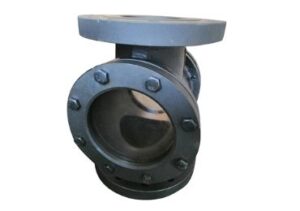
A flanged sight flow indicator showing the internal flapper

The Core Benefits of Using a Sight Flow Indicator

  • Prevent Costly Damage: Instantly detect blockages, no-flow situations, or reverse flow that could damage pumps, turbines, and other sensitive equipment.
  • Guarantee Product Integrity: Visually monitor the color and clarity of your product to spot contamination, aeration, or improper mixing at a glance.
  • Simplify Troubleshooting: Quickly determine if a problem is upstream or downstream by confirming flow at critical points in the system.
  • Verify Process Automation: Confirm that automated valves, pumps, and cleaning cycles (CIP) are functioning as intended.

Types of Sight Flow Indicators: A Detailed Breakdown

Sight flow indicators can be categorized by their indication method, body style, connection type, or specialized design. Here’s a look at the most common types and their ideal uses.

Indicator Styles: How Flow is Visualized

1. Paddle Wheel Sight Flow Indicator

A paddle wheel indicator features a rotor with visible paddles that spins in proportion to the flow rate. It is one of the most effective designs for providing clear, unambiguous confirmation of flow, especially from a distance.

  • Principio de funcionamiento: Fluid pushes against the paddles, causing the wheel to rotate. The speed of rotation gives a rough estimate of the flow velocity.
  • Lo mejor para: Opaque or dark liquids where a simple change in clarity is not visible; applications where operators need to see flow status from several feet away.
  • Considerations: Not suitable for fluids with high solids content that could jam the rotor.

2. Float (Ball) Sight Flow Indicator

This type contains a visible ball (often made of PTFE or another buoyant material) that is pushed up a tube by the force of the flow.

  • Principio de funcionamiento: In a no-flow state, the ball rests at the bottom. As flow begins and increases, the ball rises higher in the viewing tube.
  • Lo mejor para: Vertical pipelines with upward flow. It’s a simple way to confirm that flow is moving in the correct direction.
  • Considerations: Strictly for vertical, upward flow installations.

Body Styles: How the Unit is Constructed

3. Full View / Tubular Sight Flow Indicator

A full view or tubular indicator is constructed from a cylinder of glass (typically borosilicate) held between two flanged end caps. This design offers a complete, 360-degree view of the process fluid.

  • Principio de funcionamiento: Provides an unobstructed window into the pipeline, allowing observation of color, clarity, bubbles, and contaminants from any angle.
  • Lo mejor para: Applications where maximum visibility is paramount, such as monitoring reactions, crystallization, or inspecting for subtle changes in the fluid.
  • Considerations: Generally used in lower-pressure applications compared to armored metal-body indicators.

4. Double Glass Sight Indicator

This is a critical safety design, not just a viewing style. It features a dual-window construction. If the primary inner glass fails due to chemical attack or thermal shock, the secondary outer glass contains the process fluid, preventing a hazardous leak and giving operators time to safely shut down the line.

  • Principio de funcionamiento: Functions as a standard sight glass but with a built-in safety backup.
  • Lo mejor para: Highly corrosive, toxic, or high-temperature fluids where a breach would be catastrophic. A must-have for personnel safety in critical processes.
  • Considerations: The investment is higher, but the safety payoff is invaluable in hazardous service.

Connection & Specialized Types

5. Flange Sight Flow Indicator

This refers to any sight flow indicator equipped with flanges for connection. The flanges are bolted to corresponding flanges on the pipeline, creating a secure, leak-proof seal.

  • Lo mejor para: Most industrial applications, especially in pipes 2″ and larger. Flanged connections are robust and standard across industries like oil & gas, chemical, and water treatment.

6. Thread Sight Flow Indicator

This type uses threaded (typically NPT – National Pipe Taper) connections to screw directly into the pipeline.

  • Lo mejor para: Smaller-diameter pipelines (typically under 2″), auxiliary lines, and OEM equipment where compact size and ease of installation are important.

7. Sanitary Sight Flow Indicator

Designed specifically for the food, beverage, dairy, and pharmaceutical industries, these indicators feature a crevice-free, polished internal surface to prevent bacterial growth.

  • Lo mejor para: Any hygienic process. They use sanitary clamp (Tri-Clamp) connections for quick disassembly and cleaning, and are often 3-A certified or FDA-compliant.

8. High Pressure Sight Flow Indicator

These units are engineered for extreme operating conditions. They feature heavy-duty carbon steel or stainless steel bodies, robust retainers, and extra-thick tempered glass fused to a metal ring to withstand immense pressures.

  • Lo mejor para: Upstream oil and gas, hydraulic systems, and chemical injection skids where pressures can exceed thousands of PSI.

How to Choose the Right Sight Flow Indicator: A Step-by-Step Selection Guide

Selecting the correct model is crucial for safety, reliability, and performance. Follow this step-by-step guide to determine the best sight flow indicator for your needs.
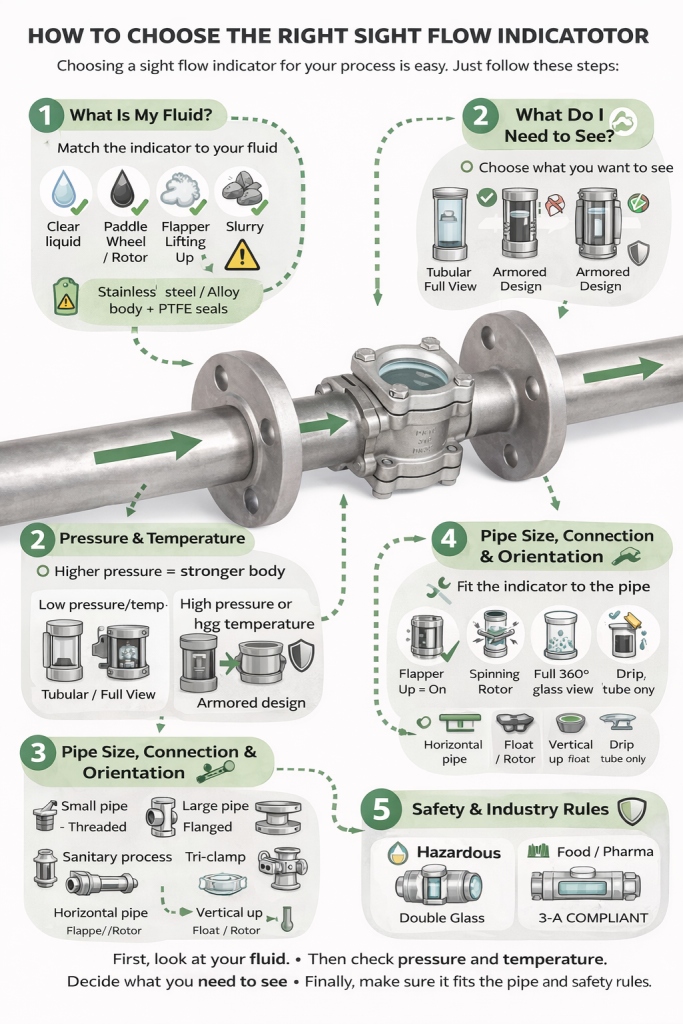
A flowchart infographic detailing the selection process for sight flow indicators

Step 1: What is my fluid?

The nature of your process fluid is the most important factor, influencing both the indicator type and material selection.

  • If you have a clear, transparent liquid: A Plain , Flapper , or Paddle Wheel indicator will work well.
  • If you have a dark or opaque liquid: A Paddle Wheel / Rotor indicator is the best choice. Its spinning motion is highly visible even when the fluid itself is not, providing unambiguous confirmation of flow.
  • If you have a gas: A Flapper indicator is highly effective, as even a small amount of flow will lift the flapper, making it easy to see.
  • If you have a slurry or liquid with high solids content: A Plain / Full View indicator is the safest option. It has no moving parts that can become clogged or jammed by solids. Avoid rotor or paddle wheel types.
  • If you have a highly corrosive fluid: This dictates material choice. You will likely need a Stainless Steel , Hastelloy , or other alloy body, combined with corrosion-resistant seals like PTFE (Teflon™) .

Step 2: What are my process conditions (Pressure & Temperature)?

These conditions determine the required structural integrity of the sight flow indicator. Always check the manufacturer’s nameplate for its pressure/temperature rating.

  • If you have low pressure and temperature: A Tubular / Full View indicator may be a suitable and cost-effective option.
  • If you have high pressure (>150 PSI) or high temperature (>400°F / 200°C): You must select an armored High Pressure Sight Flow Indicator . These feature robust metal bodies (Carbon or Stainless Steel) and flanged connections designed to handle stress. For extreme conditions, look for models with glass fused directly to a metal ring.

Step 3: What do I need to see?

Your monitoring goal will determine the ideal indicator style.

  • For simple “on/off” flow confirmation: A Flapper indicator is perfect. If the flapper is up, there is flow; if it’s down, there is no flow.
  • To see flow status from a distance: A Paddle Wheel / Rotor is superior. The spinning motion catches the eye from across a room.
  • To monitor fluid color, clarity, bubbles, or contamination: A Full View / Tubular indicator is the only choice, providing a complete 360° window into the process.
  • To observe extremely low or intermittent vertical flow: A Drip Tube indicator is specifically designed for this purpose, allowing you to see drips form and fall.

Step 4: What is my pipe size, connection, and orientation?

The physical installation details will narrow down your selection.

  • Connection Type: For pipes under 2 inches, a Thread Sight Flow Indicator is common. For lines 2 inches and larger in industrial settings, a Flange Sight Flow Indicator is the standard for its robustness. For hygienic applications, a Sanitary Sight Flow Indicator with Tri-Clamp connections is mandatory.
  • Orientation: Horizontal: Flapper, Rotor, and Plain styles work well. Vertical (upward flow): Rotor, Flapper, and especially Float (Ball) indicators are effective. Vertical (downward flow): A Drip Tube style is typically required. Standard flappers may not function correctly. Always check the manufacturer’s specifications for orientation.
  • Horizontal: Flapper, Rotor, and Plain styles work well.
  • Vertical (upward flow): Rotor, Flapper, and especially Float (Ball) indicators are effective.
  • Vertical (downward flow): A Drip Tube style is typically required. Standard flappers may not function correctly. Always check the manufacturer’s specifications for orientation.

Step 5: Are there critical safety or industry requirements?

Compliance and safety are non-negotiable.

  • If the fluid is hazardous, toxic, or lethal: You should specify a Double Glass Sight Indicator . The secondary window provides critical containment and safety if the primary glass fails.
  • If the application is in the food, beverage, or pharmaceutical industry: You must use a Sanitary Sight Flow Indicator that is 3-A certified or otherwise compliant with hygienic standards.

How to Install and Maintain Your Sight Flow Indicator

Proper installation and routine maintenance are essential for the long-term safety and reliability of your sight flow indicator. Always consult the manufacturer’s specific manual, but these general best practices apply to most models.
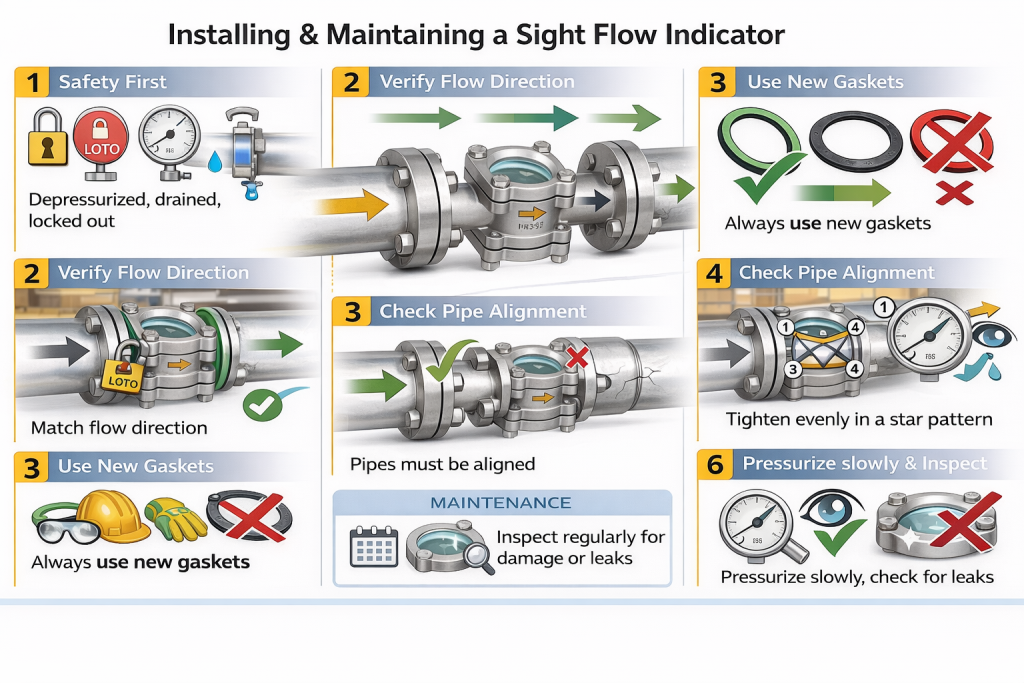
An engineer performing maintenance check on an industrial sight flow indicator

Installation Best Practices

  • Safety First: Before beginning, ensure the pipeline is fully depressurized, drained, isolated, and locked out/tagged out (LOTO). Always wear appropriate Personal Protective Equipment (PPE), including safety glasses.
  • Verify Flow Direction: Most indicators (especially flapper and rotor types) have a flow direction arrow cast or stamped onto the body. Ensure the unit is installed in the correct orientation.
  • Use New Gaskets: Never reuse old gaskets. Use new gaskets that are correctly sized and made from a material compatible with your process fluid and temperature.
  • Check Pipe Alignment: The pipe flanges must be parallel. Never use the sight flow indicator to pull misaligned pipes together. This creates dangerous stress on the housing and glass, which can lead to premature failure.
  • Follow Proper Bolting Procedure: When tightening bolts on a flanged unit, use a star or criss-cross pattern to apply pressure evenly. Use a torque wrench and tighten to the manufacturer’s recommended torque specifications. Over-tightening can crack the glass, while under-tightening will cause leaks.
  • Pressurize Slowly: After installation, re-pressurize the system slowly while carefully inspecting the sight flow indicator’s seals for any signs of leakage.

Maintenance and Proactive Inspection

A sight flow indicator is a pressure-containing component and should be part of your regular maintenance and inspection schedule.

  • Daily Visual Checks: During operator rounds, visually inspect the unit for: Leaks: Any sign of weeping from the gaskets or seals. Cracks: Look for any fractures or chips in the glass. Cloudiness or “Etching”: This can indicate a chemical attack on the glass surface, weakening its integrity. Internal Buildup: Note any scaling or deposits that obscure visibility.
  • Leaks: Any sign of weeping from the gaskets or seals.
  • Cracks: Look for any fractures or chips in the glass.
  • Cloudiness or “Etching”: This can indicate a chemical attack on the glass surface, weakening its integrity.
  • Internal Buildup: Note any scaling or deposits that obscure visibility.
  • Regular Cleaning: To ensure clear visibility, clean the external glass surfaces regularly. If internal surfaces become coated, schedule a shutdown to remove the unit for safe and thorough cleaning according to manufacturer guidelines.
  • Scheduled Component Replacement: Gaskets and seals are wear items and have a finite life. Follow a preventive maintenance schedule to replace them before they fail, especially in critical or high-temperature service. If the glass shows any signs of wear, etching, or damage, replace it immediately. Do not remain in service.
  • Keep Records: Maintain a log of inspections, cleaning, and any component replacements for each sight flow indicator. This helps track the asset’s health and predict its service life.

Conclusión

A sight flow indicator is more than just a component; it’s an investment in process control, safety, and peace of mind. By providing a clear and immediate view into your operations, it empowers you to act quickly, solve problems efficiently, and keep your systems running at peak performance.

Ready to find the perfect window into your process?

Browse our complete collection of sight flow indicators or contact our technical experts today for a personalized recommendation.

Preguntas frecuentes

How do I choose between a flapper and a rotor type indicator?

A flapper type is best for simple, on/off flow verification, especially with clear fluids, and can be used in vertical or horizontal lines. A rotor type is superior for dark or opaque liquids, as the spinning motion is highly visible. It also provides a rough indication of flow speed.

What are the best seal materials for corrosive fluids?

The best material depends on the specific chemical, concentration, and temperature. While FKM (Viton®) is an excellent general-purpose option for many chemicals and oils, PTFE (Teflon™) offers superior resistance to highly aggressive acids and solvents. Refer to our Material Compatibility Chart or consult our experts.

Can you provide custom connection sizes?

Yes. While we stock a wide range of standard ANSI flanged and NPT threaded connections, we have full in-house machining capabilities to provide custom connection types, sizes, or face-to-face dimensions to fit your existing piping. Contact us with your requirements.

What certifications do your products carry (e.g., ASME, 3-A)?

Our manufacturing facility is ISO 9001:2015 certified. Specific models are available with full material traceability (MTRs), compliance with ASME B31.3 standards, and CRN registration. We also offer a full line of sanitary models designed to 3-A standards for hygienic applications.

¿Cuáles son los consejos para el mantenimiento y la instalación de indicadores visuales de caudal?

Mantenimiento:

Relatively, the sight flow indicator is a simple device that needs no maintenance. But you need to select the correct model for the application and properly install the sight flow indicator .

Consejos de mantenimiento:

  • Si los cristales están sucios y se desmontan para limpiarlos, hay que sustituir la junta al mismo tiempo. Si el cristal es sólo el disco liso, sustitúyalo también. Puede volver a utilizar las mirillas de vidrio fundido.
  • Limpie el cristal con limpiacristales comerciales. No es conveniente utilizar rascadores de metal, cepillos de alambre, o cualquier equipo áspero
  • Never clean the glass when the sight flow indicator is in working condition. The cold water on the hot sight glass

Tips for inspecting the sight flow indicator:

  • The sight flow indicator needs inspection on a regular basis for damage purposes. For examining the scratches, use a shiny and bright light source at an angle of approximately 45 degrees. Anything sparkling requires close inspection.
  • Cualquier arañazo de la uña o marcas brillantes son motivo de sustitución. También hay que cambiar las mirillas si siguen ásperas o turbias incluso después de limpiarlas.
  • La inspección de los marcos o bridas también es muy importante en lo que respecta a la acumulación de corrosión.

Tips regarding the installation of sight flow indicator:

  • No es bueno utilizar el vidrio rayado o dañado. La superficie del asiento de vidrio tiene que ser plana por lo menos 0,005 pulgadas, junto con el acabado liso. Las bridas tienen que ser rígidas. Durante el montaje, no haga contacto con el vidrio con el metal. Todas las juntas deben ser nuevas, lisas y limpias. Utilice todas las juntas con el mismo diámetro y fíjelas concéntricamente.

Tips for bolting in sight flow indicator :

  • Nunca apriete los tornillos de la mirilla cuando las piezas estén en funcionamiento. Es necesario seguir regularmente el orden de apriete para tener la seguridad de la carga de la mirilla. El apriete es suficiente para producir un sellado positivo contra la presión del proceso.
¿Qué industrias utilizan indicadores de flujo visual?

Many industries require a tool for monitoring the speed and quality of the liquid, raw material, or gas. You can use the sight flow indicator at the internal level inside the turbine or component to inspect the fuel or hydraulic flowing of the fluid and its quality. The sight flow indicator is also helpful for several environmental and wastewater applications. In the measurement of the fluids, the sight flow indicator plays a significant role in measuring the fluids in various industries. If you want to measure or monitor the liquid or gas, the sight flow indicator needs to operate correctly inside the applications to deliver accurate results.

¿Cuáles son las aplicaciones de los indicadores de flujo visual?
  • While processing the solids in bulk quantity like plastic resins, food products, and powder inorganic form, a sight flow indicator helps the operators see the blending process. The sight flow indicator confirms the free-flowing of the materials.
  • The sight flow indicator is also helpful in terms of inspecting the pipelines for the residue and foreign particles, particularly during the cleaning schedules.
  • There is an involvement of many pipes in the process of a chemical system for moving the product in liquid form. The liquid flow is from the filters, cooling, and pumping lines. The sight flow indicator is helpful for the operator to inspect the conditions of the lines and observe the clogging.
  • The pipes carrying steam and sight flow indicator help the operator by giving alerts regarding the existence of condensate and taking preventive measures for the elimination.
  • In separate manufacturing, machines are dependent on the proper lubrication for smooth working. The usability of the sight flow indicator is on the equipment during maintenance. The sight flow indicator is also helpful for the inspection and absence of the oil and the colour. It shows that you need to change the oil if it is necessary.
¿Qué accesorios forman parte del indicador de caudal a la vista?

Camisas de vapor:

La disponibilidad de las camisas de vapor es para cubrir los indicadores de caudal visibles. No hay cubierta para la mirilla. Las chaquetas ayudan a evitar los puntos fríos en el proceso y aumentan la viscosidad de los fluidos que fluyen.

Cámaras:

La instalación de mirillas va acompañada de cámaras de vídeo que permiten el control y la grabación a distancia. En los entornos peligrosos, también se dispone de modelos a prueba de explosiones.

figura 6 cámaras

Iluminación:

You call the lights luminaries and add them to the view-through and full-view styling sight flow indicator. The mounting of these lights is at an outer surface with the help of a bracket. Or even directly fitting the luminaries in the sanitary for single-piece mounting on the cover of the flange. The halogen bulb, LEDs, or fluorescent bulbs provide lighting. Additionally, cable of optical fibre is also an option for transmitting light from the source to the sight glass. It is suitable in tight spaces where the bulb is far away from the sight glass due to vibration.

Limpiaparabrisas y lavaparabrisas:

Materiales como sólidos, espuma y condensación pueden adherirse a la mirilla y obstaculizar la visión. En estas aplicaciones, se dispone de limpiadores y arandelas de pulverización para limpiar la superficie del interior de la mirilla. En la mayoría de los casos, las láminas del interior del limpiaparabrisas son de materiales elastoméricos. Se puede accionar manualmente girando el pomo o la manivela, ya que una longitud determinada del limpiaparabrisas es inadecuada para las mirillas de gran tamaño o los indicadores de caudal de doble cristal. También hay limpiaparabrisas motorizados que consisten en modelos a prueba de explosiones. Estos funcionan por control remoto.

figura 8 paños y arandelas

¿Cómo funciona el indicador de caudal a la vista?

The sight flow indicator has small size housing equipment along with the window of glass whose insertion is with the pipe. It is for observing the flowing fluid in the pipe. To bring enhancement in the visibility of the flowing fluid, the spinner is along with the stream so that it is in contact with the spinner vanes causing it to turn. The spinner is also helpful for detecting the low-flow rates along with the visibility from a distance. The rotation speed provides a proper indication regarding the velocity of the flow. There is a sight flow indicator along with the hinged flanges for showing the flow from both directions. The single window is also available in sight flow indicator at the front of the indicator or even double windows. One is at the back, and another is at the indicator’s front. The double windows are the best choice when the colour of the liquid is the priority. The units of single windows are always with the spinners for providing the observations regarding the clarity of flowing fluid at reasonable rates. The vertical tube-kind sight flow indicator has a clear glass tube whose diameter is equal to the pipe that you can insert and inspect the high-flowing rates running in the vertical pipes. There are no spinners or other devices in these units for detection purposes. It results in no proper resistance regarding the flow and provides the pressure drop at the lowest level for any sight flow indicator. There is also an availability of sight flow indicator with unique materials to meet the requirements of different applications. The materials are present as an option for the flanges, housing, spinners, and sealing gaskets.

Póngase en contacto con nosotros

Tell us your specs; our engineer will reply within 24 hours.