
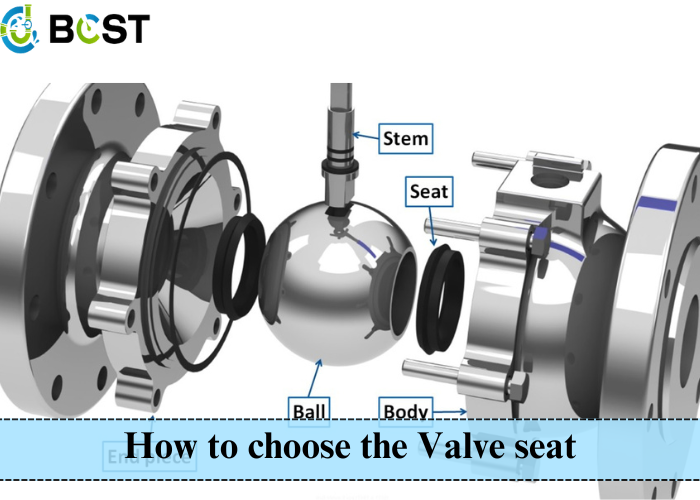
En válvula seat is one of the critical components of the valve, which directly determines the sealing performance and durability. As the part is in contact with the medium, the valve seat’s material, design, and processing technology impact the valve’s performance. According to different application scenarios and working conditions, choosing a suitable valve seat can significantly improve the service life and reliability of the valve. This article will discuss multiple aspects of selecting a suitable valve seat, such as válvula seat type, material selection, sealing performance, wear resistance, corrosion resistance, etc.
1. Basic functions and effects of valve seat
En válvula seat plays a role in sealing and controlling the fluid in the valve. When the valve is open, the fluid flows through the gap between the valve core and the valve seat; when the valve is closed, the valve core and the valve seat are in close contact to prevent fluid leakage. Therefore, the sealing performance, pressure resistance, and material selection of the valve seat directly affect the valve’s sealing effect.
The design of the valve seat should not only consider coordination with the valve core but also select the appropriate material according to the use environment to ensure that it can still work effectively under high temperature, high pressure, or corrosive media conditions. Problems such as valve seat wear, corrosion, and deformation are all factors that need to be considered in practical applications.
2. Type of valve seat
Valve seats can be divided into soft and hard seals according to different structures and sealing methods. They are suitable for various working conditions and have advantages and disadvantages.
2.1 Soft Sealing Seat
Soft-sealing valve seats are usually made of elastic or plastic materials (such as rubber, polytetrafluoroethylene PTFE, etc.). This type of valve seat has good sealing performance and is suitable for low pressure, low temperature, and non-corrosive media. Due to its soft characteristics, the soft-sealing valve seat can closely contact the valve core, thereby providing an excellent sealing effect.
Ventaja:
Excellent sealing performance, almost no leakage.
The cost is relatively low and easy to manufacture and process.
It has good elasticity and wear resistance under low pressure and medium and low-temperature conditions.
Deficiencia:
Not suitable for high temperature and high-pressure occasions.
It is susceptible to corrosive media and has a relatively short service life.
Long-term use may cause aging and deformation.
2.2 Hard seal valve seat
The rigid seal válvula seat is usually made of metal or other rigid materials (such as stainless steel, nickel-based alloy, hard alloy, etc.). This type of valve seat is highly resistant to high pressure, temperature, and wear and is suitable for high temperature, high pressure, and highly corrosive media. The sealing surface of the problematic seal valve seat is precisely machined and can cooperate with the valve core to achieve a good sealing effect.
Ventaja:
Resistant to high temperature and high pressure, suitable for harsh working conditions.
Resistant to corrosion and wear, long service life.
Able to withstand mechanical shock and wear with high stability.
Deficiencia:
The sealing performance is slightly worse than soft seals, and there may be slight leakage.
The manufacturing process is complicated, and the processing cost is high.
The sealing effect depends on precision machining and has high matching requirements.
3. Selection of valve seat material
La selección de válvula seat material must be comprehensively considered based on factors such as working medium, working temperature, working pressure, etc. Standard valve seat materials include metal and non-metal materials, and each material has its applicable working conditions.
3.1 Metal materials
Metal valve seats have good strength, temperature, and wear resistance and are widely used in high-temperature, high-pressure, and corrosive media. Common metal valve seat materials are:
Stainless steel: Stainless steel is highly corrosion-resistant and suitable for most corrosive media. It is commonly used in chemical, petroleum, and natural gas valves.
Carbon steel: Carbon steel is highly strong and inexpensive. It is suitable for general non-corrosive media such as water and oil. Carbon steel valve seats are commonly used in low-temperature and low-pressure conditions.
Nickel-based alloy: Nickel-based alloy has excellent high-temperature resistance and corrosion resistance and is suitable for harsh working conditions, such as strong acid and strong alkali media in the chemical industry.
Cemented Carbide: Cemented carbide valve seats have extremely high hardness and wear resistance and are often used in situations with highly abrasive media, such as mud, mortar, coal powder, etc.
3.2 Non-metallic materials
Non-metallic materials are usually used for soft sealing valve seats and are suitable for low-temperature and low-pressure conditions. Common non-metallic materials include:
Rubber: Rubber valve seats have good elasticity and sealing, making them suitable for low-temperature and low-pressure conditions. However, they are not resistant to high temperatures and corrosive media.
Polytetrafluoroethylene (PTFE): PTFE has excellent chemical corrosion resistance and a low friction coefficient. It is widely used in valves in the chemical industry and is suitable for operating temperatures ranging from -200°C to 250°C.
Nylon: Nylon valve seats have good wear resistance and strength and are suitable for medium and low-pressure conditions, but their chemical corrosion resistance is poor.
4. Select valve seat according to working conditions
The selection of a valve seat should comprehensively consider factors such as the characteristics of the working medium, working pressure, working temperature, and fluid flow velocity.
4.1 Corrosive medium
The material selection of the valve seat is particularly important for corrosive media such as strong acids and alkalis commonly found in the chemical industry. Generally, corrosive media require selecting materials with good corrosion resistance, such as stainless steel, nickel-based alloys, or polytetrafluoroethylene (PTFE). At the same time, a soft-sealing valve seat is recommended for highly corrosive media to ensure sealing performance.
4.2 High temperature and high-pressure medium
In high-temperature and high-pressure applications, the valve seat must be highly resistant to high temperature and pressure. Hard seal valve seats are the first choice for these media, and the materials can be stainless steel, hard alloy, etc. Under high-temperature conditions, soft sealing materials are prone to deformation, resulting in seal failure, so soft seal valve seats are not recommended.
4.3 Media containing solid particles
For media containing solid particles, the valve seat needs to have high wear resistance to prevent solid particles from wearing it when the fluid passes through. Hard-sealing valve seats, especially those made of cemented carbide, have excellent wear resistance and are suitable for this working condition.
4.4 Low-pressure and low-temperature medium
Soft-sealing valve seats have good sealing performance and economy under low-pressure and low-temperature conditions. They suit general non-corrosive media such as water, oil, and gas. Due to their excellent sealing performance, soft-sealing valve seats made of rubber, PTFE, and other materials are widely used in such conditions.
5. Valve seat processing and installation requirements
The machining accuracy and installation quality of the valve seat directly affect the valve’s sealing performance. During the manufacturing process, the sealing surface of the valve seat must be precisely machined to ensure a good fit with the valve core. Common machining processes include turning, grinding, polishing, etc. For hard-sealing valve seats, heat treatment is usually required to improve their hardness and wear resistance.
During installation, the valve seat must be correctly positioned to ensure good contact with the valve core and prevent fluid leakage. Common ways to fix the valve seat include threaded welding and flange connections. After installation, a leakage test is required to ensure that the valve seat sealing performance is qualified.
6. Maintenance and replacement of valve seat
The valve seat is one of the valve’s vulnerable parts. In long-term use, the sealing performance may be reduced due to wear, corrosion, and other reasons. Therefore, it is necessary to regularly check the valve seat’s wear. Under high wear conditions, the valve seat’s service life is relatively short and needs to be replaced regularly. Soft-sealed valve seats are usually easier to replace, while the replacement of hard-sealed valve seats is relatively complicated and may require reprocessing of the sealing surface.
7. Conclusión
As an essential part of the valve, the valve seat directly affects the sealing performance, pressure resistance, and corrosion resistance of the valve. Choosing a suitable valve seat requires careful consideration of the type of medium, working temperature, working pressure, and fluid characteristics. Soft sealing valve seats are ideal for low temperature and low-pressure conditions, with good sealing performance, but not resistant to high temperature and corrosion; hard sealing valve seats are suitable for high temperature, high pressure, and corrosive media, with higher wear resistance and durability.
With industrial technology development, valve seat materials and designs are also constantly improving. Applying new materials and processing technology can further enhance valves’ performance and service life and provide more reliable solutions for industrial production. In practical applications, choosing a suitable valve seat is the key to ensuring the long-term stable operation of the valve.

 English
 Arabic
 Russian
 French
 Spanish