
How to Choose the Right Ball Valve Grease for Your Application
The performance and longevity of your ball valves hinge significantly on the proper selection of grease. It’s not a ‘one-size-fits-all’ situation; an incorrect choice can lead to chemical degradation, accelerated wear, or even valve failure. Beyond simply understanding that “grease” can be for lubrication or sealing, the challenge lies in matching the exact compound to your unique operational parameters.
This guide will walk you through the critical factors and decision-making process for selecting the optimal ball valve grease or sealant for your specific application. By considering your valve type, process media, and operating conditions, you can make an informed choice that enhances efficiency and extends valve life.
Ready to dive in and solve your valve lubrication puzzles? Let’s ensure your valves are well-cared for.
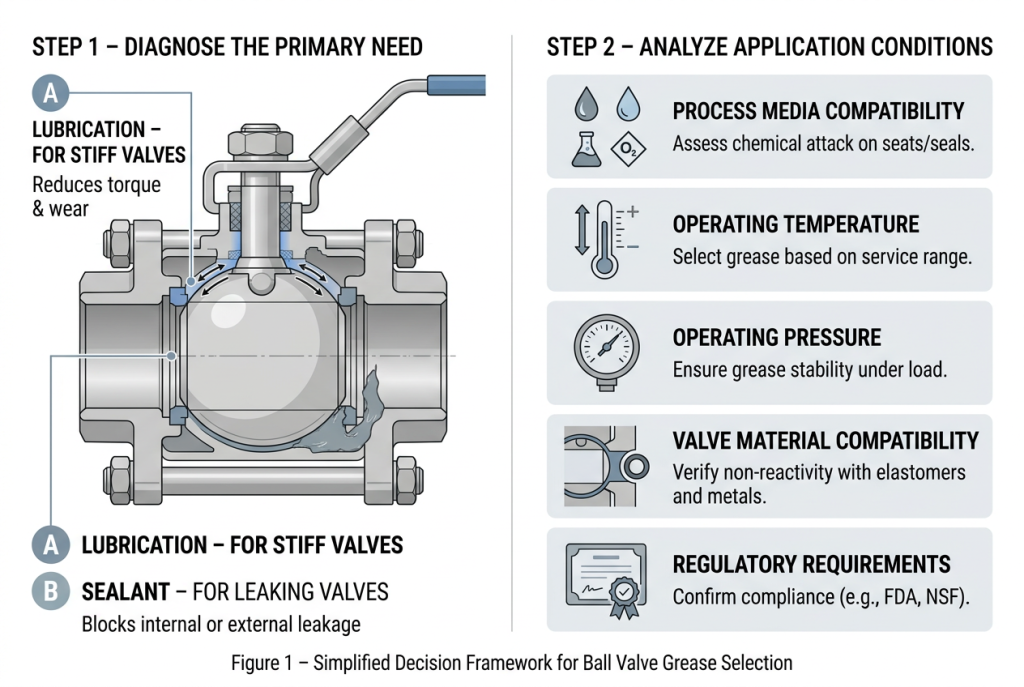
Step 1: Diagnose the Primary Need – Lubrication or Sealing?
Your first step is to clarify the primary function you need the grease to fulfill. Is the valve stiff to operate, or is it leaking?
For Stiff Valves (Reducing Torque & Wear)
If the valve is hard to turn, requires excessive force, or you’re looking for preventive maintenance to reduce wear, your primary need is lubrication. Lubricants form a protective film to reduce friction between the ball and seats or stem packing. This is often the goal for routine maintenance programs.
For Leaking Valves (Stopping Passage)
If the valve is visibly leaking (internal passing or external stem leakage), your immediate need is often a sealant. These compounds are designed with fillers to physically block leak paths in damaged or worn seats/packing. Sealants are typically an emergency or temporary solution to maintain operation until a full repair can be scheduled.
For more detail on diagnosing the problem, consult our guide: “Stiff or Leaking Ball Valve? When Grease is the Right Solution.”
Step 2: Analyze Your Application’s Conditions
Once you’ve identified the primary need, delve into the specifics of your operating environment. These factors are crucial for selecting a compatible and effective compound.
Process Media Compatibility
This is often the most critical factor. The grease must not react with or degrade in the presence of the fluid flowing through the valve. Incompatibility can lead to hardening, thinning, washout, or contamination of the process fluid.
- Hydrocarbons (Oil, Gas, Fuels): Many petroleum-based greases are suitable, but synthetic options offer better longevity and performance.
- Water / Steam: Requires water-resistant or waterproof greases to prevent washout and corrosion.
- Corrosive Chemicals (Acids, Bases): Often require synthetic greases like Perfluoropolyether (PFPE) due to their extreme chemical inertness.
- Oxygen Service: Absolutely requires highly specialized, oxygen-compatible (PFPE) greases to prevent combustion risks. Even minute amounts of petroleum-based products can be catastrophic.
- Slurries / Abrasive Media: May benefit from greases with solid lubricants (e.g., molybdenum disulfide) or sealants with inert fillers to protect against erosion.
Operating Temperature Range
The grease must remain stable (not melt, freeze, or degrade) across the entire temperature range of the application. High temperatures can cause grease to thin and run out, while low temperatures can cause it to stiffen, increasing torque or preventing flow.
- Low Temp: Synthetic bases (e.g., silicone, PFPE) are generally superior.
- High Temp: Synthetic bases (PFPE, heat-resistant silicones) with high dropping points are necessary.
Presión de funcionamiento
High pressures can force inadequate grease out of sealing areas. Sealants generally need to withstand pressure to effectively block leaks. Consider the maximum differential pressure across the valve seats.
Valve Material Compatibility
Ensure the grease won’t react negatively with the valve’s seat materials (PTFE, PEEK, Nylon, Metal), O-rings, or packing materials (graphite, elastomers). Some greases can swell or degrade certain plastics and rubbers.
Regulatory Requirements & Certifications
- Food Grade (NSF H1, H2, 3H): Essential for food & beverage, pharmaceutical, and potable water applications.
- Environmental Standards: If in environmentally sensitive areas, biodegradable options might be required.
- Industry Standards: Specific industry standards (e.g., for gas utilities, chemical plants) may mandate certain types or brands of compounds.

Step 3: Evaluate Grease Properties & Formulations
With your application needs defined, you can now consider the specific characteristics of the greases on the market.
Base Fluid Type
- Petroleum (Mineral Oil) Based: Cost-effective, good for general applications with compatible hydrocarbons. Limited temperature range and chemical resistance.
- Synthetic (Silicone): Wide temperature range, good water resistance, fair chemical resistance. Not suitable for oxygen or silicone-sensitive applications.
- Synthetic (PFPE – Perfluoropolyether): Excellent chemical inertness, very wide temperature range, non-flammable. The go-to for oxygen, harsh chemicals, and high-performance applications. More expensive.
- Synthetic (Ester, PAO blend): Offers optimized performance for specific applications.
Thickener Type
The thickener gives grease its structure and consistency. Common types include Lithium, Calcium Sulfonate, Clay (Bentonite).
- Lithium-based: Good all-purpose, moderate temperature, and water resistance.
- Calcium Sulfonate: Excellent water resistance, corrosion protection, and mechanical stability. Good for harsh environments.
NLGI Grade (Consistency)
The National Lubricating Grease Institute (NLGI) grade indicates grease consistency, ranging from 000 (fluid) to 6 (solid). Most ball valve greases are 1 or 2, balancing injectability and resistance to washout.
- NLGI 0 or 1: Easier to pump, good for systems with long lines or low injection pressure.
- NLGI 2: General purpose, good balance of pumpability and stability.
Additives & Fillers
- Extreme Pressure (EP) Additives: For high-load applications.
- Corrosion Inhibitors: Protect metal surfaces.
- Solid Lubricants (Graphite, Moly): For metal-seated valves or abrasive media applications.
- Sealant Fillers: Fibrous or particulate materials in sealants to physically block leak paths.
Common Mistakes to Avoid When Choosing Grease
Even with careful consideration, pitfalls can emerge. Be aware of these common errors:
- Ignoring Manufacturer’s Recommendations: Always check the valve manufacturer’s guidelines first. They often provide acceptable grease types.
- Mixing Different Greases: Incompatible greases can react, causing hardening, thinning, or complete loss of lubrication. Use dedicated grease guns.
- Over-reliance on “All-Purpose” Greases: While convenient, general-purpose greases rarely offer optimal performance for demanding or specialized applications. They may not hold up to specific chemicals, temperatures, or pressures.
- Prioritizing Price Over Performance: A cheap grease might seem like a cost-saver initially, but premature valve failure, increased maintenance, and process downtime will quickly erase those savings.
- Incorrect Storage: Grease stored improperly can become contaminated or degrade, losing effectiveness.
Conclusión
Choosing the right ball valve grease is a strategic decision that directly impacts the reliability, safety, and operational costs of your facility. By carefully considering the primary need (lubrication or sealing), and thoroughly evaluating your application’s conditions—including process media, temperature, pressure, and valve materials—you can select a grease that ensures optimal performance.
Remember, the best practice is to view greasing as part of a comprehensive maintenance philosophy. Learn more about proactive maintenance in our guide on Developing a Proactive Ball Valve Lubrication Program. BCST Valve is committed to providing not only high-quality valves but also the knowledge to maintain them effectively.
Confused about the best grease for your valve?


 English
 Arabic
 Russian
 French
 Spanish