

The Floating Ball Valve and the Trunnion Ball Valve are both types of ball valves, but they differ in their internal design and how the ball is supported within the valve. These differences have implications for their performance, especially in terms of pressure handling, valve size, and application suitability.
1. Design & Structure
1.1 Floating Ball Valve:
In a floating ball valve, the ball is not fixed to any part of the valve body except the valve stem. The ball “floats” and is pushed against the valve seats by the pressure of the fluid when the valve is closed.
The ball itself moves slightly within the valve body, and when pressure is applied from the inlet side, it pushes the ball into the downstream seat, ensuring a tight seal.
1.2 Trunnion Ball Valve:
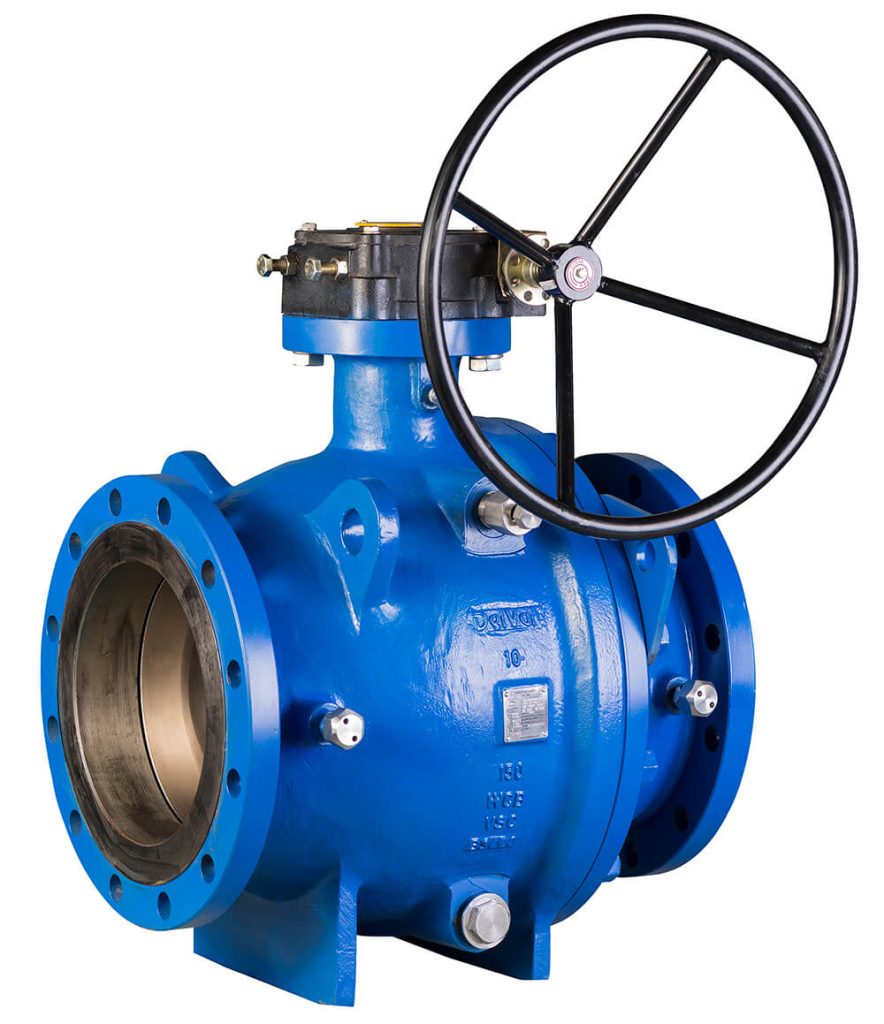
In a trunnion ball valve, the ball is fixed and supported by two trunnions (metal shafts) at the top and bottom of the ball, preventing it from moving freely.
The trunnions hold the ball in place and allow it to rotate smoothly without any displacement, making it more stable and capable of handling higher pressures.
2. Pressure Handling
2.1 Floating Ball Valve:
Best suited for low to medium-pressure applications, typically used in smaller pipelines (low to medium size).
Because the ball is not supported from below, at higher pressures, the ball could potentially be deformed or not maintain a tight seal, especially in large valves.
2.2 Trunnion Ball Valve:
Designed for high-pressure and large-diameter pipelines.
The fixed trunnion supports help distribute the internal pressure load, preventing ball deformation and ensuring a more stable seal even under high-pressure conditions.
Trunnion valves are generally preferred in oil, gas, and chemical industries where high-pressure or high-flow systems are common.
3. Sealing Mechanism
3.1 Floating Ball Valve:
The sealing depends on the pressure of the fluid pushing the ball against the seat. The higher the pressure, the tighter the seal.
This is more effective in smaller valves and lower pressures, but as the valve size and pressure increase, the effectiveness of the seal may decrease due to the movement of the ball.
3.2 Trunnion Ball Valve:
The fixed position of the ball ensures a constant and stable contact with the seat, which provides a reliable and consistent seal even under higher pressures and in larger sizes.
This is particularly important in applications where fluid leakage could be costly or dangerous.
4. Size & Application
4.1 Floating Ball Valve:
More commonly used in smaller pipelines (typically 2 inches to 6 inches).
Suitable for less demanding applications where the pressure and size are relatively lower (e.g., HVAC systems, water treatment, or small-scale industrial processes).
4.2 Trunnion Ball Valve:
Typically used in larger pipelines (6 inches and above) and high-pressure applications.
Common in heavy industries such as oil and gas, power plants, and chemical manufacturing, where high flow rates and pressures are expected.
5. Maintenance and Cost
5.1 Floating Ball Valve:
Simpler construction means it is usually cheaper and easier to maintain.
However, under high pressures or in larger sizes, the ball’s movement may cause wear on the seats, potentially requiring more frequent maintenance.
5.2 Trunnion Ball Valve:
More complex and expensive due to the trunnion design and additional components.
Trunnion valves generally require less maintenance in high-pressure applications because the fixed ball reduces wear on the sealing surfaces.
6. Performance in Large Valves
6.1 Floating Ball Valve:
As valve size increases, the floating ball design may struggle with sealing efficiency and may require higher fluid pressure to achieve a good seal.
6.2 Trunnion Ball Valve:
Performs better in larger valves and at higher pressures because the trunnions provide stability to the ball, preventing it from shifting under high pressure.
Summary of Key Differences:

7. Conclusion:
Floating Ball Valves are ideal for smaller, low to medium pressure systems, where cost and simplicity are important factors.
Trunnion Ball Valves are better suited for larger, high-pressure applications, where the valve’s stability and long-term performance are critical, such as in the oil and gas industry.
Choosing between the two depends on the specific requirements of your system, such as pressure, valve size, and performance needs.


 English
 Arabic
 Russian
 French
 Spanish