
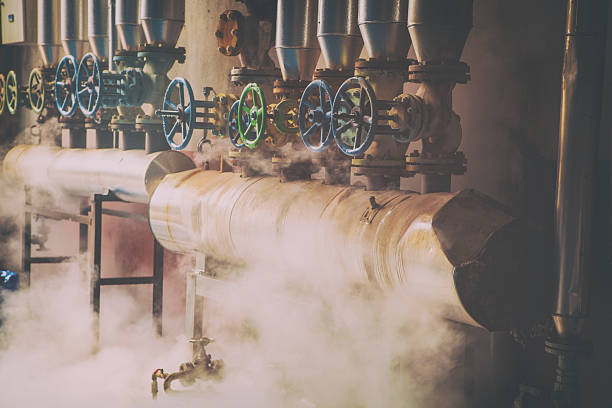
As a steam industry professional, selecting the proper control valve for your system is crucial. However, with many options available, picking the perfect valve for your application can take time and effort. Fortunately, there are a few key steps that you can follow to ensure that you select the best control valve for your steam system.
Selecting the right control valves for your steam systems is essential for optimal performance. With a suitable valve, you can ensure that your system runs at its peak efficiency and safety. This article will provide a significant guide on choosing the correct valve for your specific needs.
When choosing an automatic control valve for your application, you want to select the right one. However, with three common choices – pneumatic, electric, and self-acting – it can be challenging to know the best option for your case. That’s why it’s essential to work with a professional to ensure you make the right decision. BCST helps you assess your needs and find the perfect control valve for your steam system.
Step 1: Defining Your Application
This first step is essential to the success of your application: clearly defining and understanding your application, its process variables, and the data required. As the engineer or end-user, it is up to you to know exactly what you need for your application. Take the time to ensure that your requirements are well-defined and accurately communicated for the best results.
- Controlling
- Temperature
- Pressure
- Flow Rate
- Level
- Failure Safety Position
- Valve Close
- Valve Open
- None
- Medium Information
- Density
- Temperature
- Physical Properties
- Process Pressure
- Maximum/Normal/Minimum Upstream and Downstream Pressure
- Maximum Drop Pressure
- Differential Pressure
- Flow Rate
- Maximum/Normal/Minimum Flow Capacity
- Valve Material
- End Connection Type
- What type of power is available on site, compressed air power, electricity, or non-power driving?
- What is the working environment like? Is it corrosive, hazardous, dirty, dusty, or atmospheric?
- What is your set-point temperature for the control temperature function? Is it a fixed or variable temperature?
After carefully considering the above ten questions, you can define your application and select the appropriate control valves for the steam system. Generally, control valves are driven by electric power, compressed air, or self-acting. Electric power options include 220 V AC, 24 V DC, 380 V AC, and other custom power. Compressed air power ranges from 1.4 to 10.0 Bar. An input signal is needed to control the transmitter, such as 4-20mA, 3-15PSI, 1-10V, or others for modulating functions. Self-acting control valves do not require external auxiliary power, and they use energy from the fluid to generate fluid power.
Selecting the proper control valves is essential for the steam system and requires careful consideration. Utilize this guide to make the most informed decision for your application.
Step 2: Select the Power Source of Control Valves for Steam Systems
Before you decide on control valves for the steam system, it is vital to check the in-site power you can provide and understand the advantage and disadvantages of each drive option. Professional engineers should comprehensively describe the pros and cons of each power source, as well as the best practices for installation and maintenance. This will ensure your steam system is running smoothly and efficiently.
Compressed Air
This control loop system typically consists of a valve, pneumatic actuator, controller, sensors or transmitter, and converter or electro-pneumatic positioner. Each system component can be precisely adjusted to achieve the desired output, allowing for accurate control of the process. With this arrangement, precise control is achievable through the latest in pneumatic technology.
Advantages
Fast response, tight shutoff, large rangeability, high capacity, and no extra cost for failing to open or forgetting to close the safety position required, professional-level performance and reliability, ensuring precise control and maximum efficiency.
Disadvantages
It calls for compressed air strength for this system. Unfortunately, only some industry systems have compressed air on-site and need air tubing and piping to transfer this air power.
Electric Power valve
Electric Power to drive control valves offers numerous advantages over pneumatic actuated control valves. The controller and power are conveniently combined within the actuator, allowing for a faster, more straightforward wiring setup. In addition, the electric power ensures precise, effortless control of the valve, delivering superior performance with minimal effort.
Advantages
- Highly accurate control system for superior precision and multi-functionality, with the ability to switch between on-off and modulating shift modes. This ensures a professional level of control that delivers reliable results.
Disadvantages
- They are relatively slow to operate compared to pneumatic control valves and are only sometimes suitable for process parameters that require sudden changes, such as pressure control of rapidly changing loads.
- Due to the need for independent wiring for electric power to the control valves, the associated costs must be considered.
- Electric actuators may have higher upfront costs than pneumatic actuators. However, their added functionality—such as safety position, limit switches, and loading speed—can often make them a worthwhile investment in the long run.
- Pneumatic control valves offer superior smooth operation compared to other valve types.
In a hazardous environment, when using control valves, an electric actuator or any other electrical device with explosion-proof performance will be required, resulting in higher costs than pneumatic control valves, which only require an improvement in the explosion-proof grade of the valve positioner.
Self-Actuated Control valve
Self-actuated control valves are control system that does not require external power to operate. They typically refer to self-operated pressure regulators, self-operated temperature regulators, and differential pressure regulators. These systems provide precise control and are widely used in various industries. Their reliable operation ensures process safety and optimal performance.
Advantages
- Low cost, simple operation, and easy to install and start up. It also provides proportional control with a wide rangeability and is safe for use in hazardous areas.
Disadvantages
- Due to the self-actuated regulator operated by medium energy, it will be relatively slow to respond if data variables change fast.
- It cannot transmit the facts to the controller system. The self-actuated valve does not have a remarks sign to the manipulated room.
In conclusion, it is essential to know your specifications in detail for steam systems or other industrial applications and then provide process parameters to the experts. Then, our team of professionals will size the appropriate control valves for your specific requirements. These steps are critical for ensuring that your steam system runs smoothly, is accurate and reliable, has extended durability, and is cost-effective and energy-efficient.


 English
 Arabic
 Russian
 French
 Spanish