
A single failed underground shutoff valve can flood a home with hundreds of gallons per minute, turning a routine well pump issue into a $50,000+ insurance nightmare. Yet 73% of rural homeowners have never tested their buried main water valve — according to a 2024 National Ground Water Association survey — discovering it’s frozen, corroded, or completely inoperable only when disaster strikes.
Your underground main water shutoff ball valve is the final barrier between your well system and catastrophic property damage. This full-port, quarter-turn valve must operate flawlessly under constant pressure, resist decades of soil chemistry, and remain accessible through frost, sediment, and landscaping changes.
This comprehensive guide equips homeowners, well contractors, and rural property managers with actionable specifications, installation protocols, maintenance schedules, and emergency procedures to ensure your underground shutoff valve works when seconds matter.
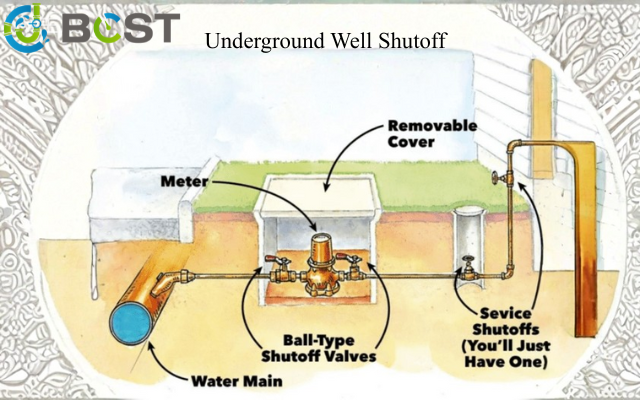
Why Your Underground Well Shutoff Valve Is Different From Household Plumbing Valves
Standard ½-inch ball valves from big-box stores are not engineered for buried service. They lack:
- Corrosion-resistant metallurgy for aggressive groundwater
- High-pressure ratings beyond municipal supply (150 PSI)
- Full-port flow to prevent pump cavitation
- OSHA-compliant access systems for safe operation
- Frost-heave protection and drainage design
Real-World Failure Example
In January 2024, a Minnesota homeowner’s well pump failed at 2 a.m. The buried shutoff valve, a standard brass plumbing valve installed 8 years prior — was completely seized. Water flooded the basement at 18 GPM for 4+ hours until the well driller arrived.
Critical Specifications for Underground Well Shutoff Ball Valves
 High-pressure underground ball valve internal components
1. Pressure Rating: 300 PSI Minimum (500 PSI Recommended)
Well systems operate at 40–80 PSI, but pressure spikes during pump start/stop can exceed 200 PSI. Add winter freeze expansion? You need 500 PSI burst protection.
Pro Tip: Choose valves rated ANSI/ASME B16.34 or AWWA C507 for well service.
2. Body Material: Bronze or 316 Stainless Steel Only
- Lead-free bronze (C89833) — Best for neutral pH groundwater
- 316 stainless steel — Required for acidic soils (pH < 6.5) or high chlorides
Never use: Cast iron, carbon steel, or PVC below grade.
3. Full-Port Design (100% Bore Match)
Reducing flow diameter causes:
- Pump motor overload
- Pressure drop
- Sediment buildup
- Cavitation damage
Flow Math: A 1-inch nominal valve with ¾-inch port restricts flow by 44% — forcing your pump to work 40% harder.
4. Seat & Seal Materials
| Component | Minimum | Premium | Lifespan Impact |
|---|---|---|---|
| Ball Seat | EPDM | PTFE-encapsulated | +300% wear resistance |
| Stem Seals | Single O-ring | Double O-ring + chevron packing | Prevents groundwater ingress |
| Ball Material | Chrome-plated brass | 316 stainless | Eliminates galvanic corrosion |
5. Operator Type
| Application | Recommended Operator |
|---|---|
| < 2" valve, < 36" burial | Extended T-handle (stainless) |
| ≥ 2" valve or > 36" depth | Gear operator with position indicator |
| High-traffic areas | Recessed curb box with locking lid |
Underground Ball Valve Selection Matrix (2025 Standards)
| Feature | Minimum Code Compliance | Ideal Long-Term Performance | Cheap Valve Failure Mode |
|---|---|---|---|
| Body Material | Lead-free bronze | 316 stainless steel | Pitting, cracking |
| Pressure Rating | 300 PSI | 600 PSI working | Burst under surge |
| Port Design | Reduced port | Full port (100% bore) | Flow restriction, pump strain |
| Seat Material | EPDM | Virgin PTFE or PEEK | Seat washout in 3–7 years |
| Stem Seal | Single O-ring | Triple stem seal | Groundwater infiltration |
| Operator | Standard lever | Gear operator + extension | Seized or broken handle |
| Access Box | Plastic curb box | Cast iron traffic-rated | Crushed by vehicles |
| Frost Protection | 6" below frost line | 12" + insulation sleeve | Freeze-heave damage |
Professional Installation Protocol (Step-by-Step)
Step 1: Site Preparation
- Dig test hole to confirm frost line depth (use NOAA frost map)
- Excavate 36" wide x depth + 12" trench
- Add 6" washed gravel base for drainage
- Install dielectric unions if connecting copper to galvanized
Step 2: Valve Positioning
- Mount valve vertically (stem up) when possible
- Align flow arrow with pressure source (well → house)
- Support valve with concrete blocks to prevent settling
- Leave 12" clearance around operator for future access
Step 3: Access System
- Install 24-inch minimum diameter valve box
- Use traffic-rated cast iron lid in driveways
- Extend riser pipe to 2–4 inches below lid
- Mark location with permanent survey stake + GPS coordinates
Step 4: Backfill & Testing
- Pressure test assembly to 150 PSI for 15 minutes
- Cycle valve 10 full turns to verify smooth operation
- Backfill with clean fill dirt, compacting in 6" layers
- Install warning tape 12" above pipe
Maintenance Schedule
| Frequency | Task | Tools | Red Flags |
|---|---|---|---|
| Monthly | Visual inspection of valve box | Flashlight | Water in box, cracked lid |
| Quarterly | Exercise valve 3–5 full cycles | 36" T-handle wrench | Stiff operation, grinding |
| Annually | Pressure test + stem lubrication | Gauge, food-grade lube | >1 PSI drop in 10 min |
| Every 3 Years | Professional inspection | Borescope, torque wrench | Corrosion, sediment buildup |
Emergency Troubleshooting: When Your Valve Won’t Turn
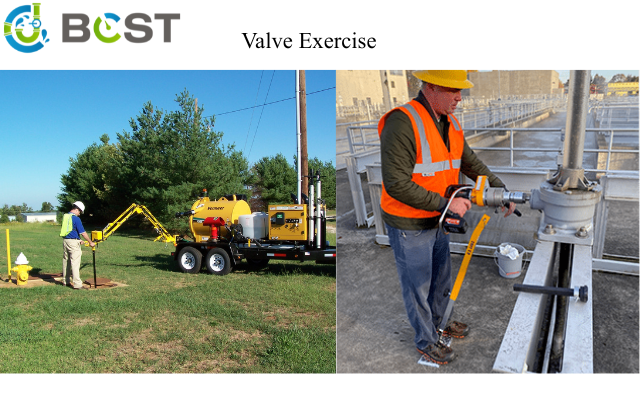
Scenario 1: Valve Frozen (Stuck)
- Apply penetrating oil (PB Blaster) down stem — wait 15 minutes
- Use 36-inch cheater bar — never exceed 100 ft-lbs torque
- Alternate ¼-turn open/close motions to break corrosion
- If still stuck → call well driller immediately
Scenario 2: Leaking When Closed
- Cycle valve 10 times rapidly to clear debris from seat
- Check water meter — spinning = internal leak
- Temporary fix: Use curb stop (if present) or clamp pipe
- Schedule excavation and replacement
Scenario 3: Broken Handle/Operator
- Dig 12-inch radius around stem
- Use pipe wrench on square stem (protect with rag)
- Install temporary bypass if needed
- Replace valve within 7 days
When to Replace Your Underground Shutoff Valve
| Symptom | Urgency | Cost to Ignore |
|---|---|---|
| Hard to turn (>50 ft-lbs) | High (30 days) | $3,000–$7,000 excavation |
| Minor drip when closed | Medium (6 months) | Basement flood risk |
| Corrosion visible on stem | High (immediate) | Complete failure |
| Valve > 15 years old | Preventive | Avoid emergency costs |
Conclusion: Your Well System’s Most Important Valve
Your underground main water shutoff ball valve isn’t plumbing — it’s property insurance. A properly specified, installed, and maintained valve costs under $500 and prevents tens of thousands in damage.
Take action today:
- Locate your valve (check well driller records)
- Test it this weekend (quarterly schedule starts now)
- Upgrade if >10 years old or showing wear
- Save this guide — share with your well contractor
Because when your well pump fails at 3 a.m., you’ll be glad you did.


 English
 Arabic
 Russian
 French
 Spanish