
Before/After: From Cutting Out Failed Valves to a 10-Minute Swap. The Case for True Union.
A critical process line has a leaky solvent weld ball valve. What’s your first thought? Too often, it’s a groan. The immediate mental checklist: shut down the line, drain the system, cut out the old section of pipe, meticulously prepare new pipe ends, fusion-bond new couplings and a replacement valve, wait for cure, then painstakingly refill and test. This “maintenance marathon” isn’t just inconvenient; it’s a significant drain on resources and a major cause of costly downtime.
But what if that multi-hour ordeal could be reduced to a matter of minutes? This isn’t wishful thinking; it’s the reality offered by a true union ball valve. At BCST Valve, we advocate for solutions that dramatically cut your pvc valve replacement time and costs. This guide will walk you through the stark before-and-after of valve replacement, making a compelling case for choosing serviceable designs for your critical operations.
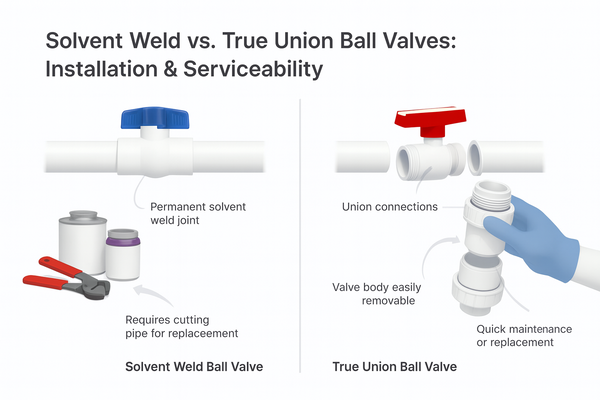
The “Before”: The Traditional Solvent Weld Valve Replacement Nightmare
For decades, the standard procedure for replacing a failed solvent weld ball valve has been a resource-intensive process. This scenario illustrates why many plant managers and maintenance supervisors dread these unforeseen breakdowns.
Step-by-Step Breakdown of a “Cut and Replace” Operation:
- System Shutdown & Isolation: Identify the affected section, shut down pumps, and isolate the line upstream and downstream. This alone can interrupt processes across an entire plant.
- Draining the System: The entire line section between isolation points must be drained, often involving significant downtime and potential waste of valuable process fluid or water.
- Pipe Cutting: Precisely cut out the old, failed valve and often a small section of adjacent pipe to ensure clean, square ends for the new weld. This requires careful measurement and specialized tools.
- Surface Preparation: Painstakingly clean, deburr, and prime all new pipe ends and fittings, including new couplings if the existing pipe ends are too short.
- Solvent Welding: Cement the new valve and any required couplings into place. This is where subtle mistakes can lead to future failure (as extensively covered in The 5-Minute Mistake That Causes a Solvent Weld Joint to Fail).
- Cure Time: Wait for the solvent weld joints to fully cure. This can be hours, or even overnight, depending on pipe size, temperature, and humidity, halting operations.
- Refill & Test: Slowly refill the system, purge air, and conduct a pressure test to ensure all new joints are leak-free.
Estimated Time: 2-8+ hours (not including procurement of parts and travel time). This labor-intensive process, coupled with extended downtime reduction valve challenges, significantly drives up your operational expenses.

The “After”: The True Union 10-Minute Swap
Now, imagine the same scenario, but this time, a true union ball valve is in place. The difference is profound, transforming a disruption into a minor inconvenience. This is why more facilities are opting for a serviceable ball valve design.
Step-by-Step Breakdown of a “True Union Swap”:
- System Isolation: Similar to above, but often much faster if the true union valve itself provides good isolation, meaning a smaller segment of pipe might need isolation.
- Depressurize & Drain (Minimal): Only the valve body and a very small section between the unions needs to be depressurized. Depending on orientation, often no significant draining is required from the main line, making it a faster pipe repair without draining.
- Loosen Union Nuts: Using standard tools, simply loosen the two union nuts on either side of the valve body.
- Remove Old Body: The central valve body easily lifts out of the pipeline. No cutting, no re-welding.
- Insert New Body: Drop the new PVC valve replacement body into place.
- Tighten Union Nuts: Hand-tighten the nuts, then use a wrench for a final snug fit. The O-rings in the unions provide the seal.
- Refill & Test: Re-open isolation valves. Often, no pressure test is explicitly needed on the valve itself, as the union seals are visually verifiable and reliable.
Estimated Time: 5-15 minutes. This approach drastically reduces maintenance cost valve-related operations and eliminates downtime related to solvent cure. The direct comparison of a true union ball valve vs solvent weld valve here is undeniable.
The Undeniable Benefits of a Serviceable Ball Valve
The choice for a true union ball valve delivers far more than just convenience. It translates directly into substantial operational savings and improved system reliability.
- Dramatic Downtime Reduction: This is arguably the biggest benefit. Minutes versus hours or days means minimal disruption to production and vastly reduced lost revenue.
- Lower Labor Costs: Fewer man-hours spent on intricate pipework, draining, and refilling. Maintenance crews can be more productive.
- Reduced Risk of Installation Error: Eliminating solvent welding for repairs removes a major source of potential future leaks and callbacks.
- Simplified Inventory: In some systems, interchangeable true union bodies can reduce the variety of spare parts needed.
- Enhanced Safety: Faster repairs mean less time workers are exposed to potential hazards like chemicals or high-pressure streams. This is especially critical in applications where misapplication can cause rapid failure, such as using the wrong valve for compressed air.
- More Efficient Planned Maintenance: Routine seal replacements or internal inspections become quick tasks rather than major projects.
Conclusion: Prioritizing Uptime and Efficiency with True Union Valves
The dramatic reduction in downtime and labor shown here—from hours of cutting and re-welding a standard solvent weld ball valve to a mere 10-minute swap with a true union ball valve—is the core argument for looking at The True Cost of a Solvent Weld Ball Valve, not just its initial price tag.
Investing in serviceable ball valve designs like the true union isn’t an added expense; it’s a strategic investment in operational efficiency, reduced maintenance costs, and maximized uptime. For plant managers, maintenance supervisors, and purchasing managers, choosing the right valve means choosing fewer headaches, more productivity, and a healthier bottom line. Make the switch and experience the future of valve maintenance.
Ready to upgrade your system to true union efficiency?


 English
 Arabic
 Russian
 French
 Spanish