
Yes, You Can Remove It: A Guide to Taking Off Push Connect Valves
One of the most appealing features of push connect ball valves is their incredible ease of installation. With no soldering, crimping, or gluing required, getting them onto a pipe is as simple as, well, a push! But a common question we hear is: “Can you take them off?” The answer is a resounding YES! And just like installation, removing a push connect valve is refreshingly straightforward, requiring only a simple, inexpensive tool.
This BCST Valve guide will walk you through the entire process of safely and efficiently removing a push connect ball valve from various pipe types. Whether you need to reposition a valve, replace a faulty one, or simply disconnect a line, we’ll provide the clear, step-by-step instructions you need to get the job done right.
Safety First: Essential Precautions Before Removal
Always prioritize safety when working with plumbing components:
- Shut Off Water Supply: Locate the main water shut-off valve for your home or the specific area you’re working on and turn it off completely.
- Depressurize and Drain: Open the nearest faucet(s) on the relevant hot and cold lines to relieve any remaining water pressure and drain the pipes. Be prepared for some residual water to spill out.
- Wear PPE: Safety glasses are always a good idea when working with tools and potentially pressurized systems.
Tools You’ll Need for Push Connect Valve Removal
The beauty of push connect system removal is that it requires just one specialized tool:
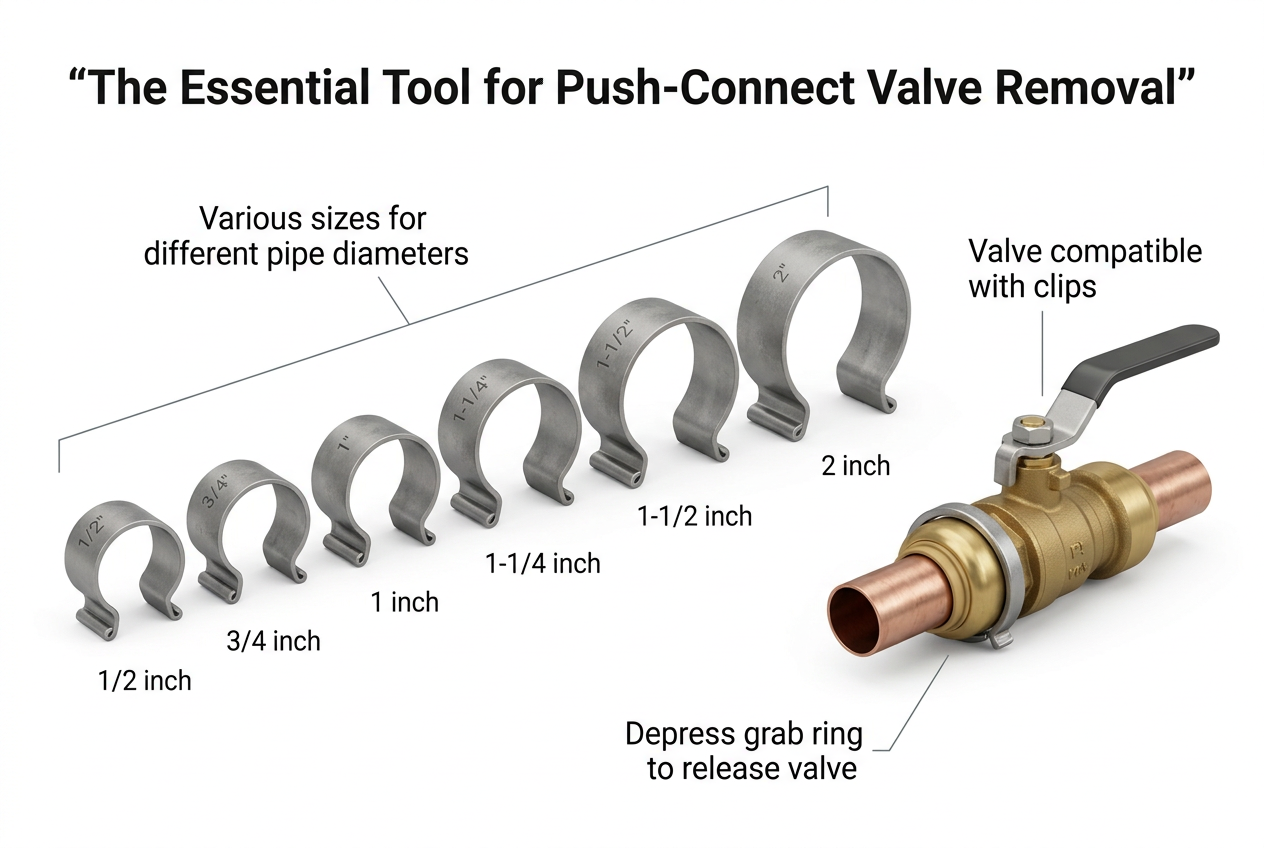
- Push Connect Disconnect Clip/Tool: This is a small plastic or metal ring that comes in various sizes to match your valve’s pipe diameter (e.g., 1/2″, 3/4″, 1″). It’s designed to depress the valve’s internal grab ring, allowing the pipe to be released.
- Towel/Bucket: To catch any residual water from the pipes.
The Step-by-Step Removal Process
Once you’ve ensured safety and gathered your tools, follow these easy steps:
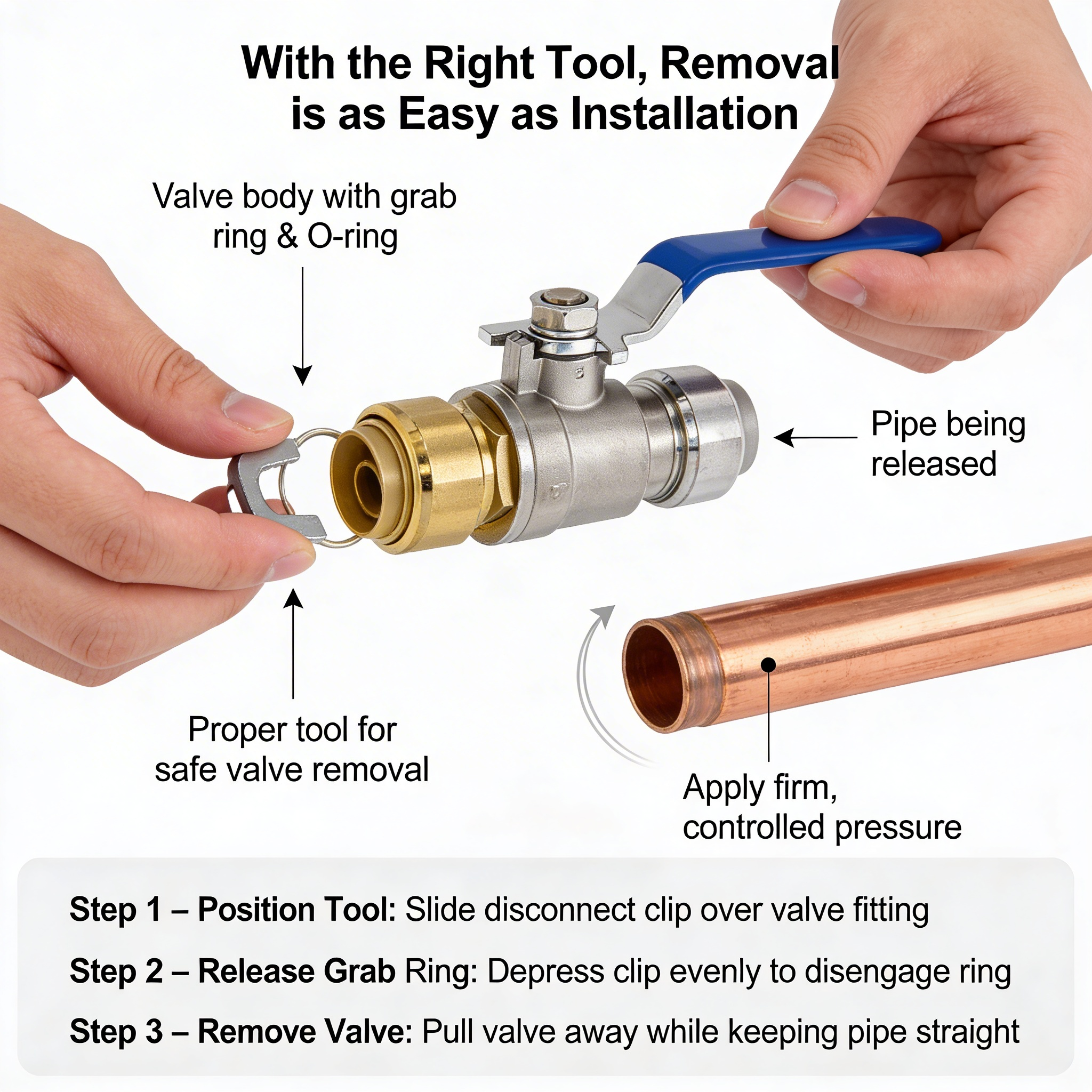
Step 1: Position the Disconnect Clip
- Take the correct size disconnect clip (it should match the pipe’s diameter).
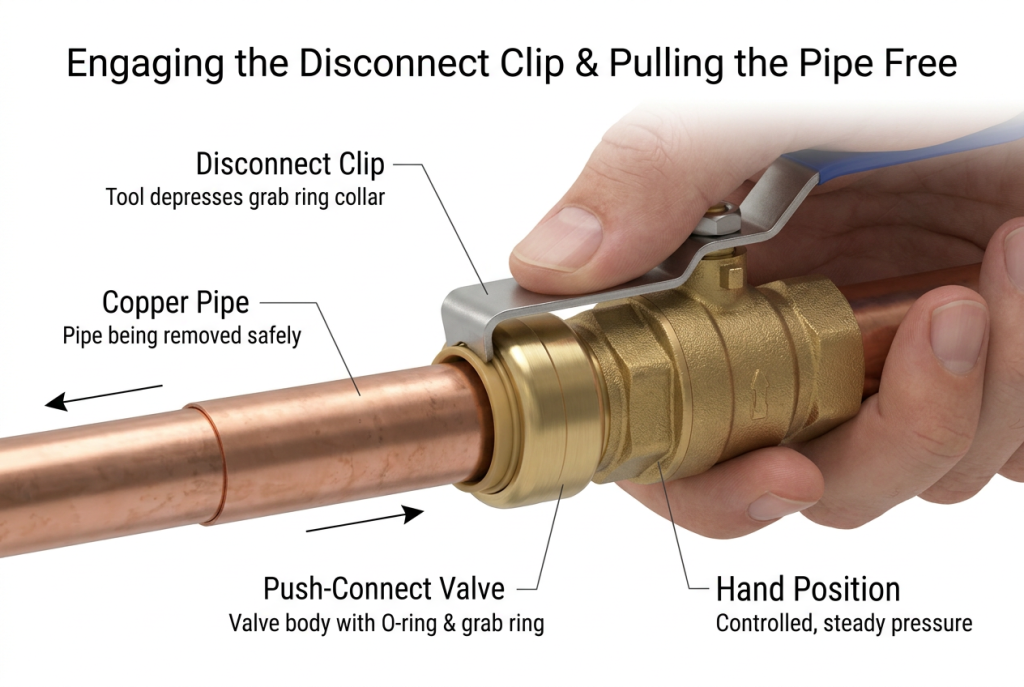
- Slide the clip over the pipe until it rests squarely against the collar of the push connect valve, encompassing the valve’s release ring.
- Ensure the clip is pushed flush against the valve, engaging the inner teeth that hold the pipe.
Step 2: Depress the Collar and Pull
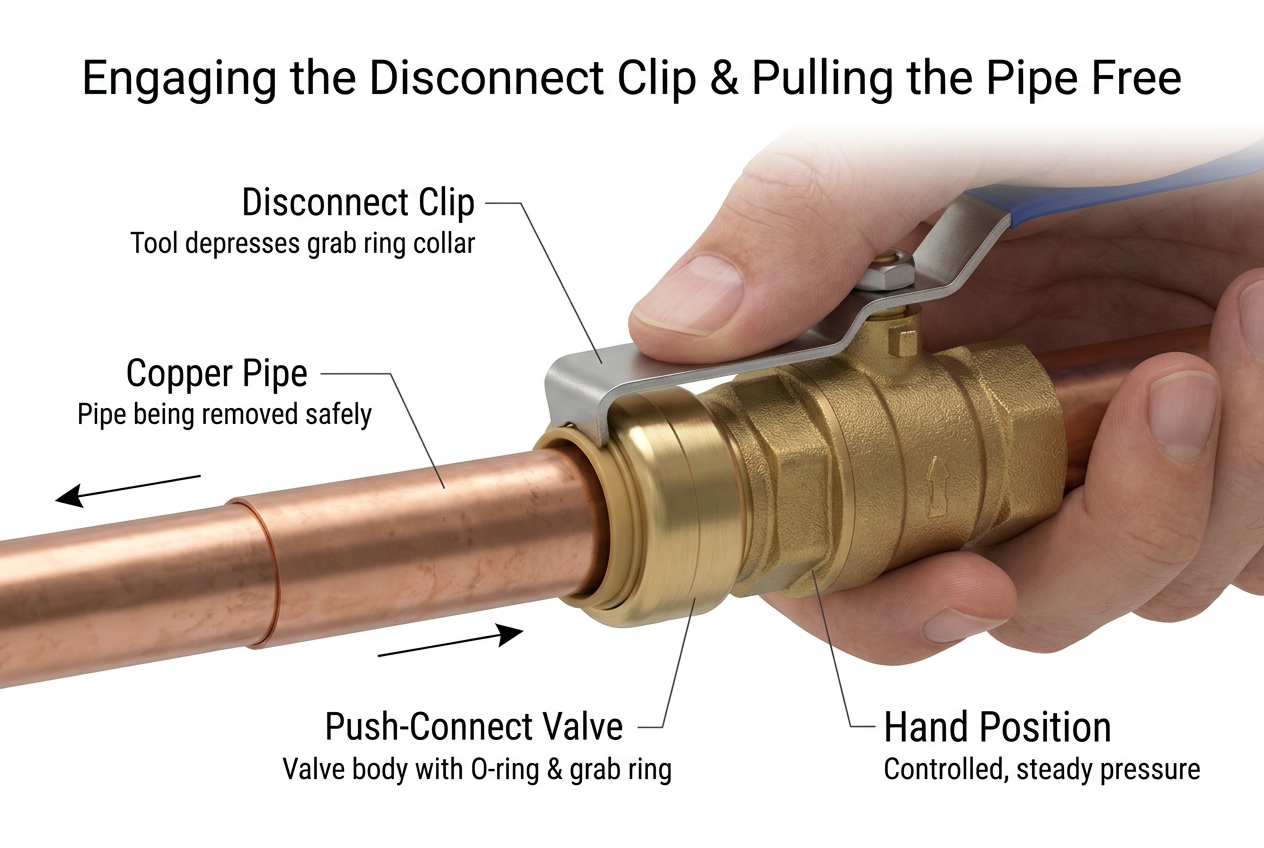
- While holding the disconnect clip firmly against the valve, use your other hand to grasp the pipe.
- Push the pipe *into* the valve slightly, then immediately pull it out firmly. The clip should depress the grab ring teeth inside the valve, allowing the pipe to slide free.
- If the pipe doesn’t release, ensure the clip is flush and try again with a steady, firm push-and-pull motion.
Step 3: Repeat for the Other Side (if applicable)
- If your push connect ball valve is connected to pipes on both ends, repeat Steps 1 and 2 for the other side of the valve.
- Once both pipes are disconnected, the valve should be completely free.
Step 4: Inspect the Pipe Ends
- After removing the valve, carefully inspect the ends of your pipes. You might see slight indentations from the grab ring teeth; this is normal.
- Ensure there are no deep gouges, burrs, or deformities that could compromise a future connection (whether with a new push connect fitting or another type). If the pipe is damaged, you may need to cut a new, clean section.
Troubleshooting Difficult Removals
While usually simple, sometimes a push connect valve can be stubborn. Here are a few tips:
- Ensure Clip is Fully Engaged: The most common reason for difficulty is not having the disconnect clip fully pressed against the valve collar. Apply firm, even pressure.
- Too Much Paint/Caulk: If the valve was painted or heavily caulked, this might interfere with the clip’s ability to depress the grab ring. Carefully clear away any obstructions.
- Corrosion: In very old or highly corrosive environments, the internal components might be slightly seized. Gentle wiggling and persistent effort, ensuring constant pressure with the clip, often helps. Avoid excessive force that could damage the pipe.
- Pipe Movement: If the pipe is flexible (like PEX), ensure it’s not bending excessively during removal. Try to keep the pull straight and steady.
Can You Reuse a Push Connect Ball Valve?
Generally, yes, high-quality push connect valves are designed for reuse. However, exercise caution and discretion:
- Inspect the Valve: Before reusing, carefully examine the valve’s interior. Ensure the grab ring is intact, the O-ring is not nicked, dried out, or deformed, and there’s no visible internal corrosion or debris.
- Condition Matters: If the valve was exposed to harsh chemicals, extreme temperatures, or has been in service for many years, it’s often best to replace it with a new one for peace of mind.
- New O-Rings: Some manufacturers offer replacement O-rings, which can extend the life of a valve, but this is less common for full valves compared to simpler fittings.
For critical applications or if there’s any doubt about the valve’s integrity, always opt for a new BCST push connect valve. Learn more about their initial setup in: How to Install a Push Connect Ball Valve in 5 Easy Steps.
Conclusion: Simple Removal for Ultimate Flexibility
The ability to quickly and easily remove a push connect ball valve is a testament to the intelligent design behind this plumbing innovation. It provides unparalleled flexibility for repairs, modifications, and system updates, proving that convenience doesn’t have to come at the expense of reliability.
By understanding the simple mechanism and utilizing the proper disconnect tool, both DIY enthusiasts and seasoned professionals can confidently work with these valves. BCST Valve is committed to providing not only top-quality, dependable push connect solutions but also the clear guidance needed to use them effectively throughout their lifecycle.
Have more questions about push connect valves?


 English
 Arabic
 Russian
 French
 Spanish