
Choosing the right quarter-turn valve is a critical decision that impacts your system's efficiency, safety, and long-term costs. Make the wrong choice, and you could face leaks, unexpected downtime, or even a hazardous failure. The pressure to select the perfect component for the job is immense.
This decision often comes down to two industry workhorses: the plug valve and the ball valve. While they look similar and perform the same basic function, their internal designs lead to significant differences in performance, durability, and ideal use cases. This comprehensive comparison will break down their design, applications, maintenance needs, and costs to help you make the best possible choice for your system's success.
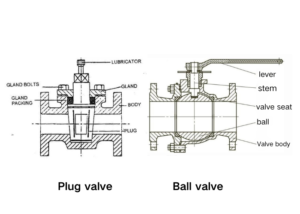
What is a Plug Valve? A Quick Definition

A plug valve is a quarter-turn, on/off valve that uses a cylindrical or tapered plug with a hole, or "bore," through it to control flow. When the bore is aligned with the pipeline, flow is permitted. When the plug is rotated 90 degrees, the solid part of the plug blocks the flow. Its core strengths lie in its simple, robust design and its ability to provide an extremely tight shutoff, especially in demanding services.
What is a Ball Valve? A Quick Definition
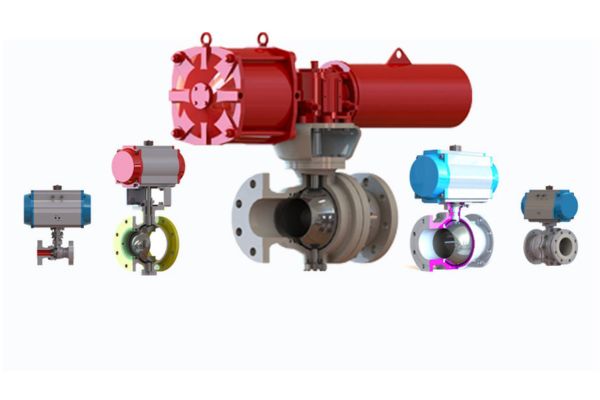
A ball valve is also a quarter-turn, on/off valve, but it uses a rotating, hollow ball to manage the flow. Similar to a plug valve, a 90-degree turn opens or closes the flow path. It has become one of the most widely used valves in the industry due to its durability, high flow efficiency, low operating torque, and excellent sealing capabilities in a vast range of applications.
Plug Valve vs. Ball Valve: Head-to-Head Comparison Table
A side-by-side view is the fastest way to understand the fundamental differences. Here’s how these two valves stack up across the most important features.
| Feature | Plug Valve | Ball Valve |
|---|---|---|
| Design | Conical or cylindrical plug with a bored passage. | Spherical ball (disc) with a bored passage. |
| Sealing | Larger sealing area, very tight shutoff. | Smaller sealing area, excellent sealing with modern seat designs. |
| Operation | Higher torque required due to more friction. | Low torque, easy to operate & automate. |
| Throttling | Not recommended; strictly for on/off service. | Not recommended (except for specialized V-port designs). |
| Applications | Slurries, abrasive/corrosive media, low-pressure gas. | Clean fluids, high-pressure & high-temperature systems, automation. |
| Maintenance | Easier to clean; some types require periodic lubrication. | Harder to clean in-line; often replaced (3-piece designs are serviceable). |
| Durability | Shorter lifespan due to higher operational wear. | Longer lifespan, more durable design minimizes wear. |
| Cost | Generally lower initial cost. | Generally higher initial cost, better long-term value. |
| Port Types | Typically full-bore rectangular ports. | Full bore, standard bore, reduced bore, V-port. |
Key Differences Explored: A Deeper Dive
The table gives you the "what," but as an engineer, you need the "why." Understanding the nuances of design and performance is crucial for confident valve selection.
Design and Sealing Mechanism: Where the Difference Begins
The way a valve seals is the most critical aspect of its design.
Plug Valve Design
A plug valve creates its seal through the direct, high-friction contact between the plug and the valve body. This large sealing surface is its greatest strength and weakness. It's why they seal so well in gritty media but also why they require more force to turn.
- Lubricated Plug Valves use a lubricant injected between the plug and body to reduce friction and improve sealing. They are great for abrasive services.
- Non-Lubricated (Sleeved) Plug Valves use a non-metallic sleeve (like PTFE) to line the body, which reduces friction and provides a "bubble-tight" shutoff without the need for periodic lubrication.
Ball Valve Design
A ball valve's sealing mechanism is more refined. The ball is not in constant, high-friction contact with the body. Instead, it rotates and compresses against downstream and upstream seats (typically made of soft materials like PTFE or metal for high-temperature service) only at the point of closure.
- Floating Ball Valves are the most common design, where pressure pushes the ball into the downstream seat to create a seal.
- Trunnion Mounted Ball Valves support the ball with a top and bottom trunnion, reducing torque and making them ideal for larger sizes and high-pressure applications. This design provides a reliable Class VI shutoff.
Performance Under Pressure: Pressure and Temperature Ratings
Your system's operating conditions are a non-negotiable factor. Generally, ball valves are superior for high-pressure and high-temperature applications, often available in ANSI Class ratings up to 2500. Their design handles stress more effectively than the high-friction plug design.
Plug valves, in contrast, are typically preferred for low-to-moderate pressure systems. While high-pressure designs exist, they are less common and more specialized.
Flow Characteristics: Throttling and Pressure Drop
I get asked about throttling all the time. The simple answer is that neither a standard plug valve nor a standard ball valve is ideal for throttling. Using them in a partially open position exposes the sealing surfaces to high-velocity flow, which can cause erosion (known as "wire drawing") and lead to leaks.
- For moderate flow control, a specialized V-port ball valve is a far better choice.
- A key performance difference is pressure drop. A full-bore ball valve offers almost zero pressure drop, as it creates an entirely unobstructed, smooth path for the fluid. A plug valve, especially those with rectangular ports, can cause a more significant pressure drop.
Durability and Maintenance: Which Valve Lasts Longer?
Total Cost of Ownership is something my friend Hassan, a Chief Engineer, drills into his team. It's not about the initial price; it's about the valve's lifespan.
In most services, ball valves have a longer service life. The low-friction operation means less wear on the sealing components. Plug valves, with their high torque and constant contact, simply wear out faster.
Maintenance approaches also differ. Plug valves are mechanically simpler and often easier to clean in-line. Ball valves, especially one or two-piece body designs, are harder to service and are often replaced entirely. Serviceable 3-piece ball valves are a great compromise, allowing the center section to be removed for seat and seal replacement.
Application Showdown: When to Use a Plug Valve vs. a Ball Valve
Theory is one thing; real-world application is another. Here is where you would typically find these valves.
The Best Use Cases for Plug Valves
Plug valves excel where other quarter-turn valves might fail.
- Real-World Example: Handling wastewater, slurries, or mud in municipal treatment plants. The smooth flow path and tight shutoff prevent solids from getting trapped.
- Real-World Example: Corrosive chemical processing. A PFA-lined plug valve provides excellent sealing and chemical resistance, offering a "bubble-tight" shutoff that is paramount for safety.
- Real-World Example: Low-pressure natural gas distribution and service lines, where their simple design and reliable sealing have been trusted for decades.
The Best Use Cases for Ball Valves
Ball valves are the versatile choice for a huge range of modern industrial processes.
- Real-World Example: High-pressure natural gas transmission or crude oil pipelines. A large, trunnion-mounted ball valve is perfect here due to its low torque, making it easy to automate with an actuator.
- Real-World Example: Sanitary applications in food, beverage, or pharmaceutical processing. A 3-piece stainless steel ball valve with cavity fillers is easy to clean and prevents bacteria from being trapped.
- Real-World Example: Any industrial system requiring frequent, fast on/off cycling. The low operating torque reduces wear on both the valve and its actuator, ensuring long-term reliability.
Frequently Asked Questions (FAQs)
Why would you use a plug valve instead of a ball valve?
You would choose a plug valve for services with high solids content (slurries), for highly abrasive media, or in certain chemical applications where its specific sealing mechanism and material options (like full lining) offer a more robust solution.
Are plug valves better for gas than ball valves?
For low-pressure gas distribution, plug valves have a long history of reliable service. For high-pressure gas transmission, automated ball valves (especially trunnion-mounted designs) are the industry standard due to their superior performance under pressure and ease of automation.
Can you throttle with a plug valve?
No, you should not throttle with a standard plug valve. It is an on/off device. Throttling will cause rapid, uneven wear on the plug and body, leading to leakage.
Which is more expensive, a plug valve or a ball valve?
Generally, a plug valve has a lower initial purchase price than a comparable ball valve. However, a ball valve often offers a lower Total Cost of Ownership (TCO) due to its longer lifespan and lower maintenance requirements.
What is the difference between a lubricated and non-lubricated plug valve?
A lubricated plug valve requires grease to be periodically injected to reduce friction and enhance the seal. A non-lubricated plug valve uses a polymer sleeve (like PTFE) to perform the same function without needing external lubrication.
Conclusion: Making the Right Choice for Your System
The decision between a plug valve and a ball valve comes down to a clear evaluation of your specific needs.
- Media Type: For slurries, solids, or abrasive media, lean toward a Plug Valve. For clean liquids and gases, a Ball Valve is typically superior.
- Pressure/Temperature: For high-pressure and high-temperature systems, choose a Ball Valve.
- Application: If you require frequent cycling or automation, a low-torque Ball Valve is the definitive winner.
- Maintenance & Cost: If upfront cost is the primary driver, a Plug Valve may be your choice. If long-term reliability and lower lifecycle cost are key, invest in a Ball Valve.
At the end of the day, plug valves are rugged problem-solvers for tough, dirty services, while ball valves are the high-performance, versatile choice for the majority of modern industrial on/off applications.
Still unsure? Contact our experts at BCST to discuss your specific valve needs, and we'll help you engineer the perfect solution.


 English
 Arabic
 Russian
 French
 Spanish