
The Complete Guide to Marine Ball Valves & Seacocks: Essential for Boat Safety
For any boater, marine mechanic, or new boat owner, the integrity of a vessel’s plumbing system is paramount. Below the waterline, or anywhere vital fluids are controlled, the right valve isn’t just a matter of convenience; it’s a matter of safety, preventing potential flooding, engine failure, or environmental spills. At the heart of this critical infrastructure are marine ball valves and seacocks – components often confused but distinctly different in their application and safety implications.
This definitive guide from BCST Valve will cut through the confusion, offering a comprehensive look at marine ball valves and seacocks. We’ll explore their definitions, the crucial distinctions that impact boat safety, essential materials, industry standards, and best practices for installation and maintenance. By the end, you’ll be equipped with the knowledge to make informed decisions for your vessel’s fluid control systems.
What is a Marine Ball Valve?
A marine ball valve functions on the same principle as any standard ball valve: a spherical ball with a bore through its center rotates within the valve body to control flow. A quarter-turn of the handle opens or closes the valve.
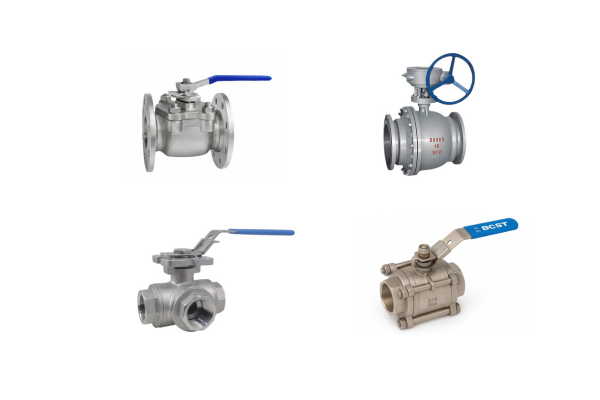
-
- Function: Provides quick, positive on/off fluid isolation.
- Design: Simple, compact, and highly reliable for non-throttling applications.
- “Marine” Designation: Crucially, a “marine ball valve” typically means it’s constructed from corrosion-resistant materials (like specific grades of bronze or stainless steel) suitable for saltwater environments, and often with more robust handles and connections. However, it’s not synonymous with a seacock.
Defining the Seacock: The Ultimate Safety Device
A seacock is far more than just a valve; it is a specialized, heavy-duty shut-off device specifically designed for through-hull fittings on boats, ensuring that any penetration below the waterline can be positively sealed at the hull.
- Structural Integrity: A true seacock must be configured to withstand the stress of a hose pulling on it or an impact (e.g., from a stray object), without shearing off at the hull.
- Mounting: It connects directly to a through-hull fitting and is typically bolted directly to the hull or a robust backing block, creating a rigid, strong connection.
- Ball Valve vs. Seacock: Often, the internal mechanism of a seacock *is* a ball valve. However, the critical distinction lies in its robust mounting and structural ability to resist catastrophic failure under load.
Installation: Above vs. Below Waterline, Through-Hull Fittings
The location of your valve – specifically, whether it’s above or below the waterline – dictates the type of fitting, the required strength, and the installation method. This is where the core distinction between a simple marine ball valve and a true seacock becomes most critical.
Below-Waterline Considerations:
Any fitting that penetrates the hull below the waterline should be a dedicated seacock, securely fastened to the hull or a robust backing pad to prevent it from failing under load or impact. A standard ball valve, even if “marine grade,” lacks the essential structural integrity for this application.
- Through-Hull Fitting: The actual fitting that passes through the hull.
- Seacock Attachment: The seacock mounts directly onto the through-hull and is then bolted through the hull (or a backing block) for structural support.
- Hose Connection: A barb fitting or threaded adapter then connects the hose to the seacock.
Above-Waterline Applications:
For plumbing above the waterline (e.g., head discharge, deck washdown), where a leak won’t immediately sink the boat, a high-quality marine ball valve is generally acceptable. These don’t require the same level of structural integration as a seacock, though robust installation is still recommended.
The choice between a flanged seacock and an inline ball valve on a thru-hull has major safety implications that deserve detailed attention. Learn more in our expert breakdown: Seacock vs. Ball Valve: Which is Right for Your Thru-Hull?
Maintenance: Ensuring Long-Term Reliability
Even the highest quality marine valve or seacock requires regular maintenance to ensure its smooth operation and leak-free performance. Neglected valves can seize, leak, or fail in an emergency.
- Regular Operation: Cycle all seacocks and valves monthly to prevent seizing.
- Lubrication: Periodically lubricate the ball mechanism (if accessible and recommended by the manufacturer) with marine-grade grease.
- Inspection: Annually inspect for signs of corrosion, leaks, loose connections, or deteriorating hoses.
- Winterization: Ensure all valves are open/closed as appropriate for draining and preventing freeze damage.
- Replacing Seals: If a valve starts to leak or feel excessively stiff, it might be time for a seal replacement or full valve replacement.
Proactive care is key to long-term reliability. Master the essential tasks in our comprehensive guide: Marine Ball Valve Maintenance & How to Free a Seized Valve.
Conclusion: Making the Right Choice for Your Vessel
Navigating the world of marine valves and seacocks doesn’t have to be daunting. By understanding the critical distinction between a simple marine ball valve and a structurally robust seacock, prioritizing marine-grade materials like bronze, adhering to ABYC/UL standards, and committing to regular maintenance, you ensure the safety and longevity of your vessel’s plumbing systems.
Choosing the right component is an investment in peace of mind. At BCST Valve, we are dedicated to providing superior marine valves and seacocks, engineered for the harsh realities of the open water. Our expertise and quality products ensure that your boat’s crucial fluid control systems are always up to the task.
Ready to equip your boat with the safest, most reliable valves?


 English
 Arabic
 Russian
 French
 Spanish