

Choosing a filter seems simple, but getting it wrong can cause big headaches. As an engineer, you know that details matter. Let’s look closely at how to make the right choice for your system. This guide will walk you through the essential steps, ensuring your pipeline stays clean and your equipment protected.
Understanding the Core Function of Pipeline Filters
You see debris in your fluid systems but are unsure of the impact. This contamination can clog sensitive instruments and wear down pumps. Filters are your first line of defense.
Pipeline filters work by physically blocking and removing solid particles from liquids or gases flowing through a pipe. They use a screen or mesh element to trap contaminants, protecting downstream equipment like pumps, meters, and valves from damage, ensuring system reliability and product purity.
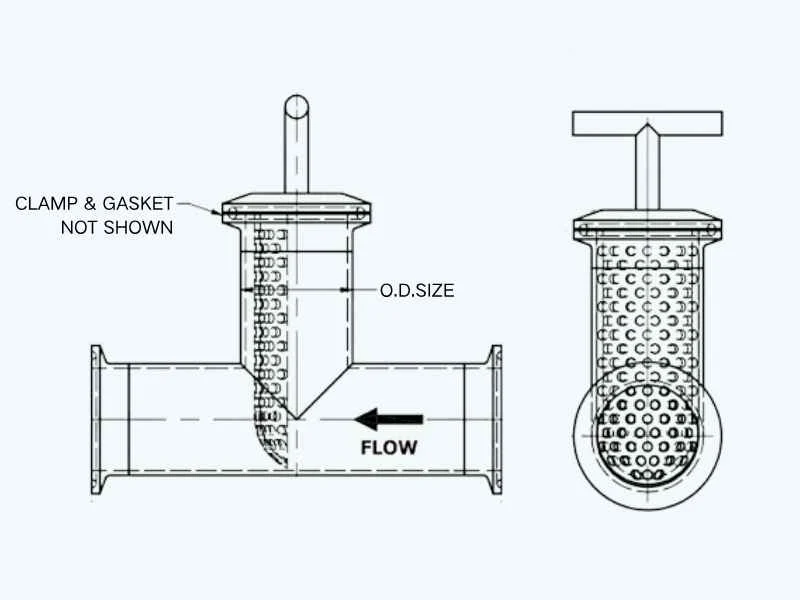
A pipeline filter is more than just a simple screen. It is a critical piece of equipment that actively protects your entire system. For a project engineer responsible for a whole refinery, the value of a small filter is immense. It stands guard, preventing stray weld slag, rust, or other debris from destroying expensive pumps or fouling heat exchangers. The primary purpose is to safeguard your assets.
How It Works
The mechanism is straightforward. Fluid enters the filter’s inlet and passes through a perforated or wire mesh screen. Solid particles larger than the screen’s openings are trapped inside the filter’s collection area. Clean fluid then exits through the outlet. This simple process prevents downstream contamination and maintains the integrity of your operation.
Key Benefits
The benefits of proper pipeline filtration directly impact your bottom line and operational stability. It is not just about catching dirt; it is about creating a more reliable and efficient process. A well-chosen filter brings several advantages.
| Benefit | Impact on Operations |
|---|---|
| Equipment Protection | Extends the life of pumps, valves, and meters by preventing abrasive wear. |
| Process Efficiency | Prevents blockages in nozzles and instruments, ensuring consistent flow rates. |
| Product Quality | Removes unwanted impurities, which is crucial for chemical and food-grade processes. |
| Reduced Maintenance | Lowers the frequency of costly repairs and unplanned shutdowns for downstream equipment. |
Selecting the Right Type of Pipeline Filter
You have many filter options, like Y-strainers and basket strainers. Choosing the wrong one can lead to pressure drops or insufficient cleaning. This choice impacts your entire system’s performance.
For low debris loads and compact spaces, choose a Y-strainer. For applications needing high flow capacity and less frequent cleaning, a basket strainer is better. Duplex basket strainers are ideal for continuous operations, as one side can be cleaned while the other remains active.

The type of filter you select has a direct effect on your maintenance schedule and operational uptime. I remember a client in the chemical industry who initially installed Y-strainers in a high-debris line. Their team had to shut down the line every day just for cleaning. It was a huge source of frustration and lost production. We helped them review the application and switch to a duplex basket strainer. Their uptime improved immediately. It is a small design change with a huge impact on the plant’s overall performance. Let’s break down the most common types.
Y-Strainers
These are named for their “Y” shape. They are compact and can be installed in both horizontal and vertical pipelines (with downward flow). Their debris-holding capacity is relatively small, so they are best suited for applications where the amount of solids is low or for temporary start-up protection.
Basket Strainers (Simplex and Duplex)
Basket strainers have a large, vertical basket for collecting debris. This gives them a much higher capacity than Y-strainers, meaning less frequent cleaning.
- Simplex Strainers: Have a single basket chamber. The line must be shut down to clean or replace the basket.
- Duplex Strainers: Feature two separate basket chambers and a diverting valve. This allows you to switch the flow to one chamber while the other is being cleaned, enabling continuous operation without any shutdown.
Making the Choice
Your decision should be based on your system’s specific needs.
| Feature | Y-Strainer | Simplex Basket Strainer | Duplex Basket Strainer |
|---|---|---|---|
| Best For | Low solids content, clean fluids | Moderate to high solids content | Continuous flow, high solids |
| Installation | Horizontal or vertical lines | Horizontal lines only | Horizontal lines only |
| Debris Capacity | Low | High | High |
| Cleaning | Requires line shutdown | Requires line shutdown | No shutdown needed |
Matching Filter Specifications to Your Application Needs
A filter’s specs look like just numbers on a sheet. But ignoring them means getting a filter that doesn’t work. This can lead to system failure or inefficient filtration.
Key specifications include connection size, pressure rating, temperature rating, and filtration accuracy (mesh/micron size). You must match these to your pipeline’s operating conditions. A higher mesh number or lower micron rating means finer filtration, which also increases the potential for pressure drop.
This part is the core of how to choose the model and application of pipeline filters. Getting the specifications right is essential for an engineer designing a safe and efficient plant. You must balance filtration level with flow efficiency. Too much filtration can be as bad as too little.
Filtration Accuracy: Mesh vs. Micron
These terms define how fine the filtration is.
- Mesh: The number of openings per linear inch of the screen. A 100-mesh screen has 100 openings per inch. A higher number means smaller openings.
- Micron (µm): The actual measurement of the opening size. One micron is one-thousandth of a millimeter.
A common mistake is to pick the finest filtration available. This is not always best. Finer filtration catches more debris, but it also clogs faster and creates a higher pressure drop across the filter. You should select a micron rating that is fine enough to protect your most sensitive downstream component, but not so fine that it disrupts your process flow.
| Mesh Size | Micron Rating (Approx.) | Particle Size Filtered |
|---|---|---|
| 20 | 840 µm | Coarse sand |
| 100 | 149 µm | Fine sand, human hair |
| 200 | 74 µm | Silt, pollen |
| 400 | 37 µm | Barely visible particles |
Flow Rate and Pressure Drop
Every filter creates some resistance to flow, which results in a pressure drop. You must ensure the filter is sized correctly for your system’s flow rate to keep this pressure drop within an acceptable range. A filter that is too small for the flow will cause a significant pressure loss, starving your pumps and reducing system efficiency. Always check the manufacturer’s charts to see the expected pressure drop for your specific flow rate.
Considering Material and Maintenance for Long-Term Performance
You selected a filter with the right specs, but it corroded quickly. Choosing the wrong material is a common and costly mistake. It leads to premature failure and potential leaks.
Choose filter materials based on fluid compatibility, temperature, and pressure. Carbon steel is common for general use. Stainless steel offers better corrosion resistance for chemicals or water. For maintenance, ensure easy access to the filter element and consider installing pressure gauges to monitor clogging.
For an engineer working with chemicals and high-stakes processes, material selection is a matter of safety and reliability. The filter body and screen must withstand the process fluid without degrading. A failure here could lead to a hazardous leak or release unfiltered fluid downstream, causing a chain reaction of equipment failures.
Body and Screen Material Selection
The fluid in your pipe dictates the material.
- Carbon Steel: A strong, cost-effective choice for non-corrosive fluids like oil and gas.
- Stainless Steel (304, 316): The go-to choice for water, many chemicals, and food and beverage applications due to its excellent corrosion resistance. 316SS is generally more resistant than 304SS to chloride-containing environments.
- Special Alloys (e.g., Duplex, Monel): Used for highly corrosive services, such as seawater or aggressive chemicals, where standard stainless steel is not sufficient.
| Material | Common Applications | Pros | Cons |
|---|---|---|---|
| Carbon Steel | Oil, gas, non-corrosive fluids | Strong, low cost | Prone to rust |
| Stainless Steel (316) | Chemicals, water, food and beverage | Excellent corrosion resistance | Higher cost |
| Bronze | Marine water, potable water | Good corrosion resistance | Softer than steel |
Planning for Maintenance
Good design includes planning for easy maintenance. Install isolation valves on either side of the filter. This allows you to safely depressurize and service the filter without shutting down the entire system, especially if a bypass line is included. The best practice is to install differential pressure gauges before and after the filter. This allows you to monitor the pressure drop and know exactly when the screen is getting clogged and needs cleaning.
Installation and Operational Best Practices for Pipeline Filtration
Your new filter is installed, but the system isn’t running smoothly. Incorrect installation can negate all your careful selection work. This leads to leaks, poor performance, and safety risks.
Always install filters according to the flow direction arrow on the body. For Y-strainers in horizontal liquid lines, place the drain leg downwards to collect debris properly. Ensure enough clearance around the filter for easy screen removal and cleaning. Regularly monitor pressure drop to schedule maintenance.

Even the best filter will fail if it is installed incorrectly. These small details are critical for ensuring the filter performs as designed and protects your plant for years to come. Following these best practices will prevent common operational problems and make maintenance tasks much easier for your team.
Correct Orientation
The flow arrow on the filter body is the most important guide. The fluid must enter the inlet and exit the outlet as indicated.
- Y-Strainers: In horizontal liquid lines, the strainer leg must be pointed downwards. This allows gravity to help collect debris in the pocket. For steam or gas service, it is often better to orient the leg horizontally, subject to the manufacturer’s instructions. This helps prevent condensate from pooling in the pocket.
- Basket Strainers: These are commonly designed for horizontal pipelines. The cover should be accessible from above for convenient basket removal. Always confirm the manufacturer’s installation requirements for the specific model.
Supporting the System
Filters, especially larger ones filled with fluid, can be very heavy. The pipeline itself should not be expected to support this weight. You must use proper pipe supports on either side of the filter. This prevents stress on the filter body and its connections, which can lead to cracks and leaks over time.
Operational Monitoring
Installation is just the beginning. The key to long-term success is operational monitoring. The differential pressure gauges you installed are your most important tool. Establish a clear procedure for maintenance. For example, decide that the filter screen will be cleaned when the pressure drop increases by a specific amount, such as 0.3 bar (approximately 4.4 psi). The actual cleaning threshold should follow the manufacturer’s recommendations and your process requirements. This proactive approach prevents emergency cleanings and helps ensure your system runs efficiently.
Frequently Asked Questions about Pipeline Filtration
1. What is the first step in effective pipeline filtration?
The first step is to fully understand your process fluid. You need to know its type (liquid or gas), chemical properties, temperature, and pressure. You also need to identify the type and size of the solid contaminants you need to remove. This information is critical for everything that follows.
2. How does flow rate affect pipeline filtration choices?
Flow rate directly impacts the size of the filter you need. A higher flow rate requires a larger filter body and screen area to avoid excessive pressure drop. If the filter is too small for the flow rate, it will act as a bottleneck, reducing system efficiency and requiring very frequent cleaning.
3. When should I choose a duplex strainer for my pipeline filtration system?
You should choose a duplex strainer when your process cannot be shut down for maintenance. It’s ideal for critical applications in power plants, refineries, and continuous chemical production. The dual-chamber design allows you to clean one filter while the other continues to operate, ensuring uninterrupted flow.
4. What does mesh size mean in pipeline filtration?
Mesh size refers to the number of openings in one linear inch of a filter screen. A higher mesh number, like 100 mesh, generally means smaller openings and finer filtration than a lower number, like 20 mesh. The actual opening size depends on the wire diameter and screen specifications.
5. Why is material selection so important for pipeline filtration?
Material selection is crucial for safety and longevity. The filter’s body, screen, and gaskets must be chemically compatible with your process fluid. Using the wrong material can lead to corrosion, leaks, and filter failure. This can cause equipment damage, production loss, and serious safety hazards.
6. Can I install a Y-strainer vertically for pipeline filtration?
Yes, you can install a Y-strainer in a vertical pipeline when the flow direction and installation arrangement allow debris to collect in the strainer pocket, typically with downward flow. An upward-flow installation may allow debris to fall back into the pipe when the flow stops. Always follow the manufacturer’s installation instructions.
Final Thought
Selecting the right pipeline filter protects your entire system. It helps maintain efficiency and extend the service life of your valuable equipment. At BCST, we provide industrial filtration solutions and expert guidance to help you find the right filter for your application.


 English
 Arabic
 Russian
 French
 Spanish