
In the demanding world of mineral processing, few applications test the mettle of industrial equipment like high-pressure slurry letdown. Imagine a relentless torrent, not of water, but of a highly pressurized, often acidic, abrasive mixture, a concoction designed to extract valuable metals. For leach circuits, especially those involving autoclaves, managing this “liquid sandpaper” is a brutal necessity. Standard valves often surrender within weeks, even days, leading to catastrophic trim wear, loss of process control, crippling downtime, and significant safety hazards. In this harsh environment, which valve emerges as the hero? Often, it’s the meticulously engineered angle control valve, specifically designed to withstand these extreme conditions.

This article delves into the severe challenges of high-pressure, abrasive slurry letdown in mineral processing and explores how advanced angle control valve solutions are critical to taming these destructive forces, ensuring operational stability and profitability.
Understanding Slurry Letdown Challenges in Mineral Processing
Slurry letdown is an important step in hydrometallurgical processes, like pressure oxidation (POX) for gold or high-pressure acid leach (HPAL) for nickel and cobalt. Here, a mixture of tiny mineral particles, chemicals, and water from a high-pressure setting (such as an autoclave working at high pressure and temperature) needs to be carefully lowered to a lower, almost normal pressure for the next steps. Here, slurry (a mix of fine mineral particles, chemicals, and water) from a high-pressure environment (like an autoclave operating at hundreds of PSI and high temperatures) must be carefully reduced to a lower, near-atmospheric pressure for further processing.
Why is this so aggressive?
- High Pressure Drop: The significant pressure reduction across the valve can accelerate slurry particles to very high velocities, turning them into projectiles that erode valve internals.
- Abrasive Solids: The slurry contains hard, sharp mineral particles (e.g., silica, unreacted ore) that act like sandpaper, grinding away at valve surfaces. The smaller and harder the particles, the more aggressive the wear.
- Corrosive Environment: Leaching processes usually include strong acids (such as sulfuric acid) or other harmful chemicals that can damage valve materials, making them more vulnerable to erosion.
- Potential for Flashing/Cavitation: The large pressure drop can cause the liquid to flash into vapor or dissolved gases to come out of solution, creating vapor bubbles. When these bubbles collapse (cavitation), they can cause severe localized damage. While an angle control valve is better at handling flashing, it’s still a concern.
The High Stakes:
Failure in this service isn’t just an inconvenience; it’s a cascade of problems:
- Safety Risks: Sudden valve failure can lead to uncontrolled release of high-pressure, hot, and potentially hazardous slurry.
- Extreme Costs:
- Downtime: Replacing a failed valve in an autoclave letdown station can halt the entire production line, leading to massive losses.
- Replacement Costs: Specialized valves for this service are expensive, and frequent replacements add up.
- Lost Production & Recovery: Unstable control due to valve wear can lead to inefficient leaching, reducing metal recovery rates.
- Process Inefficiency: As valve components wear, their ability to accurately control pressure and flow diminishes, upsetting the delicate balance of the downstream processes.
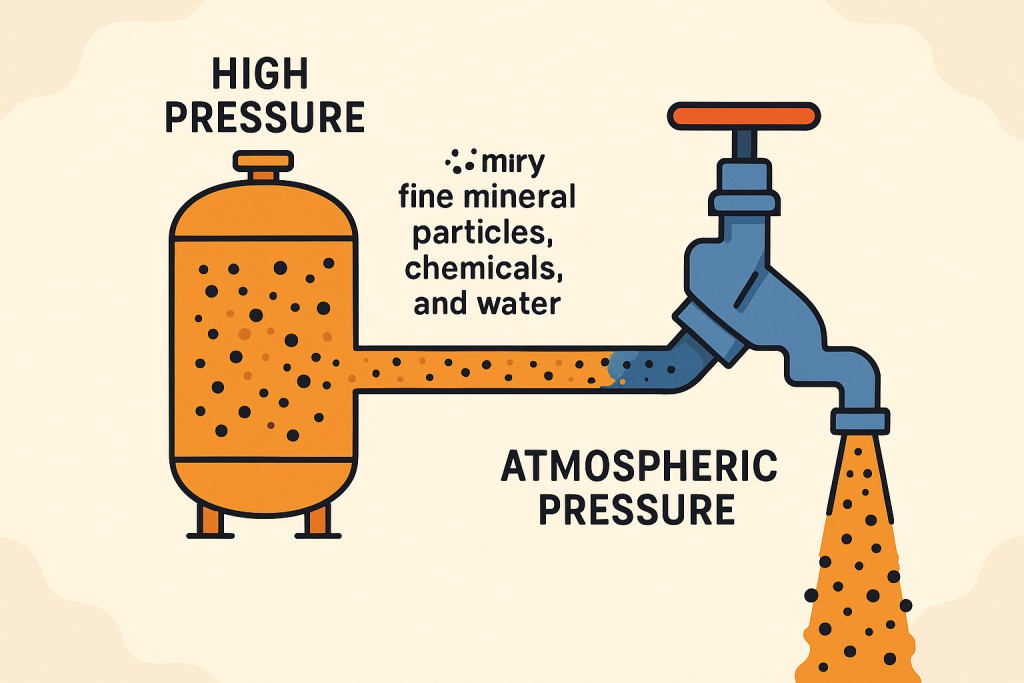
Standard globe valves or improperly specified valves simply disintegrate. Their convoluted flow paths create turbulence and direct impingement points, accelerating wear. This is where the design of an angle control valve begins to shine.
Why Angle Control Valves?
An angle control valve features a body with an inlet and an outlet port oriented at 90 degrees to each other. This configuration offers inherent advantages in severe service applications:
- Smoother Flow Path: The angled design can promote a less turbulent, more sweeping flow path compared to traditional globe valves. This aids in minimizing the direct impact of abrasive particles on the valve body and trim, particularly when directing the flow “over the seat.”
- Self-Draining Capability: The body shape naturally allows for better slurries drainage, reducing clogging when the valve is not in operation.
- Handling Flashing: The angled body, often with an expanded outlet, can better accommodate the volume expansion that occurs during flashing, directing the two-phase flow away from critical components.
- Adaptability for Hardened Materials: The design is conducive to incorporating ultra-hard, erosion-resistant materials for the trim and body liners, which are essential for survival.
While the basic design of an angle control valve provides a good starting point, mastering abrasive slurry letdown requires much more advanced features and material science.
Advanced Solutions for Angle Control Valves
The valve trim – primarily the plug (which modulates flow) and the seat (which it closes against) – bears the brunt of the erosive attack. The trim determines the success or failure of an angle control valve in this service.
Material Marvels: The First Line of Defense
Choosing the right material is paramount. Standard stainless steels are inadequate. The focus is on materials with exceptional hardness and toughness.
| Material | Key Characteristics | Typical Hardness (Vickers, HV) | Toughness | Corrosion Resistance (General) | Relative Cost |
|---|---|---|---|---|---|
| Tungsten Carbide (WC) | Excellent hardness and wear resistance. Various binder types (e.g., Cobalt, Nickel) affect toughness and corrosion resistance. | 1200 – 2200+ | Moderate | Fair to Good (binder dependent) | High |
| Engineering Ceramics | |||||
| Silicon Carbide (SiC) | Extreme hardness, excellent abrasion and corrosion resistance. | 2000 – 2800+ | Low to Moderate | Excellent | Very High |
| Zirconia (ZrO₂) | Very high toughness for a ceramic, good wear resistance. Often transformation toughened. | 1200 – 1500 | High (for ceramic) | Good | Very High |
| Stellite™ (Cobalt-Chromium Alloy) | Good combination of wear, corrosion, and heat resistance. Applied by hard-facing. | 400 – 800 | Good | Good to Excellent | Moderate-High |
| Hardened Tool Steels | High hardness, but may have limitations in highly corrosive environments. | 600 – 900 | Moderate-Good | Fair | Moderate |
The selection often involves a trade-off. For instance, while some ceramics offer supreme hardness, they can be more brittle than tungsten carbides. The specific nature of the slurry (particle size, hardness, corrosivity) dictates the optimal choice for the angle control valve trim.
Design Innovations for Longevity:
Beyond just materials, the design of the trim components in an angle control valve is crucial:
- Robust, Solid Construction: Trims are often made from solid, through-hardened superalloys or feature substantial ceramic or tungsten carbide inserts.
- Protected Seat Designs: The seat, a critical sealing surface, can be designed to be shielded from the direct flow path when the valve is open, minimizing erosion.
- Specialized Plug Profiles: Plug shapes can be optimized to manage velocities, direct flow, and minimize turbulence that can concentrate wear. Some angle control valve designs utilize a “cascade” or multi-stage plug/cage system to break down the pressure drop into smaller, less damaging steps, particularly useful if cavitation is also a concern.
- Flow Direction: In many severe slurry angle control valve applications, “flow-over-the-seat” (or flow-to-open) is preferred as it can provide a smoother path and protect the seat when the valve is throttling.
- Expanded Outlet Areas: To accommodate flashing and reduce exit velocities, the outlet area of the angle control valve body may be significantly larger than the inlet.
Body and Actuation Considerations
While the trim is critical, the valve body and actuator also play vital roles.
- Valve Body Materials & Liners: The body of the angle control valve itself can be made from corrosion-resistant alloys. For extreme abrasion, replaceable hardened liners (e.g., ceramic or high-chrome iron) can be installed within the valve body to protect it and allow for easier refurbishment.
- Robust Actuators: Slurries can be sticky, and high pressure drops require significant force to operate the valve. Powerful, high-stiffness actuators (pneumatic, hydraulic, or electric) are essential for precise control and reliable shutoff. Feedback mechanisms and smart positioners are increasingly important for an angle control valve in such critical loops.
The Angle Control Valve’s Role in Process Control
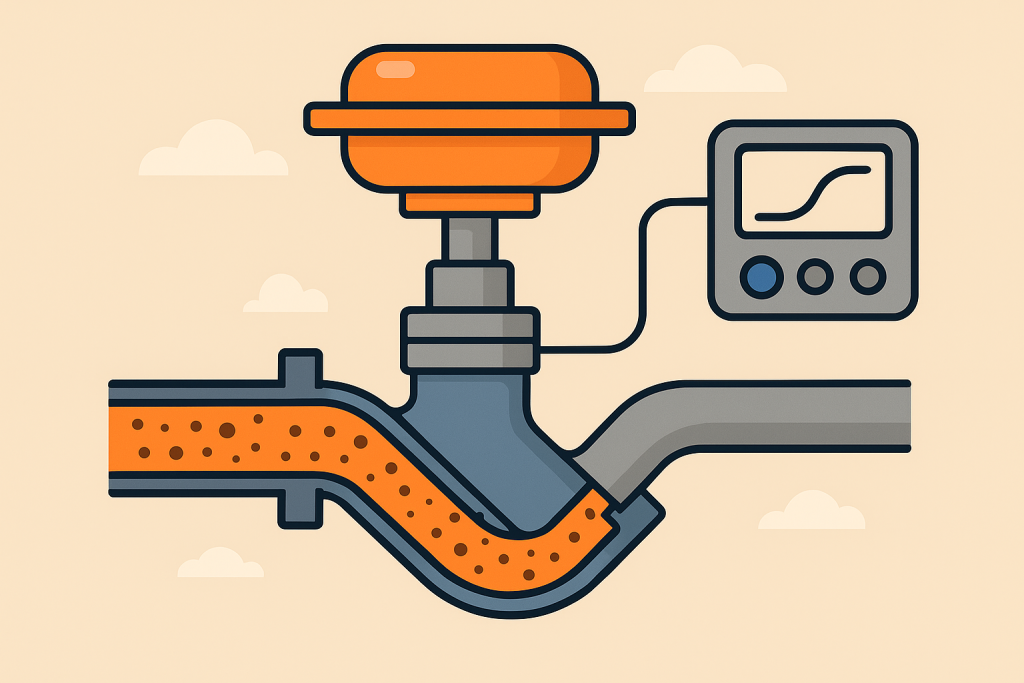
A rapidly wearing valve doesn’t just fail; its performance degrades over time. As the trim erodes, the valve’s flow characteristic (the relationship between plug travel and flow rate) changes. This makes it increasingly difficult for the plant’s control system to maintain the desired pressure or flow, leading to process instability.
A durable angle control valve, designed specifically for the service, maintains its performance characteristics for much longer. This stability is key to:
- Consistent Product Quality: Stable pressure and flow control contribute to optimal leaching and consistent metal recovery.
- Reduced Process Upsets: Minimizes disturbances to downstream equipment and processes.
- Optimized Chemical Usage: Better control can lead to more efficient use of expensive leaching chemicals.
Correct sizing of the angle control valve is also paramount. An oversized valve will operate too close to its seat for most of its range, leading to higher velocities and accelerated wear. An undersized valve will create excessive pressure drop and may not have enough capacity.
Key Selection Criteria for Angle Control Valves in Abrasive Slurry Letdown
Choosing the right angle control valve is a complex decision. Here are key factors to consider:
| Criteria | Description | Importance |
|---|---|---|
| Detailed Process Conditions | Accurate data on pressure, temperature, flow rates (min/max/normal), slurry composition (solids %, particle size/hardness, chemicals, pH). | Absolutely Critical: Forms the basis for all material and design choices for the angle control valve. |
| Trim Material & Design | Selection of appropriate hard materials (ceramics, WC) and erosion-resistant designs (protected seats, multi-stage if needed). | Critical: Directly impacts valve lifespan and performance. |
| Body Material & Liners | Corrosion-resistant body alloy, consideration of hardened body liners if extreme abrasion is present. | High: Ensures long-term integrity of the pressure boundary. |
| Valve Sizing & Flow Capacity | Correct Cv calculation to ensure valve operates optimally within its control range, avoiding excessive velocities. | High: Impacts wear rate and control accuracy of the angle control valve. |
| Shutoff Requirements | Tightness of shutoff needed (e.g., Class IV, V, or VI). Achieving tight shutoff in abrasive service is challenging. | Moderate to High: Depends on process needs; impacts trim design. |
| Actuation & Control System | Adequate actuator thrust, stiffness, speed of response, and compatibility with plant control system. Smart positioner features. | High: Ensures the angle control valve can effectively modulate flow as required. |
| Maintenance Philosophy & Access | Ease of trim replacement, availability of spares, plant’s maintenance capabilities. | High: Impacts total cost of ownership. |
| Manufacturer Expertise & Support | Proven experience in similar severe slurry applications, availability of technical support, and understanding of the challenges. | Very High: A knowledgeable partner is invaluable for success with such a demanding angle control valve. |
Conclusion: An Investment in Reliability and Profitability
High-pressure, abrasive slurry letdown in mineral processing represents one of the toughest applications for any control valve. While the challenges are immense, advanced angle control valve technology, incorporating cutting-edge materials and intelligent design, offers robust and reliable solutions.
Choosing the right angle control valve is not merely an equipment purchase; it’s a strategic investment in plant availability, safety, process efficiency, and ultimately, profitability. By understanding the unique demands of the service and partnering with experienced valve specialists, mining operations can conquer this “battle of the blast” and keep their critical processes flowing smoothly. The continued evolution of the angle control valve ensures it will remain a key player in these severe service environments for years to come.


 English
 Arabic
 Russian
 French
 Spanish