
Picking the wrong valve is a fast track to leaks, failures, and expensive downtime. You need a reliable solution for your line, and the “gate valve vs. ball valve” question is overwhelming. It’s a common crossroads.
The right choice between a gate valve vs ball valve boils down to your specific job. For simple on/off control where you need flow with minimal restriction, a gate valve is your go-to. For jobs that demand fast shutoff, a perfect seal, and high-cycle durability, a ball valve is the clear winner.
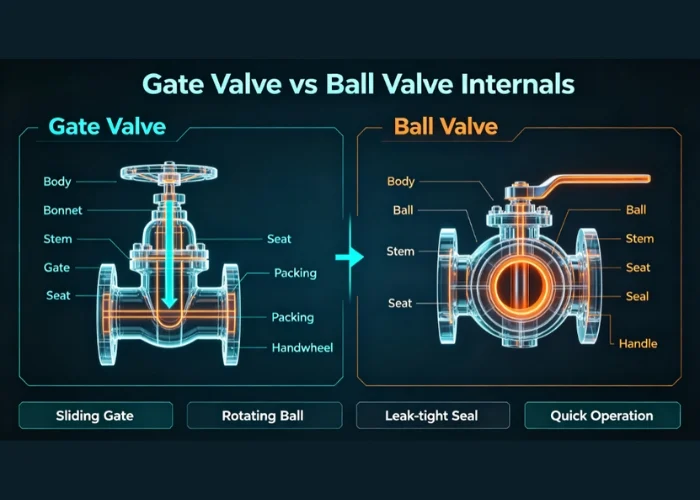
Choosing between a gate valve and a ball valve seems basic on the surface. But I’ve seen this one decision make or break project budgets. From my early days on the factory floor watching my father obsess over his valve designs, to now helping engineers worldwide, I’ve learned that the smallest details make the biggest difference. A simple misunderstanding of how these valves work causes major headaches down the road. You have to look past the handwheel and handle and see how their core designs impact your system’s performance, safety, and lifespan. Let’s dig into those differences so you can choose with confidence.
Gate Valve vs. Ball Valve: The Key Mechanical Differences
Your system has failed, and you have a sinking feeling it’s the valve. The constant wear from using the wrong type—a gate valve where a ball valve should have been—has created bottlenecks and now, a complete shutdown.
It all comes down to how they open and close. A ball valve is a light switch: a quick, 90-degree turn gives you instant on or off with a tight seal. A gate valve is an outdoor faucet: you turn the handle multiple times to slowly raise or lower the gate.
Whenever I talk with seasoned engineers like Hassan, who designs entire petrochemical plants, our conversation always turns to the core performance of a gate valve vs. a ball valve. It’s not just about “on vs. off.” It’s about how they get there and what that means for the pipes, pumps, and products in a system. Getting this right is the foundation of a reliable plant. Let’s break down the real-world differences.
Operational Mechanism and Speed
Think about speed. How fast do you need to shut off the flow?
- Ball Valve: A ball valve is built for speed. That quick quarter-turn means you go from wide open to fully closed in a second. In an emergency, that speed is critical. It’s also the right choice for processes that get turned on and off frequently. The handle’s position is a dead giveaway: if it’s aligned with the pipe, it’s open; if it’s across, it’s closed. Simple.
- Gate Valve: A gate valve is the opposite; it’s slow and steady. You turn the handwheel over and over to slowly lift the gate. This gentle operation is a benefit in large pipelines because it prevents “water hammer”—a destructive pressure wave that destroys pipes. For anything needing a quick response, it’s the wrong tool.
Sealing Capability
How well a valve seals is everything, especially when you’re handling gas or hazardous fluids.
- Ball Valve: A ball valve is the champion of sealing. Its design pushes the ball against soft seats, creating a “bubble-tight” seal. When you absolutely must have zero leaks, like in a natural gas line, the ball valve is the only choice.
- Gate Valve: A gate valve has a good, metal-on-metal seal. It’s solid and reliable for general isolation. Over time, especially if there’s grit in the line, it will develop minor leaks. It’s not designed to be bubble-tight in the same way a ball valve is.
Flow Path and Throttling
What happens to the fluid inside the valve is a huge factor in the gate valve vs ball valve decision.
- Gate Valve: When a gate valve is fully open, the gate is pulled completely out of the way. This creates a straight, wide-open path for the fluid, like a clear highway with no obstructions. This means very little pressure drop, which is great for efficiency. However—and this is critical—never use it to throttle flow. Cracking it open just a little causes the gate to vibrate wildly, which will destroy the valve. I’ve seen it happen.
- Ball Valve: A ball valve also has a clear path when open. While it handles a little throttling better than a gate valve, it is still the wrong choice for long-term flow control. It causes turbulence and premature seat wear. If you need to control flow, you get a proper V-port ball valve designed for the job.
Here’s a quick cheat sheet for the gate valve vs ball valve showdown:
| Feature | Gate Valve | Ball Valve |
|---|---|---|
| Operation | Multi-turn (slow & steady) | Quarter-turn (fast & responsive) |
| Sealing | Good, solid isolation | Excellent, bubble-tight shutoff |
| Flow Path | The “open highway” | A clear path |
| Throttling | Absolutely Not. Destructive. | Not its main job. Use a V-port. |
| Durability | Solid, but wears when throttled | The workhorse for high-cycle jobs |
| Size/Weight | Taller and heavier | Compact and lighter |
This isn’t about which valve is “best.” It’s about picking the specialist that is perfect for your specific task.
Applications: Where to Use Gate Valves vs. Ball Valves
You’ve installed a new line, but it’s not working right. Using a slow gate valve where a fast-acting ball valve was needed is killing your process time, forcing you to second-guess the whole setup.
Here’s the simple rule: a gate valve is for the big, quiet jobs, like main line isolation where you “set it and forget it.” Use a ball valve for the busy, high-stakes tasks that demand speed and a perfect seal.
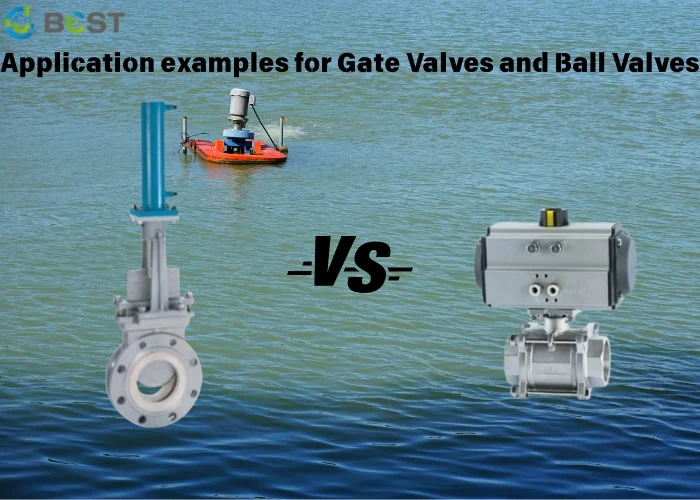
Theory is fine, but the real learning happens on the plant floor. I’ve walked through massive refineries with Hassan and small, local water plants. The successful ones all share a secret: the right valve is always in the right place. Answering “gate valve vs ball valve?” is all about looking at the job’s real demands. Let’s look at where they fit.
Oil & Gas and Petrochemical Industries
In this world, both are critical, but they do not do the same job.
- Gate Valves: These are the unsung heroes of the pipeline. On huge lines carrying oil or gas for miles, you find large gate valves. Their job is simple: isolate a massive section of pipe for maintenance. They are operated infrequently. Their wide-open path is essential for pipeline “pigging” (running a cleaning tool through the pipe).
- Ball Valves: Step inside the refinery itself, and ball valves are everywhere. They are the workhorses on process lines, fuel gas feeds, and anywhere an operator needs to shut off flow right now. That bubble-tight seal is a non-negotiable safety feature when dealing with flammable materials. For engineers like Hassan, the reliable, quick-shutoff of a ball valve is peace of mind.
Water and Wastewater Treatment
In water systems, it’s all about flow and pressure.
- Gate Valves: Look at the big main water lines under the street or in a pump station. You find gate valves. At large sizes, they are cost-effective and their low pressure drop saves energy when moving millions of gallons of water. Their slow operation is a benefit here, preventing damaging pressure surges.
- Ball Valves: Inside the treatment plant, ball valves take over. They handle chemical dosing, drainage, and sampling points. Their compact size and the fact they are easy to automate with an actuator make them the perfect choice for the controlled processes within the plant.
General Industrial and Manufacturing
The logic holds up everywhere else.
- Gate Valves: Use them on your main plant utility lines—steam, compressed air, water—that you leave open or closed for months at a time. They are the perfect, affordable isolation points for shutting down a whole area for maintenance.
- Ball Valves: A ball valve is your go-to for anything that’s part of the action: filling a tank, diverting flow, or shutting off a fluid feed on a machine. Their toughness and reliable sealing make them the superior choice over a gate valve for any dynamic part of your process.
The lesson is simple: don’t ask a highway guard to be a traffic cop. Match the valve’s talent to the task’s needs.
Look, picking the right type of valve—gate valve or ball valve—is a huge win. But it’s not the end of the story. The ultimate reliability of your system hangs on the quality of the valve itself and the people who stand behind it. I’ve lived this my whole life. That’s the philosophy my father built our company on, and it’s how I work with every client today. At BCST Valve, we don’t just ship boxes; we provide solutions. We bring decades of real-world experience to help you get the perfect valve for your job.
Frequently Asked Questions (FAQ)
Which valve is better for high pressure, a gate valve or a ball valve?
Both handle high pressure when designed for it. You see big, forged steel gate valves in high-pressure steam service. Special trunnion-mounted ball valves are also masters of high-pressure applications.
Can I use a ball valve for throttling?
No. A standard ball valve isn’t designed for it, and the partial flow will eat away at the soft seats. If you need to control flow, you need a V-port ball valve, which is purpose-built for throttling.
Is a gate valve or a ball valve more expensive?
In smaller sizes, their prices are comparable. As pipe sizes increase, gate valves become the more economical choice for simple on/off jobs.
Which valve is easier to automate?
The ball valve, by a mile. Its quarter-turn action needs a simple, compact actuator. Automating a multi-turn gate valve requires a much larger, more expensive, and more complex actuator.
Final Thought
The gate valve vs ball valve decision is not complicated. One is for isolation, the other is for action. For expertly engineered valves and a partner dedicated to your project’s success, trust the hands-on experience and quality of BCST.


 English
 Arabic
 Russian
 French
 Spanish