
Is your pump making a high-pitched screaming noise? Are your control valves failing under high temperatures? You might blame mechanical failure, but the real issue could be an invisible force: vapor pressure.
Vapor pressure is the pressure created by a vapor when it is in balance with its liquid in a closed container. This property determines a liquid’s boiling point and its tendency to evaporate, making it a critical factor in the safe design and operation of industrial systems.
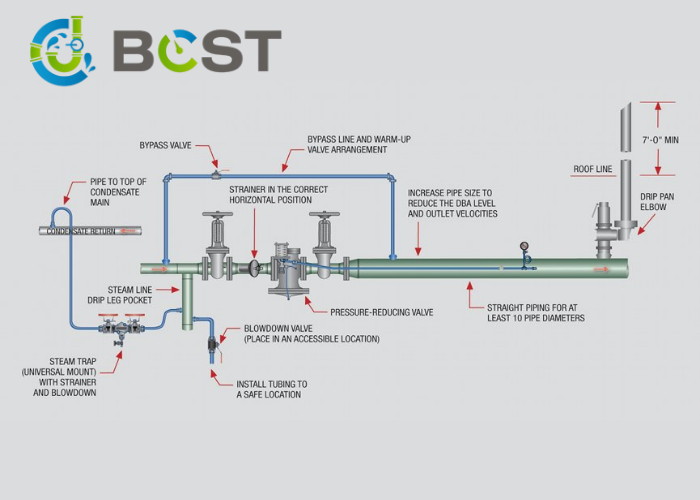
So, What Exactly Is Vapor Pressure?
Do you find technical definitions of vapor pressure confusing? It seems abstract, but it’s just about molecules trying to escape. Imagine a bottle of water, and you’ll see how simple the concept really is.
At its core, vapor pressure is the force of gas molecules pushing against the walls of a container. In any liquid, some molecules have enough energy to break free and become a gas. This balance between escaping and returning molecules creates a stable pressure.
How Molecules Create Vapor Pressure
Think of any liquid in a closed container. The molecules inside aren’t just sitting still; they are constantly moving and bumping into each other.
- Evaporation: A few high-energy molecules at the surface will gain enough speed to break free from their neighbors and escape into the space above, turning into a vapor (gas).
- Condensation: At the same time, some of the vapor molecules will lose energy, slow down, and fall back into the liquid.
At first, more molecules are escaping than returning. But as the vapor gets more crowded, the rate of condensation increases. Eventually, the rate of evaporation will exactly match the rate of condensation. This perfect balance is called dynamic equilibrium. The pressure exerted by the vapor at this point is the equilibrium vapor pressure.
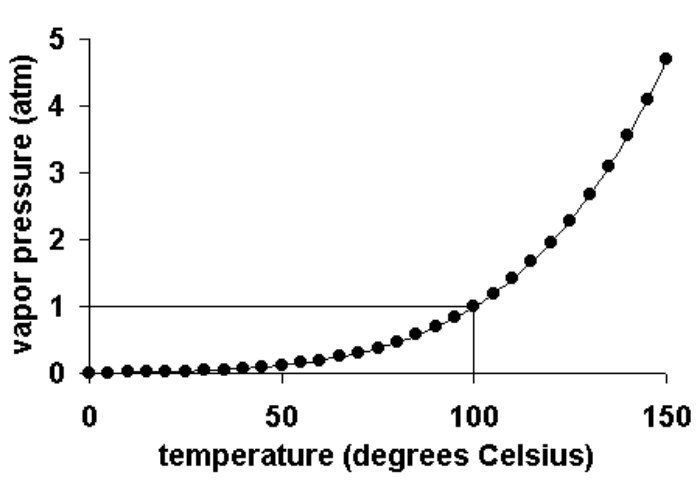
The most important takeaway? As you increase the temperature, you give more molecules the energy to escape. This means the evaporation rate shoots up, and the vapor becomes much denser before reaching equilibrium. Therefore, a higher temperature always means a higher vapor pressure.
What Key Concepts Are Tied to Vapor Pressure?
Ever wonder why water boils at a lower temperature on a high mountain? The answer isn’t just about heat; it’s a battle between two pressures, and vapor pressure is the key to winning.
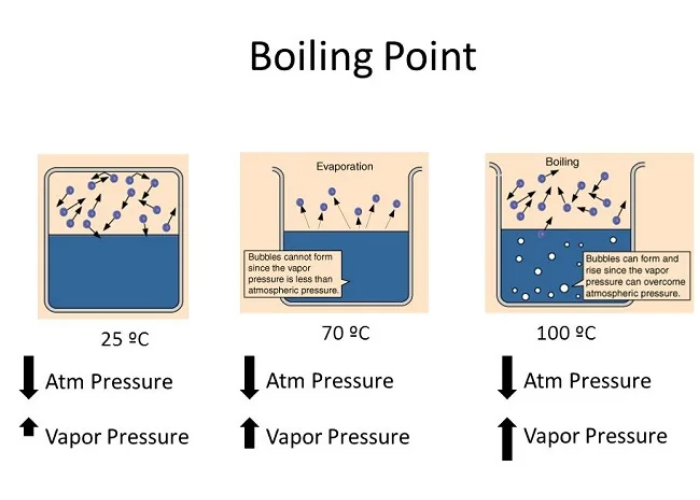
The most important concepts are equilibrium vapor pressure, the normal boiling pointy atmospheric pressure. A liquid boils when its vapor pressure becomes strong enough to overcome the atmospheric pressure pushing down on it. This is a fundamental principle in any system involving heated liquids.
Vapor Pressure vs. Atmospheric Pressure
Let’s break down this battle of pressures. Hassan once designed a steam system for a plant located high in the Andes mountains. He had to re-calculate everything because the rules changed at that altitude.
1. Equilibrium Vapor Pressure
This is the internal, upward push from the liquid. As you heat the liquid, this internal pressure builds up. It’s the liquid’s “desire” to become a gas.
2. Atmospheric Pressure
This is the external, downward push from the air around us. At sea level, it’s about 14.7 psi (1 atm). But as you go up in altitude, there’s less air above you, so the atmospheric pressure drops. This is what Hassan had to account for in the Andes.
3. The Normal Boiling Point
A liquid starts to boil when its internal push (vapor pressure) equals the external push (atmospheric pressure). The normal boiling point is the temperature at which this happens under standard sea-level pressure. For water, this is 100°C (212°F). But at Hassan’s high-altitude plant, the atmospheric pressure was lower. This meant the water’s vapor pressure didn’t have to push as hard to win the battle. As a result, the water boiled at only 90°C. This lower boiling point changed the efficiency of his entire steam system.
What Factors Can Change a Liquid’s Vapor Pressure?
Are you assuming all liquids behave the same way as they heat up? The truth is, the unique properties of each fluid dramatically change its vapor pressure, affecting how you must handle it.
The three main factors affecting vapor pressure are temperatura, the liquid’s intermolecular forces, and the presence of solutes. Temperature has the strongest effect, but the natural “stickiness” of a liquid’s molecules is just as important for its inherent volatility.
Temperature, Molecular Forces, and Solutes
Understanding these factors is crucial for safe handling and process design. You can’t treat gasoline the same way you treat water, and vapor pressure is the reason why.
1. Temperature (The Energizer)
As we’ve covered, this is the biggest factor. More heat equals more energy, which means more molecules escape into the vapor phase, leading to a higher vapor pressure. This relationship is exponential, not linear.
2. Intermolecular Forces (The “Stickiness”)
This refers to how strongly the molecules of a liquid are attracted to each other.
- Strong Forces (Low Vapor Pressure): Liquids like water have strong hydrogen bonds. The molecules are “sticky” and hold onto each other tightly. It takes a lot of energy to pull them apart, so fewer molecules escape. This results in a low vapor pressure.
- Weak Forces (High Vapor Pressure): Liquids like gasoline or acetone have very weak forces. Their molecules are not sticky at all and break apart easily. This means many molecules escape, resulting in a very high vapor pressure. This is why gasoline evaporates so quickly.
3. Presence of Solutes (The Impurities)
When you dissolve a solid, like salt, into a liquid, the solute molecules get in the way of the liquid molecules trying to escape from the surface. This effectively lowers the rate of evaporation and, therefore, lowers the vapor pressure.
How Is Vapor Pressure Applied in the Real World?
Do you think vapor pressure is just a theoretical number on a spec sheet? In reality, this single value dictates how you design pumps, size valves, and operate entire industrial systems safely and efficiently.
Vapor pressure is critical in almost every industry. In the petroleum industry, it determines fuel volatility (Reid Vapor Pressure). In process engineering, it’s essential for preventing cavitation in pumps and ensuring proper operation of boilers and steam systems.
Industrial Applications of Vapor Pressure
When I talk to Hassan about plant design, the conversation often comes back to managing pressure. He stresses that ignoring vapor pressure is a recipe for disaster.
Here’s where it matters most:
| Industry / Application | Why Vapor Pressure is Critical |
|---|---|
| Petroleum & Energy | Volatility & Safety: The Reid Vapor Pressure (RVP) is a standard test for gasoline. A high RVP means the fuel evaporates easily, which is good for starting a cold engine but bad for storage, as it can create explosive vapor in a tank. |
| Process Control (Pumps) | Preventing Cavitation: If the pressure inside a pump drops below the liquid’s vapor pressure, the liquid will flash boil, forming vapor bubbles. These bubbles collapse violently as they move to higher-pressure zones, destroying the pump’s impeller. This destructive phenomenon, called cavitation, sounds like the pump is full of gravel. |
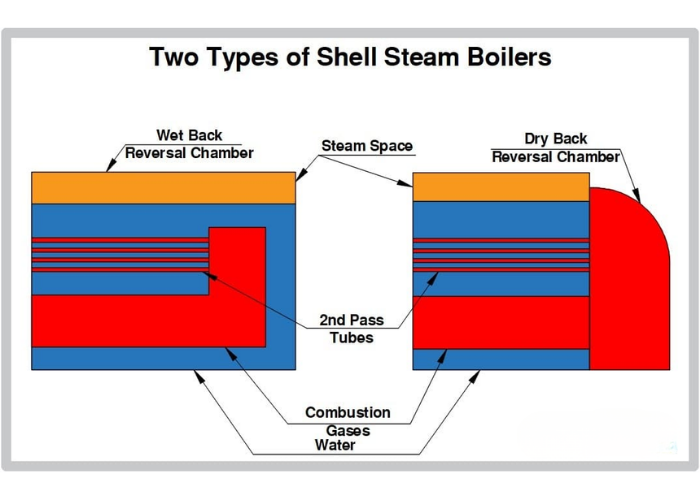
| Process Control (Valves & Boilers) | Steam Systems: In a boiler, we intentionally raise the temperature to increase water’s vapor pressure until it becomes steam. The design of all the steam traps, control valves, and relief valves in that system depends entirely on understanding the pressure-temperature relationship of steam. |
| Alimentación y bebidas | Packaging & Preservation: Controlling vapor pressure inside packaging (moisture control) is key to keeping food fresh and preventing it from getting soggy or drying out. |
For my business, selling valves, this is critical. A client handling a high vapor pressure liquid like butane needs a valve with superior sealing technology, like a bellows seal valve, to prevent dangerous leaks. The same valve would be overkill for a simple water line. Understanding vapor pressure leads to safer, more cost-effective engineering.
FAQs
1. What does high vapor pressure mean?
It means a liquid evaporates easily. These liquids are often described as “volatile.”
2. Does low vapor pressure mean a higher boiling point?
Yes. A liquid with low vapor pressure needs a lot more heat to boil because its internal pressure starts off lower.
3. What factors most affect vapor pressure?
Temperature is the primary factor. The type of liquid and its molecular forces are also hugely important.
4. How does vapor pressure relate to equilibrium?
Vapor pressure is specifically measured at dynamic equilibrium, where the rates of evaporation and condensation are equal.
Conclusión
Vapor pressure is more than a number; it is a fundamental property that governs how liquids behave. Understanding it is essential for engineers to design safe, reliable, and efficient industrial processes, from the largest boiler to the smallest valve.


 English
 Arabic
 Russian
 French
 Spanish