
What Butterfly Valves Are Used For in Your Industry
Are you choosing válvulas for your project? The wrong choice can cause leaks, failures, and expensive downtime. A válvula de mariposa offers a simple, compact, and safe way to control flow.
A butterfly valve is a quarter-turn valve. You use it to start, stop, or control the flow of a fluid. It has a simple design with a disc on a shaft. They are lightweight, low-cost, and operate quickly. This makes them great for large volumes of liquid and gas in many industries.
Now you know the basics. But to choose the best valve, you need to know exactly where they are used. Understanding their specific jobs in different industries helps you avoid costly mistakes. It also helps improve how well your system works. Let’s look at the key uses so you can make the right choice.
Key Uses in Water and Wastewater Treatment
Managing huge amounts of water is a daily challenge. Heavy, slow gate valves can make work hard. Butterfly valves are a fast, light, and low-cost solution for controlling these large flows.
In water plants, you use butterfly valves to shut off flow for equipment repair and to control flow in big pipes. They are common for water intake, filtering systems, and distribution lines. They handle high flow rates well and are easy to control from a distance.
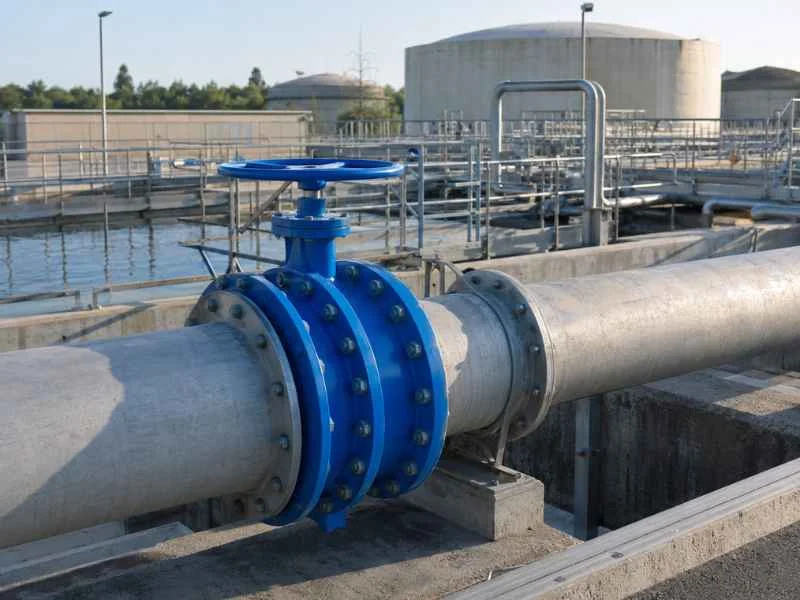
How Butterfly Valves Support Water and Wastewater Treatment
Butterfly valves are important in the whole water treatment process. Their simple design and large size options make them a top choice for city and industrial water systems. You will find them doing important jobs at every step.
Intake and Distribution Pipes
First, large butterfly valves control raw water flowing from a river or lake into the plant. Their fast quarter-turn action is perfect for quickly closing off parts of the plant for maintenance. After treatment, they manage the clean water flowing into the city’s pipe network. For these jobs, the valves are often made of strong ductile iron with a protective coating. This coating stops rust and damage. The seat is usually made of a rubber called EPDM. This material is safe for drinking water and gives a tight seal.
Filtering and Sludge Control
During filtering, you need good flow control. You can use butterfly valves to partly open or close, which helps manage the flow rate. They are also used for backwashing, a process that cleans the filters with a strong reverse flow. In wastewater treatment, they handle sludge, which has grit that can cause wear. For this, you use special butterfly valves with a tough, flexible seat (called a resilient seat) and a strong disc. These can handle the harder jobs. The table below shows why you might choose a butterfly valve over a gate valve.
| Característica | Válvula de mariposa | Válvula de compuerta |
|---|---|---|
| Operación | Rápido (cuarto de vuelta) | Lento (multivuelta) |
| Weight & Size | Light & Small | Heavy & Big |
| Coste | Baja | Más alto |
| Control de caudal | Bien | Pobre |
| Shutoff | Good (with soft seat) | Excelente |
| Mantenimiento | Easier | Harder |
Key Roles in Chemical and Petrochemical Plants
Handling strong chemicals can destroy normal valves. This can lead to dangerous leaks and expensive shutdowns. High-performance and lined butterfly valves are made to handle these materials safely.
Para chemical plants, you will often choose high-performance or fully lined butterfly valves. They control harmful or dangerous fluids. Their ability to seal tightly is very important for safety. It also stops different chemicals from mixing. They are also used for utility lines, like steam and cooling water.
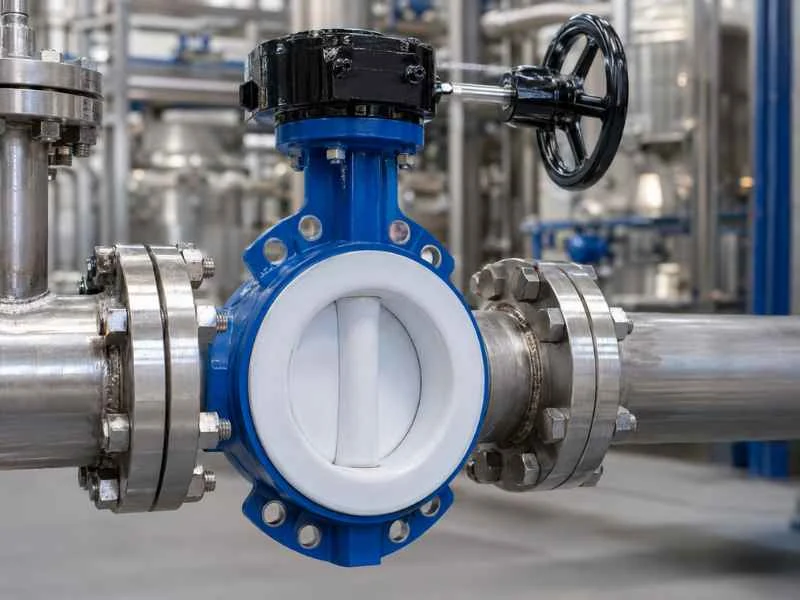
How Butterfly Valves Handle Chemical and Petrochemical Applications
In the chemical industry, safety and using the right materials are everything. Even a small leak can be a big problem. This is why picking the right butterfly valve is so important. I remember talking with Hassan, a chief engineer in Nigeria. He was designing a chemical plant and worried about his valves handling strong chemicals. We talked about triple offset butterfly valves. He needed a valve with zero leaks that also met fire-safety rules. Helping him find the right valve for his important job showed me again how vital it is to provide solutions made for a specific job. That is the principle my father built our company on.
Handling Corrosive and Hazardous Fluids
For strong chemicals like acids or chlorine, you must use a lined butterfly valve. These valves have an inner body completely covered with a material like PTFE. This lining protects the metal body from the fluid, stopping damage. The disc is also fully covered in the same material. This design is a low-cost and safe way to handle these tough chemicals. Understanding what are butterfly valves used for here means focusing on the materials.
High-Temperature and High-Pressure Jobs
When you have high heat or high pressure, a standard soft-seated valve is not a good fit. This is where high-performance butterfly valves come in. There are two main types:
- Doble Offset: The shaft is not in the center. This design reduces rubbing and wear on the seal when it opens and closes.
- Desplazamiento triple: This design adds a third offset. This creates a special seating shape. The disc only touches the seat at the exact moment of closing, so there is no rubbing. This gives a perfect, “bubble-tight” seal with zero leaks. It is great for high-pressure steam, hot gas, or other tough jobs.
| Tipo de válvula | Uso principal | Pressure/Temp | Sealing Quality |
|---|---|---|---|
| Lined Butterfly Valve | Strong chemicals | Bajo a medio | Excelente |
| Double Offset | General process, steam | Medium to High | Very Good |
| Triple Offset | Critical jobs, high temp/pressure | High to Very High | Excellent (Zero-leak) |
Uses in HVAC and Power Generation
Controlling air and water in large buildings or power plants is a big job. If flow control is poor, you waste energy and money. Butterfly valves give you a simple, low-cost way to manage these big systems.
In HVAC systems, you use butterfly valves on chiller and boiler lines to control hot and cold water. In power plants, you can get them in very large sizes. This makes them perfect for cooling water systems and other low-pressure jobs.
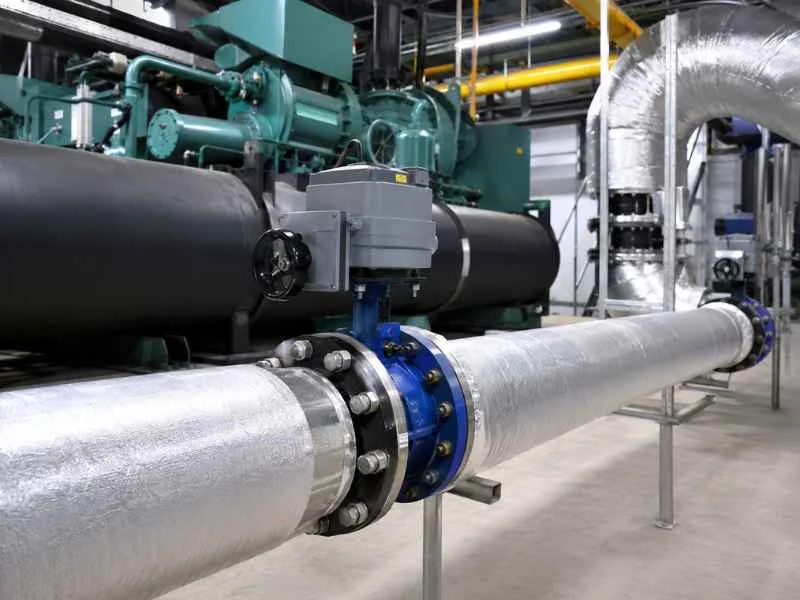
How Butterfly Valves Improve HVAC and Power Plant Flow Control
Saving energy and being reliable are the main goals for commercial buildings and power stations. Butterfly valves help with these goals. They are easy to use, don’t block the flow much when fully open, and come in the huge sizes needed for these jobs.
Controlling Flow in HVAC Loops
Modern HVAC systems need exact water flow to heat and cool big spaces well. Butterfly valves are placed on the main pipes connected to chillers, boilers, and cooling towers. They are used for two main jobs:
- Aislamiento: When a pump or chiller needs maintenance, you can use butterfly valves to shut off water to that unit. You don’t have to shut down the whole system.
- Balancing: In big systems, you need to make sure every area gets the right amount of hot or cold water. You can partly close a butterfly valve to reduce the flow. This helps balance the system and save energy. Their small size is also a big help in crowded mechanical rooms.
Important Jobs in Power Plants
Making power means moving huge amounts of water and gas. Butterfly valves are a workhorse in this industry. A very common use is for cooling water systems. Power plants need a steady supply of cooling water. This requires very large pipes. Butterfly valves are one of the few types you can get in these giant sizes. They are also used in systems that clean exhaust gases. There, they handle liquids with grit that can cause wear. For these jobs, they often have a rubber lining to make them last longer.
| Aplicación | Key Benefit of Butterfly Valve | Common Type |
|---|---|---|
| HVAC Chiller Lines | Small size, low cost | Soft Seated |
| Power Plant Cooling Water | Available in very large sizes | Double Offset, Rubber-Lined |
| Exhaust Gas Cleaning | Resists wear from grit | Rubber-Lined |
Preguntas frecuentes
Q: For which industries are butterfly valves most used?
A: You will find butterfly valves used in many places. They are most common in water treatment, chemical plants, power plants, and large building HVAC systems. They are also used in food and beverage, drug manufacturing, and mining for many jobs controlling fluids.
Q: What are high-performance butterfly valves used for?
A: High-performance butterfly valves are used for tougher jobs than standard valves. This includes jobs with higher pressure or heat, or where you need very exact flow control. They are common in steam lines and chemical plants where you need them to work every time.
Q: What are lug-style butterfly valves used for?
A: Lug-style butterfly valves are used for jobs where you need to close off a pipe at the end. They have threaded holes (lugs) for bolts. This lets you take off the pipe on one side, and the valve will still hold back the fluid. This is useful for repair work.
Q: What are lined butterfly valves used for in chemical plants?
A: In chemical plants, lined butterfly valves handle strong or very clean fluids. The inside of the valve is coated with a material like PTFE that won’t react with the chemical. This protects the metal valve from damage and keeps the fluid clean.
Q: What are butterfly valves used for in a fire protection system?
A: In fire sprinkler systems, butterfly valves are used to turn the main water supply on or off. They are often “supervised.” This means they have a switch that sends an alarm if someone closes the valve. This makes sure the system is always ready.
Q: What are wafer-style butterfly valves used for?
A: Wafer-style butterfly valves are used for common jobs where you don’t need to close off the end of a line. They are the most common and lowest-cost type. The valve body is simply held between two pipe flanges with long bolts.
Final Thought
Válvulas de mariposa can be used for many things. They are reliable and low-cost for a huge number of jobs. From water treatment to chemical plants, they provide important flow control. At BCST, we use our experience to help you pick the perfect valve. Contact us to make your project a success.


 English
 Arabic
 Russian
 French
 Spanish