
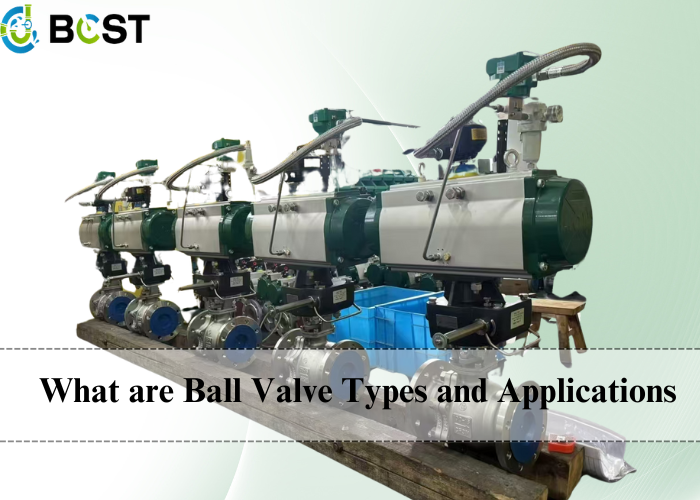
A Válvula de bola is a valve that uses a spherical valve core to control the flow of fluid. Its simple design, durability, and stable flow during rapid opening and closing make it a vital component in modern industrial pipeline systems. Ball Valves are widely used in industries such as petroleum, chemicals, power, and water supply and drainage due to their excellent sealing performance and ease of operation.
I. Válvula de bola Structure Types
Válvulas de bola can be divided into several types based on their structural forms. Here are some common types:
1. Floating Ball Valve
Structure: In a floating Ball Valve, the ball is not fixed to the valve stem but floats freely. When the valve opens or closes, the ball tightly seals against the seat due to fluid pressure.
Application: Suitable for low- and medium-pressure fluid control, commonly used in small-bore pipelines and lower-pressure systems.
2. Trunnion Ball Valve
Structure: In a trunnion Ball Valve, the ball is fixed at two points, preventing free movement. This structure allows the valve to handle higher pressures while maintaining excellent sealing performance.
Application: Primarily used in high-pressure, large-diameter pipelines, especially in oil, gas, and chemical industries.
3. Three-way Ball Valve
Structure: A three-way Ball Valve has three ports, allowing the fluid to be distributed or switched between different outlets. The ball’s internal passageway design enables the flow of fluid from one inlet to multiple outlets.
Application: Suitable for fluid switching or distribution, such as in adjusting liquid flow or mixing different media.

4. V-Ball Valve
Structure: A V-Ball Valve has a ball with a V-shaped notch to improve flow regulation capabilities. The valve can achieve precise flow control by adjusting the valve opening.
Application: Ideal for locations requiring precise flow regulation, such as chemical process control and wastewater treatment.
5. Electric and Pneumatic Ball Valves
Structure: These Ball Valves are equipped with electric or pneumatic actuators for remote automated control. Electric Ball Valves are driven by electricity, while pneumatic Ball Valves are powered by compressed air.
Application: Suitable for highly automated systems, such as automatic control systems and remote operation equipment.
II. Válvula de bola Application Scenarios
Due to their superior design and excellent sealing performance, Ball Valves are widely used in various industrial applications. Based on fluid medium, pressure requirements, and control needs, Ball Valves are applied in the following scenarios:
1. Petroleum and Natural Gas Industry
Ball Valves are commonly used for flow control in oil and gas pipelines. Trunnion Ball Valves are especially suitable for high-pressure, large-diameter pipelines, ensuring efficient and safe transmission of oil and gas. Floating ball and three-way Ball Valves are also used in oil extraction and refineries.
2. Chemical Industry
In chemical processes, Ball Valves play a key role, especially in controlling high-corrosive or high-temperature fluids. Their sealing performance and corrosion resistance prevent leakage effectively. V-Ball Valves are particularly useful in flow regulation and liquid speed control in chemical reactions and process control.
3. Water Treatment Industry
Ball Valves are used for flow regulation and on/off control in water treatment plants and water supply systems, especially in applications requiring quick opening and closing with high sealing performance. Electric or pneumatic Ball Valves are used in automated control systems for remote flow regulation.
4. Power Industry
Ball Valves are used in power plants to control steam, cooling water, and other fluids. Their quick opening and closing feature make them ideal for systems that need rapid response. In high-pressure systems, trunnion Ball Valves ensure efficient sealing and stability.
5. Pharmaceutical and Food Industries
Due to their excellent sealing and unobstructed flow, Ball Valves are ideal for controlling clean, non-contaminated fluids in the pharmaceutical and food industries. The materials and surface treatments of these valves are crucial, requiring food-grade stainless steel to prevent contamination.
6. Firefighting Systems
Ball Valves are commonly used for on/off control in firefighting pipelines. Particularly, electric Ball Valves can be quickly activated or closed in emergencies to ensure timely water supply for firefighting.
7. HVAC (Heating, Ventilation, and Air Conditioning) Systems
Ball Valves are widely used in HVAC systems, particularly for air circulation, temperature control, and water flow regulation. Their compact structure and easy operation make them a popular choice in such systems.
III. Advantages of Válvula de bolas
Quick Opening and Closing: Ball Valves can achieve full open or closed status in a short time, making them ideal for applications requiring rapid fluid cutoff.
Excellent Sealing: Ball Valves typically offer superior sealing, especially in high-pressure and high-temperature environments, effectively preventing leakage.
High Flow Control Accuracy: Certain Ball Valve types (e.g., V-Ball Valves) provide precise flow control, suitable for systems with high flow regulation requirements.
Wide Range of Applications: Ball Valves can handle liquids, gases, and steam and can operate in harsh environments, including high pressure, low temperature, and corrosive conditions.
IV. Conclusion
As an important industrial control valve, Ball Valves are widely used across multiple industries due to their simple design, good sealing performance, and ease of operation. Different types of Ball Valves are suitable for various applications, and users can select the appropriate type based on specific needs. With increasing industrial automation, the use of electric and pneumatic Ball Valves has also grown, further enhancing fluid control precision and efficiency.


 English
 Arabic
 Russian
 French
 Spanish