
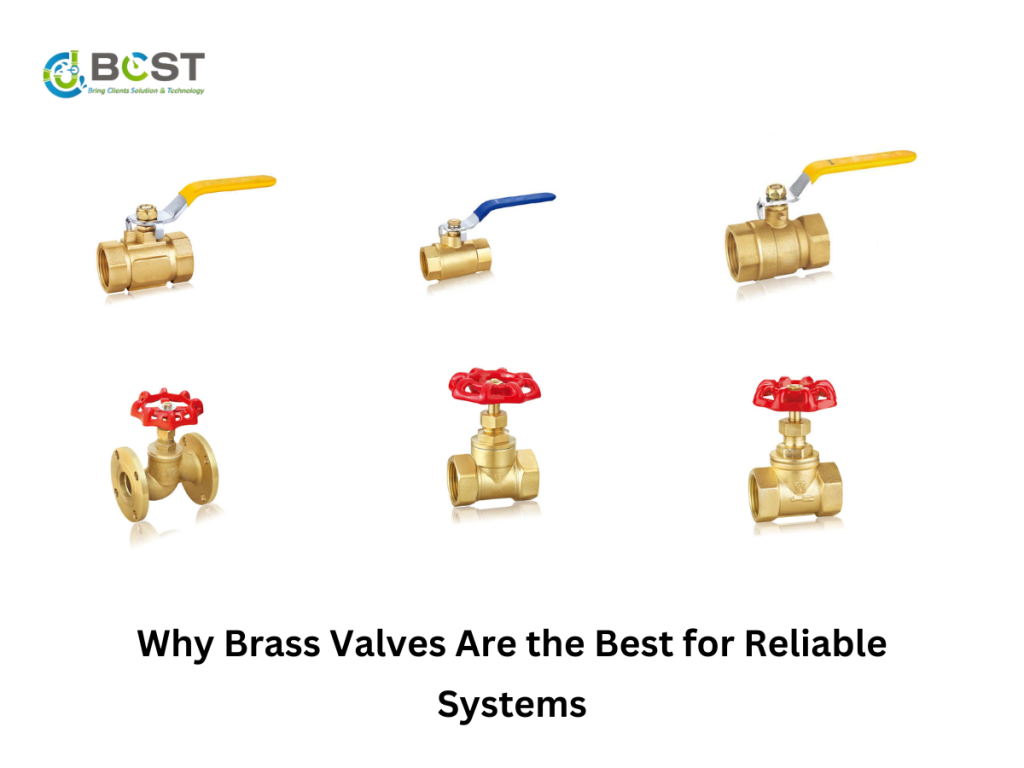
When you choose materials for plumbing systems, brass offers exceptional durability, corrosion resistance, and flexibility. It’s one of the top choices for residential, commercial, and industrial applications. BCST, a globally recognized supplier from China, provides high-quality brass valves that ensure reliable service for years.
Why Brass is Ideal for Plumbing Valves
Brass, an alloy of copper and zinc, stands out for its strength and durability. It resists corrosion, a critical factor for plumbing systems exposed to water and other elements. Brass withstands high temperatures, making it perfect for hot water lines. Unlike other materials, it is less likely to crack or degrade over time.
Additionally, brass’s flexibility allows easy shaping and fitting to various plumbing requirements. This adaptability proves beneficial for fittings that need to conform to different pipe sizes or shapes. Despite its flexibility, brass remains a reliable material, offering long-term dependability.
Applications of Brass Valve
Brass valves excel in various applications:
- Air and Liquid Shut-Off: These valves efficiently control the flow of air or liquids, ensuring safe and effective system operation.
- Natural Gas Shut-Off: Their durability and high-temperature resistance make them ideal for natural gas systems.
- Flow Direction Control: Brass valves effectively manage fluid flow direction, crucial for complex plumbing systems.
- Potable Water Systems: Brass safely serves in drinking water systems, as it resists corrosion and doesn’t release harmful substances.
- Control de flujo: In residential and industrial settings, brass valves provide precise fluid flow control, optimizing system performance.
BCST’s Brass Valve Quality Control
Design and Technical Evaluation
- Design: BCST’s team uses advanced software for accurate calculations and meets to finalize designs.
- CAD Drawing Confirmation: They create and confirm detailed CAD drawings before production begins.
Inspección de materias primas
- Chemical Analysis: BCST analyzes the chemical composition of brass to meet specific standards.
- Mechanical Property Tests: These tests confirm the material’s strength and durability.
- Dimensional and Visual Checks: Raw materials undergo strict dimensional and visual inspections.
- Non-Destructive Examination: This process ensures the materials are free from internal flaws.
Machining and Part Testing
- CNC Machining: Precision machining is conducted using CNC technology, followed by visual and dimensional checks.
- Liquid Penetration and Hardness Tests: These tests ensure the machined parts meet the required quality standards.
Assembly and Hydrostatic Testing
- Installation and Calibration: The team installs and calibrates the assembly to ensure correct valve function.
- Hydrostatic Testing: Each valve undergoes rigorous testing, including shell, sealing, and leakage tests.
Final Treatment and Packaging
- Surface Polish and Painting: BCST polishes and paints the valves for a smooth finish.
- Visual Inspection and Thickness Checks: They carry out final inspections to ensure the valves meet aesthetic and functional standards.
- Packaging: Valves are securely packed in marked wooden boxes to prevent transit damage.
Why Choose Brass Valves from BCST?
Brass valves offer a dependable, long-lasting solution for plumbing systems. Their durability, resistance to corrosion and heat, and versatility make them an excellent choice for various applications. BCST ensures that each brass valve delivers exceptional performance and reliability through stringent quality control. Whether for residential, commercial, or industrial use, brass valves from BCST are a smart investment.


 English
 Arabic
 Russian
 French
 Spanish