
Solenoids, Positioners, Limit Switches: A No-BS Guide to the ‘Extras’ That Make or Break Your Package
You’ve specified the perfect valve and a powerful ball valve actuator. You’re done, right? Not even close. The accessories—the solenoids, positioners, and switches—are not “extras.” They are the brain and nerves of your automated package. Getting them wrong is a recipe for failure.
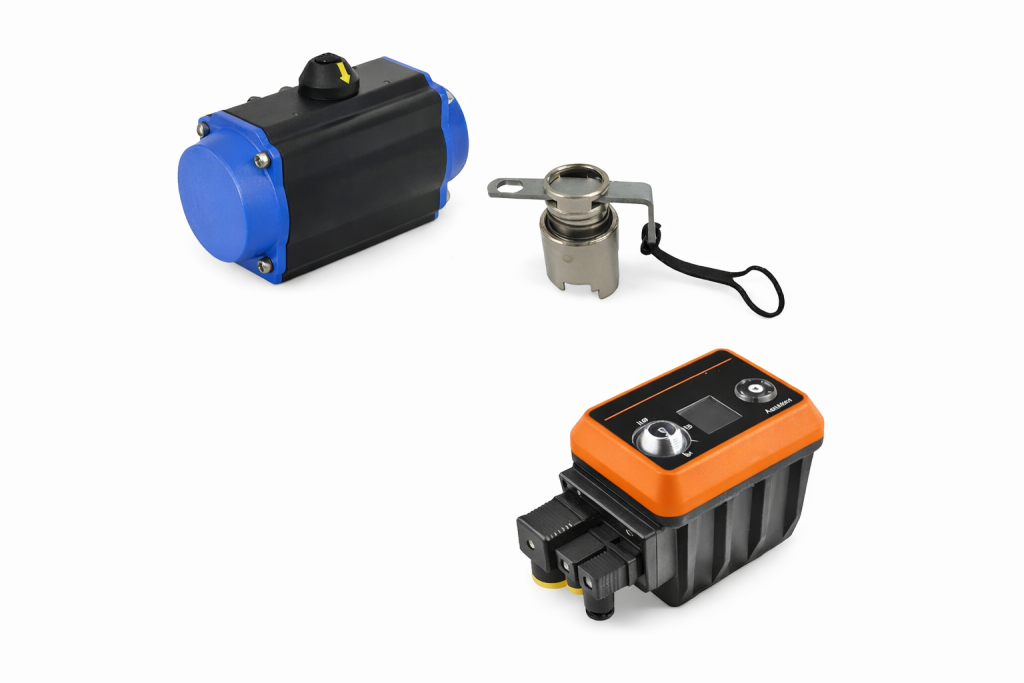
1. The Solenoid Valve: Your On/Off Switch
Think of a válvula solenoide as an electrically operated gate for the air that powers your pneumatic actuator. When your control system sends a signal, the solenoid opens, air flows, and the ball valve actuator moves. It is the fundamental link between your electrical control and mechanical action.
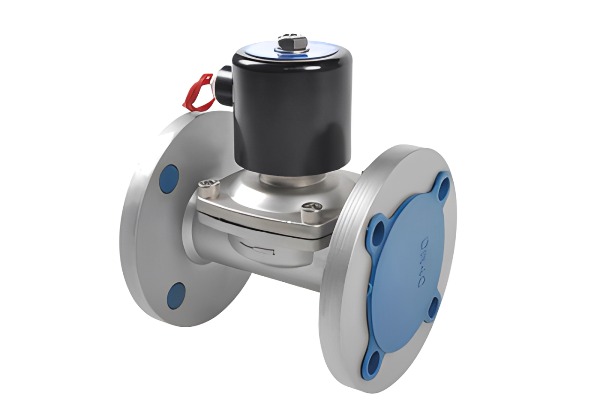
Dive Deeper: Don’t Fry Your Coil
Choosing the wrong solenoid is the #1 reason for “dead on arrival” failures. Here’s what you MUST get right:
- Voltage and Power: Does your PLC send 24VDC, 120VAC, or another signal? The solenoid coil MUST match this exactly.
- Función: Use a 3-way solenoid for a spring-return actuator and a 4-way for a double-acting actuator.
- Area Classification: This is non-negotiable. If the ball valve actuator is in a Zone 1 area, the solenoid MUST have the correct rating (e.g., NEMA 7 / ATEX).
- Flow Rate (Cv): An undersized solenoid will starve a large actuator of air, making it slow and sluggish. Ensure the Cv is adequate.
2. The Limit Switch Box: Your Eyes in the Field
A caja de final de carrera visually and electrically confirms the valve’s position, answering two critical questions: Is the valve fully open? Is it fully closed? You need one whenever your control room requires positive confirmation of the valve’s state.

Dive Deeper: Closing the Feedback Loop
Without a limit switch, you are flying blind. You can send a signal, but you have no proof the valve obeyed. A good limit switch closes this feedback loop.
- Switch Type: Mechanical switches are reliable and common. For high-vibration areas, non-contact proximity sensors are a better choice.
- Enclosure & Area Rating: The enclosure must match the environment. A NEMA 4X rating is standard for weatherproofing, while hazardous area ratings are mandatory for classified zones.
Pro-Tip: Don’t underestimate the visual indicator. A large, clear indicator lets field technicians see the valve’s position from 50 feet away—a huge safety and operational benefit.
3. The Positioner: Your Cruise Control
If a solenoid is an on/off switch, a positioner is a throttle. It takes a variable input signal (typically 4-20mA) and precisely controls the position of the ball valve actuator anywhere between 0% and 100% open. You only need a positioner for modulating or throttling flow.

Dive Deeper: The Brain of Modulation
- Electro-Pneumatic Control: Modern “smart” positioners take an electrical signal (e.g., 4-20mA HART) and convert it to a precise pneumatic output for the actuator.
- Diagnostics: Smart positioners are powerful diagnostic tools. They track torque, count cycles, and can alert you to a sticking valve, preventing unscheduled downtime for your ball valve actuator.
Pro-Tip: Don’t use a positioner for a simple on/off valve. It’s an expensive and unnecessary component for open/close service. A simple solenoid is faster, cheaper, and more reliable for that job.
Conclusion: Specify a System, Not Just Parts
Understanding these “extras” is the difference between buying a box of parts and investing in a reliable, integrated system. By specifying the right solenoid, limit switch, and positioner for your ball valve actuator, you ensure safety, reliability, and peace of mind for your entire team.


 English
 Arabic
 Russian
 French
 Spanish