
How to Choose the Right Butterfly Valves Manufacturer for Your Project
Choosing a válvula de mariposa supplier is a vital decision. The wrong partner can cause project delays, operational failures, and safety issues that harm your entire system.
To choose a great butterfly valves manufacturer, check their technical skill, production capacity, and quality control. You should also review their material certificates and after-sales support. These factors ensure the valves you buy are safe, reliable, and cost-effective over their lifetime.
Price is always important, but focusing only on the initial cost is a mistake. A valuable manufacturing partner gives you more than a product. They provide confidence and peace of mind. Let’s explore the key things to look for when you select a manufacturer who will support your project’s success.
Assessing a Manufacturer’s Capabilities
A manufacturer’s factory and engineering team are the basis of product quality. Without modern tools and deep knowledge, they cannot produce consistent and reliable valves.
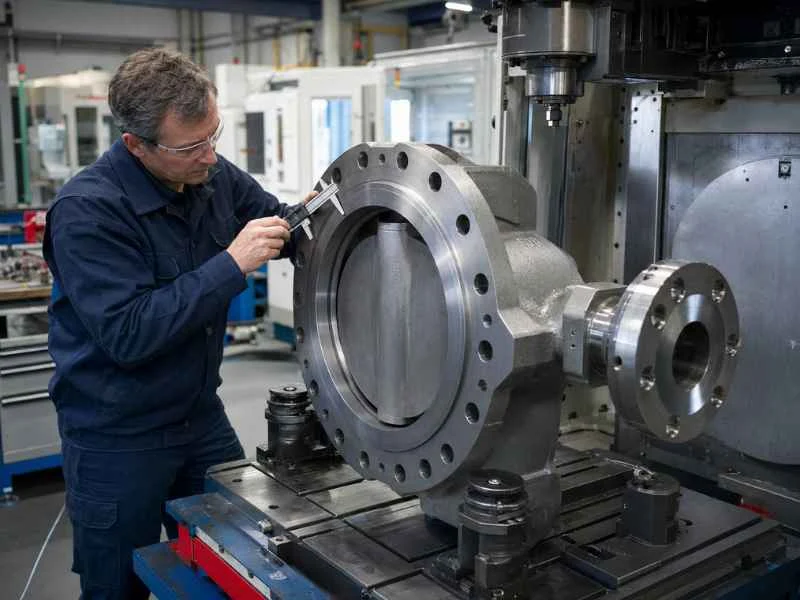
A good manufacturer has advanced CNC machines, automated assembly, and its own testing facilities. Its engineers must be able to confirm designs, choose materials for tough conditions, and follow international standards like API 609.
From the Factory Floor to Your Project
My father built his valve business on deep product knowledge. This inspired me to start my career on the factory floor instead of in an office. I worked in every department, from material inspection and machining to valve assembly and pressure testing.
This experience taught me a valuable lesson. Theory alone is not enough. You must understand how a valve is made to know its limits and why it might fail. This practical knowledge is key to solving real-world problems.
When you assess a potential butterfly valves manufacturer, look for this type of hands-on experience. Does their team understand the details of manufacturing? Can they discuss machining tolerances or the best way to apply a hard-facing material? This practical insight is very helpful when you face difficult application challenges. A manufacturer with this ground-level experience will give you better recommendations and support.
Technical Skill and Design Checks
Look at the strength of the manufacturer’s engineering team. A skilled team provides great support during your project’s design and purchasing stages. They should use tools like Finite Element Analysis (FEA) to test valve designs. FEA simulates stress and flow to ensure the valve can handle your specific pressure and temperature.
The team should also help you select the right materials. This is especially important for corrosive fluids or high temperatures. They should reference standards like NACE MR0175 for sour gas applications. Ask potential suppliers about their design process. Find out if they have experience with applications similar to yours.
Evaluating Quality Control and Material Records
In any industrial plant, a single material flaw can lead to serious problems. Strict quality control is not an extra feature. It is a fundamental requirement for safety.
A top manufacturer uses a strong quality management system (QMS). This system should include 100% pressure testing for every valve. It also needs positive material identification (PMI) and complete material traceability. They must provide official EN 10204 3.1 certificates when you ask.
The Importance of a Quality System
An ISO 9001 certificate is a good first step. It shows the manufacturer has a documented quality system. But you should ask for more details. Ask for their quality manual and learn about their specific test procedures.
A good QMS includes several key checks:
- Raw Material Inspection: The manufacturer checks the dimensions and chemical makeup of all incoming materials. They compare them against the material certificates.
- In-Process Inspection: Workers check component dimensions after each important machining step to ensure they meet the design.
- Final Assembly Inspection: The final valve is checked for correct assembly, dimensions, and nameplate data. The team also checks that it operates smoothly.
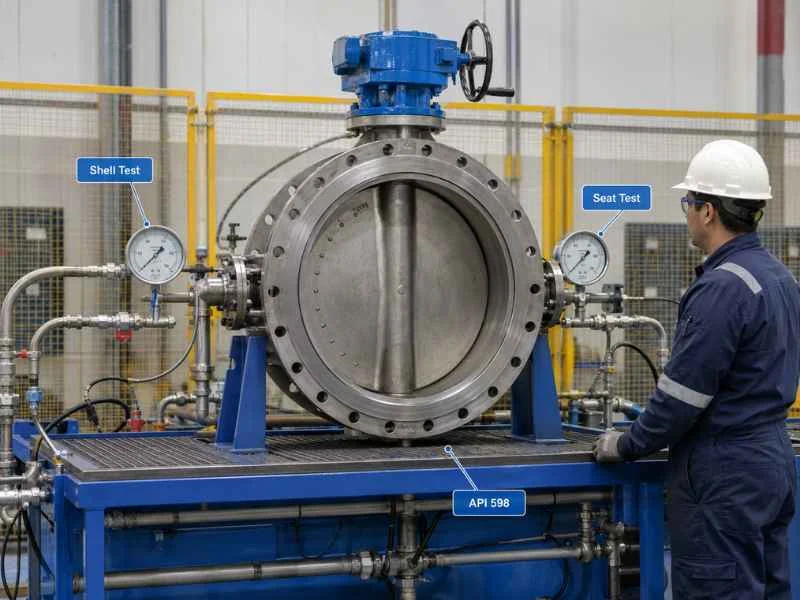
- Pressure Testing: Every valve is tested for shell and seat leakage. This follows standards like API 598. The results are recorded on a formal test report.
Material traceability is a key part of quality. Each main part, like the body and disc, should have a unique heat number. This number connects the part to its original material certificate. This is required for all major projects.
| Certificate Type | Descripción | Level of Assurance |
|---|---|---|
| Type 2.2 | A report with test results from general batch testing, not the specific items supplied. | Basic |
| Type 3.1 | A certificate from the manufacturer’s quality team. It confirms the product meets your order and includes specific test results. | Alta |
| Type 3.2 | A Type 3.1 certificate that is also checked and signed by a third-party inspector. | Más alto |
Analyzing After-Sales Support and Documents
Your relationship with a manufacturer continues after they ship the valves. Good long-term support and clear documents are necessary for a smooth project and easy maintenance.
Great after-sales support means providing full documentation on time. It also includes technical help for installation and having spare parts ready. This support lowers the valve’s total cost over its lifetime.
The Value of Good Documentation
As a project engineer, you know that missing documents can stop a project. Before you buy, confirm what documents the manufacturer will send. A standard document package should include:
- General Arrangement (GA) Drawings: These show the valve’s main dimensions and materials.
- Material Test Certificates (MTCs): Usually EN 10204 3.1 certificates for all main parts.
- Pressure Test Reports: Proof that each valve passed its required pressure tests.
- IOM Manual: A guide for your installation and maintenance teams. It explains how to handle, install, and service the valve.
Getting these documents on time is as important as getting the valve itself. A late drawing can delay piping design. An incorrect certificate can cause big problems during a quality audit.
Long-Term Partnership and Spares
A manufacturer shows its commitment through its support after the sale. Can you easily talk to a technical expert if you have a question? How do they manage warranty issues? A responsive support team shows the company cares about a long-term partnership.
Also, ask about spare parts. Butterfly valves have parts like seats and seals that wear out. A good manufacturer can recommend which spares to stock. They should also promise to have these parts available for many years. This helps you reduce downtime and lowers your total cost.
Preguntas frecuentes
1. What certifications should I look for in a butterfly valves manufacturer?
Look for a manufacturer with an ISO 9001 certificate for quality management. Other key certifications can include API 609 for valve design, CE marking for Europe, and API 607 for fire-safety. Always check that the certificates are current and apply to the products you are buying.
2. How does a butterfly valves manufacturer ensure material quality?
A good manufacturer uses several methods. They inspect incoming materials, use PMI tools to check metal composition, and maintain full traceability. They must be able to provide EN 10204 3.1 certificates that trace back to the original material source via heat numbers on the valve.
3. Can a specialized butterfly valves manufacturer provide custom solutions?
Yes, a key benefit of working with a specialized butterfly valves manufacturer is their ability to create custom valves. They can use special alloys for corrosive fluids, design valves for very high or low temperatures, or modify dimensions to fit your existing pipes. A strong engineering team is needed for this.
4. Why is factory experience important for a manufacturer’s sales team?
A sales team with factory experience deeply understands the product. They know the details of manufacturing, material limits, and proper assembly. This practical knowledge allows them to give better advice, solve problems faster, and have clearer technical discussions with engineers, leading to better results.
5. How do I check the testing capabilities of a butterfly valves manufacturer?
Ask for a list of their testing equipment. They should have test benches for hydrostatic and pneumatic pressure tests. Ask for sample test reports to check if they follow standards like API 598. You can also ask about their ability to perform other tests, like radiographic or ultrasonic testing.
Final Thought
Choosing a butterfly valves manufacturer is more than comparing prices. Your decision impacts your project’s safety, reliability, and long-term costs. Look for a partner with proven production skills, a strong commitment to quality, and excellent support. This helps you get high-quality valves that perform well for years.
At BCST, we have built our company on these values. We have deep experience in the entire production process, from materials to testing. We are focused on delivering reliable valve solutions. If you need a partner who understands your technical needs, Contacto to discuss your project.


 English
 Arabic
 Russian
 French
 Spanish