
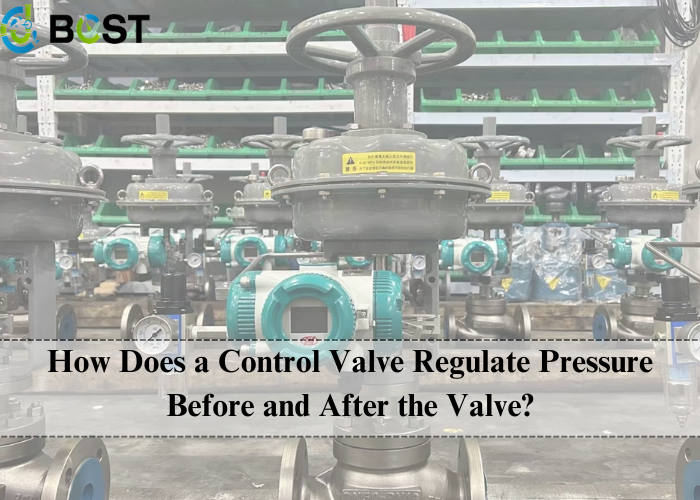
Control valves are a critical component in automated control systems, widely used in industries such as oil and gas, chemicals, power generation, and metallurgy. Their primary function is to regulate fluid flow to control parameters like pressure, temperature, and liquid levels. A key engineering challenge is understanding how control valves regulate pressure upstream (before) and downstream (after) the valve. This article will explore the working principles of control valves, their mechanisms for pressure regulation, the characteristics of different types of control valves, and their application in various engineering contexts.
1. Basic Working Principle of a Control Valve
Control valves serve as the final control element in automated process control systems. They receive signals from controllers to adjust the position of the valve plug, thereby modulating the flow rate of the fluid, which in turn alters the pressure upstream or downstream of the valve. Typically, upstream pressure is determined by the operating conditions of upstream equipment or piping, while downstream pressure is directly related to the flow demand of the downstream system.
1.1 Relationship Between Flow and Pressure
According to Bernoulli’s principle, fluid pressure changes as it flows through the valve. Generally, an increase in flow rate results in a decrease in downstream pressure and vice versa. The control valve adjusts the flow area to control the fluid flow, thereby affecting the pressure differential across the valve.
1.2 Control Characteristics of the Valve
Control valves exhibit different flow characteristics depending on the process requirements. These characteristics are typically classified into linear, equal percentage, and quick-opening types. Different flow characteristics respond differently when regulating pressure. For example, equal percentage valves are more sensitive to small changes in flow at lower valve openings, making them ideal for precise control, while linear valves are better suited for applications where flow changes remain relatively stable.
2. Pressure Regulation Mechanism of Control Valves
Control valves can regulate pressure in two primary ways: upstream pressure regulation and downstream pressure regulation. These mechanisms play a crucial role in different industrial applications, and the specific regulation strategy depends on system design and process requirements.
2.1 Upstream Pressure Regulation
Upstream pressure regulation is commonly used in processes that require stable pressure on the upstream side of the valve. By adjusting the valve opening, the flow into the upstream piping can be controlled, thereby stabilizing the upstream pressure. For instance, in boiler feedwater systems, control valves are used to maintain a steady pressure at the pump outlet, preventing pressure fluctuations from affecting downstream systems.
The principle of upstream pressure regulation is based on altering the fluid resistance before the valve. As the valve opening changes, the flow rate through the valve adjusts, which in turn changes the dynamic and static pressure of the fluid. For precise upstream pressure control, a feedback loop involving pressure sensors and controllers is often employed to enable real-time adjustments.
2.2 Downstream Pressure Regulation
Downstream pressure regulation, on the other hand, is used to maintain stable pressure in downstream piping, typically in gas or liquid distribution systems. By adjusting the valve opening, the flow rate of the fluid can be controlled to keep the downstream pressure constant. In systems like natural gas distribution, steam networks, and liquid transfer systems, control valves help maintain stable user-side pressure, avoiding disruptions caused by pressure fluctuations.
In downstream pressure regulation, the valve adjusts the flow area downstream, controlling the fluid discharge rate to regulate pressure. This method relies on pressure sensors and feedback control systems. As downstream pressure fluctuates, the control system adjusts the valve position to reach the desired pressure setpoint.
3. Pressure Regulation Characteristics of Different Types of Control Valves
Various types of control valves are available depending on the specific process requirements and operating conditions. Each type exhibits unique characteristics when it comes to pressure regulation. Common types include single-seated globe valves, double-seated globe valves, ball valves, butterfly valves, and diaphragm valves.
3.1 Single-Seated Globe Valves
Single-seated globe valves are known for their simple design and tight shutoff capabilities, making them suitable for applications requiring high precision in flow and pressure regulation. With a single sealing surface between the plug and seat, pressure loss through the valve is minimal, making them ideal for applications where precise pressure control is critical. However, due to their structure, single-seated globe valves can be less stable in high-flow scenarios, as they are more susceptible to unbalanced forces.

3.2 Double-Seated Globe Valves
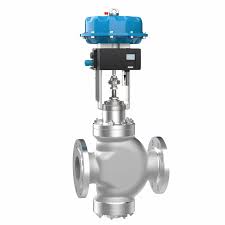
Double-seated globe valves feature two plugs and seats, allowing them to balance the forces exerted by the fluid, making them ideal for high-flow, high-pressure differential applications. These valves can handle large volumes of fluid with reduced impact on valve stability, making them common in industries like petrochemicals. While they excel in high-flow applications, they generally have higher leakage rates and are not suited for applications requiring strict shutoff.
3.3 Ball Valves
Válvulas de bola are rotary control valves known for their large flow capacity and ease of operation. Their design makes them effective for high-flow, low-pressure differential applications, particularly in liquid media. Ball valves are often used in both upstream and downstream pressure regulation due to their fast response and straightforward operation. However, ball valves tend to have inferior sealing properties, making them less suitable for applications requiring precise pressure control.
3.4 Butterfly Valves
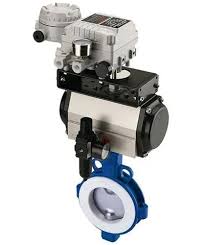
Válvulas de mariposa are compact and commonly used for controlling fluid in large-diameter pipelines. The large contact area between the valve disc and the fluid makes them suitable for low-pressure, high-flow applications. Like ball valves, butterfly valves respond quickly and are widely used in water treatment and HVAC systems. However, they are not ideal for high-pressure applications, as their sealing performance diminishes under high pressure.
3.5 Diaphragm Valves
Diaphragm valves utilize a flexible diaphragm to control fluid flow, making them well-suited for corrosive media or applications that require high sanitary standards. The unique structure of diaphragm valves isolates the fluid from the valve body, protecting it from corrosion. This makes diaphragm valves a preferred choice for controlling pressure in applications involving aggressive fluids.
4. Practical Case Studies of Control Valve Pressure Regulation
4.1 Oil and Gas Transmissione
In oil and gas transmission pipelines, control valves can maintain stable pipeline pressure, ensuring that the flow of natural gas or oil is not disrupted by pressure fluctuations. In long-distance pipelines, downstream pressure regulation is especially critical. By maintaining consistent downstream pressure, control valves ensure safe and stable distribution of natural gas.
4.2 Chemical Process Control
In chemical production, control valves are regulating fluid flow and pressure in reactors and distillation columns. For example, in distillation processes, control valves adjust feed rates and column pressure to maintain steady pressure inside the column, which is crucial for controlling product purity. In such applications, upstream pressure regulation is vital because the operating pressure directly affects the equilibrium of chemical reactions.
4.3 Boiler Systems
In power plant boilers, control valves regulate the flow and pressure of feedwater and steam. By adjusting the control valve, steady boiler pressure is maintained, preventing efficiency loss or equipment damage caused by pressure fluctuations. Both upstream and downstream pressure regulation are critical in boiler systems, as they directly impact the operating conditions and overall thermal efficiency of the boiler.
5. Valve Selection and Installation Considerations
5.1 Selection Criteria
Selecting the right control valve for a particular application involves considering the fluid properties (e.g., temperature, pressure, viscosity, and corrosiveness), process requirements (e.g., flow range, control precision), and the working environment. Each type of valve has its advantages and disadvantages, and proper selection ensures optimal performance in the specific operating conditions.
5.2 Installation Considerations
When installing control valves, it’s important to place them in straight sections of piping to minimize the impact of turbulence on pressure control. Additionally, matching the valve to the pipeline system is critical to avoid stress or vibration that could damage the valve. In applications involving corrosive media, the valve’s sealing and body materials should be corrosion-resistant to extend the valve’s service life.
6. Conclusión
Control valves play a vital role in regulating pressure before and after the valve, ensuring the stability and efficiency of automated process control systems. By understanding the working principles and pressure regulation mechanisms of control valves, engineers can effectively select and utilize these devices to improve process control accuracy and operational performance across a variety of industries.

 English
 Arabic
 Russian
 French
 Spanish