Confused by all the different valve terms? You hear “shutdown valve,” “block valve,” and “ESD valve” used interchangeably, creating uncertainty. You need to know which one to use and when.
A shutdown valve, also known as a block or isolation valve, is designed to completely stop the flow within a process line. Its primary job is to isolate equipment for maintenance, inspection, or to stop a process under controlled, non-emergency conditions.
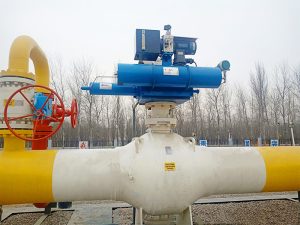
When I first started in the valve business, my father taught me that a valve’s name tells you its purpose. But even so, I saw customers get confused. The term “shutdown valve” is a perfect example. I remember a conversation with Hassan, a chief engineer designing a chemical plant. He stressed that clarity in terminology is critical for safety and efficiency. He explained that while some valves shut down a process during an emergency, most “shutdown valves” are used for planned, methodical isolation. They are the workhorses that allow maintenance crews to safely enter a section of the plant without worrying about active process fluids. They are the gatekeepers of safe maintenance and operational control. Understanding their specific role is the first step to running a safer and more efficient facility.
How is a Shutdown Valve Different from an ESD Valve?
Is any valve that closes a line a true safety device? Mistaking a manual shutdown valve for an automated emergency valve can lead to a dangerously false sense of security.
A standard shutdown valve is for planned isolation, often manually operated for maintenance. An Emergency Shutdown (ESD) valve is an automated, fail-safe system designed for rapid, remote closure during a critical failure to prevent a disaster. The key difference is planned versus emergency action.
This is one of the most important distinctions I have to make for my clients. They perform very different jobs. A general shutdown valve is what an operator uses to prepare a pump for repair. They walk up to the valve, turn the handwheel, and isolate the pump from the main process line. It’s a deliberate, planned action. I once worked with a plant that was specifying valves for a new unit. The initial drawings just said “shutdown valve” everywhere. Hassan, who was consulting on the project, immediately flagged this. He insisted we separate the valves for manual isolation from the ones tied to the safety system. An ESD valve is fundamentally different. It doesn’t wait for an operator. It’s connected to sensors that detect dangerous conditions like high pressure or a gas leak. When a hazard is detected, the safety system automatically commands the ESD valve to slam shut in seconds.
| Aspecto |
General Shutdown Valve |
Emergency Shutdown (ESD) Valve |
| Función principal |
Planned isolation for maintenance |
Unplanned, automatic emergency shutdown |
| Operación |
Typically manual (handwheel, gear) |
Automated (actuator with solenoid) |
| Trigger |
Human operator decision |
Safety system sensor signal |
| Speed |
Slow, not a critical factor |
Extremely fast, critical for safety |
| System |
Standalone component |
Part of an integrated Safety System (SIS) |
| Key Purpose |
Enable safe work |
Prevent a disaster |
Using the right valve for the right job isn’t just about efficiency; it’s about the fundamental safety of the entire plant.
What Are the Best Valve Types for Shutdown and Isolation?
Does the type of valve you choose for isolation really matter? Selecting the wrong valve type can lead to dangerous leaks, difficult operation, and unreliable sealing, compromising plant safety.
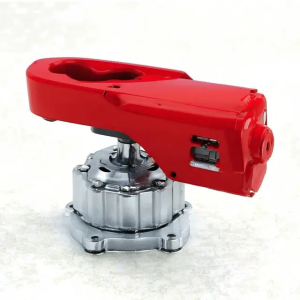 For shutdown and isolation, the best valve types provide a bubble-tight seal. Ball valves are excellent for fast, quarter-turn action and tight shut-off. Gate valves are great for full-bore, unobstructed flow, while Triple Offset Butterfly Valves offer zero-leakage performance in large-diameter pipes.
Choosing the right valve type is a decision I help engineers with every day. The best choice depends on the specific needs of the service. For most general-purpose isolation, a ball valve is a fantastic option. It’s simple, durable, and the quarter-turn action gives a clear visual indication of whether it’s open or closed. When you need a completely unobstructed flow path, like for pigging a pipeline, a through-conduit gate valve is the superior choice. Gate valves move a solid gate completely out of the flow stream. But what about really big pipes where a ball or gate valve would be enormous and expensive? That’s where I often recommend a Triple Offset Butterfly Valve (TOBV). Unlike a standard butterfly valve, its clever geometry eliminates friction between the seal and seat, allowing it to provide a bubble-tight, bi-directional seal that lasts. Hassan often specified TOBVs for critical isolation points in large cooling water or hydrocarbon lines, valuing their combination of high performance and reasonable cost.
Why is a Double Block and Bleed (DBB) System the Safest Bet?
How can you be 100% certain a line is isolated? A single valve can leak, creating a life-threatening situation for maintenance personnel working on what they believe is a safe line.
A Double Block and Bleed (DBB) system is the safest because it uses two independent isolation valves in series with a bleed valve in between. This setup allows you to verify a zero-leak seal by safely venting any pressure that leaks past the first valve.
When I talk about truly critical isolation, especially for work involving “hot work” or vessel entry, a single shutdown valve is not enough. This is where the Double Block and Bleed (DBB) philosophy comes in. I’ve seen firsthand how this system provides verifiable safety. Imagine you need to do maintenance on a pump in a high-pressure gas line. You first close the shutdown valve upstream of the pump. Then, you close a second shutdown valve downstream. These are your “double blocks.” In the space between these two closed valves, there is a small “bleed” valve. You open this bleed valve to the atmosphere. If the first block valve is leaking even slightly, you will see or hear the gas safely escaping through the bleed valve. Only when the bleed valve shows no flow can you be absolutely certain that the first valve is providing a perfect seal and that it’s safe to work on the pump. Hassan would always say, “Don’t trust, verify.” A DBB system is how you verify your isolation is secure. It’s a non-negotiable safety standard in high-risk industries.
Conclusión
A shutdown valve’s real job is to provide safe and reliable isolation for planned work. Understanding its difference from an ESD valve and choosing the right type is critical for plant safety.





 English
 Arabic
 Russian
 French
 Spanish