
A Tale of Two Failures: One Was Caused by a Ball Valve, the Other by a Check Valve. Can You Spot the Difference?
Your system just failed. A pipe is shaking violently, or a pump just spun itself to death running backward. You blame the pump or bad piping, but the real culprit is a simple valve, used in a way its designers never intended.
The key difference is control: a ball valve is an active device requiring an external command, causing pressure spikes if closed too fast. A check valve is a passive device that reacts automatically to flow, causing backflow if it fails or is chosen incorrectly.
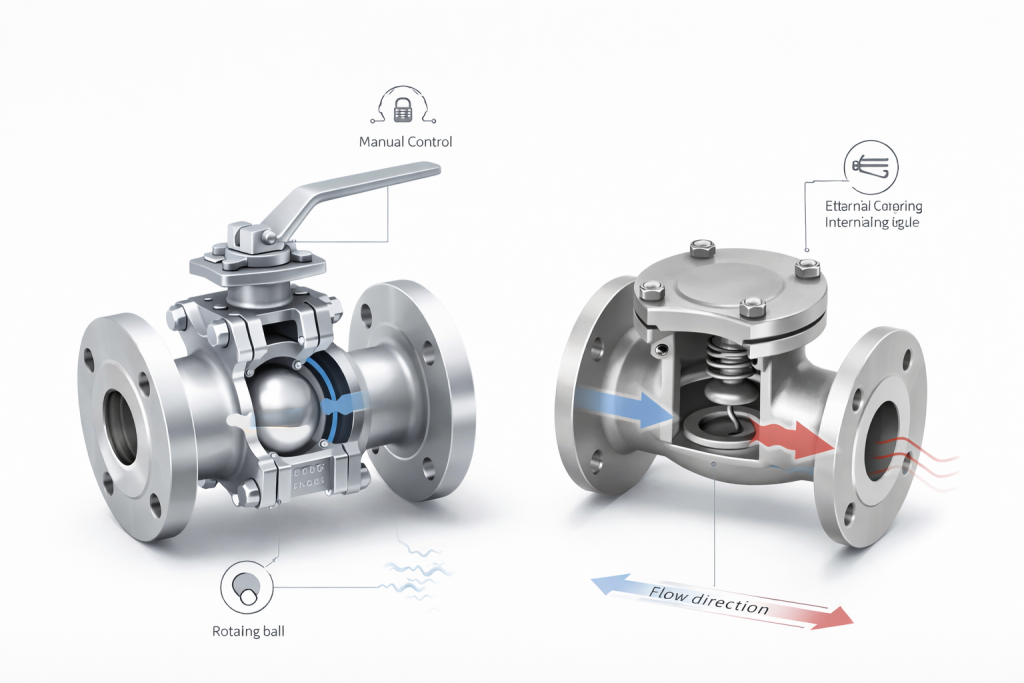
Why Did a Perfectly Good Ball Valve Cause a Catastrophic Pressure Spike?
Your operator closes a quarter-turn ball valve. A split second later, a deafening BANG echoes through the plant. This violent event, known as water hammer, isn’t a valve defect. It’s a system failure caused by using an active control valve too quickly. The valve did exactly what it was told to do, but the command was wrong for the system’s physics.
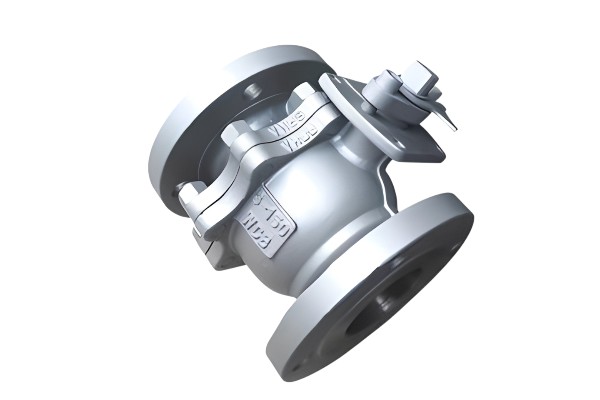
Dive Deeper: The Dangers of Active Control
A ball valve is an active valve; it does nothing until it receives an external command. Its job is to obey, whether it’s a good idea or not.
- Kinetic Energy as a Weapon: Water moving in a pipe has kinetic energy, like a freight train. Slamming a ball valve shut puts an immovable wall in front of that train.
- The Pressure Wave: The kinetic energy instantly converts into a high-pressure wave that travels back up the pipe, which is the “hammer” you hear and feel. This spike can be 50 times the operating pressure.
- The Role of the Control System: The valve is not at fault; the control strategy is.
- For Manual Valves: Train operators to close quarter-turn valves slowly over several seconds.
- For Automated Valves: The actuator’s closing speed is a critical control parameter that must be slowed down, either pneumatically or by programming the actuator’s closing time.
The failure wasn’t the ball valve; it was using a fast-acting active device without respecting the system’s physics.
| Parámetro | Ball Valve (Active Control) | Your Responsibility (as Engineer) |
|---|---|---|
| Operación | Externally commanded (manual or automated). | Define the correct operation speed and sequence. |
| Modo de fallo | Does what it’s told, even if it’s destructive. | Program safe parameters; train operators. |
| Diagnosis | Look for fast closure events preceding failure. | Review control logic and operator practices. |
Why Did My Check Valve Let a Pump Be Destroyed by Backflow?
Your vertical turbine pump trips. Instead of silence, you hear a whine as the pump spins backward at incredible speed, destroying bearings and seals. This failure means your check valve, a passive device designed to prevent this exact scenario, didn’t do its job. It allowed the system’s pressure head to reverse-drive the pump.
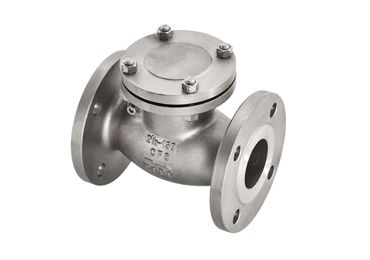
Dive Deeper: The Pitfalls of Passive Control
A check valve is the opposite of a ball valve; it’s a passive, autonomous machine designed to make one decision based entirely on flow direction.
- The Automatic Decision: A swing check valve has a disc that flow pushes open. When flow stops, gravity and back-pressure should close it.
- Modes of Failure:
- Stuck Open: Debris or corrosion can wedge the disc open. When the pump stops, the entire column of water rushes back, turning the pump into an uncontrolled turbine.
- Valve Slam (Delayed Closing): If the valve is oversized or the wrong type, flow reverses before the disc can close. The disc then slams shut against established backflow, causing a damaging pressure spike.
Hassan’s team made this mistake. A standard swing check on a high-head pump couldn’t close fast enough. We replaced it with a spring-assisted, non-slam check valve, which closes instantly, solving the problem. The failure wasn’t a broken valve; it was selecting a passive device unsuited for the system’s dynamics.
| Parámetro | Check Valve (Passive Control) | Your Responsibility (as Engineer) |
|---|---|---|
| Operación | Automatic, reacts to flow direction. | Select the correct type of check valve for the application. |
| Modo de fallo | Fails to close (backflow) or closes too late (slam). | Match valve dynamics to system dynamics. |
| Diagnosis | Look for backflow, reverse pump rotation, or slamming on shutdown. | Analyze system flow dynamics to choose the right check valve. |
Conclusión
A ball valve fails because of cómo it’s controlled; a check valve fails because of what it is. Understanding this active vs. passive difference turns you from a parts-replacer into a true system diagnostician, saving time, money, and preventing catastrophic failures.
Experiencing Valve-Related System Failures?
Our engineers can help diagnose the root cause and specify the correct valve for your application.


 English
 Arabic
 Russian
 French
 Spanish